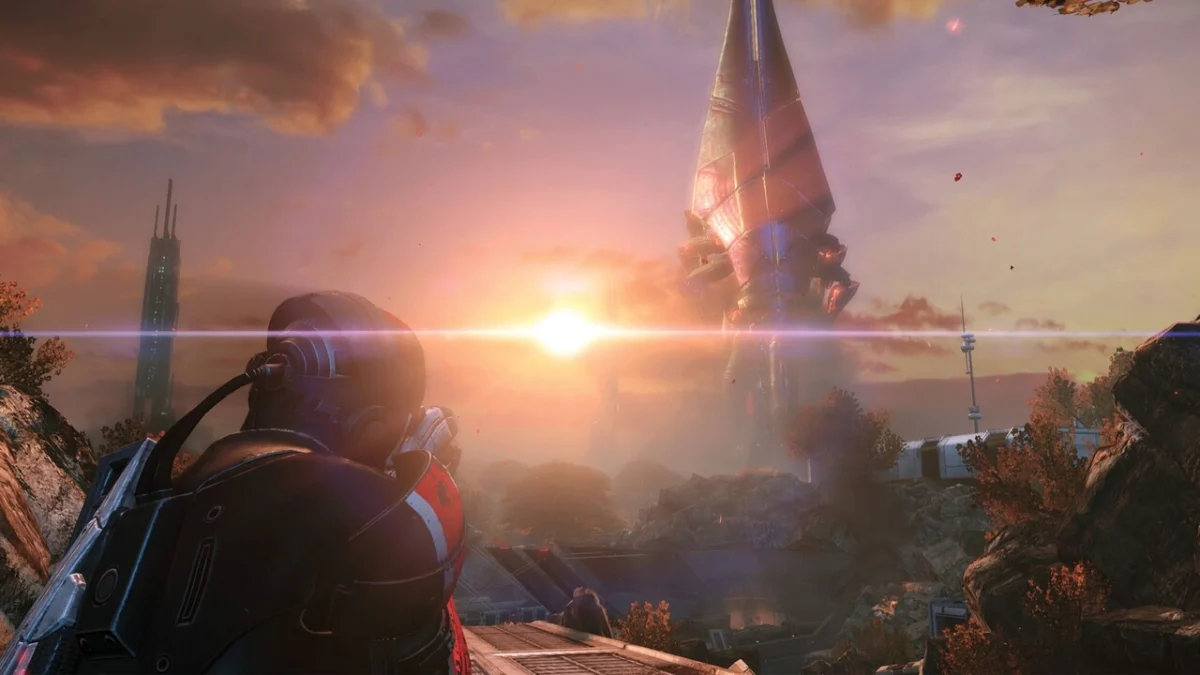
In a week marked by one of the most significant losses in the history of the video game industry, a glimmer of hope remains for fans of the Mass Effect franchise. While the recent announcement of BioWare’s closure by Electronic Arts (EA) effectively terminated the development of the highly anticipated next chapter in the gaming series, Mass Effect: Universe, the planned television adaptation at Amazon Prime Video remains firmly in development.
Industry insiders and sources close to Amazon MGM Studios have confirmed that the project is not only active but continues to move forward with its original creative team intact. This news provides a bittersweet counterpoint to the total cessation of the game development side of the studio, offering a potential lifeline for a brand that has defined the space-opera genre for nearly two decades.
The Resilience of the Amazon MGM Project
The uncertainty surrounding the Mass Effect property hit a fever pitch following the confirmation that EA had shuttered BioWare. However, IGN reported on behalf of Amazon Prime Video sources that the television series is proceeding as planned. Crucially, the production remains staffed by the same group of creative professionals who have been steering the ship since the project was formally greenlit.
"At this stage, all creative leads involved in the television project are still on board," the sources confirmed. This continuity is vital for a production of this scale. When adapting a narrative as dense and lore-heavy as Mass Effect, maintaining a consistent vision is paramount. The stability of the writing and production teams suggests that Amazon is committed to the project’s original scope, despite the tectonic shifts occurring within the video game industry.
A Chronology of a Frustratingly Slow Development
The journey to bring Commander Shepard’s universe to the small screen has been a long and winding road, characterized by years of rumors, false starts, and finally, formal confirmation.
The Rumor Mill (2021–2023)
For years, the prospect of a Mass Effect show was a "holy grail" for streaming services. Following the massive success of The Witcher and The Last of Us, Amazon Prime Video began aggressive negotiations to secure the rights to the BioWare flagship. Throughout 2022 and 2023, reports suggested that Amazon was in deep discussions with EA to bring the sci-fi epic to life, though official confirmation remained elusive.
The Formal Announcement (2024–2025)
It was not until 2024 that the project moved from a "rumored" status to active development. In a watershed moment for the community, BioWare officially acknowledged the collaboration during the "N7 Day" celebrations in November 2025. During this event, the developers clarified a pivotal narrative detail: the series would not be a direct retelling of the original Shepard trilogy. Instead, it was positioned as a new, canonical story set within the Mass Effect universe, potentially taking place after the events of the games.
The Production Timeline
While a concrete release date remains a mystery, the production roadmap has been subject to heavy speculation. In August 2025, reports suggested that cameras were slated to roll as early as the fourth quarter of 2026. Given the current instability at EA, it remains to be seen if that target date is still feasible, or if the loss of the primary creative partner, BioWare, will necessitate a strategic delay.
Creative Leadership and Vision
The project is helmed by a team with significant experience in high-stakes genre storytelling. Daniel Casey, known for his work on Fast & Furious 9, has been tasked with the screenwriting duties. His involvement has been a point of contention for some purists, but he has been quick to defend the artistic integrity of the project.
In April 2025, amidst rumors that the narrative was being "diluted" to cater to a mainstream audience that had never touched a controller, Casey took to social media to firmly deny these claims. His commitment to the source material—or at least to the specific brand of sci-fi grit that Mass Effect embodies—is a key pillar of the production’s current identity.
He is joined by showrunner Doug Jung, whose resume includes critical hits like Mindhunter and the blockbuster Star Trek Beyond. The producer list is equally formidable, featuring BioWare’s own Mike Gamble, alongside industry veterans Karim Zreik (known for his work on Netflix’s Marvel series like Jessica Jones and Daredevil) and Ari Arad (who has overseen projects ranging from Iron Man to Borderlands).
The "End of an Era": BioWare’s Departure
The survival of the television show stands in stark contrast to the tragic demise of the game studio. The closure of BioWare, announced by EA following massive corporate-wide layoffs, represents the end of an era for RPG enthusiasts.
The cancellation of Mass Effect: Universe was particularly stinging. Following the announcement, a leaked internal trailer for the project surfaced, showing a scope that fans described as "ambitious" and "heartbreakingly close to realization." The trailer, which featured a darker, more expansive vision for the franchise, only served to highlight the loss.
In response, the community has mobilized. A Change.org petition aimed at "Saving Mass Effect" has crossed the 60,000-signature threshold. While it is unlikely that the petition will force a corporate giant like EA to reverse a closure decision, it serves as a powerful testament to the emotional investment the player base has in this intellectual property.
Implications for the Future of IP Adaptation
The situation surrounding Mass Effect highlights a growing trend in Hollywood: the "decoupling" of video game franchises from their original developers. Historically, when a game studio closed, the associated media projects often collapsed with them due to shared resources, shared creative staff, and shared IP control.
However, the fact that Amazon is moving forward without the studio behind the source material signals a shift toward treating these franchises as independent assets. The challenge for the production team will be to maintain the "BioWare spirit"—that specific blend of branching dialogue, companion dynamics, and moral ambiguity—without the original architects of the universe on hand to consult.
If the show succeeds, it could set a precedent for other orphaned franchises to find new life on streaming platforms. If it fails, it may be viewed as a hollow attempt to capitalize on a brand name that lost its soul the moment its creators were let go.
Final Thoughts: A Universe Without Its Creators
The Mass Effect series has always been about choices—the heavy, galaxy-altering decisions that Shepard had to make in the face of the Reapers. Ironically, the franchise now faces its own "Renegade vs. Paragon" moment.
The "Paragon" path for Amazon is to honor the legacy of the games, respecting the deep lore and character development that made the series a cultural phenomenon. The "Renegade" path is to treat the series as a generic sci-fi commodity, prioritizing spectacle over the intimate, squad-based storytelling that defined the BioWare era.
As the production team moves forward, the eyes of millions of fans are upon them. They are currently the sole custodians of a legacy that once belonged to one of the most beloved studios in gaming history. For now, the Normandy is still flying—but it is flying into a very different, and much lonelier, part of the galaxy.