For decades, archaeologists viewed the prehistoric site at Breitenbach, Saxony-Anhalt, as a mere workshop where early humans scavenged ivory from long-dead mammoths. However, groundbreaking excavations and forensic analysis of bone fragments now suggest a much more active and sophisticated history: a site of systematic hunting, strategic processing, and long-term seasonal occupation by hunter-gatherer groups 30,000 years ago.
The Discovery and the Shift in Perspective
The archaeological site of Breitenbach, nestled in the scenic landscape southwest of Zeitz, has long been a focal point for researchers peering into the lives of Upper Paleolithic humans. The history of the site began in 1924, when a schoolboy discovered a mammoth molar along the banks of the Aga River. This chance find led to an initial excavation in 1927, which established the area as a place of human activity during the late Ice Age.
For many years, the prevailing consensus among experts was that the humans who inhabited this region were scavengers. The assumption was that they stumbled upon the skeletal remains of mammoths that had died of natural causes, harvesting the ivory for tools, jewelry, and projectiles. However, recent excavations conducted between 2012 and 2013, followed by years of rigorous laboratory analysis, have fundamentally challenged this narrative.
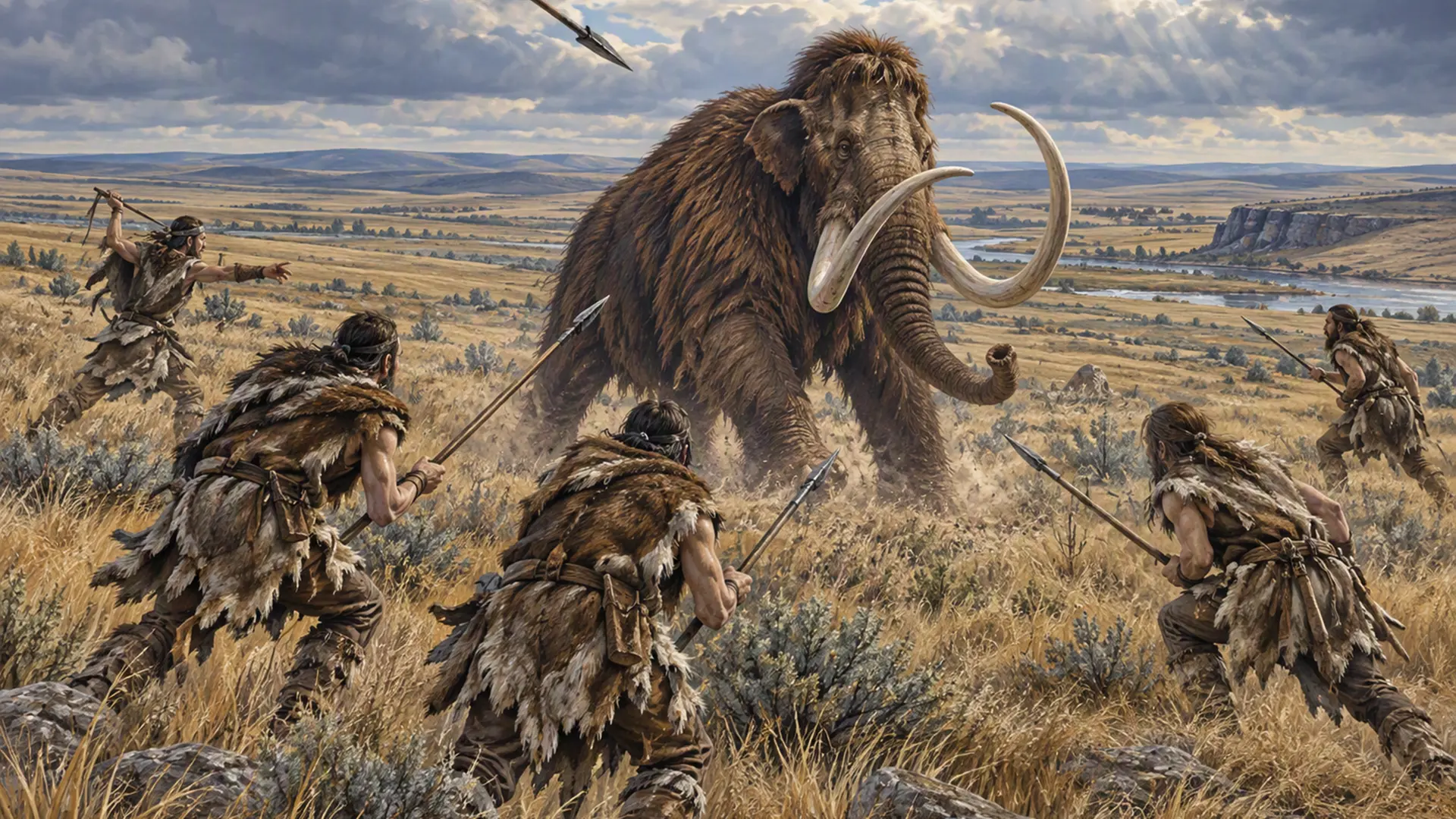
Olaf Jöris, a project leader at the Leibniz-Zentrum für Archäologie (LEIZA) in Mainz, notes that the depth and quality of the new findings provide a compelling case for active hunting. "We are no longer looking at a simple scavenging site," Jöris explains. "We are looking at a hub of sophisticated human activity where mammoths were not just found, but targeted."
Chronology of Human Activity
The timeline of human occupation at Breitenbach spans a critical period in European prehistory, roughly 30,000 to 40,000 years ago. This era was defined by harsh, fluctuating climates and the dominance of the mammoth steppe.
The initial excavations in the early 20th century provided the foundational context, but it was the 2012-2013 research that yielded the most transformative data. By analyzing the stratigraphic layers—the distinct levels of sediment—archaeologists were able to differentiate between the natural geological history of the region and the specific periods of human arrival.
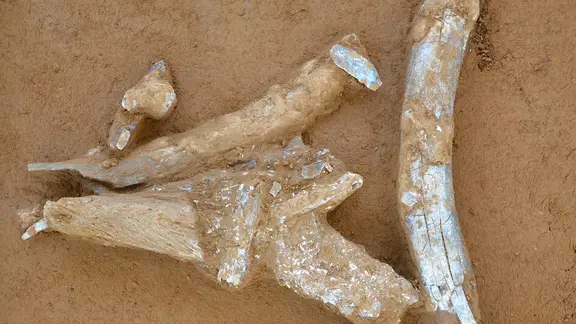
"We previously debated whether the mammoth remains were significantly older than the human activity," says Jöris. "But the density of worked ivory and the specific condition of the fossils suggest that the raw material was fresh. You simply cannot craft high-precision projectile points and delicate jewelry from old, weathered, or fossilized tusks. The material was supple and ready for transformation, which implies the animals were brought down shortly before the workshop activity began."
Supporting Data: The Anatomy of a Hunt
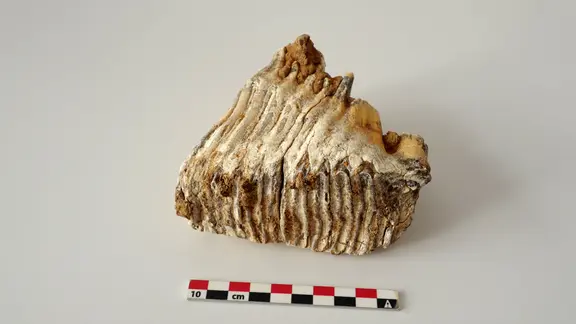
The most striking evidence for active hunting comes from the examination of mammoth skull fragments and the tooth sockets (alveoli). Mammoths possess massive tusks anchored deep within their skulls. In a long-dead, decaying animal, these tusks would naturally loosen over time.
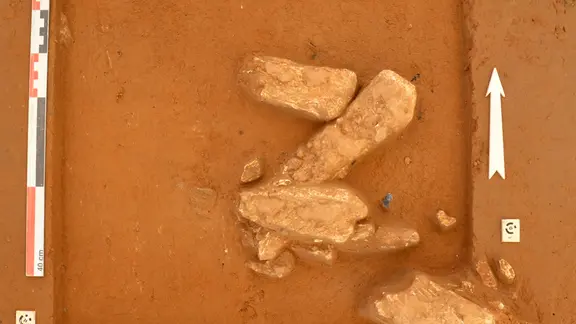
At Breitenbach, researchers discovered tusk fragments alongside broken, forcefully opened alveoli. The diameter of the ivory pieces recovered was significantly smaller than the tooth sockets themselves, indicating that the ivory had been forcefully extracted while the connective tissues were still intact. "If you find a carcass that has been lying out for a long time, you don’t need to break the bone to get the tusk—you simply turn it and pull," Jöris explains. "The fact that the humans had to chisel them out suggests the animals were freshly killed."

Furthermore, the site has yielded a vast array of flint tools, transported by glaciers during the penultimate ice age, which the humans utilized to butcher and process the animals on-site. The sheer scale of the site—estimated at 6,000 to 12,000 square meters—suggests that this was not a fleeting stop, but a major regional center.
Hunting Strategies: The Power of Cooperation
How did prehistoric humans manage to take down a creature as formidable as a mammoth? While direct evidence of a specific "kill event" is notoriously difficult to isolate in the archaeological record, researchers have pieced together a plausible strategy.
"We believe they used spears," says Jöris. "While the spear-thrower (atlatl) is more clearly documented from 25,000 years ago onward, the technology was likely evolving during the time of the Breitenbach settlers."
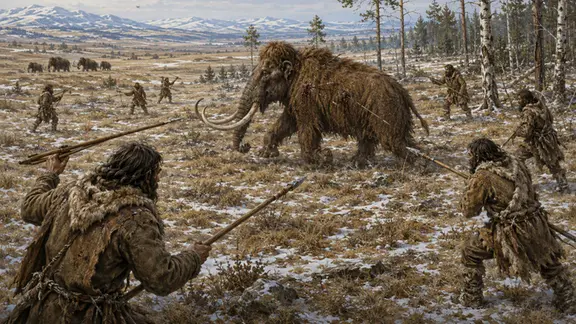
The strategy likely involved cooperation among larger groups. Mammoths were not taken down by lone hunters. It is hypothesized that the humans exploited the landscape, potentially driving the animals into the marshy areas near the riverbanks. Once bogged down, the mammoths’ immense weight became a liability, allowing hunters to strike from a distance of 20 to 30 meters.
"It wasn’t about a single ‘heroic’ blow," Jöris clarifies. "It was a tactical, collective effort. They were using the geography of the river valley to their advantage, turning the landscape into a trap."
Seasonal Rhythms and Social Organization
One of the most significant findings from the recent excavations is the discovery of evidence for summer occupation. Previous research suggested that Breitenbach was a winter camp, as the climate models favored cold-adapted species and winter-hunting patterns.
However, the discovery of juvenile fox and hare bones—animals whose skeletons had not yet fully fused—points toward a warm-season presence. This discovery suggests that Breitenbach was a multi-seasonal hub, visited by different groups or perhaps serving as a meeting place for larger gatherings.
"We see spatial differences within the settlement area," notes Jöris. "It is possible that smaller family units operated independently, only to come together during specific times of the year to conduct large-scale hunts or share resources. This indicates a high level of social organization and a deep understanding of the environment’s seasonal cycles."
The Broader Implications for Human History
The implications of the Breitenbach findings extend far beyond the borders of modern-day Saxony-Anhalt. They force a revision of how we perceive the "Stone Age" human. The popular, albeit reductive, image of the caveman as a creature living "hand to mouth," perpetually on the verge of starvation, is increasingly being dismantled by the archaeological record.

"These people were not struggling to survive; they were thriving," says Jöris. "They were landscape managers. They knew precisely which resources were available at what time, and they had the technical expertise to manipulate their environment to suit their needs."
The study of Breitenbach also serves as a somber reflection on modern society. Jöris draws a poignant parallel: "It is a testament to the adaptability of our ancestors that they could flourish in the extreme climate of the Ice Age. Today, with all our technological advancements, we still struggle to ensure that every human on the planet has access to the basic nutritional requirements they need. In that sense, we have arguably lost some of the resilience and environmental fluency that defined our ancestors."
Conclusion: A Window into the Future of Archaeology
The ongoing research at Breitenbach continues to provide a vital window into the Pleistocene era. As digital mapping, chemical analysis of bone, and high-resolution excavation techniques improve, the story of the site becomes clearer.
What began as a schoolboy’s curiosity in 1924 has evolved into a sophisticated study of human ingenuity. The people of Breitenbach were not merely witnesses to the megafauna of the Ice Age; they were the masters of their domain. By piecing together the broken tusks and scattered flint, archaeologists are not just reconstructing the life of the hunter-gatherer—they are rediscovering the fundamental human capacity for planning, cooperation, and endurance that has allowed our species to survive for millennia.
As the team from LEIZA and their partners continue to analyze the findings, the site at Breitenbach remains a beacon for the field of paleontology, proving that even after 30,000 years, the earth still has profound lessons to teach us about what it means to be human.