The German Federal Office for Information Security (BSI) has issued a sobering assessment of the ongoing crisis surrounding a critical vulnerability in the widely used PHP programming language. Despite rapid initial interventions, officials emphasize that the situation remains precarious, warning that "the worst is not yet behind us."
Executive Summary: A Digital Ticking Clock
As of October 23, 2026, the cybersecurity community remains on high alert. A severe security flaw identified within the PHP ecosystem has triggered a massive, coordinated response from government agencies, private sector entities, and critical infrastructure providers. While a security patch has been developed and distributed, the BSI reports that a significant number of web servers and networked devices remain unpatched, leaving them vulnerable to exploitation.
Thomas Caspers, Vice President of the BSI, noted in an interview with MDR AKTUELL that the current risk level remains "extraordinarily high." The vulnerability, which allows attackers to bypass security measures and potentially execute arbitrary code, poses an existential threat to organizations that have not yet updated their software stacks.
Chronology of the Crisis: From Discovery to Containment
The timeline of this incident reflects the rapid escalation typical of modern zero-day threats.
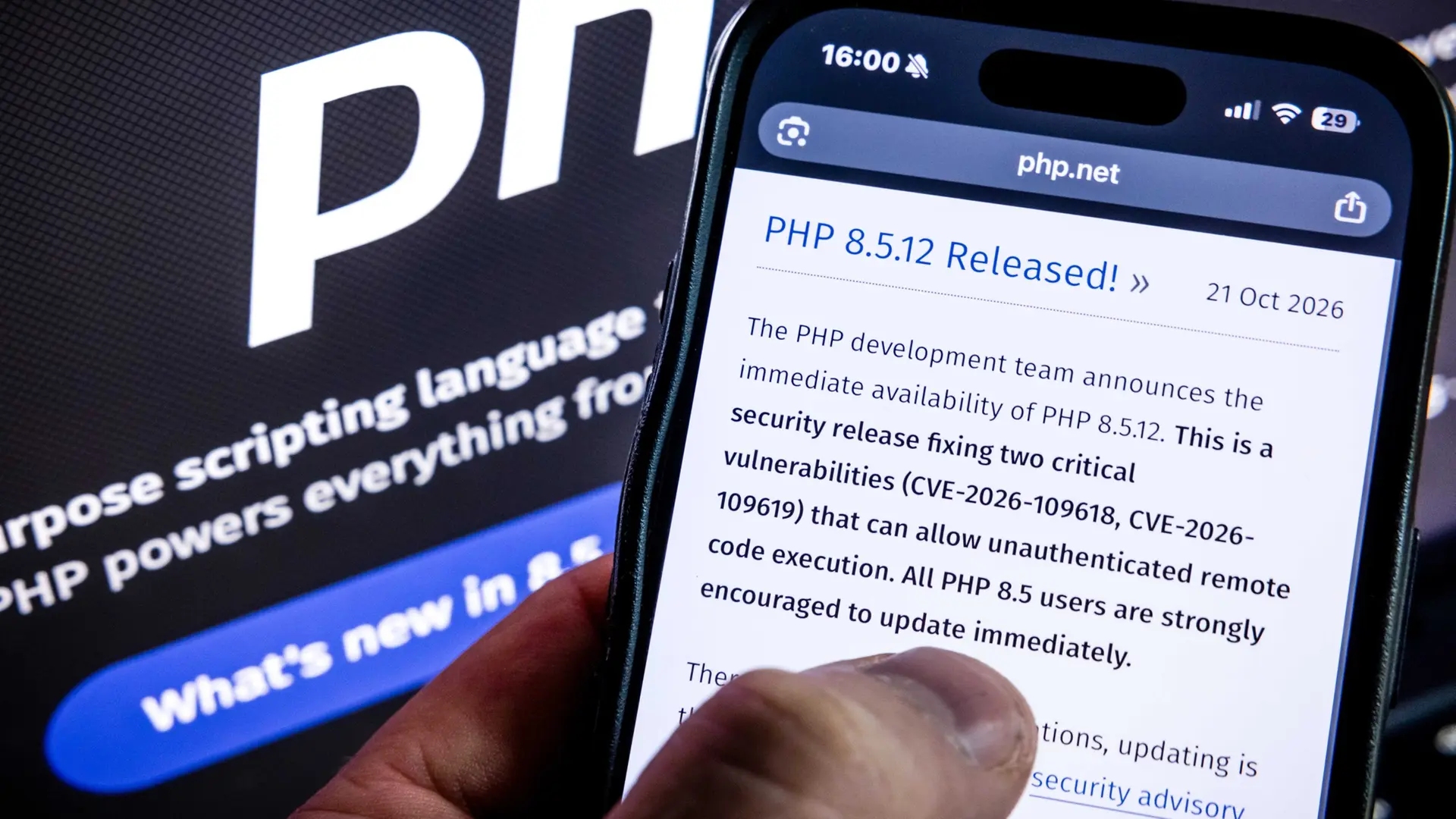
- Initial Discovery: Security researchers identified the vulnerability earlier this week, noting that the flaw exists in the core execution environment of PHP—a language that powers a vast majority of the modern web, from small blogs to the backend systems of national government portals.
- The BSI Alert: By Wednesday, October 21, the BSI officially elevated the threat level, issuing an urgent warning to all operators of PHP-based systems. The agency’s recommendation was drastic: either patch immediately or, if an update cannot be verified, take the affected web services offline entirely.
- The Wave of Shutdowns: Responding to the directive, a massive wave of voluntary outages swept across Germany. Municipalities, state administrations, universities, and healthcare providers proactively disabled public-facing services to prevent data breaches.
- Current Status (October 23): While many institutions have applied the necessary patches and restored functionality, the BSI warns that the "long tail" of unpatched legacy systems poses a significant, ongoing risk.
Understanding the Vulnerability: Beyond Web Servers
While public attention has been largely focused on website outages, the technical scope of the threat is far broader. PHP is not limited to web server software; it is frequently utilized as the administrative backbone for various embedded network devices, most notably internet routers.
The "Hidden" Risk in Network Infrastructure
"We are looking at a scenario where the danger extends well beyond the typical web browser experience," explains Caspers. "Many administrative interfaces for enterprise and residential routers are built on PHP. If these devices remain unpatched, they become potential entry points for lateral movement within a network."
The BSI advises that while large internet service providers (ISPs) generally push automatic updates to customer-premises equipment (CPE), small-to-medium enterprises (SMEs) managing their own hardware must manually verify the integrity of their network security configurations. The failure to secure these "behind-the-scenes" components could allow attackers to maintain persistence in a network long after the initial web-based threat has been mitigated.
Official Responses: Strategy and Resilience
The BSI’s strategy throughout this crisis has been one of "preventative containment." By encouraging organizations to take services offline, the agency successfully throttled the potential for mass data exfiltration.

A Coordinated Defense
The federal response was matched by state-level cooperation. In Saxony, Saxony-Anhalt, and Thuringia, state authorities took decisive action to protect sensitive citizen data. Websites for state chancellories, interior ministries, and local police departments were taken offline temporarily. This was not a failure of the systems themselves, but a calculated security maneuver to ensure that no unauthorized actor could leverage the PHP flaw to gain access to sensitive government databases.
"The fact that we have not seen a widespread, catastrophic exploitation of this vulnerability is a testament to the swiftness of the response," says Caspers. "However, the threat landscape is changing. We are seeing active reconnaissance—attackers are scanning the entire IPv4 space to identify and catalogue systems that have not yet been updated."
Implications: The Role of AI in Future Cyber Threats
The current PHP incident is being viewed by experts as a harbinger of a new era in cyber warfare. The speed at which this vulnerability was identified, tested, and weaponized points toward the increasing influence of Artificial Intelligence (AI).
The Acceleration of Reconnaissance
The Chaos Computer Club (CCC), Germany’s preeminent hacker collective, has highlighted that the barrier to entry for exploiting such flaws is dropping. "AI tools allow attackers to scan for vulnerabilities with unprecedented speed and precision," says Jochim Selzer of the CCC. "They can automate the identification of outdated software versions across the entire internet in minutes."

This "high-frequency" threat environment necessitates a fundamental shift in how organizations handle patching. Traditional, slow-moving update cycles are no longer sufficient. Organizations must move toward "automated incident response," where security teams have the capability to deploy patches across thousands of nodes simultaneously.
Technical Deep Dive: Why PHP?
PHP (Hypertext Preprocessor) is a server-side scripting language designed for web development. Because it is embedded directly into HTML, it is highly efficient. However, this ubiquity makes it a "high-value" target for malicious actors.
- Complexity of Supply Chains: Modern PHP applications often rely on a labyrinth of libraries and frameworks. If the core language engine has a vulnerability, it propagates through the entire software stack.
- The "Legacy" Problem: Many government and corporate systems run on older, custom-built PHP applications that are rarely updated. These "zombie" applications are the primary target for attackers.
- Authentication Bypasses: The current flaw specifically targets how the language handles incoming requests. In some instances, it allows an attacker to bypass authentication mechanisms, granting them administrative rights to the database or the underlying operating system.
Recommendations for Administrators and Users
The BSI has provided a comprehensive checklist for entities still in the process of recovery:
- Verify PHP Version: Ensure that your environment is running the latest patched version of the PHP interpreter.
- Audit Network Components: Check the firmware versions of all routers and switches. If they utilize a web-based administration panel, assume they are potentially vulnerable until proven otherwise.
- Implement Zero-Trust Architecture: Ensure that even if a web-facing service is compromised, the attacker cannot pivot to more sensitive internal databases.
- Continuous Monitoring: Use intrusion detection systems (IDS) to look for anomalous patterns in traffic, which may indicate that an attacker is attempting to probe for the vulnerability.
Conclusion: "Over the Mountain"
"We are not yet out of the woods," concludes Caspers. "Only when we reach a point of saturation—where the vast majority of systems have been updated—can we definitively say that we are over the mountain."

The current situation is a stark reminder of the interconnected nature of our digital infrastructure. While the immediate danger has been blunted by the rapid response of the German administration and private sector, the incident underscores a permanent shift in the cyber threat landscape. In an age where AI-driven threats can strike at any moment, the only defense is a culture of vigilance, rapid patching, and a commitment to proactive cybersecurity hygiene.
As the situation develops, the BSI continues to monitor the internet for signs of mass exploitation, maintaining communication with international partners to ensure that the global community is aware of the risks. For now, the message remains clear: check your systems, update your software, and do not assume that your infrastructure is secure until it has been explicitly verified.
This report is based on current data from the Federal Office for Information Security (BSI) and additional analysis from the Chaos Computer Club. For real-time updates and specific patching instructions, visit the official BSI security portal.