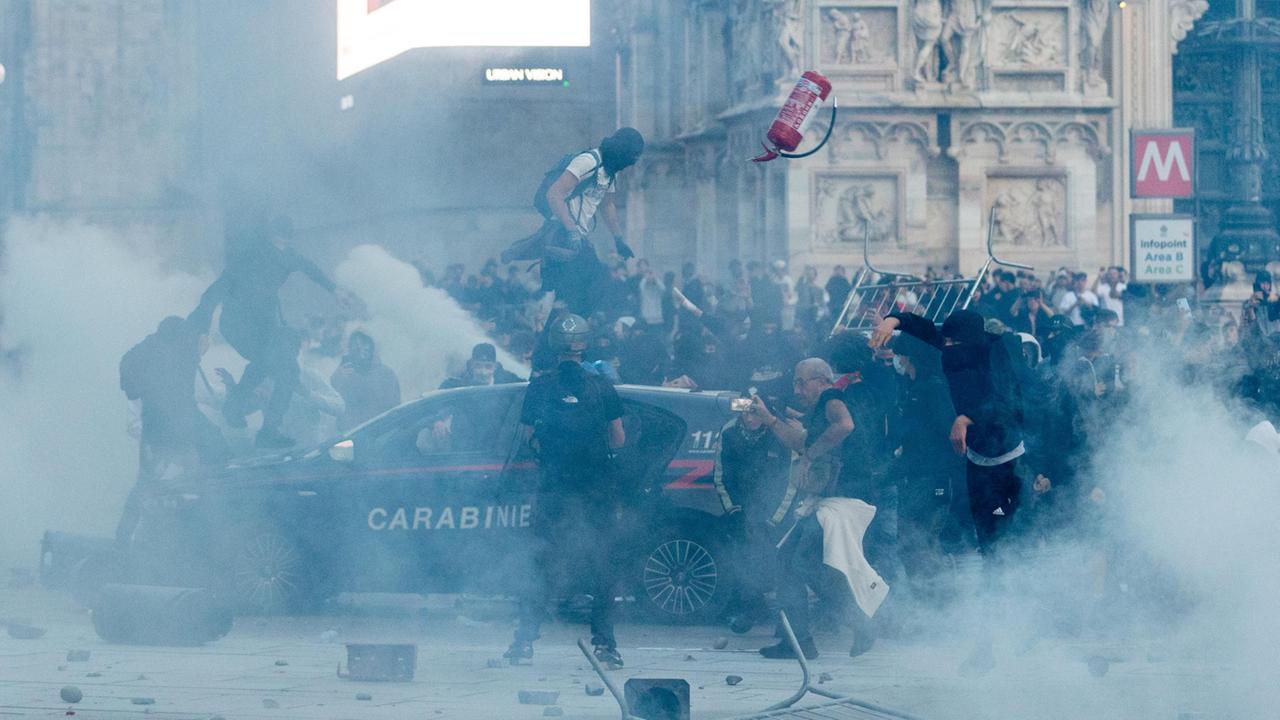
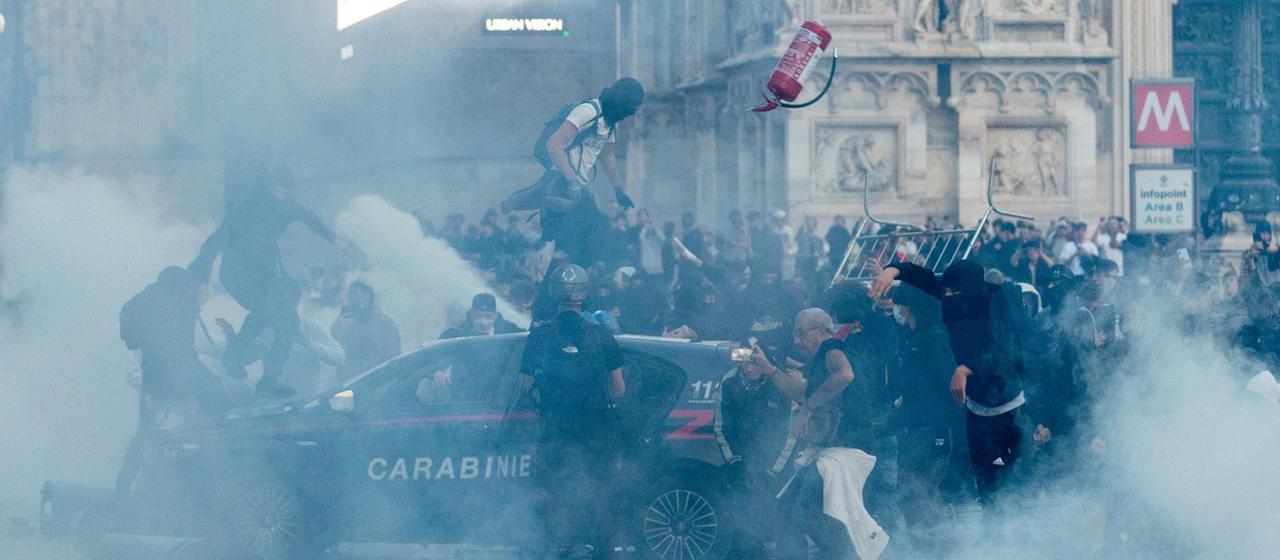
Milan, Italy – October 23, 2026 – The vibrant heart of Milan was marred last Saturday by scenes of widespread destruction as a protest spiraled into violent clashes and looting. The once-picturesque streets, usually a beacon of fashion and commerce, became a battleground between demonstrators and law enforcement, with shattered shop windows and burning refuse bins painting a stark picture of unrest that has reverberated across Italy. The images, broadcast globally, have ignited a fierce national conversation, forcing the Italian government to confront a complex web of issues ranging from public security and punitive measures to the underlying social and economic discontents fueling this escalating wave of dissent.
The immediate aftermath of the Milan riots has seen Prime Minister Giorgia Meloni’s administration swiftly enact a new security decree, signaling a hardline approach to perceived criminality masquerading as protest. However, critics argue that this focus on immediate crackdowns risks overshadowing the deeper, systemic issues that have propelled many, particularly the youth, onto the streets. The question of who these rioters were, their motivations, and the broader societal conditions that may have contributed to their actions remains a critical, and as yet, unanswered element in Italy’s unfolding crisis.
The Spark and the Flame: From Peaceful Protest to Violent Eruption
The events of last Saturday were not an isolated incident, but rather a significant escalation of a broader wave of student and youth-led demonstrations that have been gaining momentum across Italy. Just a week prior, student organizations, including the Osa collective, had called for a "No Meloni Day" in numerous cities. These protests, largely peaceful, aimed to highlight pressing concerns about the education system, job prospects, and the overall future outlook for young Italians.
Tommaso Marcon, a spokesperson for Osa, voiced frustration that the crucial messages of these earlier demonstrations have been largely drowned out by the sensationalism surrounding the Milan riots. "In the media and on television, all anyone talks about is what happened in Milan," Marcon lamented. "They aren’t talking about the fact that last week, thousands of students took to the streets saying, ‘We can’t take it anymore.’ Instead, the focus is on a smashed Louis Vuitton window and a burning garbage bin." This sentiment underscores a growing perception among some protestors that their legitimate grievances are being misrepresented or deliberately ignored, potentially pushing more disillusioned individuals towards more extreme forms of expression.
The scale of the damage in Milan was significant. High-end boutiques bore the brunt of the vandalism, with luxury storefronts smashed and goods looted. Public property also suffered, with refuse bins set ablaze, adding to the chaos and creating a sense of widespread lawlessness. The visual impact of these events has been powerful, generating concern among business owners and residents alike, and amplifying calls for decisive government action.
Government’s Response: A Security Decree and a Call for Firmness
Prime Minister Giorgia Meloni was quick to condemn the violence, unequivocally stating, "No political idea, no social emergency, and no opposition to the government can justify destroying a shop to steal goods. Vandalism and theft are not protest, they are criminality. And the state’s response must be decisive." This firm stance was quickly translated into policy with the swift passage of a new security decree.
The decree introduces significant new measures aimed at deterring and punishing those involved in violent public disorder. Key provisions include:
- Increased Penalties for Violent Participation: The legislation introduces a new criminal offense for participating in violent groups during demonstrations, carrying potential multi-year prison sentences. This measure is designed to create a stronger deterrent against individuals who join protests with the intent to engage in destructive behavior.
- Expanded Pre-emptive Arrests and Identification: The decree empowers authorities to conduct pre-emptive arrests and to detain individuals based on video footage and other forms of evidence. This aims to enable law enforcement to intervene more effectively before or during violent incidents, potentially preventing further escalation.
- Harsher Measures for Minors: The government has also signaled a tougher stance against underage offenders. Parents of minors involved in violent acts may now face fines, highlighting a strategy to hold families accountable for the actions of their children.
- Increased Security Presence: As a direct response to the Milan events, an additional 500 soldiers are being deployed to the city. This move is intended to bolster law enforcement capabilities and project an image of strong state control, reassuring the public and deterring future unrest.
The government’s strategy appears to be rooted in the belief that a firm and punitive approach is necessary to restore order and prevent a recurrence of the Milan riots. The emphasis is on punishing criminal acts and making it more difficult for such violence to occur or go unpunished.
Critiques and Counterarguments: Addressing the Root Causes
While the government’s focus on security and punishment is understandable in the wake of significant destruction, it has drawn criticism from opposition parties and student representatives who argue that the decree fails to address the underlying socio-economic factors driving these protests.
"The reason for the protests is that families can no longer make ends meet until the end of the month, but only until the third week," stated Tommaso Marcon, reiterating the concerns about rising living costs and economic precarity. He characterized the situation not as a problem of public order, but as a "social and political problem." This perspective suggests that a purely punitive approach, without a concurrent effort to address issues like inflation, stagnant wages, and lack of affordable housing, will prove insufficient in the long term.
Critics argue that the government’s emphasis on security risks creating a cycle of repression without addressing the genuine frustrations and anxieties of a generation facing uncertain economic futures. They contend that investments in education, job creation, and social support systems are crucial components of any sustainable solution to social unrest. The fear is that by focusing solely on the symptoms, the government is neglecting the disease.
The Unseen Faces: Who Were the Rioters?
A significant aspect of the Milan riots that continues to puzzle authorities and observers is the identity and organization, or lack thereof, of the individuals involved. Current intelligence suggests that there was no single, unified political bloc orchestrating the violence, nor is there concrete evidence of foreign interference or direction.
The most striking observation from the initial police detentions is the remarkably young age of many participants. Out of the 271 individuals taken into custody by the police, a substantial portion were minors. Some were as young as twelve years old, with the youngest identified participant reportedly being only eleven. This demographic profile raises profound questions about societal influences and the pathways that lead such young individuals to engage in destructive behavior.
Preliminary analyses, as reported in the media, indicate that the rioters comprised a mix of Italian youth with no migration history and second-generation Italians from the suburbs and surrounding areas of Milan. This diversity suggests that the motivations for participation were not solely tied to specific ethnic or social groups but may stem from broader feelings of marginalization, alienation, or a search for identity and belonging, however misguided.
The lack of a clear, overarching organization or ideology has presented a significant challenge for security forces. Unlike traditional political groups with established leadership and communication channels, these spontaneous mobilizations appear to have been coordinated, at least in part, through social media platforms. This makes pre-emptive identification and intervention exceptionally difficult, as groups can form and disperse rapidly, often with little prior warning. The ease with which individuals can be mobilized through online networks highlights a new frontier in social activism and potential unrest, one that traditional law enforcement models may struggle to fully comprehend or control.
The Digital Echo: New Movements Emerge Online
In the wake of the Milan unrest, a new online presence has emerged under the banner of "Movimento 17 ottobre" (October 17th Movement). This digital entity is calling for sustained mobilization and has announced plans for further demonstrations in several Italian cities, including Milan, Turin, Bologna, Rome, and Florence. The stated objective of these planned protests is to continue until the current government is overthrown.
The architects behind this new movement remain largely unknown, and there is currently no definitive evidence linking them directly to the acts of violence and looting that occurred in Milan. Notably, within the associated chat groups, some participants have explicitly distanced themselves from violence and looting. This suggests a potential schism within the broader protest movement, with some individuals advocating for continued, but non-violent, political action, while others may harbor more radical intentions.
Student representative Tommaso Marcon, while committed to continued street action, emphasizes his adherence to peaceful protest. He plans to participate in a demonstration on October 30th, reaffirming the core demands of his generation: addressing the high cost of living and securing better future prospects. His commitment to non-violence underscores the ongoing debate within the protest movement itself about the appropriate tactics and strategies for achieving their goals.
Looking Ahead: A Nation at a Crossroads
The riots in Milan and the subsequent government response have brought Italy to a critical juncture. The challenge lies in finding a balance between maintaining public order and addressing the legitimate socio-economic grievances that are clearly fueling discontent among a significant segment of the population, particularly the youth.
The government’s security decree represents an immediate attempt to regain control and deter further violence. However, its long-term effectiveness will likely depend on its ability to be implemented judiciously, without unduly infringing upon civil liberties, and whether it is complemented by policies that address the root causes of social unrest.
The emergence of new online movements and the continued calls for protest signal that the underlying issues have not been resolved. Italy, like many other nations, is grappling with the complexities of a generation facing economic uncertainty, rising inequality, and the pervasive influence of social media on political mobilization. The coming months will be crucial in determining whether Italy can navigate these challenges through a combination of firm governance and inclusive social policies, or whether the cycle of unrest will continue to deepen. The events in Milan serve as a stark reminder that beneath the surface of everyday life, significant societal fault lines are present, demanding attention and thoughtful solutions.