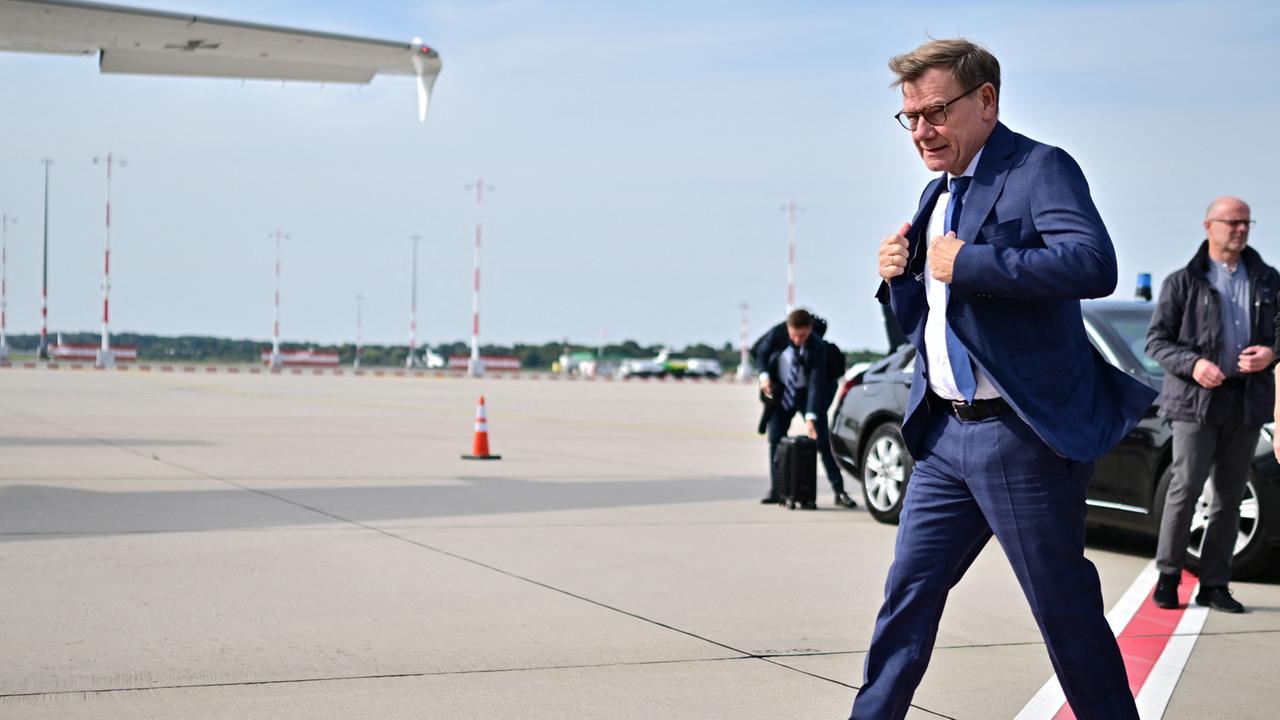
Istanbul, Turkey – October 23, 2026 – A high-stakes diplomatic summit is underway in Istanbul today, bringing together key foreign ministers from Europe and the Middle East to address a rapidly deteriorating security landscape. German Foreign Minister Johann Wadephul is at the forefront of these critical discussions, meeting with his counterparts from France, the United Kingdom, Turkey, Saudi Arabia, and Pakistan. The urgent agenda is dominated by escalating fears of a renewed Iran-led conflict that threatens to destabilize the region and impact global energy markets.
The Gathering Storm: A Crucial Confluence of Powers
The Istanbul meeting, a whirlwind one-day affair for Minister Wadephul, represents a significant diplomatic maneuver in a volatile geopolitical climate. The presence of the so-called "E3" – Germany, France, and the United Kingdom – alongside the "R4" alliance, comprising Turkey, Saudi Arabia, Pakistan, and Egypt, underscores the gravity of the situation. Adding further weight to the proceedings, Turkish President Recep Tayyip Erdoğan has unexpectedly confirmed his participation, signaling Ankara’s keen interest in shaping the regional dialogue.
This multilateral gathering is being widely interpreted as a reflection of a growing global trend: states seeking to forge new alliances and pursue diplomatic solutions independent of traditional global superpowers. The original meeting was slated for late August but was postponed. The renewed invitation by Turkish Foreign Minister Hakan Fidan, who has explicitly raised the prospect of cooperation between the two blocs, highlights a proactive approach to addressing shared security concerns. While the precise nature of any potential cooperation remains undisclosed, observers believe that both the E3 and R4 formats stand to benefit from this direct engagement.
A Region Teetering on the Brink: Unpacking the Crisis
The core of the discussions in Istanbul revolves around a series of interconnected crises plaguing the Middle East. Government sources indicate that the primary focus is on the persistent conflicts that have profound implications for regional economic stability and security.
Key areas of concern include:
- The Strait of Hormuz: The vital maritime chokepoint, crucial for global energy transit, remains under severe strain. Reports suggest its navigability has been significantly curtailed, with average transits falling well below pre-conflict levels. Recent incidents, including attacks on several tankers by Iran’s Revolutionary Guard, have exacerbated these tensions.
- The Yemen Conflict and Houthi Aggression: The ongoing conflict in Yemen continues to disrupt shipping lanes, with devastating consequences. Attacks by Houthi militants, reportedly supported by Iran, have become a near-daily occurrence. A recent assault on Riyadh’s international airport resulted in numerous casualties, underscoring the pervasive threat.
- Ukraine War Spillover: The ripple effects of the war in Ukraine, particularly concerning the disruption of grain exports via the Black Sea, are also on the agenda. These disruptions have had a significant impact on global food security and economic stability.
- The Gaza Conflict and Israeli Settlements: The situation in Gaza and Israel’s ongoing settlement policy are also critical issues that require discussion, according to sources within the Turkish Foreign Ministry.
Minister Wadephul articulated the shared sentiment prior to his departure: "What unites us is the understanding that these protracted conflicts have massive repercussions on the economic situation and security of our countries – and the will to seek new paths for solutions." This statement encapsulates the urgent need for collective action and a departure from impasse.
The Shadow of Iran: Escalating Tensions and Existential Threats
The most pressing concern for all participants is the volatile and seemingly intractable conflict between Iran and the United States, a confrontation with far-reaching implications for the global energy market. The Strait of Hormuz, as mentioned, remains a flashpoint, and recent actions by Iran’s Revolutionary Guard, including the seizure of multiple tankers, have heightened anxieties.
In response to soaring energy prices, the German government has implemented measures such as a fuel subsidy, effective from October. Additionally, Berlin is exploring the possibility of direct payments to low-income households to mitigate the impact of high energy costs. However, any immediate relief appears unlikely. Many regional observers have been anticipating a resurgence of conflict for weeks, fueled by a series of reciprocal threats exchanged between key players.
The role of Israel in this unfolding scenario is a subject of intense speculation. With parliamentary elections looming next week, Israeli Prime Minister Benjamin Netanyahu has unequivocally stated that the overthrow of the Iranian leadership is the only viable solution. He has reportedly issued directives to the Israeli military, Mossad, and security agencies, emphasizing that as long as Iran seeks Israel’s destruction, an existential threat persists. This hardline stance from Israel could further inflame regional tensions, potentially leading to renewed escalation.
Such an escalation would undoubtedly be a cause for concern among the R4 nations. Turkey and Pakistan share borders with Iran, while Saudi Arabia is separated only by the Persian Gulf. The Kingdom has been under almost daily attack from the Iran-backed Houthi militia since the beginning of the month, further complicating the regional security calculus.
Diplomatic Maneuvers and a Crisis of Trust
Despite the escalating tensions, diplomatic efforts are continuing. Pakistan and Turkey, in particular, position themselves as key mediators in the region. While Turkey has condemned Iranian attacks on Gulf states, it has also criticized American and Israeli actions against Iran, advocating for a diplomatic resolution. Ankara is actively leveraging its diplomatic ties with Tehran to urge the Iranian regime to rein in Houthi activities.
Furthermore, Pakistan and Turkey recently joined Saudi Arabia in forming the "Mecca Pact," a military alliance that, similar to NATO, includes provisions for mutual defense. Turkish security experts suggest that Ankara’s primary contribution to this pact involves providing military equipment and advisory support, rather than deploying troops. The pact is currently undergoing ratification in the Turkish parliament.
Pakistan appears to have the most direct channel to Tehran at present. In response to the heightened war risk, Pakistan’s army chief recently traveled to Iran for discussions. He has a history of mediating between Tehran and Washington. However, his visit appears to have yielded limited progress.
From Tehran’s perspective, the ball is in the United States’ court. Esmail Baghaei, a spokesperson for the Iranian Foreign Ministry, told ARD, "We have never left the negotiation table." He indicated that messages are still being exchanged through intermediaries. The core issues, as articulated by Iran, include the United States’ insistence on unilateral demands and a profound lack of trust. Baghaei stated, "The fact that they have attacked Iran twice in less than a year while we were in negotiations shows that they are not truly serious about diplomacy."
A Glimmer of Hope in Istanbul?
While immediate solutions are unlikely to emerge from the Istanbul summit, a joint press statement is planned. Sources within the government indicate a shared hope, in collaboration with Turkey and other participating nations, to contribute to de-escalating the conflict. At the very least, the aim is to prevent a further escalation of the ongoing crises. The gathering represents a crucial opportunity for dialogue and a collective effort to navigate the treacherous waters of Middle Eastern geopolitics. The world watches closely to see if these diplomatic efforts can forge a path toward stability in a region on edge.