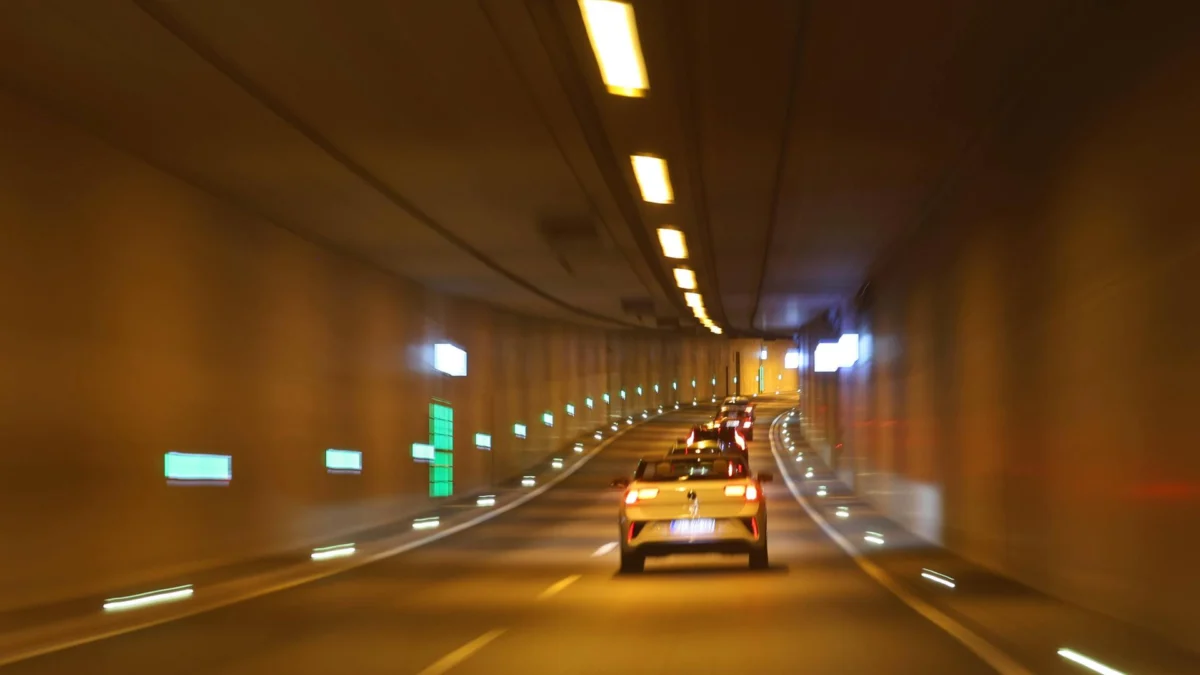
Executive Summary: A Tunnel in Turmoil
For commuters and logistics operators traveling through the East Hessian region, the A66 motorway—specifically the tunnel section at Neuhof near Fulda—has become a site of recurring frustration. In the early hours of Friday morning, motorists finally received a reprieve when the tunnel, which had been closed since Thursday evening, reopened to traffic one hour ahead of the projected 5:00 AM schedule.
The closure was not the result of a fresh accident, but rather a necessary, albeit inconvenient, administrative and technical procedure: the securing of evidence following a catastrophic collision that occurred back in May. A heavy-goods vehicle (HGV) transport carrier, laden with automobiles, had attempted to traverse the tunnel despite exceeding the height clearance. The resulting impact did not merely scratch the surface; it decimated critical safety infrastructure, including approximately 50% of the tunnel’s surveillance cameras and nearly the entire loudspeaker array. This report explores the sequence of events, the systemic implications for road safety, and the challenges faced by the Autobahn GmbH in maintaining this vital transit link.
Chronology of Incidents: A Summer of Disruption
The recent closure is merely the latest chapter in a tumultuous season for the Neuhof tunnel. To understand the gravity of the situation, one must look at the timeline of events that have plagued this section of the A66.
The May Collision: A Failure of Compliance
The root cause of the current maintenance cycle dates back to May. A transport truck carrying multiple automobiles failed to heed height restriction warnings. As the vehicle entered the tunnel, the upper deck of its cargo made forceful contact with the ceiling-mounted installations. The structural and technical damage was instantaneous and severe. By tearing away essential safety components, the driver essentially "blinded" the tunnel’s monitoring systems and disabled its primary emergency communication tools—the loudspeakers.
The Cumulative Burden
The frustration for regional commuters is amplified by the fact that the May incident was not an isolated event in the tunnel’s recent history. Just days prior to the HGV collision, the tunnel had been the scene of a localized vehicle fire. That fire necessitated emergency repairs to the road surface, which had been scorched and degraded by the heat. Consequently, the tunnel has been oscillating between states of "under repair" and "restricted operation," creating a bottleneck that ripples through the regional economy.
Technical Implications: Why Evidence Collection Matters
When a major infrastructure asset like a tunnel is damaged, the process of restoration is governed by strict legal and safety protocols. The recent overnight closure was categorized as a "Beweissicherung" (securing of evidence).
The Legal Necessity
In Germany, accidents involving damage to public infrastructure trigger complex insurance and liability investigations. Because the May incident caused massive financial loss—not only in repair costs but also in the indirect costs of traffic management and lost productivity—the Autobahn GmbH and local law enforcement must document the state of the infrastructure with forensic precision.
Infrastructure Vulnerability
The Neuhof tunnel relies on a sophisticated "Integrated Tunnel Control System." This includes:
- Surveillance Systems: Used to detect stalled vehicles, debris, or unauthorized pedestrians.
- Audio Infrastructure: Vital for emergency broadcasting in the event of a fire or crash.
- Ventilation and Lighting: While these systems were partially spared, the loss of cameras and speakers essentially renders the tunnel "non-compliant" with modern safety standards. Operating a tunnel without these systems is a violation of EU and national safety directives, leaving operators with no choice but to close the tunnel during active forensic work or repair phases.
Official Responses and Operational Challenges
The Autobahn GmbH, the federal agency responsible for Germany’s motorways, has been under significant pressure to manage the aftermath of the May collision while maintaining traffic flow.

The Speed of Recovery
The decision to reopen the tunnel at 4:00 AM on Friday, rather than the planned 5:00 AM, was a strategic move to mitigate the "morning rush" impact. For many commuters in the Fulda region, that hour of difference represents the window between a manageable commute and a total gridlock. The agency noted that while the evidence gathering was exhaustive, the crews worked with high efficiency to ensure that the structural integrity of the tunnel’s ceiling supports—the primary concern following the impact—was cleared for public transit.
Addressing Driver Negligence
The recurring nature of "height-related" accidents on German motorways has sparked a debate regarding driver training and the adequacy of warning signage. While the A66 is equipped with standard height-clearance indicators, the incident in May serves as a reminder that human error remains the most volatile variable in transport logistics. The Autobahn GmbH continues to advocate for more rigorous oversight of heavy transport route planning.
Broader Implications for East Hessian Logistics
The A66 is more than just a road; it is a vital artery connecting the Rhine-Main area with the eastern reaches of Hesse and beyond.
Economic Ripple Effects
Every hour the Neuhof tunnel is closed, the regional economy incurs costs. Heavy transport, which relies on the A66 for time-sensitive deliveries, is forced to take detours through local roads. This not only increases fuel consumption and emissions but also places significant wear and tear on secondary roads that were not designed for high volumes of transit traffic.
The Future of Tunnel Safety
The repeated incidents highlight a need for "hardened" infrastructure. Engineers are increasingly looking at ways to make overhead tunnel installations more resilient to glancing blows, or implementing "intelligent" height-detection systems that force vehicles to stop before they enter the tunnel mouth.
The question remains: can the Neuhof tunnel be further reinforced to prevent a minor driver error from resulting in a multi-day infrastructure crisis? As the Autobahn GmbH moves forward with permanent repairs, they are evaluating whether the current design meets the demands of modern, high-density traffic.
Conclusion: A Call for Caution
The reopening of the A66 tunnel at Neuhof is a welcome development, but it serves as a stark reminder of the fragility of our transport networks. The incident involving the car-carrier truck was not merely an accident; it was an expensive, time-consuming, and disruptive event that impacted thousands of citizens.
For the drivers who frequent this route, the message is clear: the infrastructure is designed to keep you safe, but it is also vulnerable. As authorities continue to process the legal claims from the May collision, the focus will remain on ensuring that such a scenario does not repeat itself. For now, the road is open, but the events of this summer serve as a testament to the fact that a single moment of inattention can have consequences that stretch for months.
As we look toward future infrastructure projects, the lessons learned from the Neuhof tunnel—both regarding the speed of repair and the necessity of preventative safety—will be paramount in keeping Germany’s motorways moving efficiently and safely.