By Editorial Staff
Updated: October 5, 2026
The global livestock industry finds itself at a critical crossroads. As the world grapples with the accelerating impacts of climate change, the spotlight has intensified on a significant, yet often overlooked, contributor to global warming: methane emissions from cattle. Responsible for approximately one-quarter of human-caused methane emissions, the ruminant sector is now at the heart of a pioneering experiment in Tasmania, Australia. Here, farmers and scientists are turning to an unlikely solution found beneath the waves: red seaweed.
Main Facts: The Algae Revolution
The initiative centers on Asparagopsis, a genus of red algae that has demonstrated a remarkable ability to neutralize the production of methane in the digestive tracts of cows. Unlike carbon dioxide, methane is a potent greenhouse gas with a warming potential over 80 times greater than CO2 over a 20-year period. By introducing a small amount of Asparagopsis into the daily diet of cattle, farmers can drastically inhibit the enzymes responsible for methane formation during the animals’ digestion process.
For farmers like Adam Wesley, a generational cattle rancher in the lush landscapes of Tasmania, the adoption of this seaweed supplement represents a shift in agricultural philosophy. No longer content with traditional methods that ignore the environmental footprint of their herds, producers are now actively integrating technology and marine biology to create a more sustainable future for the beef industry.
Chronology: From Accidental Discovery to Market Application
The journey of Asparagopsis from a coastal nuisance to a climate-tech solution was marked by scientific serendipity.
- Initial Observations: For years, researchers noted that livestock grazing near coastal areas where seaweed washed ashore exhibited lower-than-average methane emissions. Initially dismissed by many as a statistical anomaly or a measurement error, the trend persisted across multiple trials.
- Scientific Validation: Rigorous studies confirmed that the chemical compounds within the red algae reacted with hydrogen and carbon dioxide in the cows’ rumens, effectively blocking the methanogenesis pathway.
- Scaling Production: Recognizing the commercial viability, entrepreneur Sam Elsom founded Seaforest. Moving away from harvesting volatile wild seaweed, the company established land-based aquaculture systems to ensure a consistent, high-quality supply of Asparagopsis.
- Field Deployment: By 2025-2026, the technology moved from controlled laboratory settings to commercial farms. Farmers like Wesley began incorporating the algae into "lick blocks"—supplementary feed blocks—that allow cattle to ingest the additive naturally while grazing.
- Data Integration: Ongoing partnerships with the Tasmanian Institute of Agriculture have enabled farmers to track real-time methane reduction data, providing empirical evidence of the supplement’s efficacy in real-world conditions.
Supporting Data: The Science of Methane Inhibition
The effectiveness of Asparagopsis is not merely anecdotal; it is grounded in complex biochemistry. The algae contains bioactive compounds—specifically bromoform—that disrupt the methane-producing microbes in the cow’s gut.
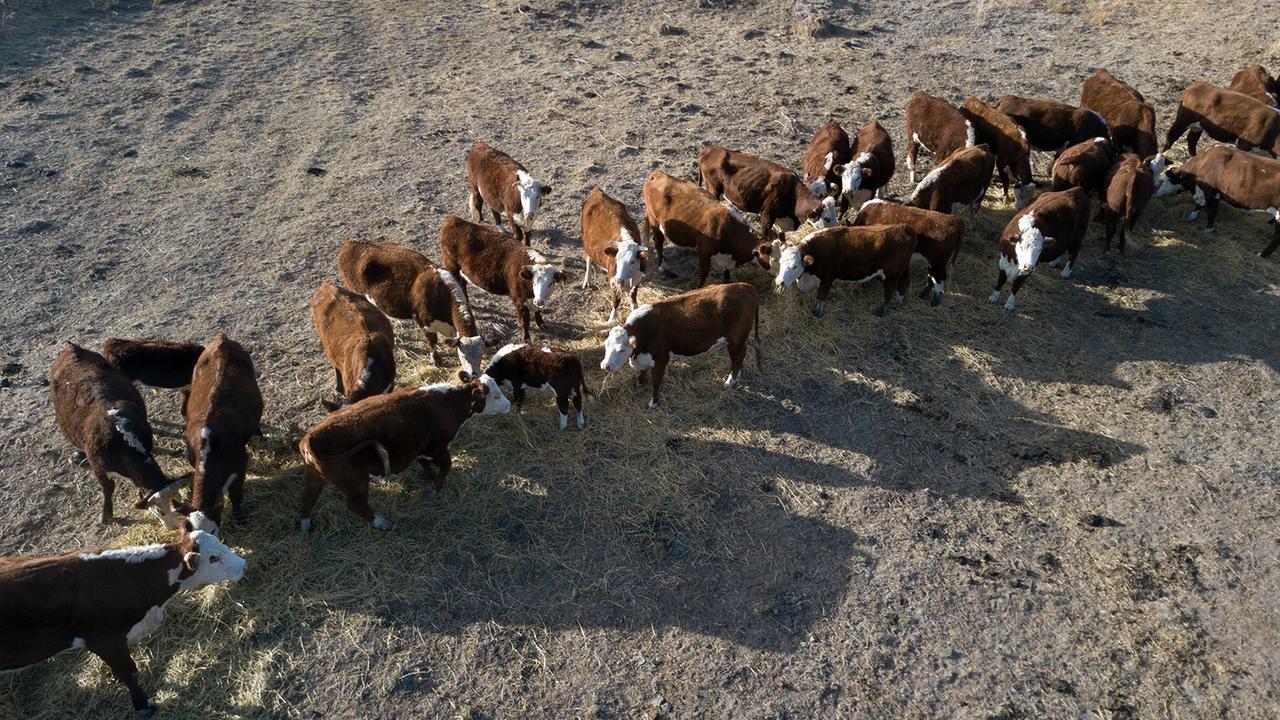
Current research indicates that even at inclusion rates of less than 1% of the total dry matter intake, methane emissions can be reduced by as much as 80% to 90%. This is a staggering figure for an industry that has historically struggled to decouple production from emissions. Furthermore, preliminary data suggest that the redirection of energy—which would otherwise be lost as methane gas—may actually improve feed conversion efficiency. This means the cows are not only cleaner for the environment but may also grow more effectively, potentially offering a financial incentive for farmers to adopt the practice.
Official Responses and Expert Perspectives
The reaction from the scientific and policy communities has been one of cautious optimism.
Tim Flannery, a renowned scientist and advisor to the Australian government on climate policy, emphasizes the necessity of these interventions. "There is no ‘silver bullet’ for climate change," Flannery notes. "However, when we look at the short-to-medium term, addressing methane is one of the most effective levers we have to slow the rate of global warming. We cannot wait for systemic shifts in human dietary habits alone; we must address the emissions of the animals we currently raise."
While industry groups welcome the technology, they are careful to maintain a realistic outlook. The cost of production remains a hurdle. Scaling seaweed aquaculture to meet the demands of the global beef industry requires significant infrastructure investment. Furthermore, the logistical challenge of ensuring that every animal in a vast, open-range herd consumes the correct dosage of the supplement is a hurdle that engineers and farmers are currently working to overcome.
Implications: The Future of "Climate-Friendly" Beef
The rise of algae-fed cattle has far-reaching implications for both the global food supply chain and the consumer market.
1. The Rise of Conscious Consumption
As transparency in the supply chain increases, consumers are becoming more discerning. Farmers like Adam Wesley believe that the future of the beef industry lies in "climate-friendly" labeling. "It is no longer just about buying the cheapest product on the shelf," Wesley observes. "Consumers want to know the story behind their food. If we can prove our steak has a significantly lower carbon footprint, there is a market for that."
2. Redefining Agricultural Sustainability
The integration of seaweed additives represents a shift toward "precision agriculture." By using sensors, data analytics, and biological additives, the modern farmer is becoming a steward of the ecosystem as much as a food producer. This transition is essential for the industry to maintain its "social license to operate" in an era where environmental scrutiny is at an all-time high.
3. Global Scaling and Policy
If the Tasmanian model proves successful at scale, it could become a blueprint for agricultural nations worldwide. However, critics argue that such technological fixes should not distract from the broader conversation regarding the reduction of global meat consumption. The consensus among experts is that while seaweed is a vital tool, it is a complement to—not a replacement for—a more sustainable, plant-forward global diet.
Conclusion: A Small Step, A Potential Leap
For the farmers of Tasmania, the use of red algae is a practical, ground-level response to a global crisis. It is an acknowledgment that the status quo is no longer sufficient. As the world watches these Australian pastures, the hope is that this blend of ancient marine biology and modern agricultural science will provide a critical bridge in the fight against climate change.
Whether this solution can scale to meet the needs of the multi-billion-dollar global cattle industry remains to be seen. Yet, for now, it represents a rare point of convergence: a solution that aligns the financial interests of the producer, the environmental mandates of the policymaker, and the growing ethical concerns of the modern consumer. In the rolling green hills of Australia, the answer to one of the 21st century’s biggest challenges may well be blowing in the sea breeze.