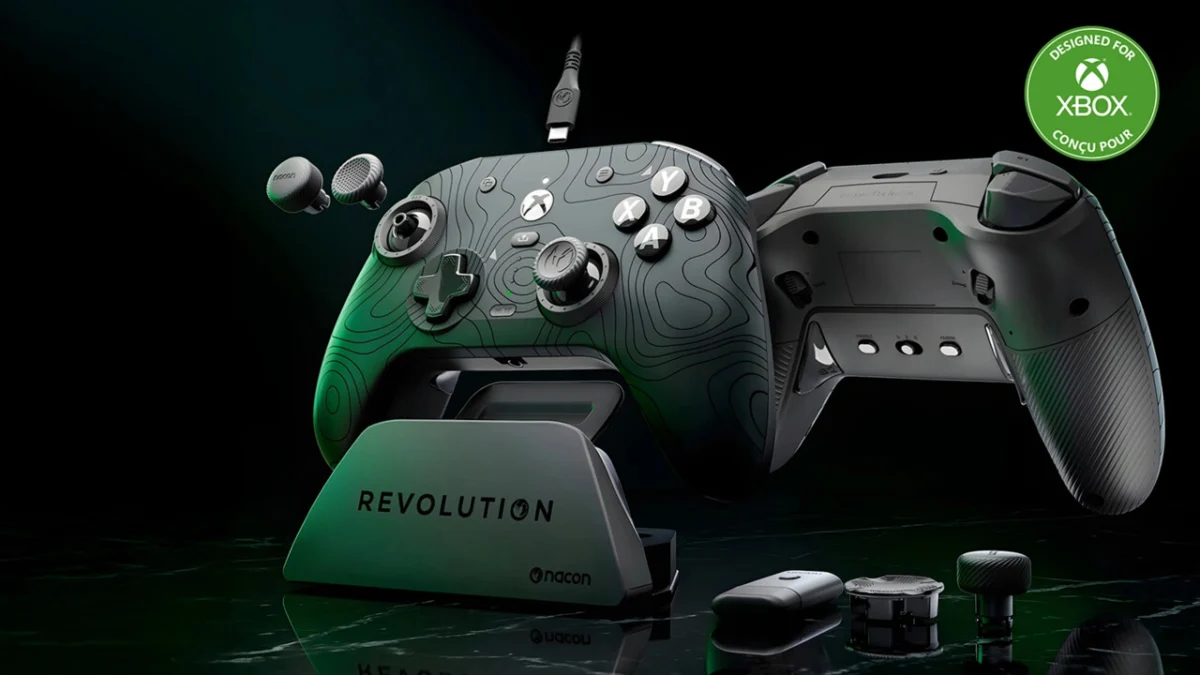
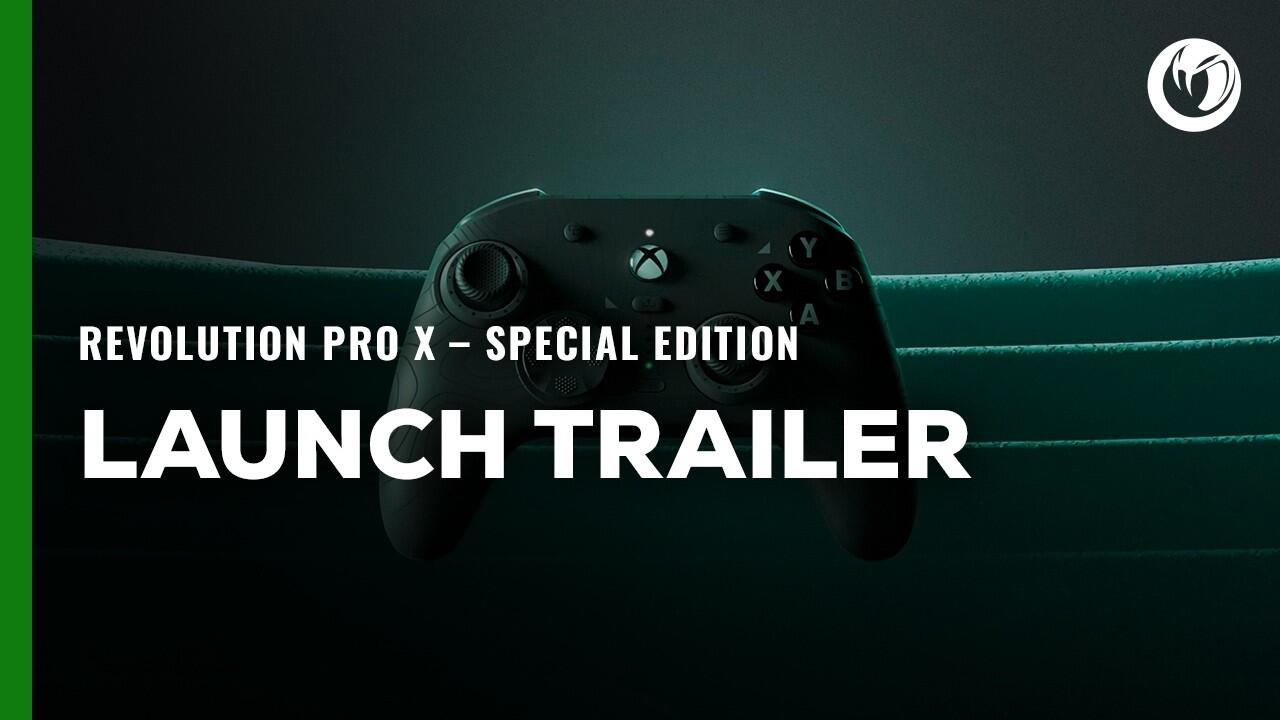
In the increasingly crowded market of premium gaming peripherals, manufacturers often struggle to differentiate their offerings beyond aesthetic RGB flourishes or superfluous digital displays. However, Nacon has taken a more mechanical, tactile approach with its latest release, the Revolution Pro X SE. By focusing on the fundamental physical sensation of gaming—specifically the resistance of the thumbsticks—Nacon is attempting to carve out a unique niche in the competitive controller landscape.
Priced at an aggressive €130, the Revolution Pro X SE arrives with an ambitious feature set that bridges the gap between mass-market gamepads and high-end, pro-tier hardware. But does this mechanical innovation justify the investment for the average gamer?
The Core Features: A Pro-Grade Foundation
At its heart, the Revolution Pro X SE is designed to meet the rigorous demands of the modern "pro-sumer" gamer. It arrives equipped with an industry-standard suite of features that have become synonymous with the upper-mid-range category.
Hall-Effect Precision
The inclusion of Hall-Effect joysticks is perhaps the most significant standard inclusion. By utilizing magnetic sensors rather than traditional potentiometers, these sticks are virtually immune to "stick drift," a common failure point in even the most expensive controllers. This ensures longevity and consistent performance over years of intensive use.
Tactical Input
Beyond the sticks, Nacon has focused on tactile feedback. The controller features micro-switches under the ABXY face buttons and the D-pad. Unlike traditional rubber membranes, these micro-switches offer a crisp, mechanical "click" that provides instantaneous confirmation of an input. The D-pad is further enhanced by an 8-way attachment, allowing for more precise diagonal inputs—a critical requirement for fighting game enthusiasts and platformer veterans.
Customization at Your Fingertips
The controller features two remappable paddle buttons on the underside, allowing players to keep their thumbs on the sticks while performing complex maneuvers. Furthermore, the modular nature of the thumbstick caps and the D-pad allows users to swap components to better suit their ergonomic preferences or specific gameplay styles.
The Differentiator: Mechanical Stick Resistance
The standout feature that separates the Revolution Pro X SE from the myriad of competitors is its adjustable thumbstick resistance.
In most high-end controllers, sensitivity is manipulated via software through "response curves"—essentially, how the controller translates the physical tilt of the stick into in-game movement. While effective, this is purely digital. Nacon has taken a physical approach. By rotating a control ring situated around each thumbstick, users can mechanically adjust the physical resistance of the stick itself.

This resistance can be tuned between 40 and 120 grams of force. This is a game-changer for players who prefer different tensions for different genres. A low-resistance setting (40g) might be ideal for twitch-based shooters like Apex Legends or Call of Duty, where rapid, snappy movements are required. Conversely, a higher resistance (120g) provides the granularity and steady tension required for precision aiming in sniper-heavy scenarios or for navigating vehicles in titles like Forza Horizon.
This physical adjustment allows for a level of tactile customization that software-only solutions simply cannot replicate, making the controller feel "custom-built" for the specific task at hand.
Ecosystem and Connectivity: Xbox-Licensed Versatility
While Nacon’s previous flagship, the Revolution 5 Unlimited, catered primarily to the PlayStation audience with its specific layout, the Revolution Pro X SE is designed for the Xbox ecosystem. Holding an official Xbox license, it is built to provide seamless integration with Xbox Series X|S, Xbox One, and PC.
Multi-Platform Flexibility
The controller isn’t limited to consoles. It is fully compatible with Windows PCs and even smart TVs, making it a versatile hub for gamers who bounce between different platforms. Connection is handled with stability in mind, and the device includes four integrated vibration motors—two in the grips and two in the triggers—to provide immersive, localized haptic feedback that differentiates subtle environmental effects like recoil or road surface changes.
Power and Software
Battery life is rated at approximately 10 hours of active playtime, which is bolstered by the included dedicated charging station. This ensures the controller is always ready to go and serves as a sleek aesthetic stand when not in use. For those who want to dive deep into the settings, Nacon provides a dedicated companion app for both Xbox and PC, allowing for fine-tuning of the trigger response (Instant Trigger mode) and button mapping.
Market Positioning and Economic Impact
The gaming peripheral market is currently bifurcated. At the lower end, budget brands like GameSir and 8BitDo are delivering exceptional value, often outperforming official hardware at a fraction of the price. At the high end, boutique controllers from companies like Scuf or Victrix charge upwards of €200–€300, often prioritizing premium materials and excessive customization.
Nacon’s decision to position the Revolution Pro X SE at €130 is a calculated strategic move. It is priced as a "premium-accessible" device. It is significantly more expensive than the budget kings—like the GameSir G7 Pro 8K—but it provides the physical, mechanical hardware that those budget options often lack.
By avoiding the inclusion of unnecessary "bloat" features—such as built-in OLED screens or complex wireless DACs—Nacon has kept the price point competitive while pouring the budget into the internal components that actually affect gameplay performance.
Implications for the Industry
The release of the Revolution Pro X SE highlights a growing trend: the commoditization of "pro" features. As consumers become more educated about Hall-Effect sensors and mechanical switches, the floor for what constitutes a "good" controller has risen.
The Shift Toward Mechanical Customization
If the Revolution Pro X SE succeeds, it may force other manufacturers to move away from software-based gimmicks and back toward mechanical innovation. The ability to physically adjust resistance is a feature that feels "next-gen," despite being a purely analog mechanical solution. It serves as a reminder that the interface between human and machine is most improved when it feels natural and responsive to the user’s specific physiology.
The Longevity Factor
In an era where "planned obsolescence" is a common criticism of tech hardware, Nacon’s emphasis on swappable sticks and high-durability sensors suggests a focus on product lifecycle. For the consumer, a €130 investment is easier to justify if the product is expected to last three to five years, rather than succumbing to drift within twelve months.
Final Thoughts
The Nacon Revolution Pro X SE is an intriguing proposition. It does not attempt to be the most expensive or the most flashy controller on the market. Instead, it aims to be the most functional. By providing a unique, mechanical way to tune the physical feel of the controller, Nacon has identified a genuine pain point for competitive players and provided a tactile solution.
As of late October, the controller is becoming available for order, and early indications suggest that it may become a favorite among competitive enthusiasts who want professional-grade equipment without the "luxury tax" associated with boutique brands. Whether this mechanical resistance feature becomes the new industry standard remains to be seen, but for now, it represents one of the most thoughtful design choices in the current controller market.
Note: This report contains information provided under NDA. There was no editorial influence or requirement for positive coverage from the manufacturer. All technical specifications are based on provided documentation and independent evaluation of the product’s feature set.