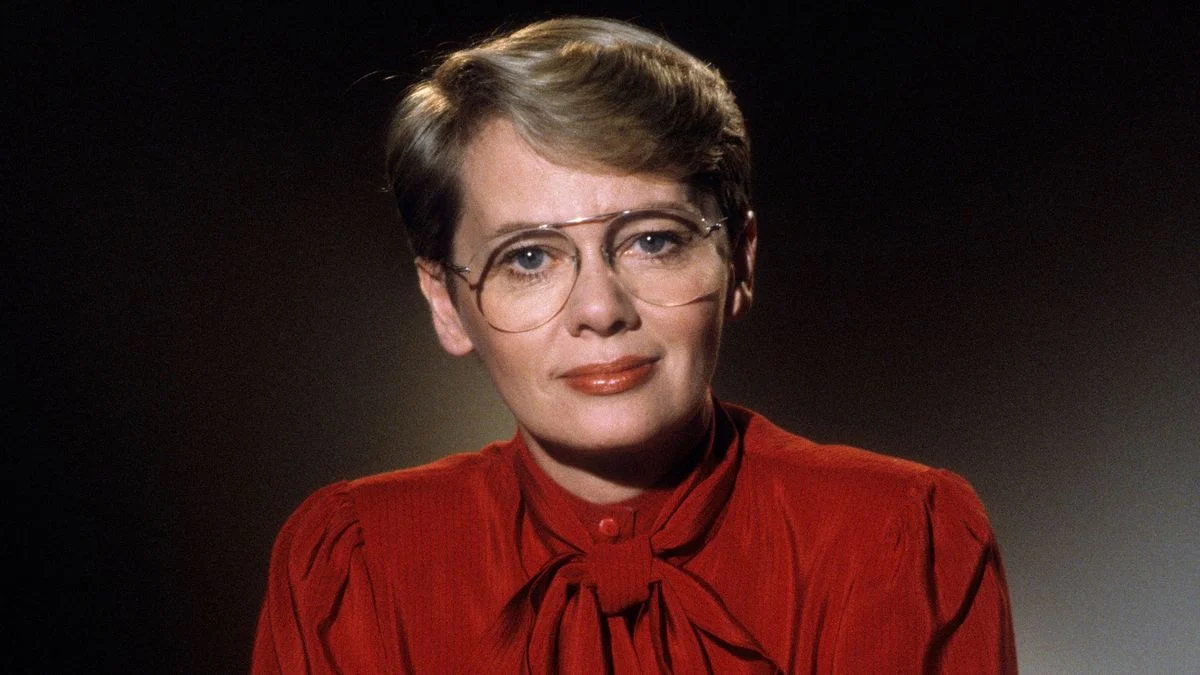
While history books often cite Walt Disney’s 1937 Snow White and the Seven Dwarfs as the dawn of the feature-length animation era, the true genesis of the genre lies in a garage in Potsdam, Germany, more than a decade earlier. It was here that Lotte Reiniger, a visionary silhouette artist, painstakingly crafted The Adventures of Prince Achmed (Die Abenteuer des Prinzen Achmed). Released in 1926, this 66-minute masterpiece remains the oldest surviving animated feature film, a testament to a level of technical innovation and artistic patience that arguably paved the way for the animation giants who followed.
The Genesis of a Masterpiece: Main Facts
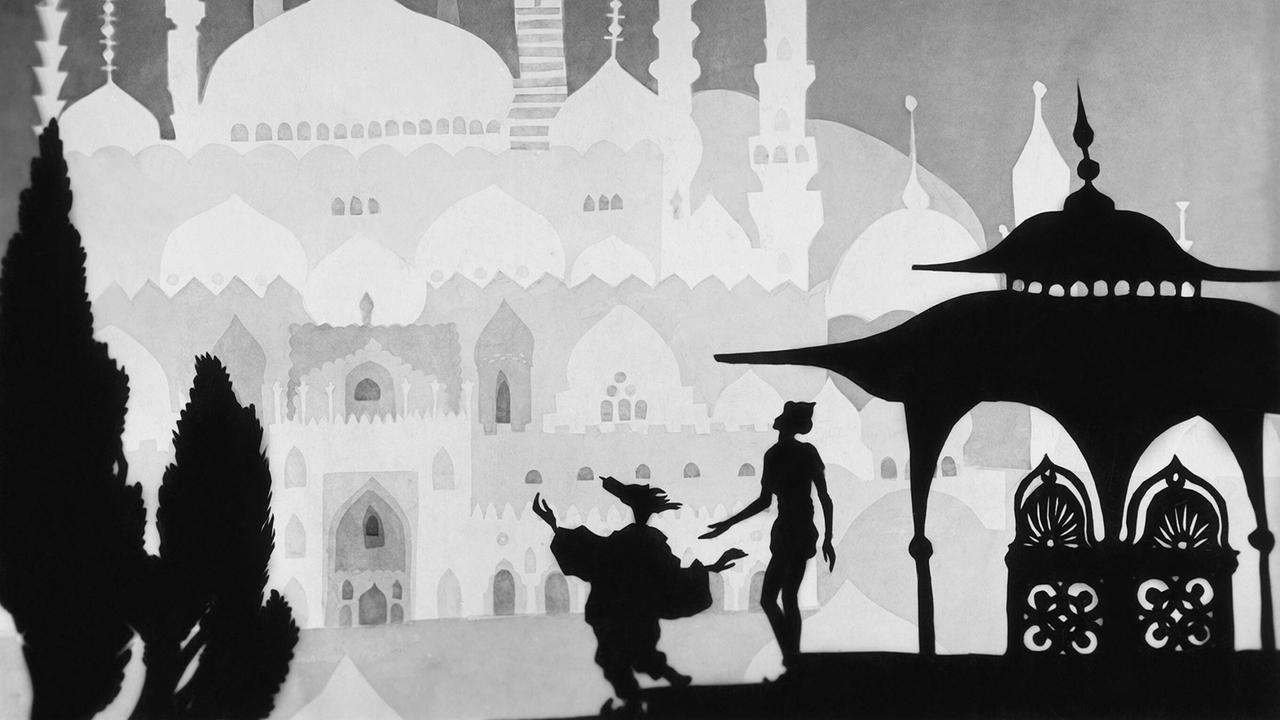
Lotte Reiniger’s The Adventures of Prince Achmed is not merely a curiosity; it is a landmark in the history of cinema. Utilizing the intricate art of the silhouette—a technique rooted in the traditional shadow-puppet theater—Reiniger created a fluid, dreamlike narrative that drew inspiration from the tales of 1001 Nights.
The film tells the story of a young prince who is tricked by an evil sorcerer into riding a magical flying horse, leading him on a perilous journey across enchanted lands. Along the way, he encounters Aladin, battles monsters, and seeks the hand of the beautiful Princess Pari Banu. What makes the film extraordinary is not just its story, but its production. Over three years, Reiniger and her team captured approximately 250,000 individual frames, 96,000 of which made it into the final edit. Every movement, from the flicker of a flame to the soaring flight of a horse, was cut by hand from cardboard and lead foil, then articulated on a custom-built, backlit glass table.
Chronology: From Theater Backstage to Animation Icon
The Formative Years (1910s)
Reiniger’s fascination with film began in childhood, but her entry into the industry was facilitated by the legendary silent film star and director Paul Wegener. Recognizing the young artist’s talent for capturing the essence of actors through paper-cutting, Wegener invited her to illustrate the intertitles for his films. Her first foray into animation occurred in 1919 for Wegener’s The Pied Piper of Hamelin, where she animated the exodus of the rats. This experience was the crucible in which her technique was refined.
The Berlin Laboratory (1920–1923)
By 1920, Reiniger was working at the Institute for Cultural Research in Berlin. It was here that she perfected the multi-plane technique. By stacking layers of glass, she was able to create a sense of depth that was revolutionary for the time. This innovation would later be famously adopted—and patented—by Walt Disney for his own animation studio. During this period, she met and married Carl Koch, who became her indispensable creative and technical partner, managing the cinematography and logistical challenges that would define her career.
The Production of Achmed (1923–1926)
The financing for Achmed arrived in the form of an unlikely patron: Louis Hagen, a Jewish banker who was captivated by Reiniger’s potential. Despite the crushing economic conditions of the Weimar Republic’s hyperinflation, Hagen provided the resources necessary to transform her vision into reality. The production moved to a makeshift studio above the garage of Hagen’s villa in Potsdam, where Reiniger, Koch, and a small, dedicated team labored for three years.
The Premiere and Aftermath (1926–Present)
The film debuted at a private press screening in Berlin’s Volksbühne on May 2, 1926, and received its official public premiere at the Gloria-Palast on September 3, 1926. While it received critical acclaim, the gargantuan effort required to produce a single feature-length film made it a solitary endeavor in Reiniger’s filmography. Following the rise of the Nazi party, Reiniger and Koch fled Germany, working in various countries before eventually finding their way back to prominence.
Supporting Data: The Craft of the Cut
The technical prowess required for The Adventures of Prince Achmed cannot be overstated. In an era before digital editing or sophisticated computer-aided design, Reiniger relied on:
- Multi-plane Camera Systems: The use of multiple glass plates allowed for foreground, mid-ground, and background layers to move independently, creating a parallax effect that simulated three-dimensional space.
- Frame-by-Frame Precision: Every movement required the physical adjustment of delicate cardboard silhouettes. If a figure needed to walk, Reiniger had to adjust the limbs in minute increments, snap a photo, and repeat the process 24 times for every second of film.
- The Aesthetic of "1001 Nights": Reiniger’s stylistic choices were deliberate. The sharp, clean lines of her silhouettes were perfectly suited for the intricate, geometric beauty of Islamic art, including the pointed arches and ornamental patterns that defined the film’s backdrop.
Official Responses and Curatorial Perspectives
The preservation of Reiniger’s legacy has largely been anchored by the Stadtmuseum Tübingen, which houses her extensive archive. Evamarie Blattner, a lead curator at the museum, emphasizes the timelessness of Reiniger’s work.
"How she managed to cut these figures with such great empathy and craftsmanship is a skill that she mastered like almost no one else," Blattner notes. "What I admire most is that people of all ages can watch these films today. They transcend cultural and linguistic boundaries, working just as effectively in Europe as they do in the Middle East, Asia, or the United States."
The industry has only recently begun to fully rectify the historical oversight of Reiniger’s contributions. In 2024, the International Animated Film Association posthumously honored Reiniger with an Annie Award—often referred to as the "Oscar of the animation world"—for her lifetime contribution to the art form. This, according to experts, is a long-overdue recognition of her status as the "mother of the animated feature."
Implications for Modern Animation
The implications of Reiniger’s work are profound for the modern industry. Her career illustrates that the core tenets of animation—patience, narrative rhythm, and visual language—remain constant, regardless of the medium.
- Technological Precedence: The multi-plane camera developed by Reiniger and Koch is now considered a foundational piece of cinema history. Its influence on the development of deep-space cinematography in cartoons is undeniable.
- Cultural Diplomacy: Reiniger’s ability to weave global folklore—specifically the Eastern traditions of 1001 Nights—into a medium that was, at the time, dominated by Western tropes, set a precedent for the globalized animation industry we see today.
- Preservation as Education: The renewed interest in her work, evidenced by a surge in requests from universities and museums in Australia, the US, and across Europe, highlights a shift in academic focus. Scholars are moving away from a "Disney-centric" view of film history, seeking instead to map the diverse, international roots of animation.
Conclusion: The Unbroken Spell
Lotte Reiniger died in 1981, but the "magic" of her silhouettes continues to captivate audiences. In an era defined by high-frequency computer-generated imagery, there is a renewed appreciation for the tactile, human-centric art of the silhouette.
In The Adventures of Prince Achmed, it is the power of Aladin’s lamp that resolves the conflict and secures the happy ending. Similarly, it is the light of the projector—and the dedication of modern archivists—that has rescued Reiniger’s work from the shadows of history. As we look back on the centennial of her work, we find that the "Achmed" project was not merely a historical milestone; it was a blueprint for the soul of animation. Reiniger did not just animate paper; she taught shadows how to live, ensuring that her light would continue to shine long after the last silhouette had been cut.