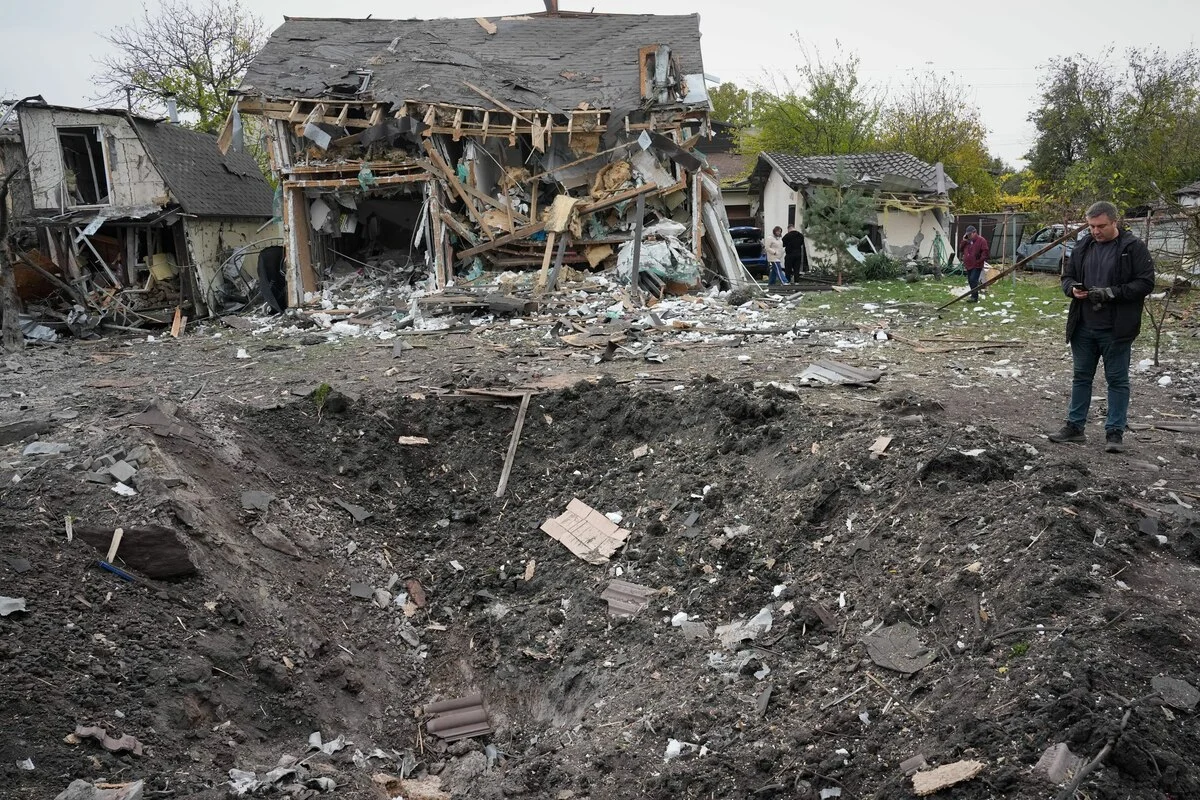
As diplomatic efforts to broker an end to the nearly five-year-long conflict in Ukraine intensify, the reality on the ground remains grim. The past 48 hours have been marked by some of the most intense cross-border aerial bombardments in recent weeks, leaving civilians dead and critical infrastructure in ruins. While US-led mediation attempts are underway, the battlefield continues to serve as a volatile backdrop, with both Kyiv and Moscow testing the other’s resolve through devastating strikes.
The Human Toll: A Night of Terror
Despite ongoing discussions regarding a potential ceasefire, the violence shows no signs of abating. According to Ukrainian officials, the latest wave of Russian aerial attacks claimed at least seven lives across the country.
In the northeast, the city of Sumy reported a fatality overnight. Simultaneously, authorities in Kharkiv confirmed the death of a woman, while three individuals perished in the Zaporizhzhia region and two others were killed in the Donetsk region. The capital, Kyiv, faced a massive barrage, with Mayor Vitali Klitschko reporting at least 15 injuries. The structural integrity of the city’s transit system has also been compromised, with significant damage reported to a crucial U-Bahn bridge spanning the Dnipro River.
The attacks were not limited to the Ukrainian heartland. Moscow’s defense apparatus reported the interception of 808 Ukrainian drones, a staggering figure that underscores the scale of modern aerial warfare. Mayor Sergei Sobyanin of Moscow confirmed that 163 drones targeted the Russian capital, resulting in two injuries. Further strikes were reported in Tula and the Lipetsk region, where local governors confirmed damage and injuries.
A Chronology of Escalation
The current surge in violence follows a series of high-level diplomatic maneuvers. US special envoy Steve Witkoff recently concluded "constructive" meetings with both Ukrainian President Volodymyr Zelenskyy in Oslo and Russian President Vladimir Putin in St. Petersburg.
- Tuesday: Envoy Steve Witkoff meets with President Zelenskyy to discuss proposals for ending the conflict.
- Wednesday: Witkoff travels to St. Petersburg to present these "ideas" to Vladimir Putin.
- Wednesday Evening: A massive wave of Russian ballistics strikes hits Kyiv. Air raid sirens sound across nearly the entire country by midnight.
- Thursday Morning: Reports emerge of damaged energy infrastructure in Kremenchuk, a strategic industrial hub housing one of Ukraine’s largest oil refineries.
The synchronization of these diplomatic talks with intensified bombardment suggests a "negotiation by fire" strategy, where both sides appear to be attempting to maximize their leverage before any formal peace framework can be solidified.
Official Responses and Political Rhetoric
The atmosphere in Kyiv is one of profound skepticism regarding the efficacy of appeasement. Ukrainian Foreign Minister Andrij Sybiha issued a sharp warning against any policy of "appeasement, submission, and flattery" toward Moscow. On social media, Sybiha emphasized that such concessions would not stop the war, but rather invite further aggression.
In Washington, President Donald Trump has faced mounting pressure regarding his decision to delay a new, comprehensive package of sanctions against Russia. Critics argue that the delay signals weakness, but Trump remains defiant. He characterized his critics as "people who don’t understand how life works," arguing that the suspension of sanctions was a tactical move that directly secured the release of Stephen Hubbard, a US citizen who had been imprisoned in Russia for over four years.
"If you had imposed these sanctions," Trump asserted, "you could have forgotten about him. He would have been in prison for another 25 years." The President also noted that the pause on sanctions is a necessary component of the "delicate negotiations" currently underway to finalize a peace deal.
Tactical Shifts: NATO, Starlink, and Infrastructure
Amidst the carnage, structural changes in military procurement are taking place. The Financial Times reported that NATO intends to allow Ukraine to purchase weapons, ammunition, and military equipment through the alliance’s central procurement agency, the NSPA. Jacqueline Borsboom, a director at the NSPA, noted that this arrangement provides Ukraine with a more structured framework, offering access to an established industrial base and technical support. This move is expected to streamline logistics and reduce costs for the embattled nation.
However, controversy continues to surround the role of private technology in the conflict. Reports regarding the intentional throttling of Starlink—the satellite internet service crucial to Ukrainian military operations—have sparked outrage among European lawmakers.
Marie-Agnes Strack-Zimmermann, chair of the European Parliament’s defense committee, expressed indignation at Elon Musk, accusing the billionaire of "playing God" with the lives of soldiers and civilians. "How sick and hardened must one be?" she questioned. Tobias Cremer, a defense spokesperson for the European SPD, echoed these sentiments, labeling the reliance on a single billionaire’s infrastructure a "wake-up call" for Europe to develop sovereign communication systems.
The "Freeze" Proposal: A Path to Peace?
The most significant shift in the diplomatic landscape involves President Zelenskyy’s recent comments regarding the frontlines. In an interview with Fox News, Zelenskyy indicated a willingness to accept the status quo to end the long-standing conflict.
"Yes, we must freeze the frontlines now," Zelenskyy stated, describing it as an "absolute minimum" requirement to stop the bloodshed. While this stance represents a significant pivot from his previous "all-or-nothing" rhetoric, it remains to be seen whether Moscow will accept a ceasefire that leaves nearly a quarter of Ukraine under Russian control.
President Trump, speaking in Washington, expressed unprecedented optimism. "Maybe we are closer than we have ever been," he said, suggesting that a trilateral meeting between teams from the US, Ukraine, and Russia is being organized "as soon as possible."
Implications for European Security
The current situation poses a severe challenge to European leadership. The German Green Party has urged Chancellor Friedrich Merz to exert greater influence on the US administration, specifically regarding the release of advanced defense missiles. The argument remains that every Russian missile that evades interception is a direct, preventable loss of life.
The geopolitical implications of a "frozen" conflict are profound. Should a deal be reached based on the current frontlines, the international community will be tasked with providing long-term security guarantees for Ukraine, a process fraught with diplomatic hurdles. Furthermore, the reliance on US-brokered negotiations and the potential for a sudden shift in American policy have highlighted the urgent need for a more autonomous European defense and communication architecture.
As the winter months approach, the combination of energy infrastructure attacks and the precarious nature of the peace talks creates a narrow window for resolution. The question remains: is the current cycle of violence a final, desperate act before a settlement, or the precursor to a much longer, more entrenched phase of the conflict? For the people of Ukraine, caught between the hope for a ceasefire and the reality of falling debris, the uncertainty is a daily burden.
The path to peace, while ostensibly "closer than ever," remains a treacherous tightrope walk, balanced precariously on the shifting dynamics of battlefield control, global economic sanctions, and the volatile whims of international power players.