By: Editorial Staff
October 6, 2026
In the hallways of the Theodor-Wuppermann-Schule in Leverkusen, a transformation is taking place. Where there are usually rows of desks and standard classroom posters, a vibrant, temporary installation has emerged. Flache wooden crates filled with artifacts, resting on a plush purple carpet, serve as a bridge between the sterile environment of a modern school and the rich, complex tapestry of Jewish life.
When museum educator Johannes Schwarz opens these crates, he isn’t just displaying historical artifacts; he is unfolding the "shrunken museum." Inside, students find a kippah, a weathered Stolperstein (stumbling stone), and, perhaps most surprisingly, packets of kosher gummy bears. This mobile initiative, known as "on.tour," is the Jewish Museum Berlin’s answer to the challenge of making history tangible, accessible, and deeply personal for a generation growing up in a rapidly changing, increasingly polarized landscape.
Main Facts: Bringing the Museum to the Youth
For over 15 years, the Jewish Museum Berlin has been taking its mission on the road. The "on.tour" program was conceptualized under the guidance of the museum’s founding director, W. Michael Blumenthal, who held a firm belief: every student in Germany should have the opportunity to engage with the Jewish experience at least once during their academic career. Recognizing that logistical and financial barriers prevent schools from across the country from visiting the physical site in Berlin, the museum decided to bring the museum to the students.
To date, the program has reached nearly 80,000 students across more than 600 schools. The model is intentionally non-traditional. By traveling to schools in cities like Bonn, Duisburg, and Leverkusen, the team bypasses the "field trip" fatigue and meets students on their own turf, creating a space where the barrier to entry is lowered and the conversation is elevated.
Chronology: A Decade and a Half of Outreach
The "on.tour" initiative did not emerge in a vacuum. It was born from a realization that static exhibitions, no matter how well-curated, were failing to reach a broader demographic of German youth.
- The Early Years (2010s): The program began as a pilot, testing how historical narratives could be translated into portable, interactive kits. The goal was to move away from lecturing and toward collaborative discovery.
- Expansion and Refinement (2015–2020): As the project gained momentum, the focus shifted from purely historical education to a broader exploration of identity, migration, and the lived experience of Jews in Germany today.
- The Post-2023 Landscape (2023–Present): Following the October 7, 2023, Hamas attack on Israel, the nature of the school visits shifted. The rise in antisemitic rhetoric and the increased polarization among youth necessitated a more robust, nuanced, and courageous approach to dialogue. Today, the program acts as a frontline defense against bigotry, addressing not only antisemitism but also Islamophobia, racism, and homophobia.
Supporting Data: The Current Climate of Antisemitism
The necessity of the "on.tour" program is underscored by alarming data. A recent study by the Bertelsmann Stiftung, "Germany and Israel Today (2025/26)," highlights a disturbing trend: the erosion of nuanced understanding among the youth.
According to the data, antisemitic sentiments have seen a measurable increase since 2021. Perhaps most concerning is the "transfer effect," where students conflate the policies of the State of Israel with the identity of Jewish individuals living in Germany. Among those under 40, 28 percent reported that they find "Jews increasingly unsympathetic" due to Israeli policies—a significant jump from 14 percent in 2021.
This data provides the backdrop for every workshop. The educators involved are not merely historians; they are trained mediators, including theater pedagogues and religious scholars, who are equipped to handle the "ice-cold" receptions that sometimes greet them in classrooms where misinformation and prejudice have taken root.
The Pedagogical Approach: From Gummy Bears to Identity
The "on.tour" workshops are three hours long and revolve around the concept of "haptic learning." Johannes Schwarz notes that they use items that allow for sensory connection: smells, tastes, and textures. "We have kosher gummy bears, which we supplement with halal bears—and vegan ones, too," says Schwarz. By comparing the dietary laws of Judaism and Islam, the educators find an immediate, relatable common ground that opens the door to deeper, more difficult discussions.
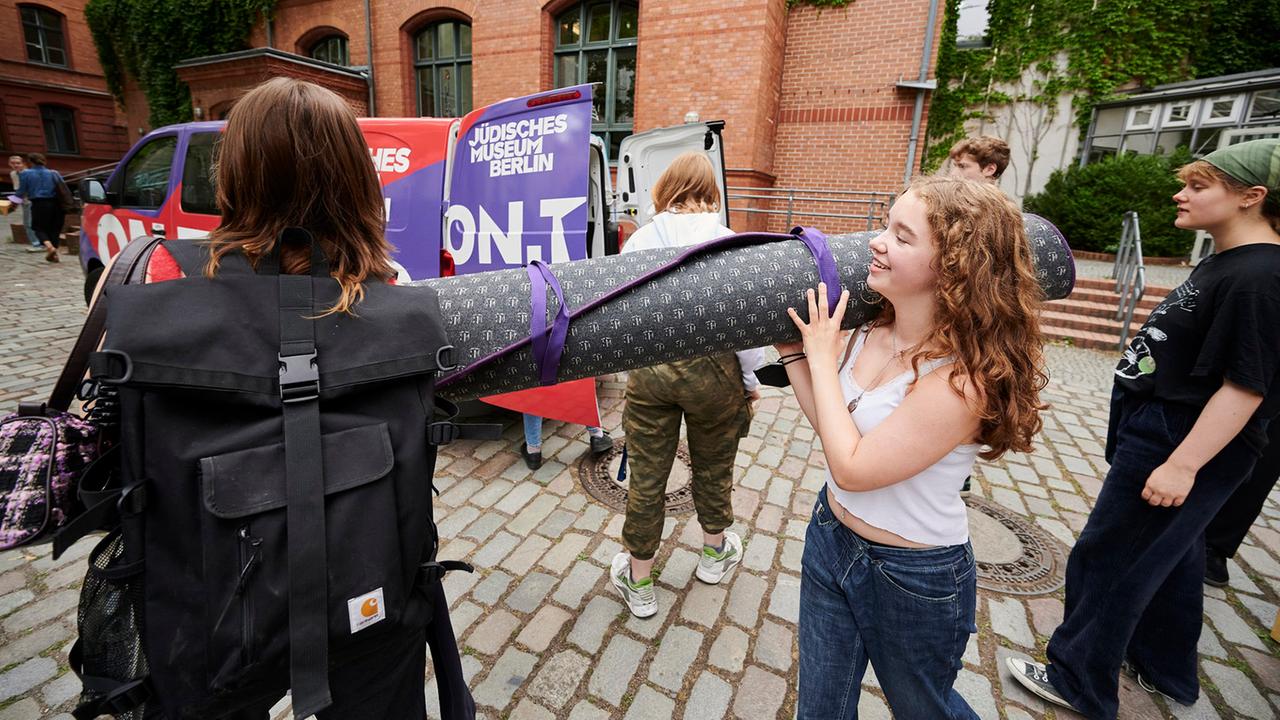
Crucially, the students are active participants, not passive observers. They are invited to bring objects from their own families that represent their heritage or history of migration. When a student like 12-year-old Shahad shares a pair of golden earrings passed down from her grandmother—items that were among the few things her family could carry during their flight from the war in Iraq—the museum becomes a space of shared human experience.
"These objects are the entry points," says Project Leader Sarah Hiron. "We don’t tell them what to think. We create an atmosphere where everyone is heard, and no one is judged for their questions."
Official Perspectives: The Institutional Mandate
Museum Director Hetty Berg has been vocal about the importance of these school visits, especially in the wake of recent election results and the ongoing geopolitical instability. For the Jewish Museum Berlin, "on.tour" is not a peripheral activity; it is a core component of its social responsibility.
"The goal is to demystify Jewish life," Berg explains. "When students realize that Jewish history is not just a chapter in a textbook or a series of tragic events, but a living, breathing culture that shares many of the same struggles as their own—migration, displacement, the search for home—the ‘othering’ begins to dissolve."
The program is designed to be a "brave space." Hiron emphasizes that facilitators often face direct, challenging questions: "Are you for Israel or for Palestine?" Rather than providing a political soundbite, the team uses these moments to model how to hold complex, contradictory, and deeply personal perspectives without resorting to hostility.
Implications: The Long-Term Impact
The impact of these visits extends far beyond the three-hour workshop. By embedding themselves in the school ecosystem, the "on.tour" team helps foster a culture of critical thinking. In a landscape where social media often amplifies binary, polarized viewpoints, the presence of the mobile museum offers a counter-narrative: one of nuance, historical literacy, and human empathy.
The success of the program is measured not just in numbers, but in the shifts in classroom dynamics. While there are instances where the team must labor hard to break through a wall of apathy or hostility, there are just as many instances where a breakthrough occurs—a moment of curiosity, a shared laugh over a snack, or a moment of empathy over a family story.
As the team prepares to depart Leverkusen, they leave behind more than just empty crates; they leave behind the seeds of a more informed and compassionate discourse. From October 19, the mobile museum will continue its journey, heading into Baden-Württemberg, bringing its unique blend of history, sensory engagement, and dialogue to the next set of classrooms.
In an era defined by division, the "on.tour" program serves as a reminder that the most effective tool against hate is not just the teaching of history, but the act of listening. By meeting students where they are—both physically and emotionally—the Jewish Museum Berlin is ensuring that the lessons of the past are not merely archived, but are actively helping to shape a more tolerant future.