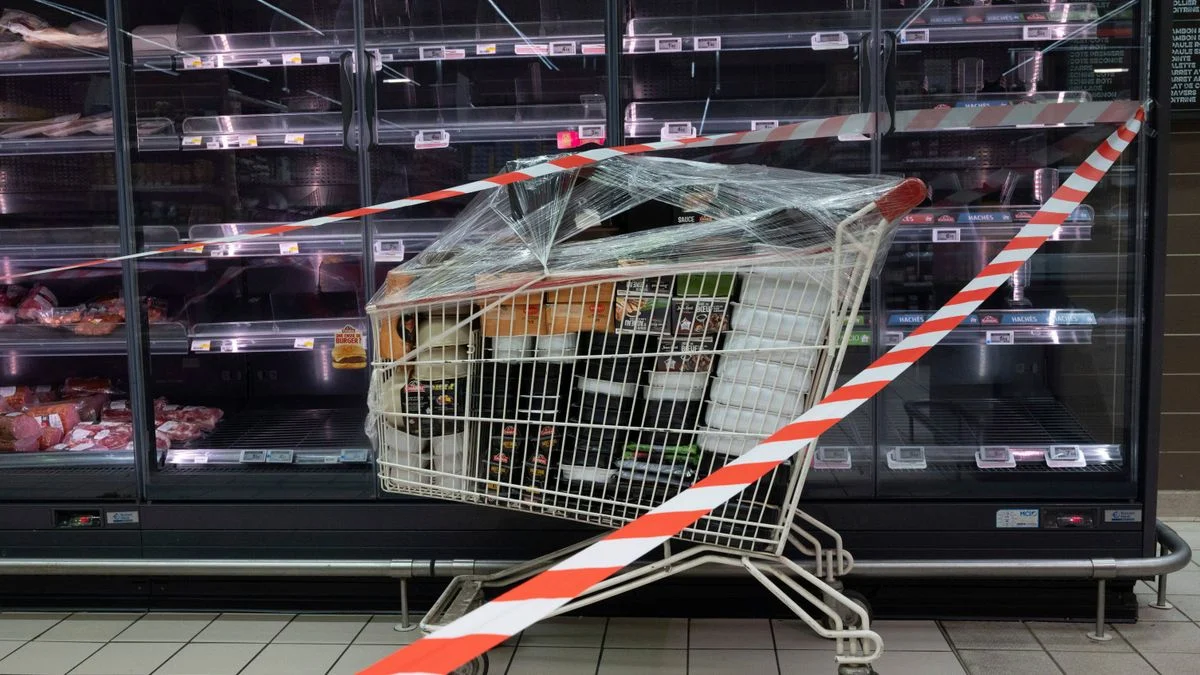
The recent, coordinated cyberattack targeting supermarket chains across France—an operation that saw hundreds of cooling systems remotely sabotaged—has sent shockwaves through the European retail and cybersecurity sectors. By infiltrating the digital control panels of refrigeration units and triggering mass defrosting cycles, hackers caused widespread spoilage of perishable goods and demonstrated a chilling new frontier in cyber-physical warfare.
The incident, which saw temperatures in refrigeration units spike to as high as 50 degrees Celsius (122 degrees Fahrenheit) in the dead of night, has prompted an urgent warning from the German Federal Office for Information Security (BSI). As investigators scramble to identify the perpetrators, the event is being viewed not merely as an act of criminal vandalism, but as a "wake-up call" regarding the fragility of the industrial Internet of Things (IoT).
The Anatomy of the Attack: A Digital "Defrost"
The scale of the disruption was significant. According to reports confirmed by French government officials, approximately 700 supermarkets across various retail chains were compromised over the course of a single weekend.
The attackers utilized sophisticated reconnaissance to identify vulnerabilities in the remote management systems of industrial cooling units manufactured by Danfoss and Copeland. These systems are designed to allow maintenance technicians to monitor temperatures, adjust settings, and perform diagnostics from off-site locations. However, the convenience of this connectivity proved to be a fatal flaw.
The hackers exploited a "backdoor" mechanism—originally intended for temporary technician access—by brute-forcing weak or factory-default passwords. Once inside, they gained administrative control over the cooling networks. In a calculated maneuver, the perpetrators initiated a global "defrost" function across hundreds of stores simultaneously. The resulting thermal spike not only rendered massive quantities of meat, dairy, and produce unsafe for consumption, but also triggered automated fire alarm systems in various locations, adding to the logistical chaos.
Chronology of a Systemic Failure
The timeline of the attack highlights the speed at which modern industrial infrastructure can be destabilized.
- Pre-Infiltration Phase: Security researchers had previously identified vulnerabilities in the Danfoss and Copeland systems. While manufacturers had released firmware updates, many retail operators failed to implement these patches, leaving their systems exposed.
- The Weekend Breach: Utilizing automated scripts, the attackers scanned the internet for exposed refrigeration controllers. By identifying devices that were directly connected to the web without adequate firewall protection, they bypassed basic security perimeters.
- The Sabotage: In the early hours of Monday morning, the malicious commands were executed. The cooling systems transitioned from preservation mode to high-heat mode.
- Discovery and Damage Control: As supermarket staff arrived for their morning shifts, they were met with flooded floors, spoiled inventory, and blaring alarms.
- Immediate Aftermath: Retailers were forced to discard vast amounts of stock. While French officials were quick to state that there were no acute food shortages, the economic impact and the logistics of restocking hundreds of stores presented a massive burden for the affected chains.
The Technological Root Cause: "Security by Obscurity"
At the heart of the crisis lies the issue of legacy industrial technology. Many of the compromised controllers were, according to manufacturer statements, outdated models.
"Danfoss has long advised its customers to keep supported systems up to date with the latest firmware and to operate them behind a firewall," the company stated in response to inquiries. Similarly, Copeland emphasized that the systems involved were largely legacy hardware that had reached the end of their intended security lifecycle.
The primary failure, however, was not just with the hardware, but with the implementation. Many supermarkets had neglected to place these sensitive industrial controllers behind a virtual private network (VPN) or a robust firewall. By leaving these ports exposed to the public internet, they essentially provided a "key under the mat" for any attacker with a basic understanding of network scanning tools.
Official Responses and the BSI Warning
The ripple effects of the French attack were felt immediately in Berlin. Claudia Plattner, the head of Germany’s Federal Office for Information Security (BSI), issued a stern public address following the incident.
"The events in France show clearly how cyberattacks can influence and disrupt our everyday lives," Plattner stated. She warned that the attack served as a blueprint for bad actors globally: "This attack could have happened to any country, and it can find imitators at any time."
The BSI has since doubled down on its recommendations for operators of critical infrastructure and large-scale commercial facilities. The agency’s guidelines are straightforward but often overlooked:
- Eliminate Direct Exposure: Steer all industrial control systems away from the public internet. If remote access is necessary, it must be gated by a secure, encrypted tunnel.
- Implement Multi-Factor Authentication (MFA): Passwords, even strong ones, are no longer sufficient for systems that control essential infrastructure. MFA must be mandatory for all remote logins.
- Patch Management: Security updates and firmware patches must be treated with the same urgency as emergency mechanical repairs.
While the German Federal Association of the German Food Retail Trade reported that no similar attacks have yet occurred on German soil, the industry is on high alert. The "uncomplicated" nature of these security fixes makes the failure to implement them increasingly difficult to defend from a regulatory standpoint.
A Broader Trend: The Vulnerability of Retail IT
While the French supermarket attack grabbed headlines, it is not an isolated incident. The Dutch retail giant Ahold Delhaize is currently grappling with a separate, high-profile IT disruption affecting its subsidiaries, including Albert Heijn in the Netherlands, Delhaize in Belgium, and several brands in the United States.
While authorities do not currently believe the Ahold Delhaize incident is directly linked to the French refrigeration sabotage, the timing highlights a growing trend: the retail sector is becoming a primary target for cyber-extortionists and state-sponsored disruption. In the case of Ahold Delhaize, customers were still able to enter stores to purchase goods, but the digital backbone—including loyalty programs, digital coupons, and inventory management systems—was rendered inoperable.
These incidents demonstrate that modern supermarkets are no longer just physical warehouses; they are complex, interconnected digital ecosystems. A single breach in an inventory management system or a heating/cooling controller can halt operations across an entire nation.
The Implications for Future Infrastructure
The French incident serves as a grim inflection point for the industry. It forces a conversation about the "Internet of Things" in a commercial context. When physical safety and the integrity of the food supply chain are at risk, "convenience" can no longer be the primary metric for system design.
1. The Cost of Negligence
Retailers are now facing a reality where cybersecurity is not an "IT expense" but a core operational cost. The cost of replacing thousands of tons of spoiled food, combined with the loss of consumer trust, far outweighs the cost of hiring cybersecurity consultants to secure refrigeration networks.
2. Supply Chain Security
Manufacturers like Danfoss and Copeland are likely to face increased pressure to ensure that their equipment is "secure by design." This may mean moving away from legacy protocols and forcing manufacturers to implement mandatory security features that cannot be disabled by a store manager looking to save time on configuration.
3. Regulatory Oversight
Given the potential for mass food waste and the disruption of basic services, governments are likely to treat retail infrastructure with the same level of scrutiny as energy or water grids. We may soon see mandatory cybersecurity audits for any business utilizing large-scale, internet-connected climate control systems.
Conclusion: A Wake-Up Call
The "defrosting" of French supermarkets was a tactical strike that achieved maximum disruption with minimal effort. It exposed the reality that our modern convenience-based economy is built upon a digital foundation that is often surprisingly brittle.
As Roland Lescure, the French Minister for Industry, aptly noted, the event is a "wake-up call for all." It is a reminder that in an era of hyper-connectivity, a password written on a sticky note or an unpatched firmware version in a warehouse basement can lead to national-level disruption. For retailers, the path forward is clear: integrate robust security into the physical core of the business, or risk becoming the next casualty of the digital war.