Russia’s Overture to Negotiations Met with Skepticism Amidst Shifting Geopolitical Tides
Byline: [Your Name/News Agency]
Date: October 21, 2026
[City, Country] – In a development that has captured international attention, Russia has signaled a willingness to resume negotiations with the United States and Ukraine concerning the protracted conflict. However, amidst the pronouncements from Moscow, a leading expert on Eastern Europe has voiced significant skepticism, suggesting that the current overtures may represent little more than strategic posturing rather than a genuine commitment to de-escalation and peace.
The assertion from the Kremlin, indicating readiness to engage in talks from mid-November, arrives at a critical juncture, with both global powers and regional actors grappling with the ongoing war and its far-reaching consequences. Yet, the historical context of such negotiations, coupled with the stated objectives of the involved parties, paints a complex and, for many, a deeply concerning picture.
The Shifting Sands of Diplomacy: Russia’s Latest Gambit
The announcement of Russia’s potential readiness to negotiate, first reported by tagesschau24 and subsequently amplified across international media, has been met with a mixture of cautious hope and profound doubt. For years, the specter of negotiation has loomed, often proving to be a fleeting prospect rather than a substantive pathway to resolution.
Andreas Umland, an esteemed expert on Eastern Europe and a senior analyst at the Stockholm Centre for Eastern European Studies, articulated this skepticism in a recent interview with tagesschau24. "Currently, there is not much to be made of this," Umland stated, referring to the repeated cycles of negotiation theater that have characterized the conflict since its escalation in 2014. He elaborated on the core of Russia’s consistent demand: "It’s always about what Russia can get in exchange for a ceasefire and for peace. That is, how much Ukrainian territory will be ceded, how much Ukrainian sovereignty will be relinquished." This fundamental transactional approach, Umland suggests, has remained a consistent impediment to genuine progress.
However, Umland did concede a potential, albeit conditional, shift in Moscow’s calculus. "What I can imagine, though, is that perhaps the internal pressure in Russia might increase due to Ukrainian long-range attacks, and that there might then actually be a faction in Moscow that will orient itself towards a ceasefire," he hypothesized. "Perhaps that will change if the economic problems that Russia is currently already experiencing intensify." Such a scenario, Umland believes, could lend greater substance to the prospect of meaningful negotiations. Until then, he anticipates "further negotiation theater."
Ukraine’s Stance: Freezing the Frontline as a Lingering Proposal
Adding another layer to the diplomatic landscape, Ukrainian President Volodymyr Zelenskyy has reiterated his country’s readiness to freeze the current frontline. This proposal, which Zelenskyy has put forth on multiple occasions since early 2025, represents a significant concession from Kyiv, signaling a desire to halt further bloodshed and territorial shifts.
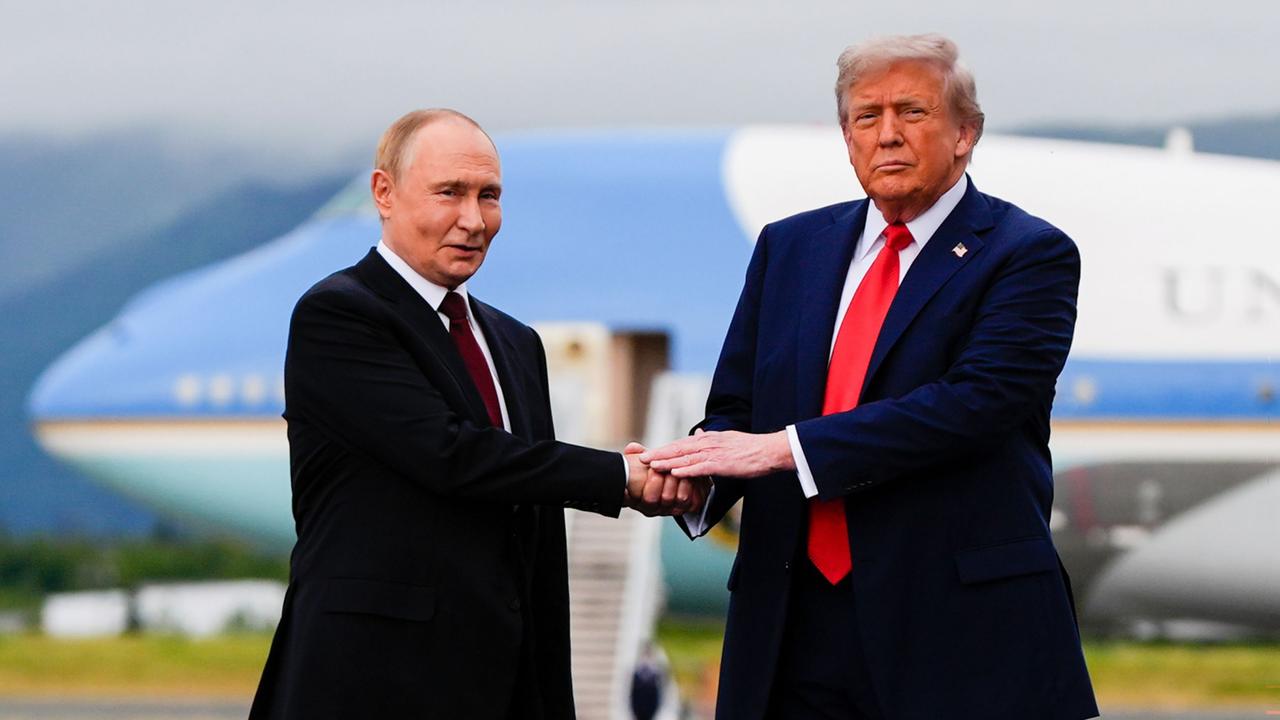
Yet, this long-standing Ukrainian proposal has, thus far, been met with Russian rejection. Umland explained the rationale behind this impasse: "Russia wants territory in return for a ceasefire. That’s how it always is." He invoked the historical perspective of military theorist Carl von Clausewitz, who, nearly two centuries ago, noted that "the conqueror does not want war; the conqueror merely wants to march peacefully into the neighboring country and take over the territories. The conqueror always wants peace." Umland draws a direct parallel to the current situation, asserting, "And that is how it is with Putin now as well."
The Specter of a "Second Yalta": Great Power Politics and the Fate of Eastern Europe
A deeply unsettling concern that looms over the current geopolitical climate is the possibility of a "second Yalta" – a scenario where major global powers unilaterally decide the fate of smaller nations, with little to no input from the affected parties. This historical echo, referencing the post-World War II conference where Allied leaders carved up spheres of influence, is a palpable fear for many in Eastern Europe.
Umland voiced this apprehension directly: "Yes, the fear is that we are heading towards a second Yalta, that is, a conference of the great powers where Eastern Europe is divided, and where the Eastern European nations have absolutely no say whatsoever." He believes this is precisely Putin’s objective: "to return to the Yalta system: that the great powers alone discuss what is to be done with the smaller states." This vision of a world order dictated by a select few, at the expense of national sovereignty and self-determination, represents a significant geopolitical risk.
Unpacking the US-Russia Dynamic: Electoral Calculations and Subtle Signals
Recent developments in the relationship between the United States and Russia have also fueled speculation about an evolving dynamic, potentially at Ukraine’s expense. The release of American teacher Stephen Hubbard, who had been imprisoned in Russia, and the reported shipment of Russian diesel fuel to the U.S. have been interpreted by some as signals of rapprochement.
Umland, however, downplayed the immediate significance of these events, framing them largely within the context of the American electoral cycle. "Ultimately, this is not that significant. It is primarily about the American election campaign," he stated. "Putin is now trying to support Trump with such positive signals." The detention of Hubbard, Umland pointed out, was itself a point of contention, raising questions about his prolonged incarceration.
Regarding the diesel shipments, Umland suggested Russia’s motive was to "break the sanctions regime." However, he cautioned against overstating their impact: "But the agreed delivery quantities are so small that they will actually have no effect on the diesel price in the USA. They create positive signals, but I don’t think anything will change materially. This is essentially a form of Russian support for the Republican campaign." This perspective suggests that, while these actions may generate headlines, their tangible impact on the broader geopolitical landscape remains limited, serving more as symbolic gestures for domestic political consumption in the U.S.
Europe’s Enduring Role: Navigating Pressure and Preserving Influence
In the face of shifting alliances and potential great power realignments, the question of Europe’s agency and its capacity to influence the course of events becomes paramount. With numerous European governments facing domestic political pressures and upcoming elections, the unified front that characterized the initial response to the invasion of Ukraine has faced significant challenges.
Umland acknowledged the formidable collective strength of European nations, noting that the coalition supporting Ukraine extends beyond the U.S. to include countries like Japan, Australia, and Canada. The critical question, he argued, lies in "the extent to which European countries develop a self-interest, at least in a partial Ukrainian victory – that is, in Ukraine not losing further territory – and in enforcing a ceasefire along the current front line."
This "self-interest" could manifest in several key areas. Firstly, preventing further refugee flows from Ukraine, which could number in the millions, is a significant humanitarian and logistical concern for Europe. Secondly, and perhaps more critically, Europe has a vested interest in averting a scenario where a Russian victory, even a partial one, emboldens Moscow to project its military power into other European nations. This is particularly pertinent for Baltic states, which are members of both NATO and the European Union. An attack on these nations would trigger treaty obligations, potentially drawing Europe into a direct conflict with Russia.
Therefore, Umland concluded, "If we have an interest in preventing refugees and the expansion of the war into a war against NATO and the EU, then there should actually be enough self-interest for European countries to at least support Ukraine in maintaining the current front line." This strategic imperative, he suggested, should be a powerful motivator for continued and robust European engagement.
The Implication of the U.S. Midterms: A Potential Rebalancing of Power
The upcoming U.S. midterm elections, scheduled in two weeks, are poised to significantly reshape the American political landscape. With current indications pointing towards a Republican defeat and a Democratic victory in at least one chamber of Congress, the implications for Europe, Ukraine, and the broader geopolitical configuration are substantial.
Umland expressed difficulty in providing a definitive assessment due to the unpredictable nature of domestic political shifts. However, he offered a general prognosis: "Tendentially, the Democrats are more pro-Ukrainian than the Republicans, and of course, much more pro-Ukrainian than the current U.S. administration."
He contrasted this with the current White House’s "pro-Russian position in many respects," citing instances of joint voting with Russia at the UN. Furthermore, he recalled that under the Trump administration, "material support for Ukraine was completely discontinued."
Consequently, Umland voiced a hope that a change in power, particularly in the House of Representatives and potentially the Senate, would lead to an improvement in U.S. policy towards Ukraine. However, he also cautioned that significant domestic political ramifications could ensue, potentially diverting American attention from global affairs, which would, in turn, be detrimental to Ukraine’s interests. This delicate balance between potential policy shifts and domestic distractions highlights the complex interplay of factors that will shape future U.S. engagement.
Conclusion: A Fragile Path Forward
The willingness expressed by Russia to re-engage in negotiations, while seemingly a step towards de-escalation, is fraught with historical precedent and strategic ambiguity. The skepticism voiced by experts like Andreas Umland underscores the deep-seated challenges that lie ahead. The proposals from Ukraine, the looming specter of great power politics, the intricate dance of U.S. domestic politics, and Europe’s own evolving self-interest all contribute to a complex and uncertain geopolitical landscape.
As the world watches, the coming months will likely reveal whether Russia’s overtures represent a genuine desire for peace or a tactical maneuver in a protracted and deeply entrenched conflict. The stakes, for Ukraine and for the broader international order, remain extraordinarily high. The path forward demands not only diplomatic engagement but also a clear-eyed understanding of the underlying motivations and the potential consequences of every step taken.