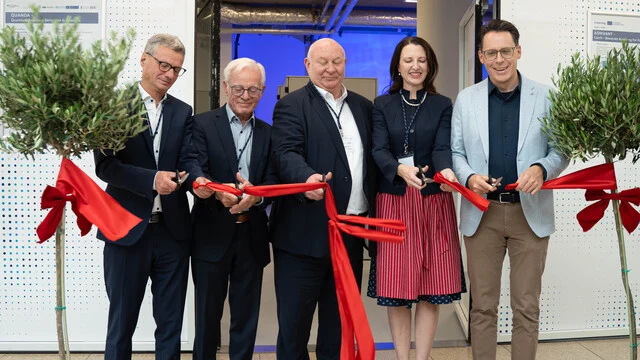
In an era defined by digital transformation, the demand for professionals capable of managing the backbone of the internet—the data center—has never been higher. Yet, a persistent gap remains between academic theory and the harsh, operational realities of the server room. Addressing this challenge, the Technical University of Deggendorf (THD) has officially inaugurated "ROBERT" (Rechenzentrum Ostbayern für Bildung und Entwicklung Resilienter Technologien), Europe’s first holistic training data center. This initiative marks a paradigm shift in how engineers, computer scientists, and facility managers are trained, moving away from fragmented, siloed learning toward an integrated, "living" operational environment.
The Core Concept: Seeing the Data Center as a Single Organism
Historically, university curricula have approached the data center as a collection of discrete subjects. Students study networking in one module, energy management in another, and server architecture in a third. Rarely, however, are these components synthesized in a live environment.
ROBERT changes this by providing a dedicated, industrial-grade facility where the data center is treated as a single, interdependent organism. From the physical infrastructure—cooling, power supply, and fire suppression—to the logical layers of virtualization, cloud orchestration, and AI-driven automation, students now have a space where they can experience the immediate consequences of their actions.
THD President Prof. Waldemar Berg identifies this as a critical intervention in the current educational landscape. "While components like storage or power supply are standard parts of our curriculum, the practical experience of operating a live, full-scale data center is a rare commodity for graduates," Berg noted. By allowing students to move beyond theoretical models and take actual responsibility for the operational lifecycle of a data center, the THD is ensuring that the next generation of professionals understands the "why" behind the "how."
Chronology and Development: From Vision to Reality
The inception of ROBERT was driven by the recognition that modern IT infrastructure is becoming increasingly complex. As organizations move toward hybrid cloud models, hyper-convergence, and edge computing, the personnel managing these systems need a broader skill set.
Phase 1: Conceptualization and Partnership
The project began as a collaborative effort between the THD and the Association of Innovative Data Centers (VIRZ). The vision was clear: to create a "Living Lab" that would serve as a bridge between the classroom and the industry. The planning phase focused on creating a space that was not just a computer lab, but a functional, mission-critical facility.
Phase 2: Infrastructure Construction
With 238 square meters of net space, the facility was partitioned into three distinct IT rooms, each equipped with a robust power supply of approximately 66 kW, totaling nearly 200 kW of potential connection capacity. This scale is sufficient to simulate enterprise-level demands. Construction was designed to accommodate modularity, allowing for the continuous swapping of hardware as industry standards evolve.
Phase 3: The Official Launch
The facility was officially opened in the presence of regional stakeholders, including Landrat Bernd Sibler and Deggendorf’s Mayor, Dr. Christian Moser. The event highlighted the strategic importance of the project, not only for the university but for the digital resilience of the East Bavarian region.
Supporting Data and Technical Specifications
To understand the scale and ambition of ROBERT, one must look at the technical configuration designed to support interdisciplinary learning:
- Spatial Allocation: The facility spans 238 m², divided into three primary IT zones (113.30 m², 67.84 m², and 57.21 m²).
- Power Density: A total capacity of 200 kW allows for high-density compute clusters, enabling students to work with modern high-performance computing (HPC) hardware.
- Living Lab Philosophy: The facility is designed to be "never finished." By design, the infrastructure will be upgraded every few years, ensuring that each student cohort interacts with state-of-the-art equipment rather than legacy systems.
- Interdisciplinary Reach: While managed by the Faculty of Applied Informatics, the facility serves students in electrical engineering, building services, and civil engineering—reflecting the multi-faceted nature of modern data center management.
Official Perspectives: Aligning Academia and Industry
The launch featured strong endorsements from both the academic and industrial sectors, underscoring the collaborative nature of the facility.

The Industrial View
VIRZ board member Hartwig Bazzanella emphasized the urgent need for "T-shaped" professionals—individuals who have deep expertise in one area but a broad understanding of the entire ecosystem. "We need people who understand how cooling systems impact server stability and how power distribution affects network latency," Bazzanella stated. For the industrial partners involved, such as Rittal, Siemens, Intel, and synaforce, ROBERT serves as a pipeline for talent that is already familiar with industrial-grade equipment.
The Pedagogical Vision
Prof. Dr. Andreas Berl, Dean of the Faculty of Applied Informatics, highlighted that ROBERT is designed to be a catalyst for research. "We are creating a nexus where students, scientists, and industry partners meet to solve real-world problems," he explained. The facility is not just for teaching; it is a sandbox for innovation where new AI-driven energy management algorithms or predictive maintenance software can be tested in a controlled but realistic environment.
Prof. Dr. Helena Liebelt, who heads the ROBERT initiative, stressed the importance of the proximity between theory and practice. By placing a lecture hall and a workshop directly adjacent to the server rooms, the university ensures that a concept discussed in the morning can be verified or troubleshot in the afternoon.
Implications for the Future of Technical Education
The establishment of ROBERT has profound implications for how universities approach technical training in the 21st century.
1. Closing the "Experience Gap"
Employers frequently complain that graduates are theoretically sound but practically unprepared for the complexities of production environments. ROBERT mitigates this by providing a "sandbox" that is indistinguishable from a professional environment. Students learn to handle outages, manage thermal loads, and optimize energy efficiency under the guidance of mentors.
2. Promoting Green IT and Efficiency
Sustainability is a pillar of the ROBERT curriculum. With energy costs and environmental impact becoming central concerns for data center operators, the facility allows students to experiment with cooling efficiency and AI-optimized power distribution. By learning to operate "Green IT" infrastructure, graduates will be better equipped to meet the ESG (Environmental, Social, and Governance) goals of their future employers.
3. A Model for Industry-Academic Symbiosis
The funding model of ROBERT—where the university provides the space and academic oversight, while the industry provides the hardware—offers a blueprint for other institutions. This mutually beneficial arrangement ensures the university remains at the cutting edge without needing to constantly reallocate massive capital budgets, while the industry gains a steady supply of well-trained, job-ready professionals.
4. Continuous Evolution
Perhaps the most significant aspect of ROBERT is its refusal to be static. By adopting the "Living Lab" approach, the THD is acknowledging that the pace of technological change in IT infrastructure is accelerating. The facility is expected to evolve alongside the industry, ensuring that the skills taught in 2024 remain relevant as we move toward the quantum and AI-integrated computing environments of the future.
Conclusion
The inauguration of ROBERT is more than just a ribbon-cutting ceremony for a new building; it is a definitive statement on the future of engineering education. By treating the data center as a complex, living system that requires an integrated understanding of power, hardware, software, and logic, the Technical University of Deggendorf is setting a new standard.
As these students enter the workforce, they will carry with them not just degrees, but the hard-won experience of having managed one of Europe’s most sophisticated training facilities. In doing so, they will be the architects of the next generation of resilient, efficient, and sustainable digital infrastructure. For industry partners and academia alike, ROBERT serves as a lighthouse project, proving that when the two sectors converge on a shared goal, the result is a significant leap forward in technological competence.