In a decision that celebrates the boundaries of genre-defying artistry, the Swedish Academy has awarded the 2026 Nobel Prize in Literature to the Canadian poet, essayist, and classicist Anne Carson. The announcement, delivered in Stockholm, marks the recognition of a writer whose career has fundamentally reshaped the landscape of contemporary literature through a daring fusion of ancient wisdom and modern experimentalism.
The Announcement: A Moment of Poetic Serendipity
The atmosphere in Stockholm was one of quiet gravity, a sharp contrast to the reaction of the laureate herself. Ingrid Carlberg, the permanent secretary of the Swedish Academy, revealed that the notification call reached Carson while she was in Iceland.
"She was out, listening to the wind," Carlberg recounted, noting that the 76-year-old author was visibly moved and profoundly surprised by the news. This image—of a writer who finds inspiration in the elemental forces of nature—resonates deeply with the core of Carson’s body of work. For decades, Carson has been a perennial favorite in literary circles, her name appearing annually on betting lists, yet her win remains a victory for the "poet’s poet," a recognition of a singular voice that prioritizes intellectual rigor and emotional depth over commercial trends.
The Academy’s citation lauded Carson for her "bold and imaginative body of work, characterized by playful dialogues rooted in classical tradition, which have forged entirely new forms for contemporary literature."
Who is Anne Carson? A Life of Intellectual Synthesis
Born in Toronto in 1950, Anne Carson is not merely a writer; she is a scholar whose life’s work bridges the gap between the ivory tower of academia and the visceral experience of the human condition. A professor of classical philology by trade, she has held teaching positions at prestigious institutions across Canada and the United States, an experience that informs every page of her writing.
Her brilliance lies in her refusal to be categorized. Is she a poet? An essayist? A translator? A dramatist? Carson is all of these, often simultaneously. She treats literature as a laboratory, mixing the structural precision of Greek tragedy with the fragmented, diaristic impulses of 21st-century memoir.
Defining Works
Her literary career has been punctuated by milestones that have altered the trajectory of modern poetry:
- Autobiography of Red (1998): Perhaps her most celebrated work, this "novel in verse" reimagines the Greek myth of Geryon. By transposing an ancient monster into a modern setting, Carson explores themes of isolation, queer identity, and the nature of monstrosity with startling empathy.
- Nox (2010): A poignant, experimental "book-in-a-box" that serves as an elegy for her brother. Nox is a testament to the limitations of language, utilizing photographs, dictionary entries, and fragmented memories to grapple with the impossibility of fully capturing a lost life.
- The Beauty of the Husband (2001): An "essay in 29 tangos," this collection examines the collapse of a marriage, demonstrating Carson’s ability to imbue the ancient form of the dialogue with the painful intimacy of modern heartbreak.
Bridging Antiquity and the Digital Age
What makes Carson’s work so vital today is its uncanny ability to make the past speak to the present. She does not merely translate the classics; she invites them to sit at the table of contemporary discourse.
In her writing, characters such as Socrates, Antigone, or the rhetorician Longinus are not kept behind glass in a museum. Instead, they are placed under the harsh, clinical glare of modern spotlights. She explores how these figures would navigate modern loneliness, fame, or technological mediation. By placing a 2,000-year-old philosopher in conversation with a 20th-century film director like Michelangelo Antonioni, she suggests that the human struggle—to love, to understand, and to articulate existence—remains static across time.
The Swedish Academy’s Rationale: Redefining Form
The decision to honor Carson signals a shift in the Nobel committee’s priorities, moving toward authors who challenge the very definition of a "book." Her work is often visual, spatial, and multi-media. She forces the reader to participate in the act of creation, demanding that they navigate her pages as they would a map or a gallery.
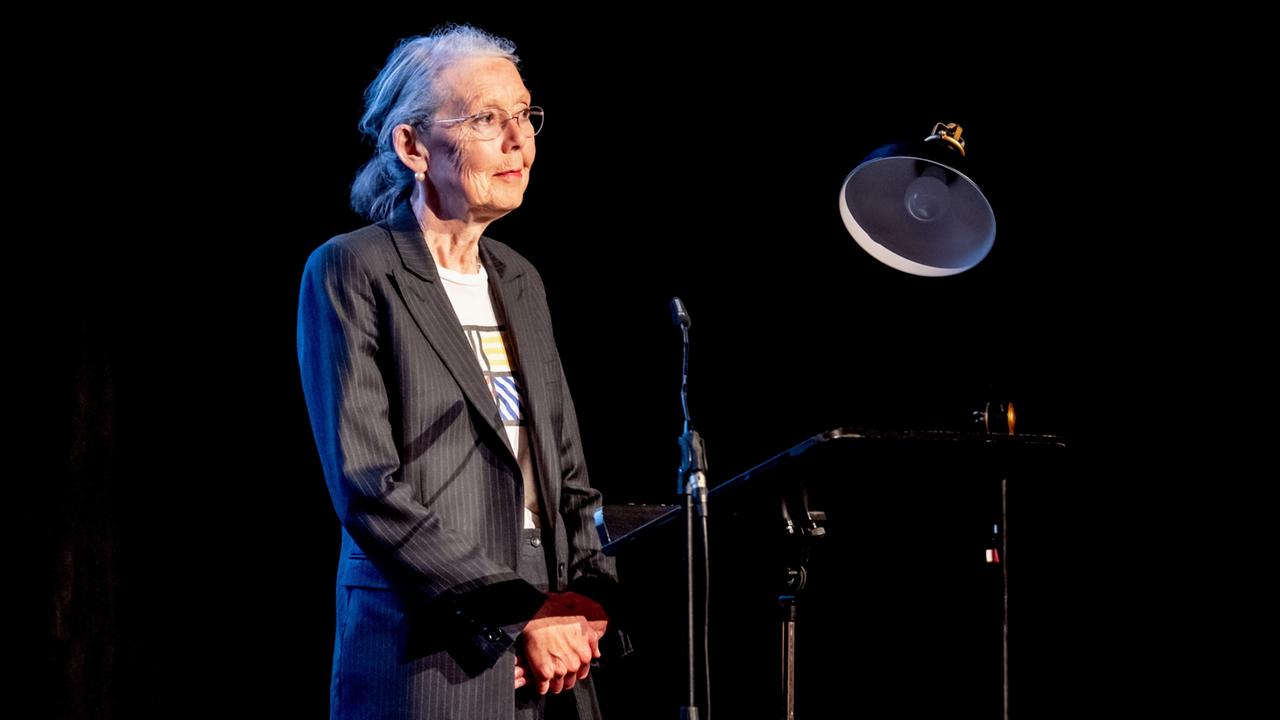
The Academy noted that her work has "breathed new life into ancient forms." In a world increasingly dominated by short-form digital content, Carson’s insistence on the "long-form" experiment—the deeply researched, deeply felt, and deeply structured inquiry—serves as a necessary corrective. Her legacy is one of intellectual freedom; she has proven that a writer can be a classicist, a radical, and a mystic all at once.
The Nobel Prize: Context and Prestige
The Nobel Prize in Literature is widely regarded as the pinnacle of global literary achievement. Since its inception in 1901, it has served as a barometer for the world’s intellectual climate. The process of selection remains notoriously opaque, with nominations shrouded in a 50-year veil of secrecy, ensuring that the focus remains on the merit of the work rather than the politics of the nomination process.
With the prize comes a purse of 12 million Swedish Krona (approximately 1.06 million Euros). While the financial reward is significant, the true value lies in the platform it provides. The laureate is expected to deliver a lecture in Stockholm on December 10th, an event that traditionally sets the tone for literary discourse in the coming year.
A Wider View: The 2026 Nobel Week
The announcement of Anne Carson as the Literature laureate follows a week of intense global attention on the Nobel committees. Earlier in the week, the scientific community celebrated breakthroughs in medicine, physics, and chemistry.
Notably, the medical prize was awarded to a trio of researchers, including German scientists Peter Hegemann and Georg Nagel, for their pioneering work in optogenetics. This highlights a broader trend in the 2026 awards: the recognition of work that bridges disparate fields—whether it is the fusion of art and history in Carson’s writing or the fusion of biology and light-based engineering in the scientific categories.
As the world turns its eyes toward the final announcement—the Nobel Peace Prize—the selection of Anne Carson serves as a reminder of the power of art to facilitate peace. By fostering empathy through the exploration of the "other" and the "ancient," Carson’s work invites a form of global reflection that is as necessary today as it has ever been.
Implications for Future Generations
What does it mean for literature that Anne Carson has been honored? It signals that the "experiment" is no longer on the fringes of the literary world. It is the center.
For young writers, Carson’s win is a validation of the "hybrid" approach. She has demonstrated that one does not need to choose between being a scholar and a poet, or between being a translator and an original voice. Her success encourages a new generation of writers to look beyond the standard novelistic structure and find the form that best fits the truth they are trying to tell.
As the literary world begins to dissect her influence, one thing is clear: Anne Carson has changed the map of literature. She has proven that to look backward at the ancients is, in fact, the most effective way to look forward into the future. Her work will continue to challenge, frustrate, and ultimately reward readers for decades to come, ensuring that the "wind" she was listening to in Iceland will continue to echo through the halls of literature for generations.
With reporting by Jan Ehlert, ARD Kultur.