After 14 years of construction chaos, soaring costs, and national ridicule, the Cologne Opera finally reopens its doors at the Offenbachplatz. As the curtain rises on Richard Strauss’s Der Rosenkavalier, the city faces a defining question: Can a project synonymous with fiscal mismanagement truly transform into a "stage for all"?
A Monument to Ambition and Excess
When architect Wilhelm Riphahn first conceptualized the Cologne Opera in the post-war era, his vision was rooted in democratic idealism. He famously remarked, "I am not building an opera house, but a house for everyone." His vision was of a cultural sanctuary—an architectural heartbeat for a city rebuilding its identity.
Fast forward 50 years, and that same structure became the epicenter of one of Germany’s most notorious municipal catastrophes. What began as a necessary modernization project in 2012 spiraled into a 14-year odyssey of technical failures, political infighting, and financial hemorrhage. On September 27, 2026, the city finally marks the official reopening of the Offenbachplatz ensemble. However, the celebration is tempered by the staggering legacy of the construction period: a total financial burden estimated at 1.5 billion euros.
Chronology of a Construction Crisis
To understand the skepticism surrounding the reopening, one must look at the timeline of the "Cologne Debacle."
- 2010: The citizens’ initiative Köln kann auch anders (Cologne can do otherwise) collects over 50,000 signatures to save the listed ensemble of the Opera and Playhouse, successfully preventing the city’s plan for partial demolition and new construction.
- 2012: The comprehensive renovation project officially begins. Initial projections are optimistic, with costs estimated in the hundreds of millions.
- 2015–2018: The project hits a wall—literally and figuratively. Discovery of massive asbestos contamination, failed fire safety systems, and the collapse of the primary contractor create a perfect storm. The "Cologne Opera" becomes a synonym for administrative incompetence in national headlines.
- 2020–2024: Constant delays push the completion date further into the future. The city relies on interim venues, incurring massive rental and operational costs.
- 2026: The project is declared complete. The final accounting places pure construction costs at approximately 800 million euros. When combined with the costs of interim venues and accrued interest, the figure reaches 1.5 billion euros.
Financial Realities and Opportunity Costs
The 1.5 billion euro price tag is more than just a number; it represents a significant opportunity cost for the city of Cologne. Critics, including Bärbel Hildebrand of the Taxpayers’ Association of North Rhine-Westphalia (Bund der Steuerzahler NRW), have been vocal about the damage done.
"These cultural funds could have been poured into museum projects, dance initiatives, or the support of the independent arts scene," Hildebrand notes. The debate is not merely about the money spent, but about what the city had to sacrifice in other cultural sectors to keep the opera project on life support.
While comparisons to Hamburg’s Elbphilharmonie are inevitable, they are fundamentally different. The Elbphilharmonie, despite its own budget overruns, became a global architectural icon and a magnet for international tourism. The Cologne Opera, characterized by a more understated, modernist aesthetic, is unlikely to serve as a similar "landmark." Its value must be proven through its utility and its connection to the local populace rather than its silhouette on the skyline.
The Mandate for Change: A "Stage for All"
Cologne’s Mayor, Torsten Burmester, acknowledges the "planning failure" with blunt honesty. However, his focus has shifted toward the future. In a recent interview, he emphasized that the city’s investment must now pay off in social currency.
"It must be an opera, a playhouse, a children’s theater, and a small stage that is truly there for the people of Cologne—not just for a small circle of subscribers," Burmester stated.
This ambition is being tested immediately. The reopening weekend at Offenbachplatz is not a stuffy gala but a public festival, culminating in a performance by the popular local band Kasalla. It is a symbolic attempt to bridge the gap between the high-brow institution and the everyday citizen. But the challenge remains: How do you invite the public into a space that has been associated with elitism and fiscal waste for over a decade?
Artistic Direction in a Post-Crisis Era
Since 2022, Dutchman Hein Mulders has served as the Intendant of the Cologne Opera. He brings a pragmatic yet visionary approach to the theater. Mulders is tasked with the difficult job of balancing international prestige with local accessibility.
"I stand for premieres. We will have at least one every year. Contemporary music is essential because opera must be a living art form," Mulders says. His programming for the current season includes not only the standard repertoire like Der Rosenkavalier but also Jacques Offenbach’s The Tales of Hoffmann—a production that has already garnered critical acclaim at the Bregenz Festival.
Mulders rejects the idea that "accessible" means "dumbing down." Instead, he speaks of "Great Opera for a Great Audience." He aims to position Cologne as a player in the international league, capable of hosting high-level co-productions that were impossible in the interim venues.
Meanwhile, at the adjacent Playhouse, Intendant Kay Voges is taking a more experimental route, seeking to bridge the gap between theater and journalism. By utilizing EU-funded programs to create discourse-heavy, relevant programming, the institution hopes to attract younger demographics who have historically stayed away from the theater.
Can the Stigma Be Overcome?
The central challenge is demographic. A 2018 survey revealed that only one in five Cologne residents visited the opera at least once a year, while two-thirds had never stepped foot in the building. The grand reopening is a necessary, but perhaps insufficient, step in changing these statistics.
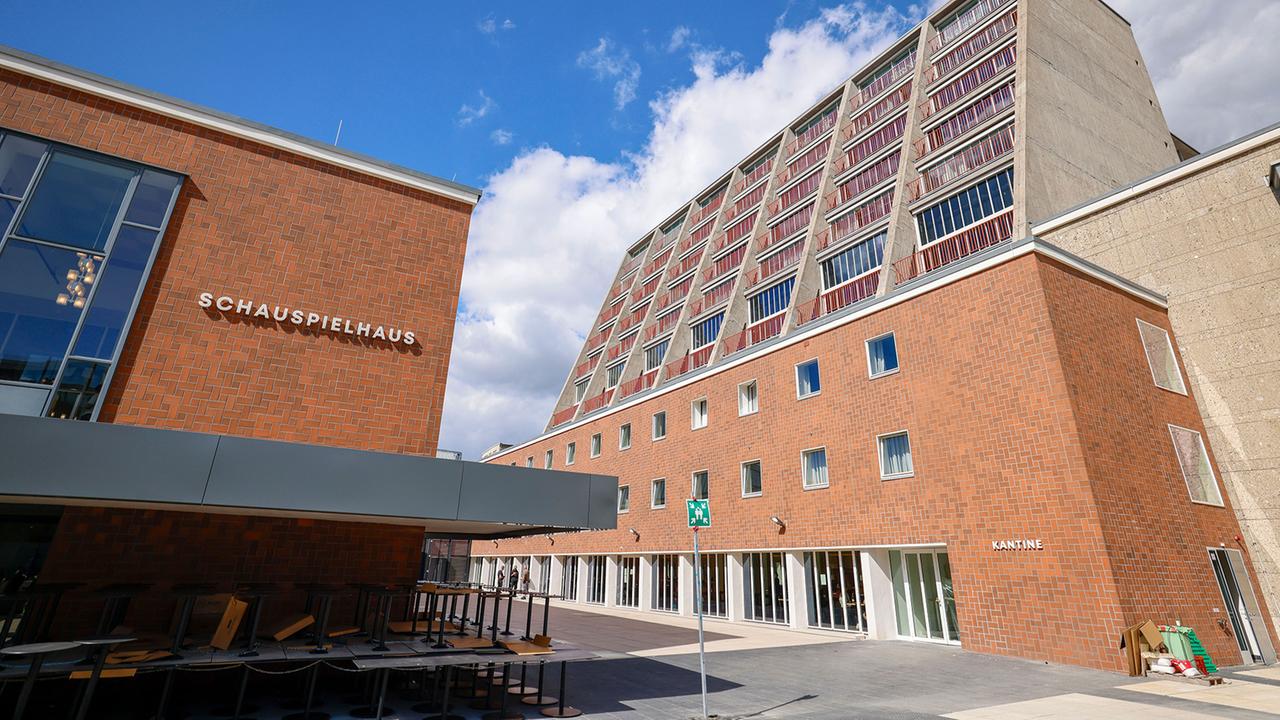
The architecture itself may play a role. City Conservator Thomas Werner remains optimistic that, over time, the discourse will shift from the financial disaster to the quality of the space. "It is a beautifully composed structure, a design of the highest quality—people will eventually come to appreciate it for its architectural integrity," Werner argues.
Yet, the social reality is that the foyer’s open doors and the high-quality acoustics inside the hall will only matter if the city can convince the "uninitiated" to walk through those doors.
Conclusion: A New Chapter or a Lingering Shadow?
As the citizens of Cologne celebrate the reopening, they are essentially walking through the ruins of a decade-long scandal. The 1.5 billion euro price tag will continue to be a talking point for years, a reminder of the perils of poor oversight and political hubris.
However, the opening of the Offenbachplatz represents a pivot point. If the opera can successfully integrate itself into the social fabric of the city—by hosting community events, keeping prices accessible, and producing art that feels vital rather than archaic—the "billion-euro disaster" might eventually fade into a footnote.
If it fails to do so, it will remain a hollow monument to a bygone era of municipal overreach. For now, the lights are on, the stage is set, and the city waits to see if the Cologne Opera can truly become the "house for everyone" that Wilhelm Riphahn envisioned over half a century ago. The burden of proof now rests with the artists, the administrators, and, most importantly, the people of Cologne themselves.