Escalating Tensions in the Black Sea: Merchant Vessel Engulfed in Flames After Apparent Drone Strike Off Romanian Coast
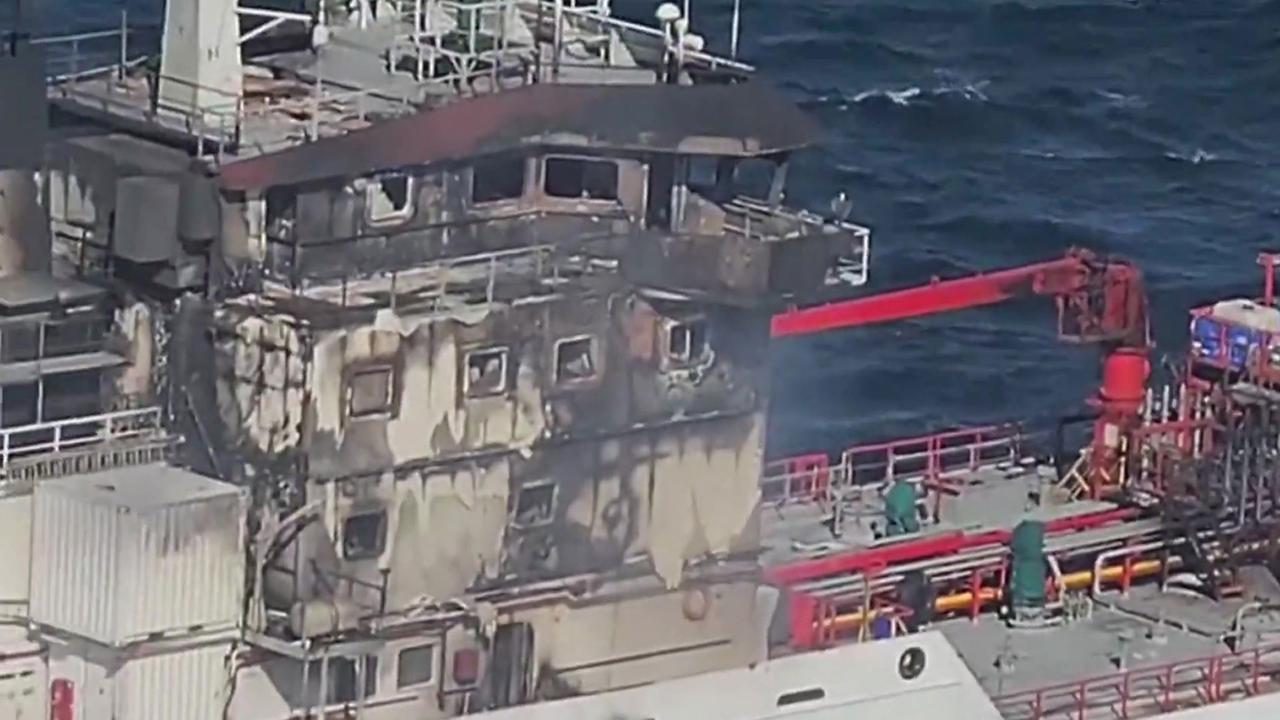
Bucharest, Romania – October 15, 2026 – The Black Sea, already a volatile theatre of conflict and strategic importance, has once again become the scene of a dangerous maritime incident. Early this morning, a merchant vessel carrying chemical substances erupted in flames after reportedly being struck by drones within Romanian territorial waters. The attack has resulted in the disappearance of several crew members, raising grave concerns about the safety of international shipping lanes and escalating regional security anxieties.
The incident, which occurred approximately 24 kilometers off the coast of Sulina, a strategic port city at the mouth of the Danube River, underscores the growing risks faced by commercial vessels operating in the vicinity of the ongoing conflict in Ukraine. Romanian President Nicusor Dan confirmed the attack, attributing it to drones, during a European Union summit in Brussels, describing the event as a direct threat to maritime security.
Immediate Aftermath and Rescue Operations
The blaze aboard the vessel, which was sailing under the flag of San Marino, broke out in the pre-dawn hours. Initial reports from the maritime authority in Constanta, Romania’s largest Black Sea port, indicate that four crew members have been successfully rescued. However, the fate of eight others remains unknown, fueling a desperate search and rescue operation that is being hampered by the ongoing fire and the potentially hazardous nature of the cargo.
Eyewitness accounts from crews of nearby vessels reportedly corroborated the drone attack, painting a grim picture of the assault on the chemical tanker. The proximity of the attack to the Ukrainian border, a region frequently targeted by aerial bombardments, immediately drew attention to potential links with the broader conflict.
Chronology of Events and Previous Incidents
This latest incident is not an isolated event, but rather the latest in a series of increasingly alarming attacks targeting maritime traffic in the Black Sea. The region has been a focal point of geopolitical tension since Russia’s full-scale invasion of Ukraine, with the sea lanes vital for global trade and energy exports.
- Early Morning, October 15, 2026: A merchant vessel, identified as a chemical tanker sailing under the San Marino flag, is struck by drones approximately 24 kilometers off the Romanian coast near Sulina. A fire erupts on board.
- Subsequent Hours: Romanian President Nicusor Dan confirms the drone attack at a European Union summit. Rescue operations commence, with four crew members saved and eight reported missing.
- Previous Night (October 14, 2026): Romanian air defense systems detect a drone originating from the direction of Ukraine in the Sulina area, which disappears from radar after approximately one minute, according to the Romanian Ministry of Defense.
- October 11, 2026: Just nine days prior, a Turkish merchant vessel laden with grain was struck by a drone near Sfantu Gheorghe, within Romania’s exclusive economic zone. This attack tragically resulted in the deaths of two sailors.
- Recent Weeks: Several other commercial ships operating within the economic waters of neighboring Bulgaria have also been affected by similar incidents, indicating a widening pattern of maritime aggression.
- October 12, 2026: A fire broke out on an unladen vessel flying the Comoros flag near Sulina, though details regarding the cause and casualties were less immediately clear than in the current incident.
The recurring nature of these attacks suggests a deliberate strategy to disrupt shipping and sow instability in the Black Sea, a critical artery for global commerce, particularly for grain and energy exports from Ukraine and other regional powers.
Supporting Data and Geopolitical Context
The Black Sea is a crucial waterway connecting Europe to Asia, with its strategic importance amplified by the ongoing war in Ukraine. The Kerch Strait, controlled by Russia, and the Danube Delta, a vital trade route, are key chokepoints that have been increasingly militarized and contested.
The presence of chemical tankers in the region highlights the dual nature of maritime threats: the risk of direct military action and the potential for catastrophic environmental damage from the spillage of hazardous materials. The ship in question, a tanker designed to carry chemical substances, raises particular concerns about the potential for a severe environmental disaster should the fire escalate or the vessel sustain further damage.
Romania, as a NATO member bordering Ukraine, is on the front lines of this escalating regional tension. Its territorial waters have become increasingly vulnerable, forcing a heightened state of alert for its naval and air defense forces. The country’s reliance on the Black Sea for trade and its role as a transit point for Ukrainian exports make it particularly sensitive to any disruption in maritime traffic.
The involvement of drones in these attacks points to the evolving nature of modern warfare, where unmanned aerial vehicles are increasingly employed in asymmetric tactics to target strategic assets and disrupt enemy operations. The origin of these drones, reportedly from the direction of Ukraine, suggests a potential connection to the ongoing conflict, although definitive attribution remains challenging in the fog of war.
Official Responses and International Reactions
The Romanian government has unequivocally condemned the attack and has pledged to conduct a thorough investigation into the incident. President Dan’s direct confirmation at the EU summit signals the seriousness with which Romania views the threat and its determination to seek international support.
"This deliberate act of aggression against a civilian vessel is unacceptable and poses a grave threat to international maritime security," stated a spokesperson for the Romanian Ministry of Foreign Affairs. "We are working closely with our allies to ensure accountability and to bolster our defenses in the Black Sea."
The European Union, already grappling with the broader implications of the Ukraine conflict, has expressed its deep concern. Discussions are underway among member states regarding potential coordinated responses, including enhanced naval patrols and intelligence sharing. The incident is likely to further fuel calls for increased security measures and a more robust NATO presence in the Black Sea region.
NATO, of which Romania is a member, has consistently reiterated its commitment to the defense of its eastern flank. While official statements have been cautious, the alliance is undoubtedly monitoring the situation closely. The repeated attacks on commercial shipping could trigger a re-evaluation of NATO’s maritime posture and potentially lead to increased military deployments in the Black Sea.
Ukraine, while not directly implicated by Romanian officials in this specific instance, has itself been the target of repeated Russian attacks on its ports and maritime infrastructure. Any escalation of hostilities in the Black Sea could have significant repercussions for Ukraine’s ability to export its vital agricultural products and engage in international trade.
Implications for Global Trade and Regional Stability
The escalating frequency of drone attacks and maritime incidents in the Black Sea carries profound implications for global trade and regional stability. The Black Sea is a critical corridor for the export of grain, oil, and other commodities, particularly from Ukraine and Russia. Any sustained disruption to these shipping lanes can have a significant impact on global food security and energy prices.
The targeting of civilian vessels, especially those carrying hazardous materials, raises the specter of environmental catastrophe. The potential for large-scale oil spills or the release of toxic chemicals could have devastating and long-lasting consequences for the delicate Black Sea ecosystem and the coastal communities that depend on it.
Furthermore, these incidents contribute to a climate of fear and uncertainty, potentially deterring shipping companies from operating in the region, leading to increased insurance premiums and higher shipping costs. This could further exacerbate existing global economic challenges.
The repeated incursions into Romanian territorial waters also highlight the growing boldness of actors seeking to destabilize the region. The attacks serve as a stark reminder of the interconnectedness of the ongoing conflict in Ukraine and the broader security landscape of Eastern Europe. The international community faces the challenging task of balancing freedom of navigation with the imperative to deter further aggression and ensure the safety of maritime traffic in this strategically vital, yet increasingly perilous, waterway. The coming days will be crucial in determining the scope of the investigation, the response of international bodies, and the future security posture of the Black Sea.