Berlin, Germany – Hopes for a swift formation of a new left-leaning government in Berlin have been dashed as exploratory talks for a "Red-Green-Red" (RGR) coalition – comprising the Social Democratic Party (SPD), Alliance 90/The Greens, and The Left Party (Die Linke) – have been abruptly suspended. The breakdown stems primarily from a contentious dispute over The Left Party’s commitment to combatting antisemitism and recognizing Israel’s right to exist, a fundamental point of contention for both the SPD and the Greens. While all three parties expressed a desire for a progressive alliance, deep-seated ideological differences and a perceived lack of reliability from The Left Party have brought the process to a standstill, leaving Berlin’s political future uncertain.
A Progressive Alliance on Ice: The Core Conflict
The suspension of talks on Tuesday evening sent ripples of surprise and frustration through Berlin’s political establishment. For many, a coalition of the SPD, Greens, and The Left Party represented the most viable path to forming a stable, progressive government in the capital following the recent elections. Yet, a fundamental disagreement regarding a joint declaration on antisemitism proved insurmountable, at least for the time being.
The Promise of Red-Green-Red
Berlin, a city often seen as a bastion of progressive politics, has frequently explored left-leaning alliances. A Red-Green-Red coalition, potentially led by the SPD, was seen as an opportunity to address pressing urban challenges such as affordable housing, climate protection, and sustainable transport through a shared progressive agenda. Both the Greens and the SPD had publicly stated their preference for such an alliance, rejecting alternatives like a coalition with the conservative Christian Democratic Union (CDU) or a precarious minority government. The prospect of new elections was also widely dismissed as a dangerous gamble that could embolden far-right and conservative forces.
The ‘Berlin Agreement’ and its Unraveling
At the heart of the current deadlock is a document informally dubbed the "Berlin Agreement." This preliminary accord, painstakingly negotiated by representatives from all three parties during earlier exploratory phases, was intended to serve as a foundational commitment to protecting Jewish life in Berlin and unequivocally affirming Israel’s right to exist. For the SPD and the Greens, this agreement was not merely a formality but a non-negotiable prerequisite for any further collaboration, reflecting a core principle of German post-war political consensus.
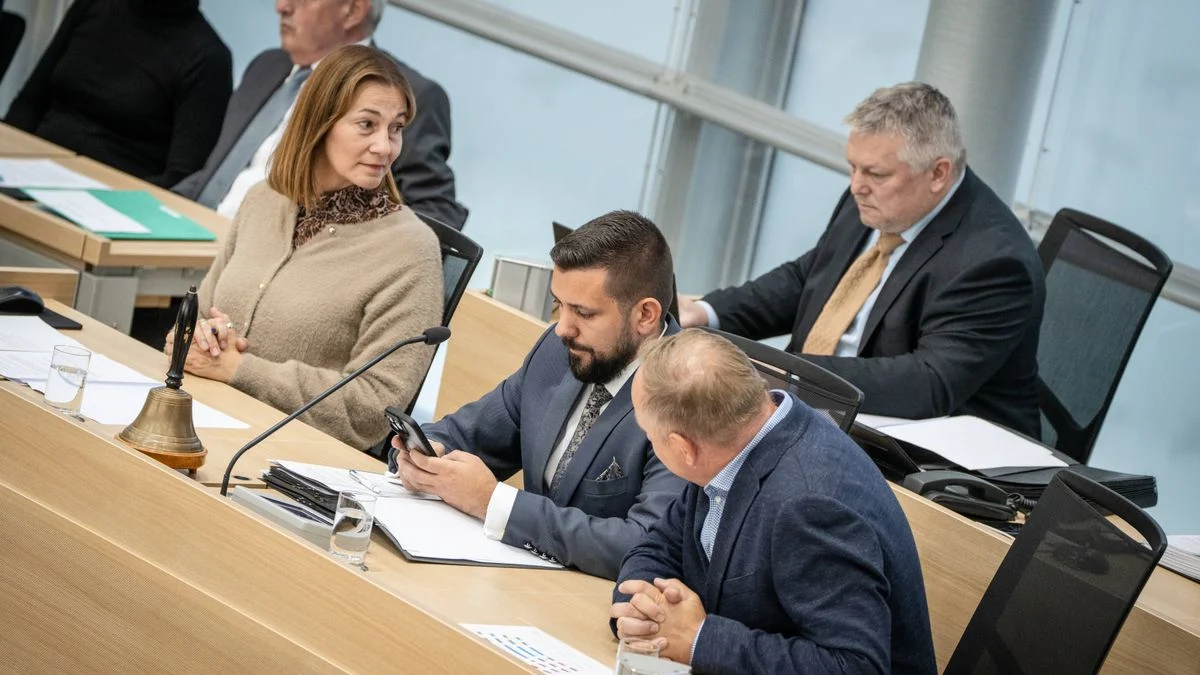
However, the Left Party’s newly constituted 45-member parliamentary group (Fraktion) on Tuesday debated for eight hours, with approximately three hours dedicated specifically to this declaration. Instead of fully endorsing the pre-agreed "Berlin Agreement," the Left Party’s faction produced its own statement. This self-formulated declaration, while containing a sentence affirming, "We stand for the existence of Israel and for equal rights for all people in Israel," crucially omitted direct reference to the "Berlin Agreement" and, according to the SPD, failed to incorporate essential components of the original joint understanding. This deviation immediately raised red flags for the SPD and Greens, who viewed it as a significant breach of trust and a weakening of the agreed-upon commitment.
Chronology of a Political Standoff
The unfolding of events leading to the suspension of talks reveals a growing chasm of mistrust and miscommunication between the potential coalition partners.
Initial Optimism and the Joint Declaration
The first phase of exploratory talks had concluded with what appeared to be a significant breakthrough: the "Berlin Agreement." This agreement, unveiled just last Thursday, explicitly outlined a commitment from all three parties to the protection of Jewish life in Berlin and the clear recognition of Israel’s right to exist. It also reportedly included mechanisms for how the factions would handle breaches of these principles, indicating a serious attempt to establish a common ground on a historically sensitive and politically charged issue. The presentation of this agreement had fostered a sense of cautious optimism, suggesting that despite their differences, the parties were capable of finding consensus on fundamental values.
The Left Party’s Internal Deliberations
The crucial moment arrived on Tuesday when the Left Party’s parliamentary group convened for its inaugural meeting. The session, which lasted a marathon eight hours, included an intense three-hour debate specifically on the joint declaration concerning antisemitism and Israel. According to reports from within the Left Party, the focus of contention was not necessarily a rejection of the principles themselves, but rather the specific wording and the inclusion of various party congress resolutions on the Middle East. There was internal resistance to what some perceived as an attempt to impose the controversial International Holocaust Remembrance Alliance (IHRA) working definition of antisemitism – which includes certain forms of criticism of Israel as antisemitic – a definition that the Left Party has previously rejected. Concerns were also raised about the "Berlin Agreement’s" call for strengthening police and the domestic intelligence agency (Verfassungsschutz), measures that are often met with skepticism within the Left Party’s ranks. Despite these internal struggles, Left Party lead negotiator Elif Eralp expressed optimism earlier in the day, emphasizing the party’s commitment to protecting Jewish life and highlighting "intensive, but also good discussions" with the SPD and Greens.
Suspension Announced
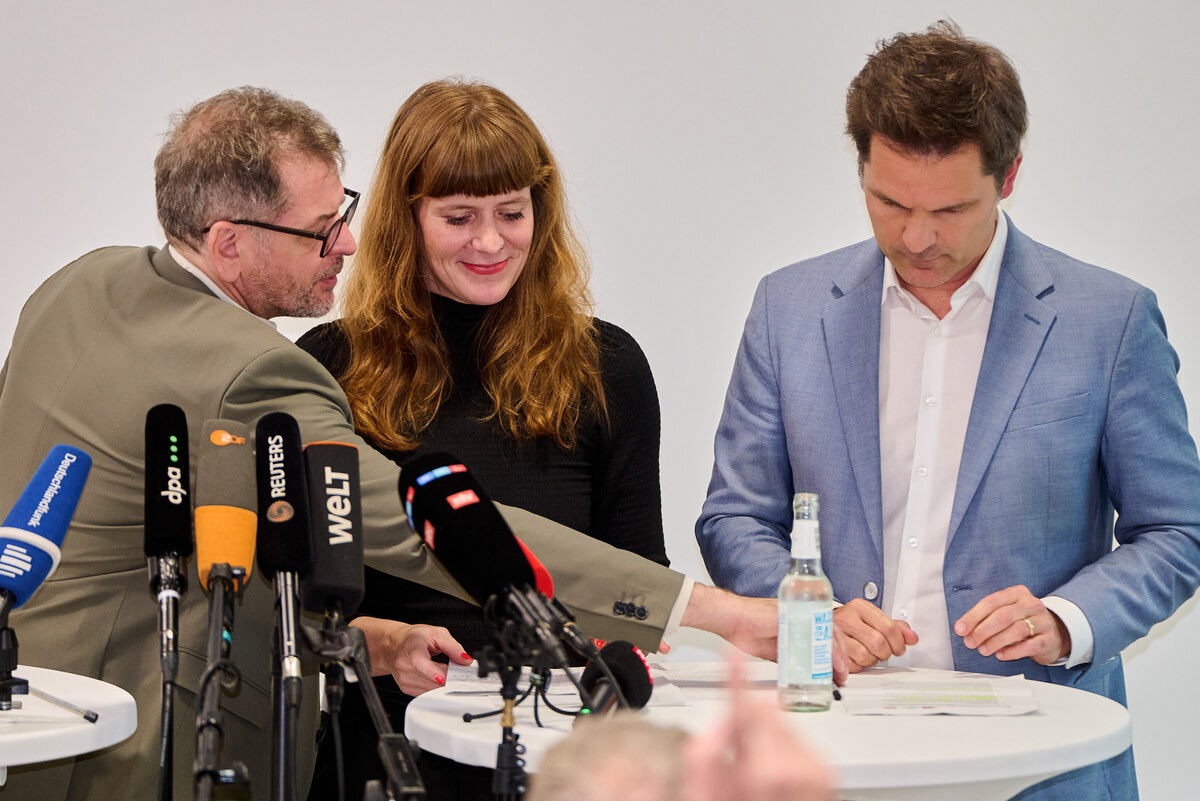
The announcement of the suspension came late on Tuesday evening, catching the Left Party’s faction, which was still meeting, by surprise and reportedly shaking them. Werner Graf, the Greens’ lead candidate, and Steffen Krach, his SPD counterpart, issued a joint statement declaring that they "must interrupt the exploratory talks at this point." Elif Eralp, visibly affected, left the Left Party’s session without comment. This abrupt halt signaled a significant escalation, indicating that the SPD and Greens viewed the Left Party’s newly adopted statement as a direct repudiation of the "Berlin Agreement" and a severe blow to the trust necessary for forming a governing coalition.
Deepening Divisions: Antisemitism, Israel, and the Left
The current impasse is not merely a procedural hiccup but highlights deep-seated ideological differences and a long-standing debate within the German Left concerning its stance on antisemitism and Israel.
The IHRA Definition and its Contentious Role
The International Holocaust Remembrance Alliance (IHRA) working definition of antisemitism has become a flashpoint in German political discourse, particularly for The Left Party. While widely adopted by many German institutions and other political parties, The Left Party has consistently expressed reservations. Critics argue that the definition, particularly its examples linking certain forms of criticism of Israel to antisemitism, can stifle legitimate critique of Israeli government policies and restrict academic freedom. Proponents, however, see it as a crucial tool in identifying and combating contemporary antisemitism, especially in the context of anti-Zionist rhetoric that often veils antisemitic sentiments. The "Berlin Agreement’s" perceived implication of adopting the IHRA definition was a major source of internal friction within The Left Party, contributing to their decision to draft an alternative statement. This divergence underscores a fundamental ideological divide that makes bridging the gap between the parties particularly challenging.
The Vanessa Emde Controversy
Adding to the complexity was the controversy surrounding Vanessa Emde, a newly elected Left Party Member of Parliament who secured her direct mandate in Neukölln with a remarkable 46.2 percent of the vote. Emde had previously stated at a rally in May that "states have no right to exist." For the SPD and Greens, this statement unequivocally denied Israel’s right to exist, a red line for both parties. They initially demanded Emde’s exclusion from the Left Party’s parliamentary group as a precondition for entering into coalition talks.

However, the situation surrounding Emde became more nuanced. While Green Party leader Felix Banaszak (national level) had previously reiterated the demand for her exclusion, both the Berlin SPD and Greens later "backtracked," clarifying that Emde’s presence in the Left Party faction – particularly after she signed the Left Party’s internal declaration – was not the direct reason for the suspension of talks. Instead, their primary concern shifted to the Left Party’s failure to explicitly integrate the "Berlin Agreement" into its official statement. Nevertheless, the Emde case undoubtedly contributed to an atmosphere of distrust, with speculations about "side agreements" regarding her future role reportedly circulating among negotiators, though none were publicly confirmed. Green co-party leader Nina Stahr acknowledged Emde as a "person who drew criticism," but emphasized that the joint declaration "must be the basis of our cooperation." This suggests that while Emde herself might not have been the direct trigger for the suspension, her presence and past statements exacerbated existing tensions and highlighted the Left Party’s internal challenges in presenting a united front on the issue of Israel.
Reliability and Trust: The SPD’s Core Concern
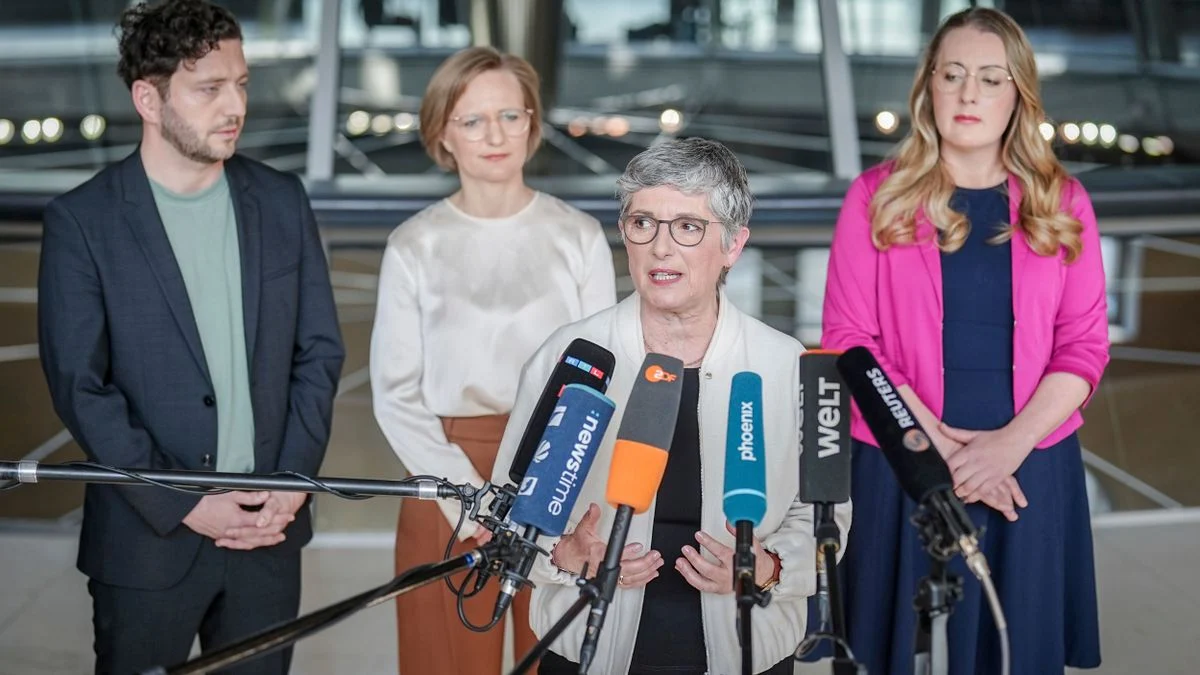
For the SPD, the crux of the matter appears to be "reliability and trust." Steffen Krach, the SPD’s lead negotiator and co-state chair, along with Bettina König, clearly articulated this point. They stated that the "Berlin Agreement" was a "basic prerequisite for entering into the exploratory talks." The Left Party’s subsequent action – creating its "own paper" that "takes no reference to the common agreement and disregards essential components thereof" – was seen as a direct violation of this trust. The SPD’s demand is clear: The Left Party must "make clear how it stands by our agreement and intends to return to the agreed common path to continue our exploratory talks." This indicates that for the SPD, the issue is less about specific wording and more about the fundamental commitment to a jointly agreed-upon framework and the integrity of the negotiation process.
Official Responses and Internal Party Dynamics
The immediate aftermath of the suspension saw a flurry of reactions, revealing both a desire to salvage the progressive alliance and a firm stance on core principles.
Greens Express Astonishment, Call for Resumption
A leading member of the Green parliamentary group expressed "astonishment about the manner in which the talks about a left-wing alliance were interrupted." Despite the setback, the Greens remain committed to the Red-Green-Red option. They unequivocally reject a coalition with the CDU, a minority government, or new elections, fearing that such scenarios would only benefit the AfD and CDU while significantly weakening the progressive parties. The Green district association of Friedrichshain-Kreuzberg, a traditionally left-leaning stronghold, went further, demanding the "immediate resumption of exploratory talks," warning that if the three elected democratic parties fail to accept this mandate, they might "lose our last chance against fascism." This strong rhetoric underscores the Greens’ deep conviction that a progressive alliance is not just preferable but essential for Berlin’s future. By Wednesday noon, the state party leadership reiterated their commitment: "We want Red-Green-Red. We want to work with the SPD and the Left Party for affordable housing, for a real transport transition, real climate protection that is socially just." Crucially, they added that it is "decisive that our common Berlin Declaration against antisemitism applies."
SPD Demands Clarity and Commitment
The Social Democrats, while also expressing a desire for Red-Green-Red, adopted a firmer tone. An SPD parliamentary group member stated, "We all want Red-Green-Red," but found the unfolding of events "incomprehensible." Their official statement from state chairs Bettina König and Steffen Krach left no room for ambiguity: the "Berlin Agreement" was a "basic prerequisite." They accused the Left Party of having "left this path yesterday and made its own paper that takes no reference to the common agreement and disregards essential components thereof." The emphasis on "reliability and trust" highlights the SPD’s concern that the Left Party’s internal dynamics might undermine any future coalition agreement. Their demand for the Left Party to "make clear how it stands by our agreement and intends to return to the agreed common path" places the ball firmly in the Left Party’s court, signaling that a simple resumption of talks without explicit recommitment is unlikely.
The Left Party’s Stance and Internal Criticisms
Within the Left Party, there was a mix of shock and a defensive posture. Elif Eralp’s silence after the suspension suggested the gravity of the situation. While some Left Party members told the taz that the "Berlin Agreement" itself was not up for debate and would become part of a larger package for their party congress in two weeks, where it would "naturally continue to have binding force if we form a coalition," this assertion did little to placate the SPD and Greens. The internal criticism within the Left Party, particularly regarding the IHRA definition and the strengthening of security agencies, indicates a significant ideological struggle that could make it difficult for the party to fully embrace the "Berlin Agreement" without further internal dissent. This internal tension and the perceived lack of a unified, unequivocal stance on a core principle are precisely what eroded trust among its potential partners.

Broader Implications for Berlin’s Governance
The suspension of talks has plunged Berlin’s government formation process into uncertainty, with significant implications for the capital’s political stability and future direction.
The Specter of Alternative Coalitions
With Red-Green-Red on hold, the pressure mounts to explore alternative governing majorities. The most obvious alternative would be a grand coalition between the SPD and the CDU. The CDU, whose lead candidate Stefan Evers reiterated on Wednesday that "their hand is outstretched," would undoubtedly welcome such a development. However, both the Greens and significant parts of the SPD have expressed strong reservations or outright rejection of a CDU-led government. The Greens, in particular, see little policy overlap with the conservatives on critical issues like climate protection, housing, and social justice. A coalition with the CDU would represent a significant ideological shift for Berlin and likely face considerable resistance from within the SPD and Green parties.
Another theoretical option is a "traffic light" coalition of SPD, Greens, and the liberal Free Democratic Party (FDP). However, the FDP performed poorly in the recent elections, making a stable majority difficult to achieve with this configuration. Furthermore, the FDP’s neoliberal economic policies often clash with the social and environmental agendas of the SPD and Greens.
The Risk of Snap Elections
Should all coalition talks fail, the ultimate consequence would be new elections. This scenario, however, is viewed with considerable apprehension by all three progressive parties. As one Green official starkly put it, new elections would likely lead to "AfD and CDU winning, while Greens, Left Party, and SPD would significantly lose." The political climate, marked by increasing polarization and a rise in support for the far-right Alternative for Germany (AfD), makes another electoral contest a risky proposition. Voters, already having gone to the polls recently, might punish parties perceived as incapable of forming a stable government, potentially leading to an even more fragmented and difficult-to-govern parliament.
Berlin’s Unique Political Landscape
Berlin’s political landscape is characterized by its vibrant diversity and its often-radical progressive leanings. A Red-Green-Red coalition was seen by many as the most authentic reflection of the city’s electorate. The failure to form such a government, particularly over an issue as sensitive as antisemitism, could deepen political divides and disillusion voters who hoped for swift action on pressing urban issues. The city faces significant challenges, from a housing crisis and climate change adaptation to maintaining social cohesion and tackling rising inequality. A prolonged period of political uncertainty or a government formed without a strong progressive mandate could hamper effective governance and exacerbate these problems.
An Uncertain Path Forward
As of now, the future of Berlin’s government formation remains precarious. The door for Red-Green-Red is not entirely closed, but it hinges on the Left Party’s willingness to make a clear and unequivocal commitment to the "Berlin Agreement" in its original form.

A Narrow Window for Reconciliation
Both the Greens and the SPD have signaled that they are open to resuming talks, provided the Left Party addresses their concerns. The Greens’ statement, emphasizing that the "common Berlin Declaration against antisemitism applies," and the SPD’s demand for the Left Party to "return to the agreed common path," indicate that a path to reconciliation exists. However, this path requires a significant concession from The Left Party: either retracting their self-authored statement and explicitly adopting the "Berlin Agreement," or providing an equally robust and unambiguous commitment that satisfies the SPD and Greens. The Left Party’s internal struggles and the upcoming party congress add another layer of complexity, as any new commitment would likely need broader party endorsement.
The Future of Progressive Politics in the Capital
The current impasse serves as a crucial test for the viability of progressive alliances in Germany. While Red-Green-Red coalitions have existed at the state level before, the Berlin negotiations highlight the delicate balance required to unite parties with distinct ideological traditions, particularly on issues touching upon national historical responsibility and international relations. The ability of the SPD, Greens, and The Left Party to overcome this challenge will not only determine Berlin’s next government but could also send a powerful signal about the potential and pitfalls of left-wing cooperation in a broader German political context. Without a clear resolution, Berlin faces continued political instability, and the promise of a united progressive front may remain an unfulfilled aspiration.