BREMEN — Under the banner "Many Strengths – One Country," Germany marked the 36th anniversary of its reunification this October 3rd. As the festivities commenced in the historic Hanseatic city of Bremen, the mood was a complex tapestry of celebration, introspection, and stark political warnings. While the event served as a formal commemoration of the 1990 national unity, the rhetoric from the podiums and the pews shifted focus toward the growing fractures within the modern German state.
The day’s proceedings, anchored by an ecumenical service at St. Petri Cathedral and a formal state act at the "Die Glocke" concert hall, highlighted a Germany struggling to reconcile its past successes with the anxieties of an uncertain future.
The Main Facts: A Commemoration Under Scrutiny
The Tag der Deutschen Einheit (Day of German Unity) is the cornerstone of the German national holiday calendar. Traditionally, the host state is determined by the presidency of the Bundesrat, the body representing Germany’s sixteen federal states. This year, Bremen—the smallest of the federal states—assumed the mantle, transforming its city center into a sprawling festival ground expected to draw over 400,000 visitors by the end of the weekend.
Despite the celebratory atmosphere of the "Ländermeile," where states showcased their regional identities, the political leadership utilized the platform to address the elephant in the room: the rising tide of societal polarization, the persistence of East-West disparities, and the perceived fragility of democratic institutions.
Chronology of the Day: From Reflection to Action
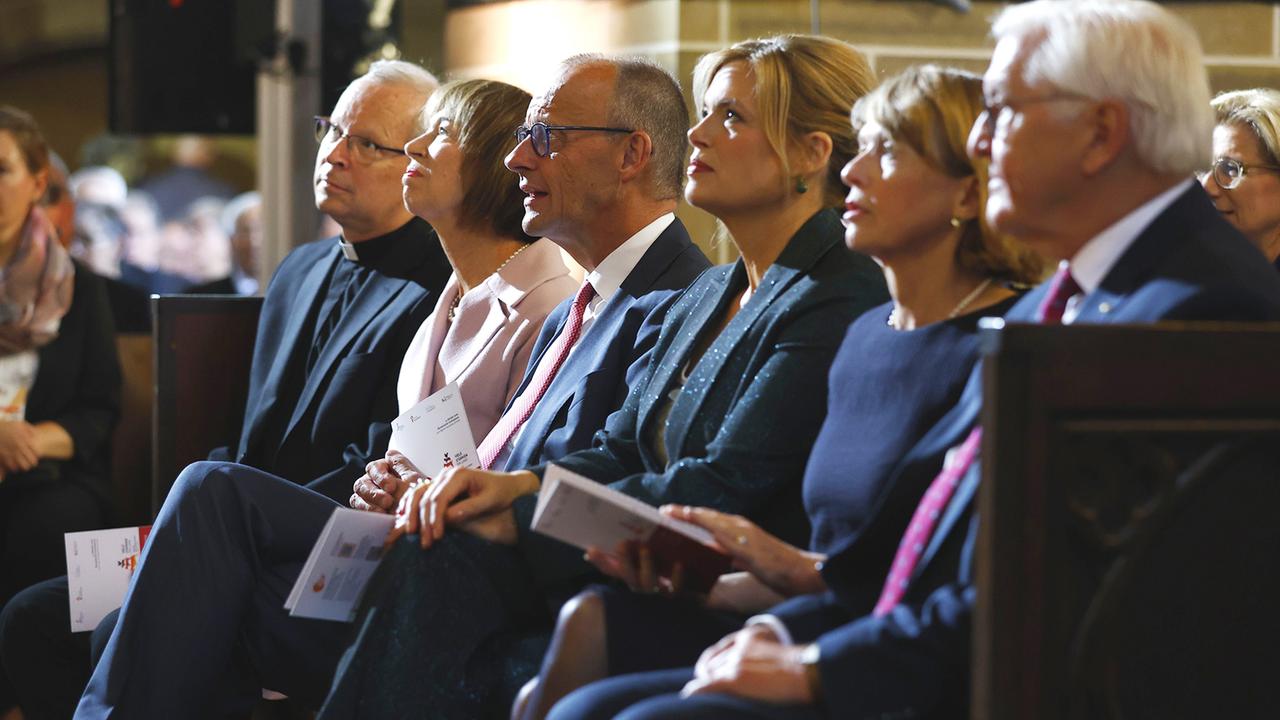
The day began in the hushed, vaulted silence of the St. Petri Cathedral. The ecumenical service, titled "Many Gifts – One Spirit," set a tone of moral urgency. Church leaders, including the President of the Bremian Evangelical Church, Bernd Kuschnerus, and the Catholic Bishop of Osnabrück, Dominicus Meier, steered clear of triumphalism. Instead, they focused on the necessity of communal resilience.
By midday, the focus shifted to the "Die Glocke" concert hall. The official state act featured the highest echelons of German politics, including Federal Chancellor Friedrich Merz and Federal President Frank-Walter Steinmeier. The ceremony served as a stage for the federal government to reiterate its commitment to national cohesion, even as speakers acknowledged that the "inner unity" of the country remains a work in progress.
As the afternoon progressed, the city’s public spaces transitioned into a massive civic festival. With over 100 stages and cultural venues, the event aims to bridge the gap between the political elite and the citizenry, culminating in high-profile musical performances, including a Saturday night set by the renowned group Die Fantastischen Vier.
Supporting Data: The Persistence of Disparity
While the rhetoric focused on unity, the underlying data paints a nuanced picture of a nation still navigating the "invisible wall" that divides it.
Economic and Leadership Gaps
Despite decades of massive capital transfers to the former East (the Solidaritätszuschlag), systemic economic disparities persist. Statistics consistently show that average wealth and income levels in the former GDR remain lower than in the West. More critically, the "elite gap" remains a source of frustration. As the Federal Government’s Commissioner for the New States, Elisabeth Kaiser, pointedly noted, the upper echelons of federal leadership and high-level bureaucratic positions remain disproportionately occupied by individuals from the West.
The Demographic Shift
The demographic composition of Germany has changed drastically since 1990. The rise of new political movements, particularly in the East, has signaled a deep-seated dissatisfaction with the status quo. Sociologists point to "biographical ruptures"—the trauma of post-1990 industrial collapse—as a continuing factor in the political alienation of Eastern voters. This historical context is essential to understanding why, 36 years later, the "East" often expresses a sense of being treated as a secondary participant in the democratic project.
Official Responses: A Spectrum of Concern
The discourse during the ceremonies was marked by a shift from the usual celebratory platitudes to urgent, sometimes defensive, political warnings.
The Federal President’s Warning
In a robust 50-minute address, Federal President Frank-Walter Steinmeier delivered a sobering assessment of the state of German democracy. He admitted that the expectations for a seamless integration post-1990 had not been met for many citizens. Steinmeier’s address was, at its heart, a plea for "democratic self-assertion." He explicitly linked the rise of extremism to the feeling of being "left behind," urging political leaders to bridge the emotional and economic divides that fuel radicalization.
The Case for an Eastern President
Perhaps the most striking political intervention came from Elisabeth Kaiser. In a bold challenge to the political establishment, she argued that the time is long overdue for an Eastern German to occupy the office of the Federal President. "Why shouldn’t the next Federal President be a smart woman from East Germany?" she posited. Her argument centers on symbolic representation; she warned that without tangible evidence that Easterners are part of the core leadership, they will continue to feel as though they are "sitting at the children’s table" of German politics.
The "Marriage" Metaphor
Wolfgang Thierse, former President of the Bundestag and a veteran of the reunification era, offered a more philosophical perspective. He likened the East-West relationship to a long-term marriage. "No one wants a divorce," he argued, "but a healthy marriage requires crises and friction." Thierse encouraged citizens to view the current political volatility not as a sign of imminent collapse, but as a painful, necessary evolution toward a more mature, normalized federal relationship where regional differences are respected rather than pathologized.
Implications: Where Does Germany Go from Here?
The 2026 festivities in Bremen suggest that Germany is moving into a new phase of its post-reunification history. The "heroic era" of 1990 is fading, replaced by the mundane, often gritty reality of maintaining a complex, diverse, and occasionally fractious democracy.
1. The Challenge of Political Polarization
The warnings from the clergy and the President indicate that the consensus-based politics of the past are under immense strain. The challenge for the government, led by Chancellor Merz, is to address the economic grievances of the population without ceding ground to the extremist fringes that exploit those very grievances.
2. The Quest for Parity
The call for an Eastern Federal President is not merely about symbolism; it is a demand for structural inclusion. As the generation that lived through the Wende (the turning point) retires, the urgency of ensuring that the "New States" are fully integrated into the power structure of the Federal Republic becomes a matter of long-term political stability.
3. Democracy as a Verb
The central takeaway from the Bremen celebrations is that unity is not a historical destination reached in 1990, but a continuous act of political labor. As Bremen’s Mayor Andreas Bovenschulte remarked, "Democracy needs conflict. But the political opponent is not an enemy." The success of the next decade of German unity will depend on whether this distinction—between legitimate political dissent and the destruction of democratic norms—can be maintained in an increasingly volatile digital and social landscape.
Conclusion
As the lights dim on the Bremen festival stages and the dignitaries depart, the message of the 36th anniversary is clear: Germany is a nation in transition. The celebration of the past serves only as a prologue to the work that remains. The "Many Strengths" mentioned in the official motto are currently being tested by the "One Country’s" inability to fully reconcile its fragmented memories. Whether the country emerges from this period of introspection as a more cohesive union or remains a collection of disparate, often suspicious regional identities remains the defining question of modern German statecraft.