Hamburg, Germany – Four years after the unprecedented underwater explosions that crippled the Nord Stream 1 and 2 gas pipelines in the Baltic Sea, a pivotal trial has commenced in Hamburg. A Ukrainian national, Serhii K., stands accused of orchestrating the sabotage, a crime that German prosecutors, led by Generalbundesanwalt Jens Rommel, are classifying as a war crime under the stringent German International Criminal Code (Völkerstrafgesetzbuch – VStGB). This prosecution marks a significant moment, not only for European energy security but also for the interpretation and enforcement of international humanitarian law in the context of modern conflict.
The trial brings to the forefront complex legal and ethical dilemmas. While some might view the destruction of pipelines, predominantly owned by Russia’s Gazprom, as a justifiable act against an aggressor state that has invaded Ukraine, legal experts underscore the imperative to uphold the fundamental principles governing armed conflict. Kai Ambos, a distinguished professor of criminal law, criminal procedure, and international law at the University of Göttingen, and a judge at the international Kosovo Specialist Chambers in The Hague, elucidates the gravity of the charges and the intricate legal framework underpinning them.
"One cannot simply destroy a pipeline," Ambos firmly states in an interview, highlighting that such actions are not merely acts of vandalism but carry profound legal consequences under German law. He argues that labeling such an act as a "good thing" plays into the hands of those who believe military force can be deployed for any purpose, undermining the very foundations of international law designed to limit the brutality of warfare.
The Incident: A Timeline of Destruction
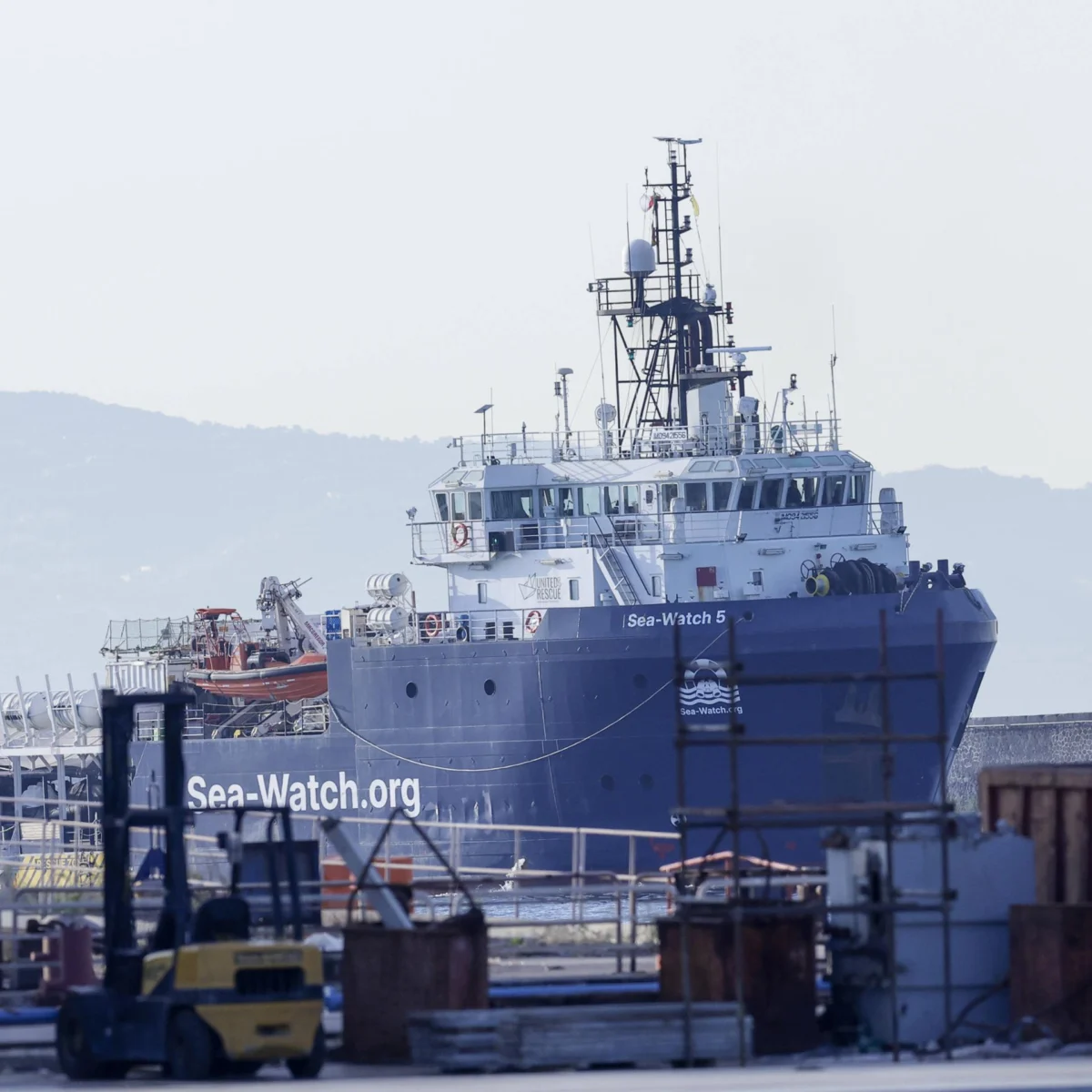
The events unfolded with dramatic speed and global ramifications. On September 26, 2022, a series of powerful underwater explosions tore through the Nord Stream 1 and Nord Stream 2 pipelines. The blasts, occurring in international waters but within the exclusive economic zones of Sweden and Denmark, ruptured both lines of Nord Stream 1 and one of the two lines of Nord Stream 2. The immediate aftermath saw massive methane leaks bubbling to the surface of the Baltic Sea, a stark visual testament to the severity of the damage.

Nord Stream 1, which had been operational since 2011, was a crucial artery for Russian gas supplies to Germany and, by extension, to a significant portion of Europe. While majority-owned by Russia’s Gazprom, it also involved German and other European energy companies. Nord Stream 2, a newer project solely owned by Gazprom, had been completed but never became operational due to Germany’s decision to halt its certification process following Russia’s full-scale invasion of Ukraine in February 2022. Even before the explosions, Russia had significantly curtailed or completely cut off gas deliveries through Nord Stream 1, using energy as a potent geopolitical weapon against Europe’s support for Ukraine.
The explosions occurred seven months into Russia’s full-scale invasion of Ukraine, at a time of heightened geopolitical tension and a frantic scramble by European nations to secure alternative energy supplies. The incident immediately triggered widespread condemnation and launched multi-national investigations by Germany, Sweden, and Denmark. Initial theories ranged from state-sponsored terrorism to a false-flag operation, with accusations and counter-accusations flying between Russia and Western nations. The sheer scale and precision of the attack suggested a sophisticated operation, far beyond the capabilities of non-state actors.
The Accused and the German Investigation
The German investigation, led by the Federal Public Prosecutor General, has focused on a specific individual, Serhii K. He is alleged to be the head of a sabotage commando responsible for the blasts. The General Federal Prosecutor Jens Rommel’s office has formally charged Serhii K. with a war crime under the German International Criminal Code (Völkerstrafgesetzbuch – VStGB).
A crucial development in the legal process was the decision by the German Federal Court of Justice (Bundesgerichtshof – BGH) regarding an appeal against Serhii K.’s detention. In rejecting the appeal, the BGH firmly placed the pipeline destruction within the context of the ongoing armed conflict between Russia and Ukraine. This classification is vital, as it allows for the application of international humanitarian law (also known as the law of armed conflict – LOAC), which governs conduct during wartime. The BGH’s ruling specifically asserted that the Nord Stream pipelines constitute "civilian objects." This designation is central to the prosecution’s case, as international law strictly prohibits attacks on civilian infrastructure.

Legal Scrutiny: The Laws of Armed Conflict
The core of the legal debate revolves around the definition of a "civilian object" and the permissible targets in armed conflict. Professor Ambos emphasizes that even in times of war, there are immutable rules designed to humanize conflict and protect non-combatants and the infrastructure essential for their survival.
Defining Civilian Objects in Warfare:
"Even in war, civilian objects must not be attacked – the accused is alleged to have violated this prohibition," Ambos explains. The question, therefore, becomes: Are Nord Stream 1 and 2 truly civilian objects? The Federal Court of Justice unequivocally answered "yes." This aligns with a restrictive interpretation favored by most international legal scholars, the International Committee of the Red Cross (ICRC), and Ambos himself.
The principle is clear: an attacked state, while possessing the right to self-defense, cannot retaliate by targeting civilian facilities. Ambos underscores the reciprocity of these rules: "For the aggressor and the attacked, the same rules of the so-called law of armed conflict apply. The Russians are not allowed to destroy Ukrainian railway stations or the Academy of Sciences in Kyiv. And conversely, for the Ukrainians, civilian facilities in Russia should be taboo." He cites the ongoing debate over whether Ukrainian forces can attack Russian logistics depots if they are perceived to also handle military supplies, highlighting the fine line that defines legitimate military targets.
The Principle of Distinction and Proportionality:
The fundamental logic behind prohibiting attacks on civilian objects is to limit the suffering and destruction inherent in warfare. This is codified in international humanitarian law, which mandates a strict distinction between combatants and civilians, and between military objectives and civilian objects. Attacks must be directed exclusively at military objectives.

Ambos details the definition of a military objective: "Military objects are, firstly, only those that effectively contribute to military actions. Secondly, the attack must bring a clear military advantage to the attacker." This definition is intentionally narrow to prevent widespread destruction. The ICRC, as the guardian of international humanitarian law, plays a crucial role in overseeing compliance with these rules. Its core message is that "even in war, rules apply; warring parties are not allowed to do everything." The primary aim is the protection of the civilian population and the infrastructure that serves it.
The Geopolitical Chessboard: Nord Stream’s Strategic Role
Despite the clear legal definitions, the strategic and economic context of the Nord Stream pipelines introduces complexities that fuel the "good thing" argument. The pipelines represented a significant source of revenue for the Russian government, which critics argue directly financed its war machine against Ukraine. Furthermore, Russia had demonstrably used gas supplies—or the threat of withholding them—as a tool of political and economic coercion against Germany and other European nations, particularly in 2021 and 2022, attempting to undermine support for Ukraine.
The argument posits that since the gas trade held such importance in Russia’s war effort and its leverage over Europe, the pipelines transcended their purely civilian function. However, Ambos strongly refutes this broader interpretation. "That may be so, but it is too general to change the aforementioned rules of international humanitarian law," he asserts. He maintains that the restrictive position on what constitutes a military target is essential.
He warns against expanding the definition of military targets to include economically significant civilian infrastructure, drawing parallels to how some interpretations of US military law might allow for targeting power plants or oil facilities. Ambos critically notes that "President Trump took this to the extreme with his threat to destroy Iranian civilization." Such broad interpretations, he argues, open the door to devastating attacks on infrastructure vital for the survival of civilian populations, akin to Russia’s targeting of Ukraine’s energy infrastructure, which has plunged millions into darkness and cold.

Ambos further challenges the notion that economic benefits derived by a warring party transform civilian assets into legitimate military targets. He poses a rhetorical question: If the revenue from pipelines finances the military, what about taxes paid by citizens? "Should a warring party therefore attack tax authorities and even taxpayers because they contribute to the war economy?" Such an extension, he implies, would lead to an unacceptably broad and destructive scope of permissible targets.
Another common argument is that the destruction of the pipelines has inadvertently "saved" Germany from relapsing into energy dependence on Russia. While this might be a perceived political benefit, Ambos vehemently argues against allowing such "political utility considerations" to influence legal interpretations. He states, "They should not. The construction of the pipelines was based on political decisions by the federal government or the state government of Mecklenburg-Vorpommern. Such projects can be stopped by civilian, peaceful means, for example, by terminating supply contracts. Military force is not an option to rid oneself of such obligations or dependencies." This reinforces the principle that political expediency cannot override established international law.
Official Reactions and International Dimensions
The German Federal Public Prosecutor’s office, by bringing these charges, is sending a clear signal about its commitment to upholding international law. The Federal Court of Justice’s classification of the pipelines as civilian objects establishes a significant legal precedent within Germany’s jurisdiction, influencing how similar incidents might be viewed in the future.
Internationally, the Nord Stream sabotage remains a highly sensitive and politically charged event. While the ongoing investigations by Sweden and Denmark have yet to yield definitive public conclusions or prosecutions, Germany’s proactive stance in identifying and prosecuting an alleged perpetrator underscores the severity with which it views the incident. The lack of a unified international consensus on the perpetrators, coupled with the geopolitical implications, highlights the complexities of investigating and prosecuting acts of sabotage in international waters, especially when state actors are suspected.

Broader Implications and Future Precedents
The Hamburg trial against Serhii K. is more than just a criminal proceeding; it is a test case for the enduring relevance of international humanitarian law in an era of hybrid warfare, economic coercion, and attacks on critical infrastructure.
Legal Precedent: Should Serhii K. be convicted of a war crime, it would set a powerful precedent for how attacks on energy infrastructure, even those with clear strategic and economic ties to a belligerent, are viewed under international law. It would reaffirm the restrictive interpretation of military objectives and underscore the broad protection afforded to civilian objects, regardless of their geopolitical significance. This could influence future legal interpretations in other conflicts where infrastructure becomes a target.
Geopolitical Impact: The destruction of Nord Stream fundamentally altered Europe’s energy landscape, accelerating the continent’s decoupling from Russian gas. While the trial focuses on the legality of the act, its geopolitical fallout has been immense, forcing European nations to diversify energy sources and rethink critical infrastructure security.
Protection of Critical Infrastructure: The Nord Stream incident also brought into sharp focus the vulnerability of undersea cables, pipelines, and other critical infrastructure to sabotage. The challenges of monitoring and protecting vast networks of submerged assets against sophisticated attacks are immense. This trial, by defining the legal boundaries of such attacks, might contribute to a stronger international framework for protecting these vital arteries of global commerce and communication.

Moral and Ethical Debate: The trial inevitably reignites the debate over "just war" theories and the perceived legitimacy of actions taken against an aggressor, even if those actions cross legal lines. Ambos’s consistent message is that while the moral outrage against Russian aggression is understandable, it cannot be a justification for violating the fundamental rules designed to limit the brutality of war. Upholding these rules, he argues, is essential for preserving a semblance of order and humanity in conflict, preventing a descent into total war where all means are considered permissible.
Conclusion
The trial of Serhii K. in Hamburg represents a critical juncture. It will not only determine the individual’s culpability but will also serve as a powerful affirmation of the international legal principles that govern armed conflict. By prosecuting the alleged orchestrator of the Nord Stream sabotage as a war criminal, Germany is sending a clear message: the destruction of civilian infrastructure, even that belonging to an aggressor state and used for geopolitical leverage, is a violation of the laws of armed conflict. This stance underscores the global community’s collective effort to maintain limits on warfare, protect civilian populations, and uphold the rule of law, even amidst the most complex and contentious geopolitical realities. The outcome of this trial will undoubtedly resonate far beyond the courtroom, shaping future discussions on international humanitarian law and the conduct of warfare in the 21st century.