The Political Brinkmanship of Magdeburg
In a dramatic display of political theater and defensive posturing, the Christian Democratic Union (CDU) faction in the Sachsen-Anhalt state parliament has announced a radical strategy for the upcoming December election of a new Minister-President. Faced with the persistent, lingering suspicion that members of its own ranks might facilitate the election of an AfD candidate, the 15-member faction has resolved to leave the plenary hall entirely during the ballot. This "empty chair" policy is designed to achieve one primary goal: to provide an ironclad alibi that no CDU vote could have possibly contributed to the elevation of the AfD’s state leader, Ulrich Siegmund, to the highest office in the state.
The move underscores a deep-seated crisis of confidence within the conservative camp. By vacating the chamber, the CDU is not merely protesting; it is attempting to build a firewall against the potential for internal betrayal. The party leadership views this drastic step as the only way to silence the mounting speculation that the "cordon sanitaire" against the far-right is crumbling from within.
A Chronology of Suspicion
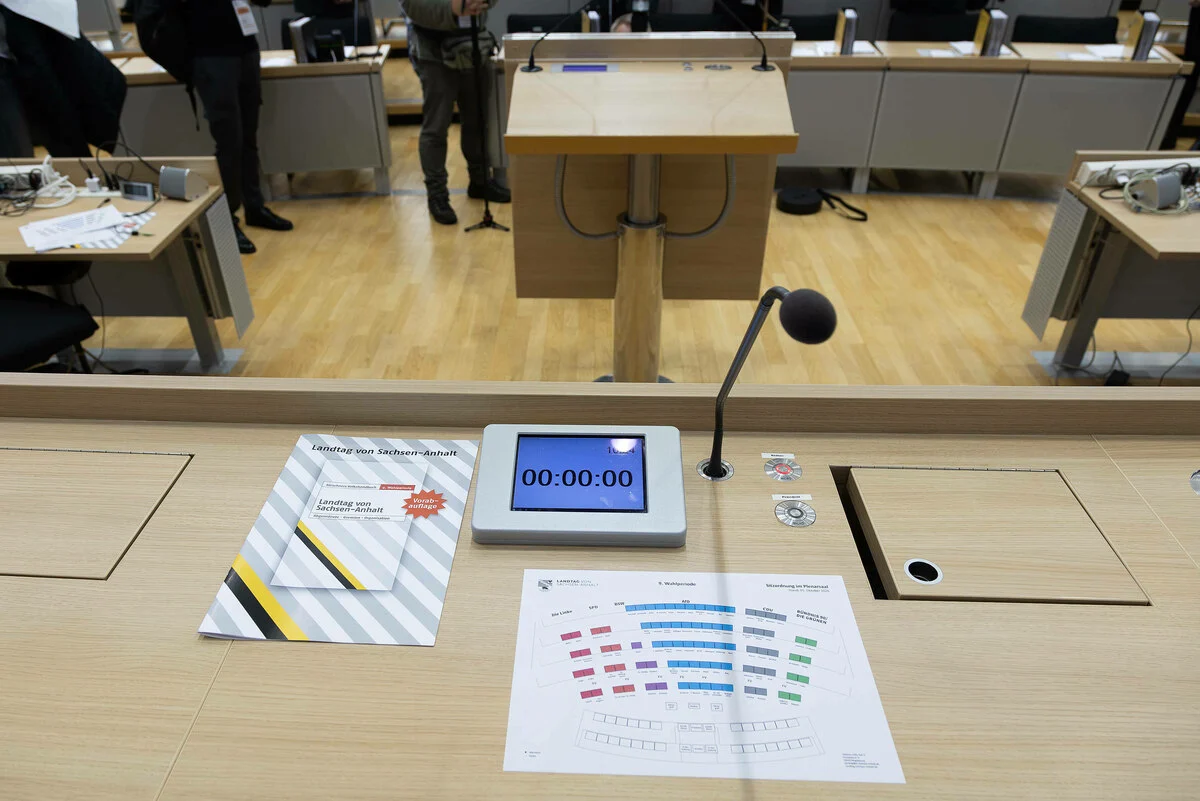
The genesis of this drastic measure lies in the shockwaves caused just last week in the Magdeburg Landtag. In a secret ballot that blindsided the political establishment, the AfD candidate Tobias Rausch was elected as Landtag President with 48 votes. The arithmetic of the parliament makes this result deeply suspicious: the AfD and the Sahra Wagenknecht Alliance (BSW) possess a combined total of only 44 seats. The mathematical discrepancy—four additional votes—has triggered a frantic hunt for the source of the "extra" support.
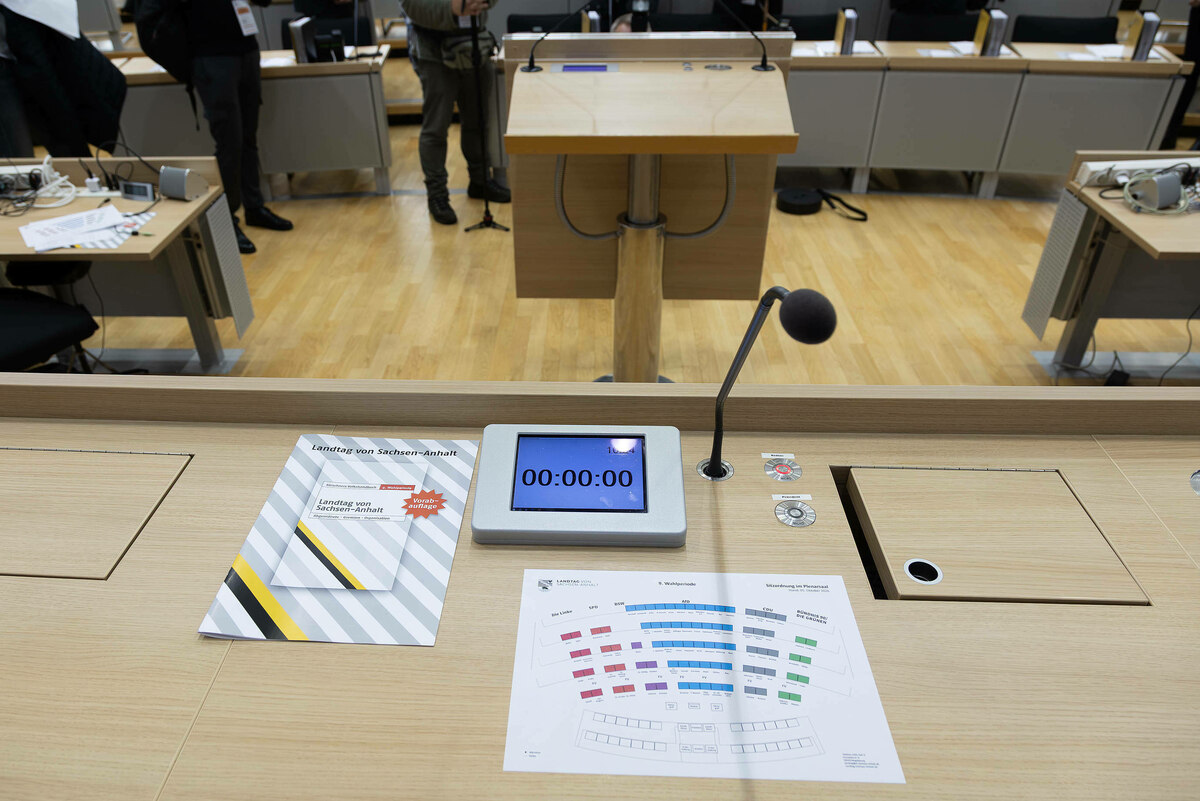
- The Election Shock: With 48 votes cast for the AfD candidate, it became statistically certain that representatives from other parties had broken ranks.
- The Denials: In the immediate aftermath, the CDU publicly and indignantly rejected any suggestion that its members were responsible.
- The Discrepancy: Investigations by the taz revealed that the internal narrative of the CDU was fundamentally flawed. When asked about their voting behavior, eight CDU members claimed to have abstained; however, the official tally recorded only five abstentions. This discrepancy dismantled the "False Flag" conspiracy theory propagated by federal party leader Friedrich Merz, who had suggested the incident was a calculated ploy by the Left or the Greens to discredit the Union.
- The Escalation: With trust in the caucus’s internal cohesion shattered, the decision to vacate the hall for the upcoming Minister-President election was formalized as a "preventative strike."
The Anatomy of the Crisis
The situation in Sachsen-Anhalt is not an isolated incident but a microcosm of the existential challenge facing the German center-right. The rise of the AfD, combined with the populist influence of the BSW, has created a volatile parliamentary environment where traditional party discipline is struggling to hold.
The BSW, under Sahra Wagenknecht, finds itself in a particularly precarious position. While the party publicly advocates for a "constructive" opposition, its recent proximity to the far-right—exemplified by a controversial joint dinner attended by AfD and BSW deputies during the launch of a television studio linked to the extremist magazine Compact—has drawn sharp condemnation. The BSW has officially stated that it intends to abstain during the Minister-President election, yet the unpredictable nature of secret ballots leaves the outcome in a state of flux.
For the CDU, the challenge is twofold: they must maintain the "Brandmauer" (firewall) against the AfD while managing a caucus that is clearly experiencing ideological slippage. The decision to leave the room is a public admission that the leadership no longer trusts the secret ballot to function as a reliable instrument of democratic intent.

Official Responses and Internal Discord
The atmosphere within the CDU caucus is reported to be fraught with tension. While the party hierarchy insists that the walkout is a principled stance, dissenting voices suggest that the move is an admission of weakness. By removing themselves from the democratic process, the CDU risks appearing as though it has abandoned its legislative duties in favor of optics.
Federal party figures have remained largely cautious in their commentary, mindful that the Sachsen-Anhalt situation is a dangerous precedent. If the CDU cannot guarantee the voting integrity of its own members, the stability of the entire state government is at risk. Analysts argue that the walkout is a "forward-defense strategy"—an attempt to control the narrative before the ballot, rather than managing the fallout afterward.
Implications for German Democracy
The implications of the Magdeburg standoff extend far beyond the borders of Sachsen-Anhalt. If a major party like the CDU finds itself forced to vacate its seats to prevent a far-right takeover, it signals a significant erosion of the institutional norms that have governed German politics since 1945.

1. The Erosion of Secret Ballots
The secret ballot is a pillar of parliamentary democracy, designed to protect the independence of the representative. However, in the current climate of extreme polarization, this secrecy has become a liability. The fear that "rogue" representatives will act against the party line—whether out of conviction, coercion, or tactical alignment with the AfD—has turned the voting booth into a source of anxiety rather than a symbol of free choice.
2. The Normalization of the Far-Right
The election of an AfD Landtag President was a symbolic milestone for the party’s "normalization" strategy. By securing the support of non-AfD members, the party demonstrated that it can break the isolation imposed by other parliamentary groups. The CDU’s move to leave the hall is a desperate attempt to reverse this normalization, but it also highlights how difficult it has become to stop the AfD’s momentum through conventional parliamentary maneuvers.
3. The Future of the BSW
The BSW stands at a crossroads. Its electoral success was built on a promise to act as a pragmatic alternative to the established parties. However, the optics of the Compact dinner and the potential for clandestine cooperation with the AfD threaten to alienate the party’s base, which includes many former Left-party voters who are deeply opposed to right-wing extremism. The upcoming election will force the BSW to declare its position unequivocally: will it facilitate an AfD-led government, or will it uphold the cordon sanitaire?

The Path Forward: A Question of Integrity
As December approaches, the political temperature in Magdeburg will continue to rise. Siegmund has announced that he will only stand for election once; if he fails to secure a majority in the first round, the procedure will enter a cycle of repeat ballots. According to parliamentary rules, if no candidate achieves an absolute majority after several rounds, the Landtag could eventually be forced to consider its own dissolution and call for new elections.
The "empty chair" tactic is, at its heart, a stopgap measure. It does not address the underlying ideological drift within the electorate or the persistent tactical opportunism of various political actors. The CDU’s inability to keep its own house in order has created a power vacuum that the AfD is all too eager to fill.
In the coming weeks, the focus will remain on the individual deputies. The "wolves in the fold"—as some media outlets have termed the suspected turncoats—remain the wild card. Whether the CDU’s theatrical exit will succeed in shaming these individuals into submission or merely underscore the party’s own helplessness remains to be seen.

Ultimately, the events in Sachsen-Anhalt serve as a stark warning to the rest of the country: when the traditional mechanisms of political accountability fail, the stability of the democratic order relies entirely on the integrity of individual representatives. If that integrity is found wanting, the institutional frameworks of the state are, quite literally, left empty. The CDU has chosen to walk out of the room to save its reputation, but by doing so, it has left the future of the state’s governance hanging in the balance, at the mercy of secret ballots and hidden alliances. The coming month will test not only the strength of the CDU’s firewall but the very resilience of the parliamentary system itself.