Magdeburg, Germany – In a dramatic display of political brinkmanship and deep internal divisions, the Christian Democratic Union (CDU) in Saxony-Anhalt has announced its unanimous decision to stage a walkout during the upcoming election for Minister-President. The unprecedented move, set for December 15th, is a direct tactic to prevent the far-right Alternative for Germany (AfD) candidate, Ulrich Siegmund, from ascending to the state’s highest office. This strategic abstention, born from hours of fraught internal debate, places immense pressure not only on the AfD but also on the newly formed Bündnis Sahra Wagenknecht (BSW), highlighting the escalating challenges to democratic norms and established political alliances in Germany’s eastern states.
The decision underscores the CDU’s struggle to maintain a "firewall" against the AfD, even as it grapples with its own internal rifts and the increasing electoral strength of populist and extremist parties. While offering a temporary solution to a complex problem, the walkout leaves crucial questions unanswered, particularly regarding the CDU’s strategy in subsequent electoral rounds and the long-term stability of the state’s political landscape.
Main Facts: A Tactical Retreat to Uphold Democratic Principles
The core of the CDU’s strategy is a collective withdrawal from the plenary session during the first two rounds of the Minister-President election. This prevents their 15 members from inadvertently or intentionally contributing votes to Ulrich Siegmund, the AfD’s candidate. Siegmund, representing a party classified as a suspected right-wing extremist organization by Germany’s domestic intelligence agency in some states, would require an absolute majority (42 votes) to win in the first two ballots. With the AfD holding 39 seats in the 97-seat Landtag of Saxony-Anhalt, they would need at least three additional votes to secure a victory. The BSW, with its 8 seats, has also announced its intention to abstain, further complicating the AfD’s path.
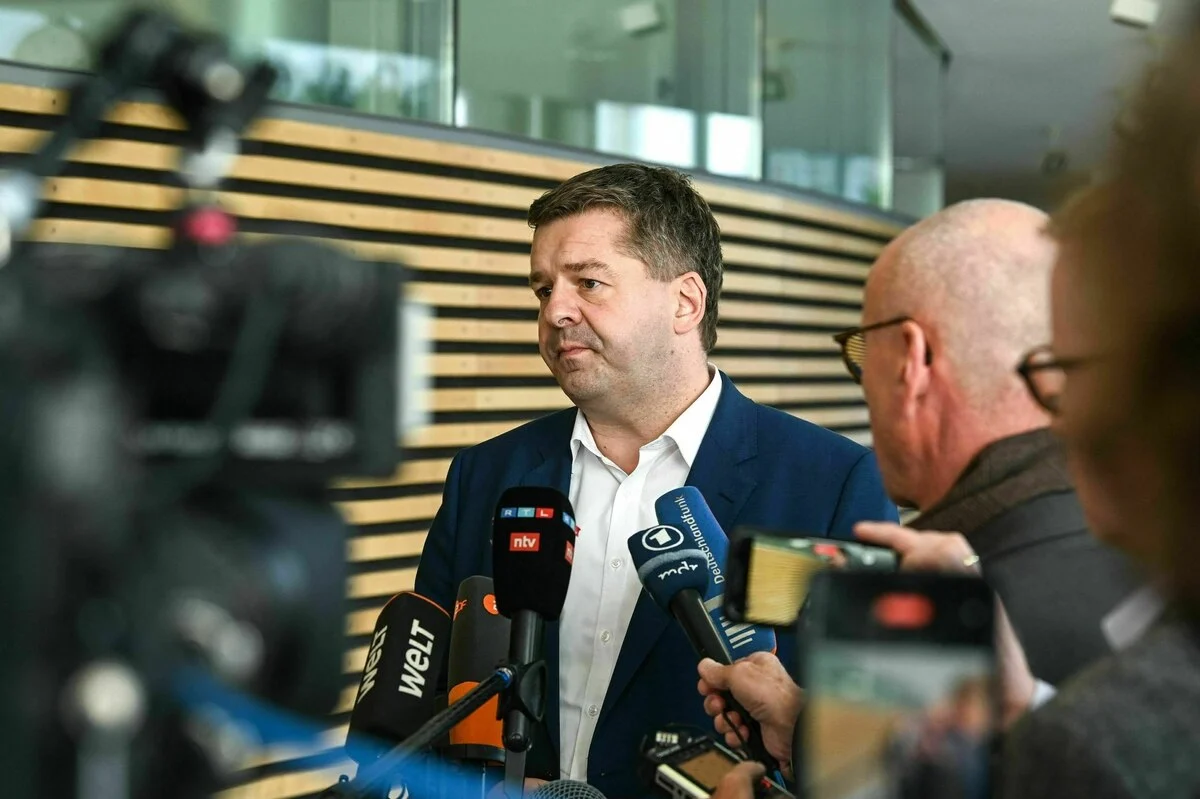
The CDU’s decision, reached after a grueling three-hour faction meeting, represents a fragile consensus within a party deeply scarred by mistrust and past electoral disappointments. For Sven Schulze, the embattled CDU faction leader, it is a crucial, albeit temporary, victory that allows the party to project an image of unity and decisive action against the far-right. However, the move is not without its risks, as it effectively cedes the parliamentary floor to the very forces the CDU seeks to contain and sets a precedent for procedural obstruction in a state already characterized by political volatility.
Chronology: A Faction Divided, a State in Flux
The path to this extraordinary decision has been marked by a series of escalating tensions and internal struggles within the CDU Saxony-Anhalt, mirroring broader challenges facing centrist parties across Germany.
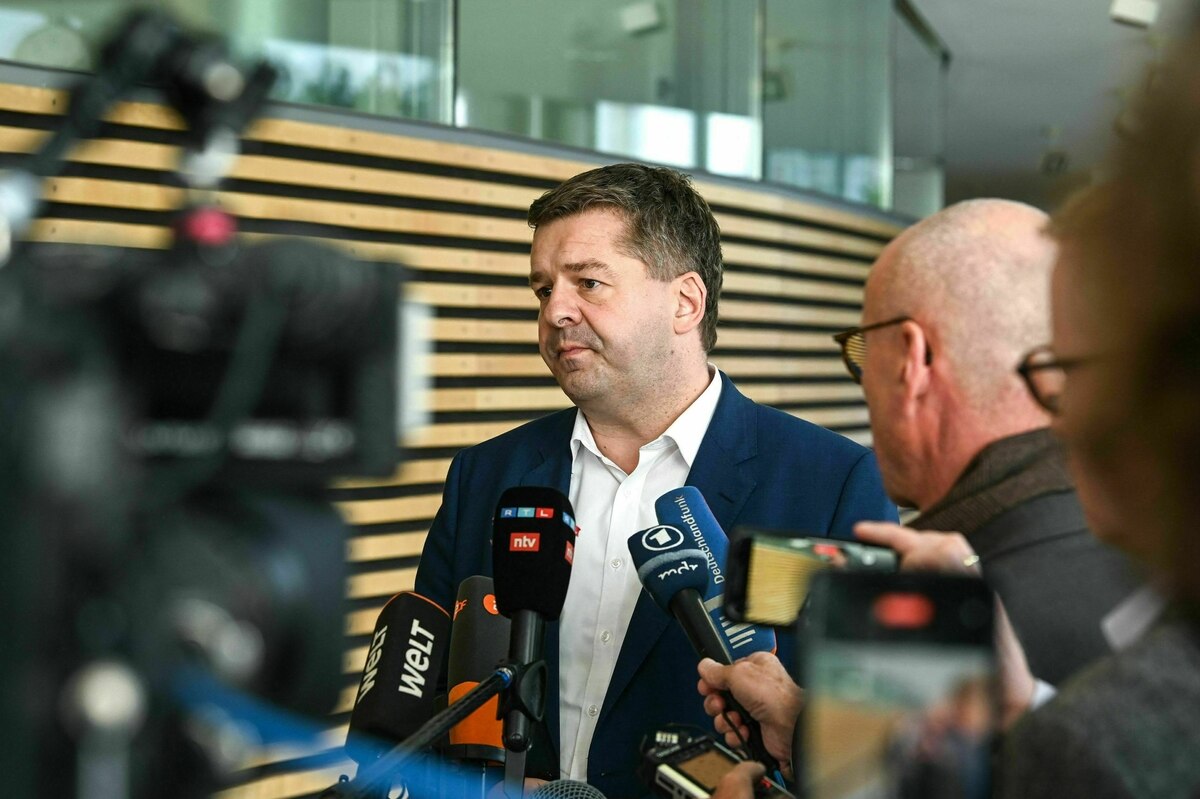
The Deeply Fractured Faction: A Three-Hour Ordeal
On Tuesday, the 15 members of the CDU faction gathered in the Landtag of Saxony-Anhalt for a meeting that stretched for over three hours. The prolonged duration underscored the depth of the divisions within the group, which has been described as deeply split, with members reportedly no longer trusting each other. Sven Schulze, the faction leader, appeared visibly strained, indicating the immense pressure under which the decision-making process unfolded. The absence of a mediator, despite the clear need for one, highlighted the raw nature of the internal conflict.
Lingering Shadows: The AfD Landtag President Vote
Even before the meeting officially began, the existing fissures within the CDU were laid bare. CDU parliamentarian Tobias Krull publicly questioned why eight faction members had claimed to have abstained in the recent election of AfD politician Tobias Rausch as Landtag President, when only five actual abstentions were officially recorded. This discrepancy pointed to a potential covert alignment with the AfD from within CDU ranks, fueling suspicion and mistrust. It set a chilling precedent for the upcoming Minister-President election, raising the specter of "turncoats" who might secretly vote for the AfD’s candidate, Ulrich Siegmund, despite official party lines. This past incident served as the "elephant in the room" during Tuesday’s discussions: could CDU members, in a secret ballot, once again break ranks to support a far-right candidate?
A Fragile Consensus: The Walkout Decision
Ultimately, the CDU faction managed to forge a unanimous decision – with one abstention – to address this critical question directly. "We have decided," Schulze announced, looking somewhat pale but resolute, "that we will not participate in this election, but will leave the session hall." This unified front, albeit born out of necessity, aims to prevent Siegmund from garnering the necessary votes with the assistance of rogue CDU members, unless those members were to openly defy the faction by remaining in the chamber.
The lone abstention came from Guido Heuer, a former faction leader who had been blindsided by Schulze’s surprising candidacy for the faction leadership after the last election, which Schulze won by a narrow 8-7 margin. Heuer expressed a desire for legal clarification regarding the consequences of a walkout for a potential second ballot. His reserved demeanor after the meeting – stating only that "we had a discussion, and our faction leader will announce the results – not me" – hinted at the persistent underlying tensions within the faction, despite the outward show of unity.
Supporting Data: Electoral Mechanics, Political Alignments, and Eroding Norms
To fully grasp the significance of the CDU’s decision, it is crucial to understand the parliamentary mathematics, the broader political dynamics in Saxony-Anhalt, and the increasing erosion of democratic norms by the AfD and BSW.

The Electoral Process for Minister-President
The election of a Minister-President in Saxony-Anhalt is governed by a specific procedure designed to ensure broad parliamentary support. In the first two ballots, an absolute majority of the statutory number of members of the Landtag is required. With 97 seats in the Landtag, this means a candidate needs 49 votes to win. However, the Minister-President only needs 42 votes to be elected if all 97 members are present and voting (42 being 49 – the required number to abstain and thus lower the threshold). The article states Siegmund needs 42 votes in the first ballot, implying that the calculation of "absolute majority" is based on votes cast, not the statutory number of seats, or that the effective number of members expected to vote is lower. Assuming the article’s number (42) is correct for Siegmund, it suggests a calculation based on votes cast, not total seats. If 97 members are present, 49 votes are needed. If 85 members are present (97 – 12 CDU members who walk out), then 43 votes are needed. If the 8 BSW members also abstain, then the number of votes needed decreases further. Let’s assume the 42 votes mentioned in the article is the critical threshold for Siegmund to win if the CDU walks out and BSW abstains.
If neither the first nor the second ballot yields an absolute majority, a third ballot is held within 14 days. In this third round, a simple, or relative, majority suffices. This means the candidate with the most votes, regardless of whether it’s an absolute majority, wins. This third round is where the CDU’s long-term strategy becomes particularly critical and currently remains undefined.
The Numbers Game: AfD, BSW, and the Blocking Coalition
The current composition of the Landtag of Saxony-Anhalt is crucial to this political drama:
- AfD: 39 seats
- CDU: 15 seats
- Die Linke (The Left): 11 seats
- SPD: 9 seats
- FDP: 7 seats
- Bündnis Sahra Wagenknecht (BSW): 8 seats (recently formed from former Left Party members)
- Bündnis 90/Die Grünen (Greens): 5 seats
- Non-attached: 3 seats
- Total: 97 seats
The AfD, with its 39 seats, is the largest single party. If Siegmund needs 42 votes in the first round (as stated in the original article, likely implying a calculation based on effective votes if others abstain), the AfD is just three votes short. The BSW’s renewed announcement to abstain, despite "cuddling photos with the AfD at the right-wing extremist magazine Compact," means Siegmund cannot rely on their votes. This places the onus squarely on potential CDU defectors. By walking out, the CDU removes its 15 votes from the equation, making it virtually impossible for Siegmund to reach the 42-vote threshold in the first two rounds, provided no CDU members openly defy the faction.
The CDU’s "Firewall" and National Implications
The CDU’s walkout is a stark illustration of the "firewall" strategy that mainstream parties in Germany have long attempted to uphold against the AfD. This unwritten rule dictates no cooperation, coalition, or support for the far-right party. However, this firewall has shown increasing cracks, particularly at the municipal and state levels, and especially in eastern Germany where the AfD’s support is highest. CDU national leader Friedrich Merz has repeatedly reiterated the party’s commitment to this stance, but incidents of local CDU members collaborating with the AfD have frequently challenged his authority and the party’s cohesion. The situation in Saxony-Anhalt is a high-stakes test of this principle, demonstrating the lengths to which a mainstream party is willing to go to prevent a far-right takeover of a state government.

The BSW’s Ambiguous Role and the "Cuddling Front"
The BSW, founded by the charismatic but controversial Sahra Wagenknecht, positions itself as a new political force transcending traditional left-right divides. However, its actions in Saxony-Anhalt, particularly the "cuddling photos" with the AfD published in the right-wing extremist magazine Compact, have raised serious questions about its true political alignment. Despite these public appearances, the BSW faction announced it would abstain from the Minister-President election. This stance, while denying direct support to the AfD, also avoids actively blocking them, leaving the party in an ambiguous position that draws criticism from across the political spectrum. Critics argue that by not actively voting against Siegmund, the BSW indirectly aids the AfD by normalizing their presence and influence.
Erosion of Parliamentary Norms
Beyond the election itself, the political climate in Saxony-Anhalt reveals a worrying trend of eroding parliamentary customs, largely spearheaded by the AfD and, at times, facilitated by the BSW. A striking example is the absence of an "Ältestenrat" (Council of Elders) meeting before a special plenary session called for Wednesday. Traditionally, this cross-party body coordinates speaking times and procedural flows, ensuring smooth parliamentary operations. Its bypass indicates a deliberate disregard for established cooperative practices.
Furthermore, AfD Landtag President Tobias Rausch had already announced his intention to exclude the CDU Vice President from leading the session – an unprecedented breach of protocol, revealed, ironically, in the right-wing extremist magazine Compact. This signals a clear intent by the AfD to weaponize parliamentary procedures and sideline political opponents. Adding to these concerns is the planned resolution in favor of Putin, pushed by both the AfD and BSW, which would place Saxony-Anhalt in direct opposition to Germany’s foreign policy and further strain democratic consensus.
Official Responses: Unity, Reservations, and Open Hostility
The immediate aftermath of the CDU’s decision saw a mix of cautious optimism, lingering skepticism, and outright hostility from the various political actors.
Sven Schulze’s Attempt at Reconciliation
Sven Schulze, the CDU faction leader, attempted to project an image of newfound unity and reconciliation after the arduous meeting. "I have the feeling that the faction has moved a step closer together again after today’s factual discussion," he stated, adding that some "trenches had been filled." He emphasized the necessity for the CDU to act as a united opposition, particularly given the perceived proximity between BSW and AfD. "All 15 together," he declared, underlining the need for cohesion against the backdrop of an increasingly polarized political landscape. This public display of harmony is crucial for Schulze, whose leadership has been repeatedly questioned due to the faction’s internal discord.

Guido Heuer’s Legal Scrutiny
Guido Heuer, the CDU member who abstained from the walkout vote, maintained his reserved stance. His concern centered on the legal ramifications of a collective absence, especially for a potential second ballot. This legalistic approach reflects not only a personal caution but also hints at the persistent underlying tensions and mistrust within the faction, where every tactical move is scrutinized for potential pitfalls and challenges to established norms. Heuer’s past rivalry with Schulze further underscores that while a decision was made, deep-seated grievances may not have been fully resolved.
Sepp Müller’s Proposal for the Third Ballot
Sepp Müller, a prominent CDU figure and Schulze’s internal rival aspiring to become the state party leader, quickly offered a suggestion for the as-yet-undetermined strategy for the crucial third ballot. On platform X (formerly Twitter), Müller proposed that the CDU should return to the chamber for the third round and vote "No" against Siegmund. This proposal aims to directly counter the AfD candidate if a relative majority becomes the deciding factor, providing a clearer stance than simply abstaining. It also allows Müller to position himself as a decisive leader with a clear strategy.
The AfD’s Hostile Silence
The AfD’s response to the CDU’s move was characterized by a telling silence from the party as a whole, coupled with an openly hostile reaction from one of its prominent members. When asked by taz for comment on how they would deal with the CDU’s decision, the AfD chose not to provide an official statement. This lack of comment suggests either a scrambling for a new strategy or a deliberate attempt to project indifference.
However, Vice Landtag President Tillschneider, an AfD member, responded to the taz inquiry with an unpresidential and aggressive message: "Stop writing to me. I have no interest in contact with you or any other taz employee. You are welcome to talk about me, but not with me. Understood?" This response not only demonstrates a clear disdain for journalistic inquiry but also highlights the AfD’s increasingly combative and anti-establishment posture, which extends to media interactions.
Implications: Uncharted Waters for Saxony-Anhalt’s Democracy
The CDU’s walkout decision, while a short-term tactical success in blocking the AfD, opens up a complex array of long-term implications for the CDU, the AfD, the BSW, and parliamentary democracy in Saxony-Anhalt.

For the CDU: Fragile Unity and a Looming Challenge
For the CDU, the decision represents a temporary triumph of unity over deep-seated divisions. It allows them to demonstrate a firm stance against the far-right, potentially boosting their credibility among voters who demand a clear distinction. However, this unity is fragile. The core issues of mistrust and internal power struggles, as evidenced by Krull’s question and Heuer’s reservation, remain unresolved. The biggest challenge lies in the third ballot. If the election reaches this stage, a relative majority suffices, and a walkout might no longer be a viable option. The question of whether the CDU would follow Sepp Müller’s suggestion to vote "No" or devise an alternative strategy remains open, exposing the potential for renewed internal conflict. Furthermore, the risk of individual CDU members openly defying the faction and remaining in the chamber to vote for Siegmund, though small, cannot be entirely dismissed, which would shatter the carefully constructed image of unity.
For the AfD: A Strategic Setback and Potential Escalation
The CDU’s move is a significant tactical setback for the AfD. It disrupts their immediate path to the Minister-President’s office and forces them to rethink their strategy. While they might still put Siegmund forward for a second or even third ballot, the initial momentum is lost. This could lead to frustration within the AfD, potentially resulting in an even more aggressive and confrontational approach within the Landtag. Their past actions, such as bypassing the Council of Elders and Rausch’s exclusion of the CDU Vice President, suggest a willingness to further erode parliamentary norms when faced with opposition. The AfD might try to exploit the perceived "obstruction" by mainstream parties to paint themselves as victims of an undemocratic establishment.
For the BSW: Pressure to Define its Stance
The BSW’s continued abstention, while preventing direct support for the AfD, places the party under increasing scrutiny. The "cuddling photos" with the AfD and the joint push for a pro-Putin resolution already suggest a blurring of lines. In the current highly polarized environment, a neutral stance can be interpreted as tacit approval or, at best, a failure to actively defend democratic principles against extremist forces. The CDU’s walkout puts additional pressure on the BSW to clarify its political identity and whether it genuinely seeks to operate outside the established political spectrum or is, in practice, enabling the far-right.
For Parliamentary Democracy in Saxony-Anhalt: A Precarious Future
The events unfolding in Saxony-Anhalt paint a grim picture for parliamentary democracy in the state. The open mistrust between factions, the weaponization of procedural rules, the erosion of established customs, and the direct confrontation with extremist parties create a highly unstable political environment. The possibility of snap elections looms if no Minister-President can be elected, further prolonging political uncertainty. More broadly, the situation reflects a national challenge where mainstream parties struggle to contain the rise of the far-right while maintaining their own internal cohesion and the functionality of democratic institutions. The willingness of parties to resort to extraordinary measures like a collective walkout underscores the severity of the crisis and the unprecedented nature of the political landscape in Germany’s eastern states. The outcome of the Minister-President election will not only shape Saxony-Anhalt’s future but also serve as a crucial test case for how German democracy confronts its most profound challenges.