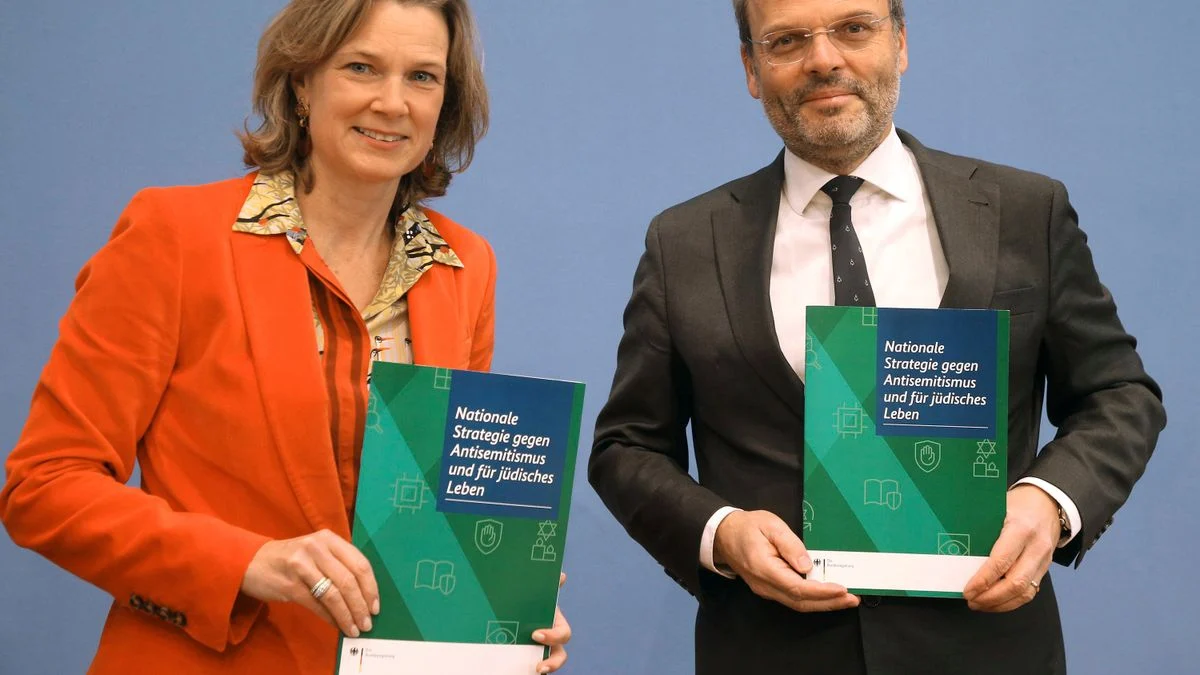
BERLIN, Germany – In a significant move signaling a renewed commitment to combating rising antisemitism, Germany is reportedly on the verge of appointing Katharina von Schnurbein, the European Union’s highly regarded Coordinator on Combating Antisemitism and Fostering Jewish Life, as its next Federal Government Commissioner for Jewish Life in Germany and the Fight Against Antisemitism. Multiple media outlets, including Der Tagesspiegel, Politico, Welt, and the Frankfurter Allgemeine Zeitung, have cited government circles in their unanimous reporting of the impending decision.
The appointment of such a prominent European figure to a national role underscores the urgency and seriousness with which Germany is approaching the persistent challenge of antisemitism. Von Schnurbein, who has served in her EU capacity since 2015, brings a wealth of experience, an extensive international network, and a proven track record in developing and implementing strategies to combat anti-Jewish hatred and promote Jewish culture across the continent. Her potential transition from Brussels to Berlin is anticipated to occur rapidly, with the federal cabinet expected to formalize the decision as early as this Wednesday, paving the way for her to assume the pivotal position within the month. This strategic leadership change comes at a critical juncture, as Germany grapples with a notable surge in antisemitic incidents and an ongoing debate about national identity and historical responsibility in the face of contemporary challenges.
Main Facts: A Crucial Transition in the Fight Against Antisemitism
The news of Katharina von Schnurbein’s likely appointment has been met with a sense of anticipation within political and Jewish community circles. Her name has emerged as the leading candidate, with reports from influential German and international media converging on her selection. This consensus among government sources suggests a carefully considered choice designed to inject fresh impetus into Germany’s national efforts.
Katharina von Schnurbein’s Distinguished Profile:
Since her appointment in 2015 as the first-ever EU Coordinator on Combating Antisemitism, Katharina von Schnurbein has been instrumental in shaping European policy and action against anti-Jewish hatred. Her mandate has been broad and impactful, encompassing several key areas:
- Strategy Development: She spearheaded the creation of the EU Strategy on combating antisemitism and fostering Jewish life (2021-2030), a landmark document that outlines a comprehensive approach across various policy domains, including prevention, protection, education, and fostering Jewish life.
- Inter-institutional Coordination: Von Schnurbein has worked tirelessly to ensure that the fight against antisemitism is integrated into all relevant EU policies and programs, coordinating efforts across different Commission departments and engaging with Member States.
- Engagement with Jewish Communities: She has served as a vital liaison between the European Commission and Jewish communities, ensuring their voices are heard and their concerns addressed at the highest levels of European governance.
- Education and Awareness: A significant part of her work has involved promoting Holocaust remembrance, combating Holocaust denial and distortion, and fostering education about Jewish life and history to counter prejudices.
- International Cooperation: Her role has also involved extensive collaboration with international organizations and partners, positioning the EU as a leader in the global fight against antisemitism.
Her deep understanding of the multifaceted nature of antisemitism, from its historical roots to its contemporary manifestations, combined with her experience in navigating complex political landscapes and building broad coalitions, makes her an exceptionally well-suited candidate for the German federal role. The position demands not only a profound commitment to human rights and historical responsibility but also a pragmatic approach to policy implementation and public engagement.
The Role’s Heightened Importance:
The Federal Government Commissioner for Jewish Life in Germany and the Fight Against Antisemitism is more than just an administrative post; it is a powerful symbolic and practical embodiment of Germany’s commitment to its Jewish community and its solemn responsibility stemming from the Holocaust. In recent years, particularly in the wake of geopolitical events and the pervasive influence of social media, antisemitic incidents in Germany have shown an alarming increase. This makes the leadership of this office more critical than ever, requiring a figure who can inspire confidence, mobilize resources, and articulate a clear vision for a Germany free from anti-Jewish hatred. Von Schnurbein’s international stature and proven efficacy are seen as significant assets in this endeavor, promising to elevate Germany’s domestic efforts and reinforce its standing as a responsible actor on the global stage.
Chronology: The Evolution of Germany’s Anti-Semitism Commissioner Role
The establishment of the Federal Government Commissioner for Jewish Life in Germany and the Fight Against Antisemitism marked a pivotal moment in Germany’s post-war history, underscoring a deepening awareness of the persistent nature of antisemitism and the need for a dedicated, high-level response.
Inception of the Role and Felix Klein’s Tenure:
The position was created in 2018 under the then-Grand Coalition government, primarily in response to growing concerns over a discernible rise in antisemitic incidents across the country. These concerns were fueled by various factors, including the increasing presence of far-right extremism, the impact of migration, and the proliferation of anti-Jewish sentiments in online spaces. The role was designed to be a central point of contact for Jewish communities, a voice for their concerns within the government, and a coordinator of national strategies to combat antisemitism.
Dr. Felix Klein, a distinguished diplomat and former Special Representative for Relations with Jewish Organizations and Issues Relating to Antisemitism at the Foreign Office, was appointed as the first incumbent in April 2018. During his tenure, which lasted approximately five and a half years, Klein became a prominent public figure, tirelessly advocating for Jewish life and condemning antisemitism in all its forms. His work focused on:

- Raising Awareness: Constantly highlighting the dangers of antisemitism and educating the public on its various manifestations.
- Policy Recommendations: Advising the federal government on legislative and policy measures to enhance protection for Jewish communities and prosecute antisemitic crimes more effectively.
- Community Engagement: Fostering dialogue and building trust with Jewish organizations and individuals across Germany.
- International Collaboration: Representing Germany in international forums on combating antisemitism and sharing best practices.
- Defining Antisemitism: Actively promoting the adoption and application of the International Holocaust Remembrance Alliance (IHRA) working definition of antisemitism as a crucial tool for identification and understanding.
Klein’s tenure was characterized by a robust and proactive approach, which laid a strong foundation for the office. He navigated complex debates, often facing public scrutiny and criticism, but remained steadfast in his mission.
Departure and Interim Leadership:
Dr. Klein concluded his service as the Federal Commissioner at the end of August, taking on a new diplomatic assignment as Germany’s Ambassador to the Organisation for Economic Co-operation and Development (OECD) in Paris. His departure left a significant void, with the crucial post becoming vacant at a time when antisemitism was, if anything, escalating.
In the interim, the responsibilities of the office were temporarily assumed by Christoph de Vries, a Parliamentary State Secretary in the Federal Ministry of the Interior and a member of the Christian Democratic Union (CDU). While de Vries is a respected politician, the temporary nature of his role and the inherent limitations of an interim arrangement meant that the office could not operate with the full authority and strategic direction of a permanent commissioner. This interim period, though necessary, highlighted the critical need for a swift and decisive appointment to ensure continuity and strength in Germany’s fight against antisemitism. The delay in finding a successor, even if understandable given the complexity of high-level appointments, did draw criticism from various quarters, underscoring the perceived urgency of the role.
Supporting Data: The Rising Tide of Antisemitism in Germany and Europe
The urgency surrounding the appointment of a new Anti-Semitism Commissioner is not merely political; it is a direct response to tangible and alarming trends in antisemitic sentiment and incidents across Germany and, indeed, Europe. Data from various sources consistently paints a grim picture, underscoring the persistent and evolving threat faced by Jewish communities.
Statistical Overview (Germany):
Official statistics from the German Federal Criminal Police Office (BKA) and reports from independent monitoring bodies like the Research and Information Centre on Antisemitism (RIAS) reveal a troubling upward trajectory in antisemitic crimes and incidents.
- General Increase: Even before recent geopolitical escalations, Germany witnessed a steady increase in antisemitic offenses. For instance, the number of antisemitic crimes recorded by the police has consistently been in the thousands annually, with a significant portion being violent acts or propaganda-related offenses.
- Post-October 7th Surge: The terrorist attacks by Hamas on Israel on October 7, 2023, and the subsequent conflict in the Middle East, have triggered an unprecedented surge in antisemitic incidents globally, and Germany is no exception. RIAS reported a dramatic increase in incidents immediately following October 7th, ranging from verbal abuse and harassment to property damage, graffiti, and even physical assaults. Synagogues and Jewish institutions have required heightened security, and Jewish individuals have reported feeling increasingly unsafe in public spaces.
- Nature of Incidents: The incidents are diverse, encompassing:
- Verbal Abuse and Harassment: Often directed at individuals perceived to be Jewish, or those expressing solidarity with Israel.
- Vandalism and Graffiti: Swastikas, anti-Semitic slogans, and other hateful symbols appearing on public and private property.
- Physical Attacks: Though less frequent, violent assaults against Jewish individuals have occurred, sometimes resulting in serious injury.
- Online Hate Speech: The internet and social media platforms are fertile ground for the rapid spread of antisemitic conspiracy theories, Holocaust denial, and incitement to hatred. This digital dimension poses a significant challenge for monitoring and intervention.
Contextual Factors:
The rise in antisemitism in Germany is multi-faceted, stemming from various ideological and social currents:
- Far-Right Extremism: Traditional neo-Nazism and contemporary far-right groups continue to be a primary source of antisemitic ideology and violence, often intertwining with anti-democratic and xenophobic narratives.
- Anti-Israel Activism: While legitimate criticism of Israeli government policies is distinct from antisemitism, the line is often blurred, with some forms of anti-Zionism crossing into antisemitic tropes, denying Israel’s right to exist, or holding all Jews collectively responsible for Israeli actions. This has become particularly pronounced in the current geopolitical climate.
- Conspiracy Theories: Antisemitic conspiracy theories, often rooted in centuries-old prejudices, find new life and wider dissemination through social media, particularly during times of crisis (e.g., linking Jews to global pandemics or financial crises).
- Imported Antisemitism: Debates also exist around antisemitism brought in by some immigrant communities, necessitating nuanced approaches to integration and education.
European Context:
The trends observed in Germany are not isolated but reflect a broader European phenomenon. Surveys by the EU Agency for Fundamental Rights (FRA) have consistently shown that antisemitism is a deeply entrenched problem across the continent, with Jewish individuals frequently reporting fear, harassment, and discrimination. The EU’s own strategy, which Katharina von Schnurbein helped develop, acknowledges the systemic nature of the problem and the need for coordinated, cross-border responses. Her expertise in this broader European landscape makes her uniquely positioned to understand and tackle the specific challenges within Germany while maintaining a vital international perspective. The appointment is therefore not just a national matter but also carries implications for European efforts to combat antisemitism.
Official Responses and Public Sentiment
The announcement of Katharina von Schnurbein’s potential appointment, while not yet officially confirmed, has generated significant discussion and reflects a carefully managed communication strategy from government circles.
Federal Interior Ministry’s Stance:
As is standard protocol for high-level personnel decisions, the Federal Ministry of the Interior, which oversees the Commissioner’s office, has refrained from providing an immediate public confirmation of the reports. When queried by media outlets, the Ministry issued a carefully worded statement indicating that the Interior Minister would, in due course, decide on the filling of the position and submit a proposal to the federal cabinet. The statement typically concludes by noting that the Ministry does not comment publicly on ongoing personnel matters beyond this. This official reticence, while expected, does not contradict the widespread media reports but rather adheres to bureaucratic formalities until a formal cabinet decision is made and announced. The Ministry’s general posture, however, remains one of strong commitment to fighting antisemitism and ensuring the security and well-being of Jewish communities in Germany.

Government Circles’ Perspective:
The reports, emanating from "government circles," suggest a deliberate leak or controlled information release aimed at preparing the ground for the official announcement. The consensus among these sources points to several key reasons for von Schnurbein’s selection:
- Unparalleled Expertise: Her eight years (now nine years as of 2024) in the EU role have given her an unparalleled depth of knowledge and experience in combating antisemitism at a policy level.
- International Network: Her extensive network among European institutions, national governments, Jewish organizations, and civil society groups is seen as a major asset, allowing Germany to integrate its efforts more seamlessly into broader European and international strategies.
- Strategic Vision: Her involvement in crafting the EU Strategy on combating antisemitism demonstrates her ability to develop and execute comprehensive, long-term plans.
- Symbolic Value: Appointing a figure of her international standing sends a powerful signal, both domestically and internationally, about Germany’s unwavering commitment to this cause.
Reactions to the Delay:
The vacancy of the Federal Commissioner’s post since Felix Klein’s departure at the end of August had drawn considerable criticism. Jewish community leaders, political opposition parties, and civil society organizations had expressed growing unease over the delay. In a period marked by escalating antisemitic incidents, particularly in the aftermath of the October 7th attacks, the absence of a dedicated, high-profile figure was seen as problematic. Critics argued that the delay sent an unfortunate message of disinterest or a lack of urgency at a time when strong leadership was most needed. This public pressure likely played a role in accelerating the selection process and ensuring a high-caliber candidate.
Anticipated Reactions to the Appointment:
Should Katharina von Schnurbein’s appointment be confirmed, it is widely expected to be met with broad approval from Jewish communities in Germany and internationally, as well as from political and civil society actors committed to combating antisemitism. Her reputation and track record precede her, and many will likely view her selection as a strong affirmation of Germany’s dedication. There will undoubtedly be high expectations for her to hit the ground running, address immediate challenges, and build upon the foundations laid by her predecessor. Her background in fostering Jewish life, in addition to combating antisemitism, will also likely be welcomed as a holistic approach.
Implications: A New Chapter in Germany’s Commitment
The anticipated appointment of Katharina von Schnurbein to the crucial role of Federal Government Commissioner for Jewish Life in Germany and the Fight Against Antisemitism heralds a new and potentially transformative chapter in Germany’s ongoing efforts to confront anti-Jewish hatred and nurture its vibrant Jewish community. Her transition from a prominent European position to a national one carries significant implications across several dimensions.
Strengthening National Efforts:
Von Schnurbein’s arrival is expected to invigorate Germany’s national strategy against antisemitism. Her deep expertise in policy development and implementation, honed at the EU level, will allow her to critically assess existing programs, identify gaps, and propose innovative solutions. This could lead to a more coordinated and effective approach across various federal ministries, state governments, and civil society organizations. Her focus on prevention through education, robust protection measures for Jewish institutions, and proactive engagement with communities aligns perfectly with the evolving needs of the country. Her leadership could also inspire greater public engagement and awareness campaigns, fostering a more resilient society against prejudice.
International Linkages and Best Practices:
One of the most significant benefits of von Schnurbein’s appointment is the seamless integration she offers between Germany’s national efforts and broader European and international initiatives. Having been at the forefront of the EU’s fight against antisemitism, she possesses an intimate understanding of common challenges, successful strategies, and the importance of cross-border cooperation. This will enable Germany to:
- Share and Adopt Best Practices: Germany can more effectively learn from and contribute to anti-antisemitism strategies developed across Europe.
- Harmonize Approaches: Facilitate greater alignment with EU directives and recommendations, particularly concerning data collection, legal frameworks, and educational content.
- Amplify Germany’s Voice: Reinforce Germany’s position as a leading voice in the global fight against antisemitism, leveraging its unique historical responsibility with contemporary leadership.
Her international network will be invaluable for fostering partnerships and ensuring that Germany’s policies are informed by global trends and insights.
Challenges Ahead:
Despite the optimism surrounding her potential appointment, von Schnurbein faces formidable challenges. Antisemitism in Germany is a deeply entrenched and multi-layered problem, constantly adapting to new social and political contexts.
- Persistent Nature of Antisemitism: She will confront not only overt acts of hatred but also subtle forms of prejudice, systemic biases, and the insidious spread of conspiracy theories.
- Balancing Prevention, Prosecution, and Education: The role requires a delicate balance between advocating for stricter legal measures and effective prosecution of antisemitic crimes, promoting educational initiatives to counter ignorance, and fostering interfaith dialogue and understanding.
- Engaging with Diverse Communities: Addressing antisemitism requires engaging with various segments of society, including those within immigrant communities, who may hold differing views on Israel or have been exposed to antisemitic narratives.
- Political Sensitivity: The role is inherently political and often subject to intense public scrutiny and debate, particularly concerning the nexus of antisemitism and criticism of Israel. Navigating these sensitivities while maintaining a clear and principled stance will be crucial.
- Resource Allocation: Ensuring adequate resources for security, education, and community support will be a constant advocacy point.
Expectations for Von Schnurbein:
It is expected that von Schnurbein will prioritize:
- Rapid Assessment and Action Plan: Quickly evaluate the current state of antisemitism in Germany and develop an immediate action plan.
- Enhanced Security: Work closely with law enforcement to ensure the safety and security of Jewish institutions and individuals.
- Educational Reform: Advocate for robust and nuanced education about Jewish life, history, and the Holocaust in schools and public discourse.
- Digital Combat: Develop strategies to counter online antisemitism, working with tech companies and law enforcement.
- Strengthening Dialogue: Continue to build strong relationships with Jewish communities and foster interfaith and inter-cultural dialogue.
Symbolic Importance:
Ultimately, Katharina von Schnurbein’s potential appointment sends a powerful symbolic message, both within Germany and to the wider world. It signals Germany’s unwavering commitment to its historical responsibility to protect Jewish life and to actively combat antisemitism in all its forms. It underscores that Germany views the fight against antisemitism not merely as a domestic issue but as an integral part of its identity as a democratic, tolerant, and open society. By bringing a leading European figure into this national role, Germany reaffirms its dedication to a holistic, internationally connected, and proactive approach in confronting one of the most enduring hatreds in human history.