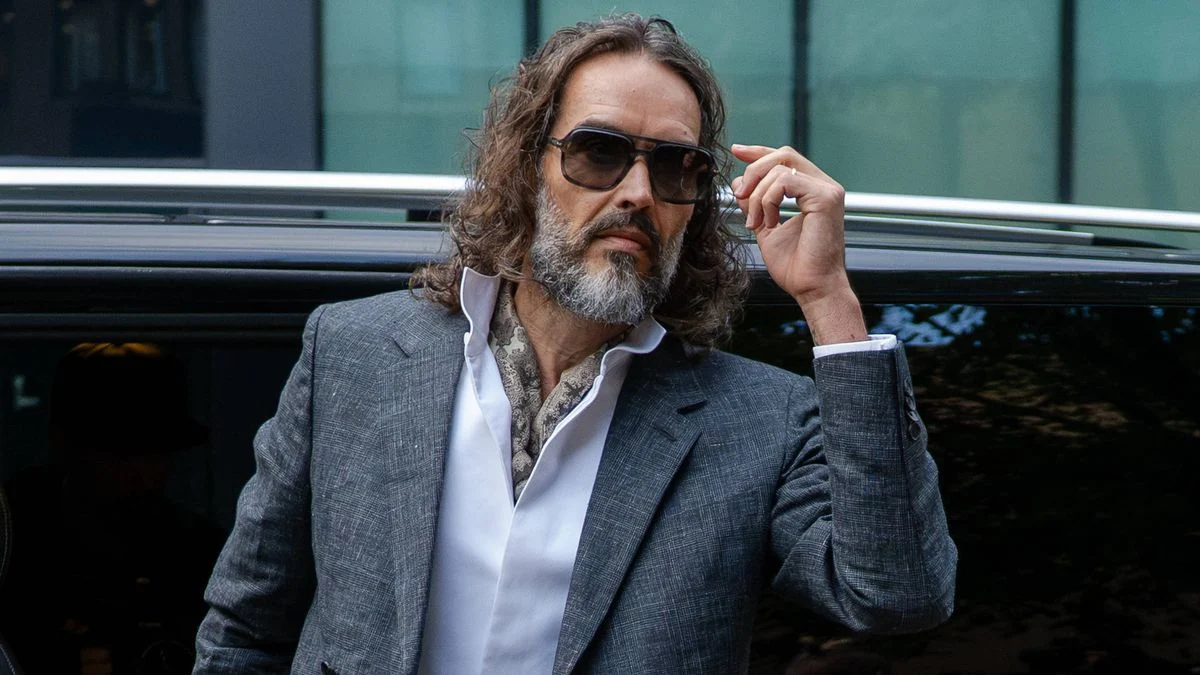
The legal landscape surrounding British comedian and actor Russell Brand has shifted dramatically. Following a protracted period of investigation and public scrutiny, a civil trial has officially commenced in London, centering on serious allegations of sexual assault. This development marks a pivotal moment in the ongoing cultural and legal reckoning regarding the conduct of high-profile figures in the entertainment industry.
Main Facts: The Nature of the Litigation
The proceedings currently underway in the London High Court represent a significant escalation from the initial journalistic investigations that surfaced in 2023. Unlike criminal proceedings, which are brought by the state, this civil lawsuit seeks damages and a formal legal acknowledgment of the alleged harm.
The claimant, identified in court documents as "Jane Doe" for the purposes of these proceedings, alleges that Brand committed sexual assault during a period spanning several years, specifically between 2006 and 2013—a time when Brand was at the absolute zenith of his fame as a presenter for the BBC and Channel 4. The lawsuit contends that Brand leveraged his immense celebrity status and the environment of the British media industry to facilitate sexual misconduct.
Brand, who has consistently and vehemently denied all allegations, has categorized the claims as “very serious criminal allegations” that he maintains are entirely false. His defense team is expected to argue that the incidents, as described by the claimant, did not occur as alleged and that the legal pursuit is an attempt to capitalize on his public profile.
Chronology of the Allegations
The path to this courtroom has been paved by years of rumors, culminating in a definitive journalistic investigation.
- 2006–2013: The period in which the alleged sexual assaults took place, according to the legal filings. During this time, Brand was a household name, known for his provocative style and hedonistic public persona.
- September 2023: A joint investigation by The Sunday Times, The Times, and Channel 4’s Dispatches program brought the allegations into the public sphere. Four women came forward with accounts of rape, sexual assault, and emotional abuse.
- Late 2023: Following the broadcast, the Metropolitan Police launched an investigation into the claims. Several other women contacted the authorities, leading to a broader inquiry into allegations of non-recent sexual offenses.
- 2024: As the police investigation continued, the civil litigation process was initiated. The claimant in the current trial seeks to hold the comedian accountable through the civil court system, which requires a lower burden of proof than a criminal trial (the balance of probabilities versus beyond a reasonable doubt).
- Present Day: The trial has commenced in London, with both parties preparing to present evidence, including witness testimony and digital communication logs from the era in question.
Supporting Data: The Systemic Context
The allegations against Brand cannot be viewed in isolation. They form part of a broader critique of the British media landscape during the mid-2000s. Media analysts and sociologists have pointed to a "culture of impunity" that existed within major broadcasting institutions during that period.
According to data compiled by industry watchdogs, the period between 2005 and 2010 saw a lack of robust HR oversight for freelance "star" talent. Internal reports from the BBC, commissioned following the Jimmy Savile scandal, noted that high-profile presenters were often granted a level of autonomy that bypassed traditional institutional guardrails.
Furthermore, the civil suit relies heavily on contemporary documentation—emails, text messages, and calendars—which the legal team for the claimant argues will corroborate the timeline of the alleged interactions. The case is expected to hinge on whether the court finds the claimant’s account consistent with the circumstantial evidence surrounding Brand’s movements and professional commitments at the time.
Official Responses and Institutional Stance
The response from the institutions once associated with Brand has been one of distancing and procedural reform.
The BBC’s Position
The BBC has faced intense pressure to account for how Brand’s behavior was handled during his tenure. In a statement issued at the start of the trial, a spokesperson reiterated that the broadcaster has cooperated fully with all investigations. "The behavior described is entirely at odds with the values of this organization," the statement read. "We have since implemented more stringent vetting and conduct protocols for all high-profile contractors."
Legal Defense Strategy
Russell Brand’s legal representatives have adopted a strategy of absolute denial. In a pretrial statement, his defense noted: "The allegations are not only denied in their entirety but are characterized as a coordinated effort to dismantle the reputation of a man who has since undergone a significant personal and spiritual transformation." The defense will likely emphasize that no criminal charges have been filed by the Crown Prosecution Service (CPS) to date, arguing that the civil court is being used as a forum for character assassination.
Implications: A Culture in Transition
The implications of this trial extend far beyond the individual parties involved. If the court finds in favor of the claimant, it could set a precedent for how the British legal system handles civil claims related to historical sexual misconduct.
Impact on the Entertainment Industry
The case is a litmus test for the "post-MeToo" era in the UK. Industry experts suggest that a ruling against Brand would likely trigger a wave of similar civil lawsuits against other figures who have previously avoided criminal prosecution due to the expiration of limitation periods or lack of sufficient evidence for a criminal conviction.
The Role of Public Perception
The trial also highlights the divide between public opinion and legal outcomes. Brand has transitioned in recent years from a mainstream comedian to a high-profile figure in the "alternative" media space, cultivating a dedicated following that often views mainstream media reporting as biased. This trial serves as a flashpoint for his followers, many of whom believe the legal system is being weaponized against him.
The Future of Accountability
Legal scholars are watching the case closely to see how the court balances the right to a fair trial for the accused against the necessity of providing a platform for the alleged victims. The trial is expected to last several weeks, with testimony from both the claimant and the defense.
Regardless of the verdict, the mere existence of this trial marks a fundamental shift in how the British legal system addresses allegations of power abuse. It serves as a reminder that the passage of time—once a shield for the accused—is becoming less of an obstacle for those seeking justice in the civil courts. As the proceedings unfold in London, the eyes of the media world remain fixed on the High Court, waiting to see if the legal system will provide the closure that has been so elusive for the survivors of the industry’s darker chapters.