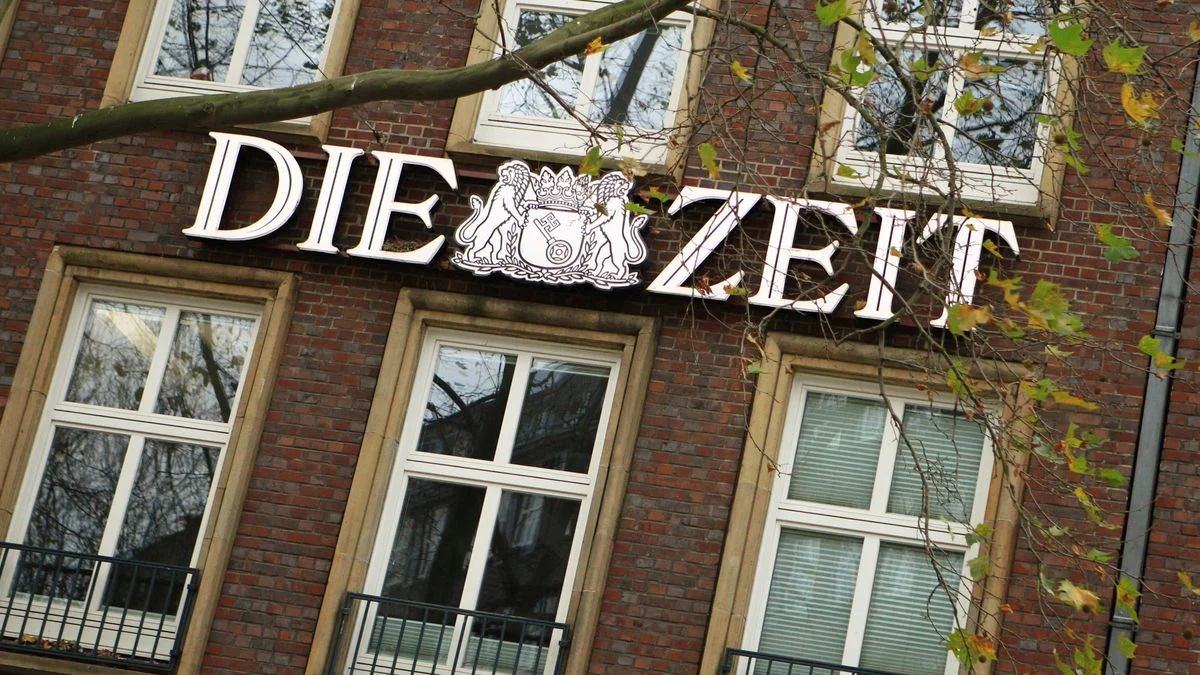
In a development that has sent shockwaves through the German media landscape, judicial authorities have executed a search and seizure operation targeting a prominent journalist. The focus of the investigation is "Fall Block" (The Block Case), a complex narrative involving historical crimes and the limits of journalistic privilege. At the heart of the controversy are audio recordings held by a DIE ZEIT reporter—materials that prosecutors argue are vital to an ongoing criminal investigation, but which press freedom advocates decry as a dangerous encroachment on the protection of sources.
Main Facts: The Seizure of Journalistic Material
The incident centers on a series of recordings produced by a DIE ZEIT journalist who had been researching the "Block" case—a long-standing investigation involving allegations of past violence and systemic failure. German investigators, acting under a court order, seized raw audio files from the reporter, effectively bypassing the reporter’s privilege that traditionally shields journalists from being forced to reveal their research materials or sources.
For the German press, the DIE ZEIT case is not an isolated incident; it represents a growing tension between the state’s desire to solve historical or complex cold cases and the constitutional guarantee of a free press. When the state seizes research materials, it creates a "chilling effect," where potential whistleblowers or victims of crime may fear that their identities will eventually be unmasked by the judiciary, regardless of promises of confidentiality made by journalists.
Chronology of the Conflict
The friction between the state and the press in the "Block" case did not happen overnight. It is the culmination of months of investigative pressure and legal maneuvers:
- Phase I: The Investigation: The journalist began an in-depth exploration of the Block case, conducting interviews with individuals who had previously remained silent. These interviews were recorded to ensure accuracy for a subsequent podcast and long-form report.
- Phase II: The Legal Intervention: Upon learning of the existence of these recordings, the public prosecutor’s office initiated a request for the surrender of the materials. When the media outlet refused, citing the protection of sources, the state sought a judicial warrant to seize the data directly.
- Phase III: The Execution: Authorities executed the search warrant, taking physical and digital copies of the recordings. The journalist’s legal counsel immediately filed a motion to challenge the legality of the seizure, arguing that the judicial order failed to weigh the public interest in journalism against the state’s interest in prosecution.
- Phase IV: The Current Standoff: The materials currently sit in the hands of the authorities, while legal challenges continue to climb the judicial ladder. The debate now focuses on whether the "Block" case qualifies as an exceptional circumstance that overrides the standard protections of journalistic confidentiality.
Supporting Data: The Erosion of Press Freedom in Europe
The seizure of the DIE ZEIT materials takes place against a backdrop of declining media freedom indicators. According to Reporters Without Borders (RSF), while Germany remains relatively high in global rankings, there has been a noticeable increase in police-press altercations and legal actions against investigative reporters in recent years.
Data suggests that when the judiciary lowers the threshold for seizing journalistic materials:
- Source Reliability Drops: Whistleblowers, who often provide the backbone for investigative reporting, are significantly less likely to come forward if they believe the state can seize the journalist’s "black box."
- Resource Drain: Media organizations are forced to divert significant financial resources toward legal defense rather than investigative reporting.
- Self-Censorship: Editorial boards may choose not to pursue sensitive stories involving state misconduct for fear of becoming targets themselves.
In the German legal system, the Zeugnisverweigerungsrecht (right to refuse to testify) is designed to act as a shield. However, critics argue that the "Block" case demonstrates how prosecutors are using criminal procedural law to effectively strip this shield away, framing the journalist not as a reporter, but as a "holder of evidence."
Official Responses and Judicial Justification
The public prosecutor’s office has defended the action as a necessary step in the pursuit of justice. In a formal statement, the authorities argued that the recordings contained "essential evidence" that could not be obtained through any other means. They maintain that the public interest in the clarification of the underlying crime outweighs the journalistic interest in secrecy.
"The law does not grant journalists an absolute immunity that prevents the resolution of serious criminal offenses," one legal representative for the state noted. "Where there is clear evidence of a crime, the state has a duty to exhaust all avenues, including the examination of materials that might shed light on the truth."
Conversely, the DIE ZEIT editorial board and the German Journalists’ Association (DJV) have issued scathing rebukes. They argue that by seizing the materials, the state has fundamentally undermined the role of the press as the "fourth estate." Their position is that if a journalist is forced to function as an extension of the police, they cease to be a journalist and become an investigator—a role that is fundamentally incompatible with the independence required for democratic oversight.
Implications: The Constitutional Crisis
The "Block" case is not merely a dispute over specific audio files; it is a constitutional test case for the future of investigative journalism in Germany.
1. The Precedent of "Journalism as Evidence"
If the court ultimately rules in favor of the state, it will set a dangerous precedent. It suggests that any research conducted by a journalist is, in essence, state property if it pertains to an ongoing criminal investigation. This would effectively turn every newsroom into an extension of the prosecutor’s office, a chilling prospect for the future of watchdog journalism.
2. The Loss of Confidentiality
The integrity of the "source-journalist" relationship is based on the absolute promise of anonymity. If the state can simply reach into that relationship, the entire mechanism of investigative reporting breaks down. Sources will vanish, and the public will be left with only official, sanitized versions of events provided by the state.
3. The Need for Legislative Reform
Many legal experts are now calling for a tightening of the laws governing the seizure of journalistic material. They argue that the current criteria for such seizures are too vague, allowing prosecutors too much discretion. Proposals include requiring a higher bar of "imminent danger to life" before such seizures can be approved, and the mandatory appointment of an independent observer to oversee the handling of any seized materials to ensure they are not used for "fishing expeditions."
Conclusion: A Turning Point
The "Block" case is a stark reminder that democratic freedoms are not static; they must be defended repeatedly against the encroachments of the state. As the legal battle continues, the eyes of the international media community remain fixed on the German judiciary.
Will the courts uphold the sanctity of the journalistic process, or will they prioritize the expediency of criminal prosecution at the cost of press freedom? The outcome will undoubtedly dictate how investigative reporters in Germany handle sensitive information for decades to come. If the state prevails, the "Block" case will be remembered as the moment the protective wall around journalism began to crumble, leaving reporters exposed and the public less informed.
For now, the audio files remain in the custody of the authorities, a silent testament to a conflict that is far from over. The journalism industry is watching, waiting to see if the law will serve as a fortress for the truth or a weapon against those who seek to uncover it. The repercussions will extend far beyond the pages of DIE ZEIT, reaching into the very core of how a free society manages the delicate balance between the rule of law and the freedom of the press.