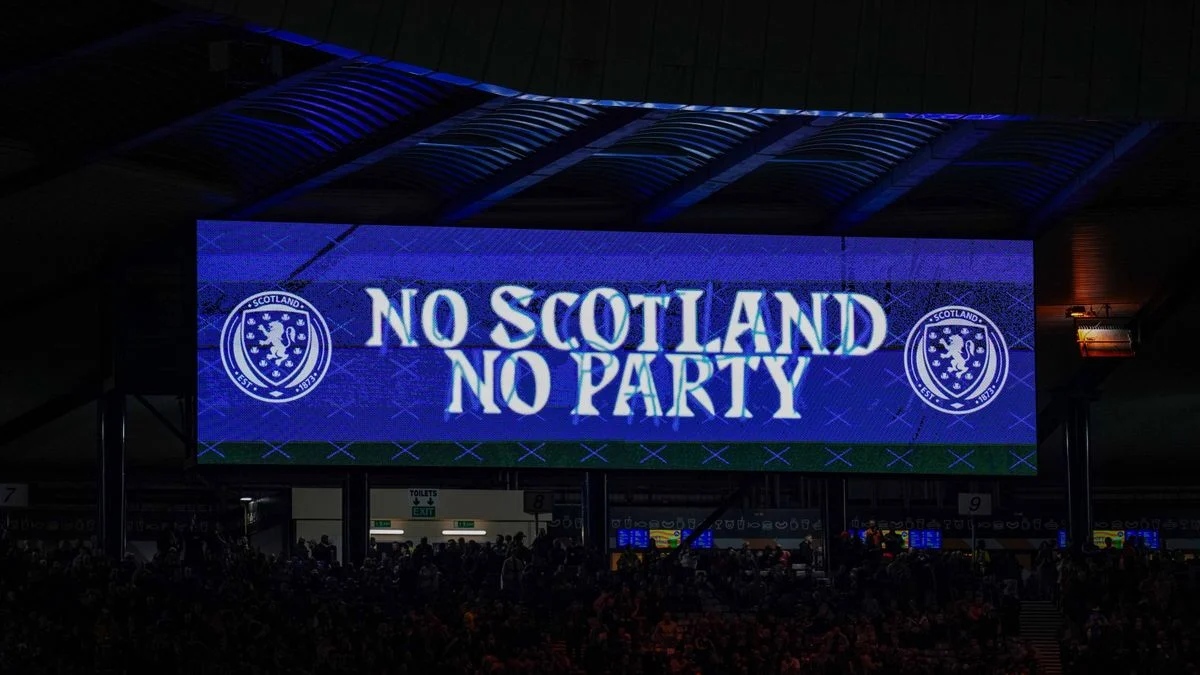
Main Facts: A New Era for Paisley and Beyond
In a landmark development for Scottish football culture, supporters attending the FIFA Women’s World Cup playoff second-leg match between Scotland and the Czech Republic in Paisley will be permitted to consume alcohol at their seats. This decision marks a radical departure from a policy that has governed Scottish stadiums for over four decades, representing a controlled, progressive experiment in stadium management.
The Scottish Football Association (SFA) has characterized the initiative as "another significant step forward." By allowing fans to enjoy a beverage while watching the match from the stands—a common practice in many European leagues—the SFA is aiming to gather empirical data on how a moderated approach to alcohol sales can contribute to a safer, more inclusive, and enjoyable match-day experience.
This pilot program takes place against the backdrop of a favorable competitive position for Scotland, who entered the return leg with a 2-0 aggregate lead following a successful performance in the Czech Republic. While the focus remains on securing a place at the global tournament, the structural changes off the pitch are being viewed by observers as a potential turning point for the Scottish game.
Chronology: The End of the "Dry" Era
To understand the gravity of this decision, one must look back at the historical context of Scottish football regulation.
1980–1981: The Catalyst for Prohibition
The current restrictions trace their origins to the early 1980s. Following a period of heightened social unrest and hooliganism that plagued the sport, the Scottish government implemented stringent laws to curb alcohol-related violence. The Criminal Justice (Scotland) Act 1980, which came into full effect in 1981, effectively banned the sale and consumption of alcohol within sight of the pitch at all professional football matches in Scotland. For 43 years, this prohibition has remained a hallmark of the Scottish sporting experience, enforced with near-total consistency.
2010s–2023: The Creeping Thaw
For decades, the only exceptions were found in exclusive corporate hospitality boxes, creating a socio-economic divide in the stadium experience. However, as the 21st century progressed, pressure mounted to modernize the match-day experience to match the commercial and social standards of the English Premier League and the German Bundesliga.
In recent years, the conversation shifted from an outright ban to "controlled access." Clubs like Aberdeen FC began experimenting with fan zones located in the stadium concourse, allowing supporters to purchase alcohol before kickoff. These trials were strictly limited to matches categorized as "low risk" by local authorities, serving as the proof-of-concept for the current, more ambitious trial in Paisley.
Supporting Data: Why Now?
The SFA’s decision is not an impulsive act of liberalization but a data-driven strategy. The organization has been monitoring international trends, specifically looking at the correlation between alcohol availability and crowd safety.
Comparative Analysis
Data from the English Football League (EFL) and the Bundesliga suggests that when alcohol is sold in a controlled, regulated environment, the "rush" behavior—where fans consume large quantities of alcohol in pubs immediately before kickoff to avoid the stadium ban—is significantly reduced. By allowing consumption throughout the match, officials hope to distribute intake over a longer period, potentially lowering the incidence of pre-match binge drinking.
Risk Mitigation Strategies
For the Paisley trial, the SFA has implemented a multi-layered security approach:
- Controlled Service Points: Alcohol is available only at designated kiosks with strict age-verification protocols.
- Staff Training: Stadium personnel have undergone specialized training in identifying and managing intoxication levels.
- Data Collection: Throughout the match, observers from the SFA and local police will log incidents related to anti-social behavior to determine if the presence of alcohol in the stands correlates with any rise in disorderly conduct.
Official Responses: Balancing Tradition and Modernization
The move has drawn reactions from across the spectrum of Scottish society, ranging from cautious optimism to regulatory scrutiny.
The Scottish Football Association (SFA)
The SFA’s statement emphasizes the long-term goal of fostering a "family-friendly" atmosphere. A spokesperson noted: "Our objective is to move away from the stigmatization of the football fan. By providing a modern, relaxed environment, we believe we can attract a broader demographic to the women’s game and ensure that the match-day experience is consistent with global standards."
Law Enforcement Perspectives
Police Scotland has maintained a position of "cautious cooperation." While they have historically supported the ban as a tool for public safety, they have acknowledged that modern stadium technology—including high-definition CCTV, improved crowd management, and sophisticated ticketing systems—makes the current environment significantly safer than the landscape of 1981. They are closely monitoring the Paisley trial as a potential blueprint for future matches.
Fan Representative Groups
Supporters’ trusts have largely welcomed the news, citing it as a restoration of personal responsibility. "For too long, Scottish fans have been treated as second-class citizens compared to their counterparts in England or abroad," said a representative from a prominent supporters’ union. "Allowing a pint in the stand is a small step, but it signifies a return to a more civilized way of enjoying sport."
Implications: A Blueprint for the Future
The implications of the Paisley trial are profound. If the match passes without a significant increase in alcohol-related incidents, the SFA is likely to lobby the Scottish government for a permanent legislative change to the 1980 Act.
Economic Impact
The financial benefits for clubs could be substantial. By capturing revenue currently lost to local pubs in the hours before kickoff, clubs would gain a new, vital income stream. This revenue could be reinvested into youth development, facility upgrades, and the professionalization of the women’s game.
Changing the Match-Day Culture
The shift is also symbolic. Football culture in Scotland has long been associated with a "hard" image. By integrating alcohol into the stadium environment in a controlled manner, the SFA hopes to shift the narrative toward a more communal, social event. This is particularly relevant for the women’s national team, which has seen surging interest and requires an environment that caters to a diverse fan base, including families and younger supporters.
Legislative Hurdles
Despite the optimism, the path to full legalization is not without obstacles. The 1980 Act remains a powerful piece of legislation, and any move to repeal it will face scrutiny from health advocates who argue that alcohol consumption in sports environments can exacerbate health issues and trigger anti-social behavior. The SFA will need to provide concrete evidence that the "Paisley Model" is not only safe but sustainable.
Conclusion: Watching the Clock
As the match kicks off in Paisley, the eyes of the Scottish sporting world—and indeed the legislative body—are fixed on the stands. This is more than just a test of public behavior; it is an experiment in cultural evolution.
For over four decades, the sight of a fan with a beer in the stands was an impossibility, a relic of a bygone era of violence and prohibition. Today, the SFA is betting that the Scottish football fan has evolved, and that the game itself is ready to grow up. Whether this trial leads to a nationwide overhaul or remains a temporary footnote will depend on the actions of the fans themselves. If the experiment succeeds, the 1980 ban will be relegated to the history books, marking the end of a long, dry, and often debated chapter in Scottish football history.
The success of this pilot program will serve as the primary evidence in a broader debate about personal liberty, public safety, and the commercial future of one of the world’s most passionate footballing nations. For now, the supporters in Paisley have the opportunity to prove that a modern, responsible, and enjoyable match-day experience is not only possible—it is the new standard.