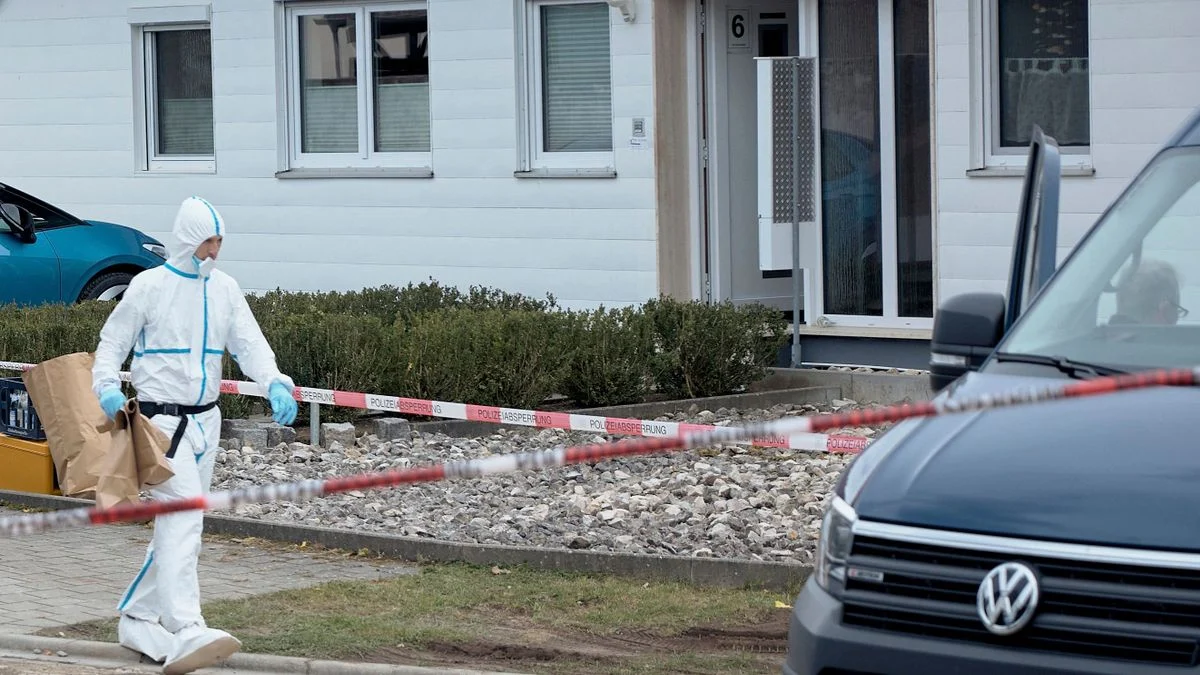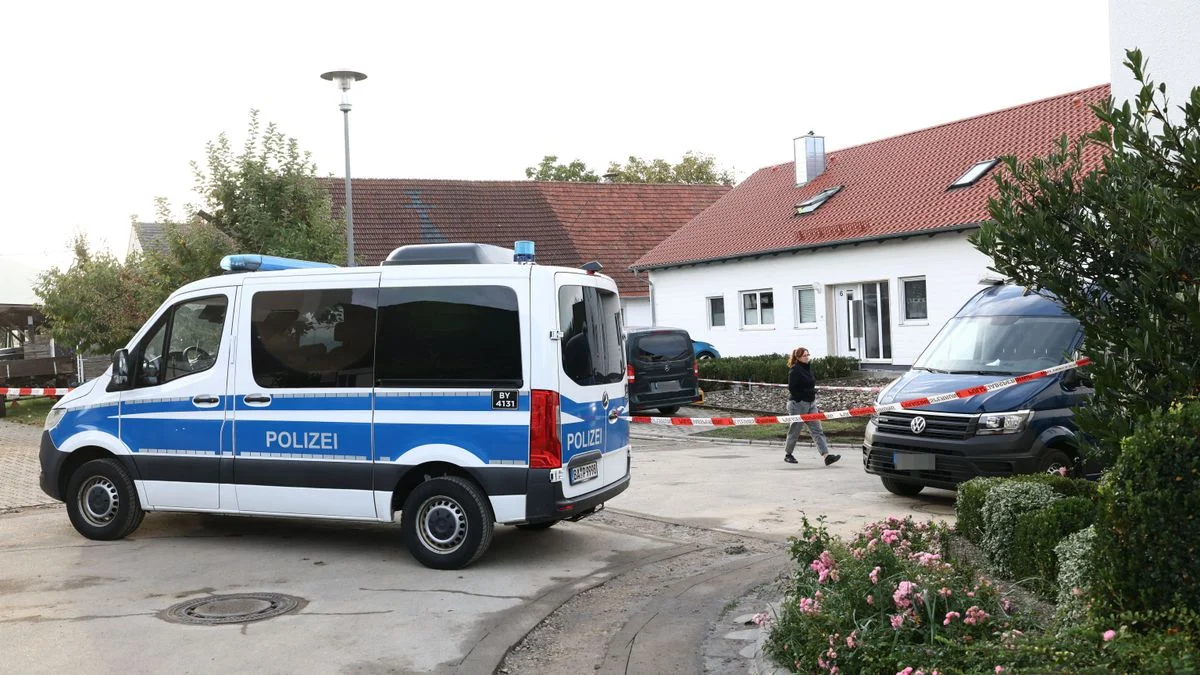
In an incident that has sent shockwaves through the administrative and law enforcement communities in Germany, a routine firearm inspection in the municipality of Berngau, Upper Palatinate, escalated into a horrific double homicide. The event, which occurred on Thursday afternoon, resulted in the deaths of two civil servants employed by the Neumarkt district administration. The suspect, a 60-year-old local resident, was apprehended following an intensive overnight manhunt and is currently hospitalized with serious injuries.
Main Facts: A Routine Procedure Turns Lethal
The incident began as a standard, legally mandated procedure. Two employees of the Neumarkt district office—a 45-year-old woman and a 54-year-old man—arrived at the residence of a 60-year-old man in Berngau to conduct a scheduled inspection of his legally registered firearms.
According to officials, the inspection was part of the standard regulatory oversight required by German gun laws, which mandate periodic checks to ensure that weapons are stored correctly and that the owner continues to meet the criteria for reliability and suitability. Tragically, the interaction took a fatal turn. Authorities believe the 60-year-old opened fire on the inspectors, killing both instantly.
The suspect, whose identity has not yet been released under German privacy laws, possessed a significant arsenal. The district administration later confirmed that the man legally owned ten firearms. Prior to this incident, the authorities stated there had been "no concrete suspicion or other indications" that the individual posed a threat to public safety or that he would react violently to a regulatory inspection.
Chronology of the Incident
Thursday: The Inspection and the Response
- Afternoon: The two employees from the Neumarkt district office arrived at the suspect’s residence in Berngau. Shortly after their arrival, gunshots were heard. Emergency services were alerted to a situation involving two critically injured individuals.
- Late Afternoon: Upon arrival, police and emergency responders discovered the bodies of the 45-year-old woman and 54-year-old man. The suspect had fled the scene, prompting a massive police operation in the Upper Palatinate region.
- Evening: Law enforcement launched an intensive search, cordoning off the area and deploying specialized units, including police helicopters and tactical teams, to track the suspect.
Thursday Night into Friday: The Apprehension
- Overnight: After an extensive search, law enforcement officers located the 60-year-old suspect. A confrontation occurred during the arrest, resulting in the suspect sustaining injuries.
- Early Friday Morning: Initial reports from police suggested the suspect had sustained minor leg injuries. However, subsequent updates from the authorities corrected this, confirming that the man had been seriously injured during his capture. He was transported to a local hospital under heavy police guard.
Supporting Data: The Landscape of Gun Ownership in Germany
The tragedy in Berngau has reignited the perennial debate regarding the efficacy of firearm regulation in Germany. To understand the context of this event, one must look at the legal framework governing private gun ownership.
In Germany, the Waffengesetz (Weapons Act) is among the most stringent in the world. Applicants for a firearms license must demonstrate a "legitimate need" (Bedürfnis), which is typically restricted to hunters, sports shooters, and collectors. Furthermore, the applicant must demonstrate personal reliability and specialized knowledge regarding the safe handling of firearms.
The Inspection Paradox
The district administration’s disclosure that the suspect owned ten firearms legally is a critical data point. Under the current law, authorities are empowered to conduct "unannounced" or "scheduled" checks on the storage conditions of these weapons. The logic is that by verifying storage—ensuring that weapons are kept in certified, locked gun safes—the state can prevent theft and accidental use.
However, the Berngau incident highlights a fundamental vulnerability: the human element. Even a person who passes the rigorous background checks—which include scrutiny of criminal records and, in some cases, psychological assessments—can potentially undergo a radical shift in temperament or mental stability. The fact that the suspect had ten weapons suggests he was an enthusiast, perhaps a competitive shooter or a collector, which often involves a long-term relationship with local regulatory authorities.
Official Responses and Administrative Reaction
The atmosphere at the Neumarkt district office is one of profound grief and disbelief. District Administrator Willibald Gailler issued a statement expressing the "deepest shock and mourning" of the entire staff. The office has since established a crisis management team to support the families of the victims and the traumatized colleagues who worked alongside the deceased.
"We have lost two valued colleagues who were performing their duties to ensure the safety of our community," the statement read. "Our thoughts are with their families, friends, and loved ones during this unimaginably difficult time."
The Bavarian State Ministry of the Interior has also been briefed on the incident. Police spokespeople have remained cautious regarding the suspect’s condition and the timeline for interrogation. As a police representative stated to the dpa, "We must wait for the medical professionals to stabilize the suspect before we can determine when he is fit for questioning." The investigation is now being led by the public prosecutor’s office, which is examining the circumstances of the shooting and the nature of the confrontation that led to the suspect’s arrest.
Implications: A Call for Stricter Protocols?
The murder of two public officials during a regulatory check is rare, but it raises uncomfortable questions about the safety of civil servants conducting field inspections. In the wake of the incident, unions representing local government employees are calling for a reassessment of safety protocols.
1. Risk Assessment for Field Inspections
Currently, many routine checks are conducted by two-person teams, but these individuals are rarely armed or equipped with protective gear, as they are viewed as administrative staff rather than law enforcement. There is growing sentiment that if the subject of an inspection is known to possess multiple firearms, the procedure should perhaps involve police accompaniment as a matter of policy.
2. The Limits of Background Checks
While Germany’s vetting process is robust, it relies on information currently available in police and judicial databases. If a legal gun owner experiences a private crisis, depression, or radicalization that does not lead to a criminal record, the system may remain blind to the danger. This incident may force a review of whether "reliability" checks need to include more proactive psychological monitoring or more frequent mandatory re-evaluations.
3. Public Impact and Gun Culture
In rural areas like the Upper Palatinate, gun ownership is often tied to traditional activities like hunting. The incident may lead to increased scrutiny of collectors and enthusiasts who possess large quantities of weaponry. Critics of current gun laws will likely argue that the sheer number of weapons—ten in this instance—presents an unnecessary risk, regardless of the owner’s prior record.
Conclusion
The Berngau tragedy serves as a grim reminder that administrative procedures, no matter how routine, carry inherent risks when they involve the intersection of state authority and private, armed individuals. As the legal process unfolds and the suspect eventually faces the judiciary, the community of Neumarkt will continue to grapple with the loss of two dedicated public servants.
The investigation will undoubtedly lead to a national dialogue on how to balance the rights of legal gun owners with the safety of the officials tasked with their oversight. For now, however, the focus remains on mourning the victims and seeking justice for a crime that has shattered the peace of a quiet Bavarian town. The questions left in the wake of this violence are difficult, and the answers may require fundamental changes to how the state interacts with its citizens regarding the ownership of lethal force.