

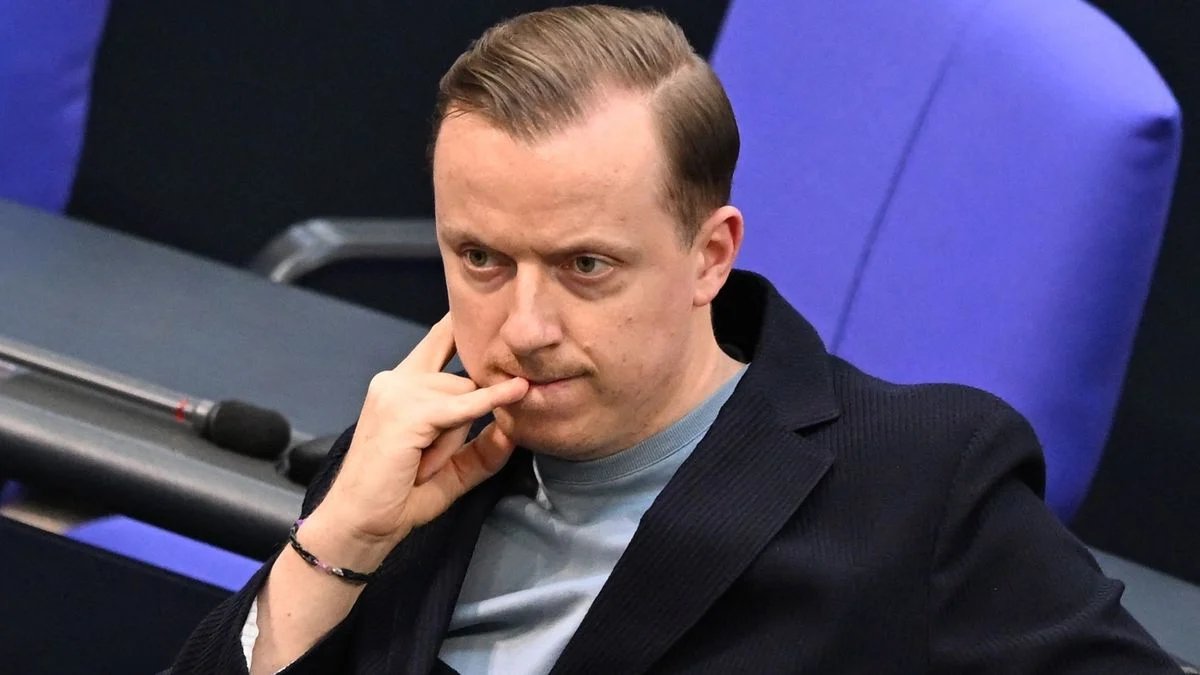
The Hannover Public Prosecutor’s Office is currently conducting investigations into three prominent Social Democratic Party (SPD) politicians, casting a long shadow over the party’s regional and federal operations. As the list of individuals under scrutiny grows—now including a sitting member of the Bundestag—the legal and political implications are beginning to reverberate through the halls of power in Berlin and Lower Saxony.
Executive Summary: A Web of Investigations
What began as an isolated probe into local administrative decisions has evolved into a multi-layered legal challenge for the SPD. The Hannover Public Prosecutor’s Office is investigating three high-profile figures: Steffen Krach, the SPD faction leader in Berlin; Stefan Politze, the former SPD faction leader in Lower Saxony; and most recently, Adis Ahmetović, a member of the Bundestag and head of the SPD in Hannover.
While official details remain sparse due to ongoing investigative tactics, reports suggest that these cases are linked to a complex set of allegations surrounding the public tender and subsequent sale of a hospital site in Lehrte, near Hannover. As the legal process unfolds, all three politicians benefit from the constitutional presumption of innocence. However, the political fallout has already been significant, leading to the resignation of one of the key figures involved.
Chronology of the Investigation
The Initial Blow: Steffen Krach
The investigative focus intensified on September 9, 2026—just eleven days before a pivotal Berlin election—when the public prosecutor confirmed that they were investigating Steffen Krach. Krach, who was serving as the SPD’s top candidate in the election while on leave from his duties as the President of the Hannover Region, found himself at the center of a storm.

The following day, authorities clarified the scope of the allegations:
- Vorteilsannahme (Acceptance of favors): A suspicion regarding two separate incidents.
- Competitive Interference: Potential illegal agreements regarding public tenders in conjunction with the violation of trade secrets and breaches of confidentiality obligations.
The scale of the authorities’ response was swift. Investigators searched Krach’s office in Hannover, his private residence in Berlin, and the SPD’s national headquarters. Electronic devices, including his mobile phone, were seized as part of the evidence-gathering process.
The Expansion: Stefan Politze
On October 2, 2026, the prosecutor’s office confirmed that the scope of their investigation had widened to include Stefan Politze, who was at the time serving as the SPD faction leader in the Lower Saxony Landtag. While the authorities remained tight-lipped regarding the specific charges against him, the proximity of the announcement to the Krach case signaled a broadening of the investigation.
The Latest Development: Adis Ahmetović
On October 8, 2026, the legal pressure mounted further when it was confirmed that Adis Ahmetović, a Member of the Bundestag and the influential chair of the SPD in Hannover, had also become a subject of the investigation. The prosecutor’s office refused to provide specific details regarding the allegations against Ahmetović, citing "investigative tactics."

The Center of the Controversy: The Lehrte Hospital Site
The common thread linking these three investigations is the sale of a former hospital property in Lehrte. During the period in question, Steffen Krach served as the Chairman of the Supervisory Board of the Klinikum Region Hannover (the regional hospital network).
According to public statements, the core of the controversy involves the bidding process for this land. Investigators are examining whether procedural irregularities, preferential treatment of bidders, or improper influence occurred during the tender process. The investigation specifically touches upon whether any political donations—or promises of such—were tied to the decision-making process regarding the sale.
Official Responses and Defensive Strategies
Steffen Krach’s Defense
Steffen Krach has consistently and vehemently denied all allegations. In his public remarks on September 10, he expressed confidence that the accusations would eventually be proven baseless. He described the timing of the search warrants as "surprising" and challenged the necessity of the heavy-handed investigative measures.
"I don’t know what they were looking for, whether under my children’s beds or in the car," Krach remarked. He confirmed that several devices were confiscated, including old family mobile phones and an iPad.

Addressing the specific allegations regarding the Lehrte hospital site, Krach explained that he did indeed have a "favored bidder" during the process, but argued that this was based on professional assessment rather than illicit motivation. Regarding a controversial donation of 9,900 euros from a businessman involved in the project to the Berlin SPD, Krach stated:
- The donation was received in late December 2025.
- He was informed of the donation on January 7, 2026.
- He immediately ordered the money to be returned on the following morning.
Krach emphasized that he never personally accepted any donation from the company, nor did he accept any at the party level that would influence his conduct. Furthermore, he noted that the contract for the hospital site was ultimately awarded to a different bidder, and he had recused himself from the final vote.
Stefan Politze’s Resignation
The legal pressure ultimately forced a leadership change in Lower Saxony. Following the revelation of the investigation and the subsequent lifting of his parliamentary immunity by the state parliament, Stefan Politze resigned from his position as SPD faction leader.
In his resignation statement, Politze remained firm in his innocence, stating: "Even if I am firmly convinced of my innocence, I feel the burden [this investigation] places on the party, the faction, and myself."

His legal counsel, Matthias Waldraff, has provided insight into the defense strategy. Waldraff argued that the case against Politze is entirely contingent on the case against Krach. "The connection to this investigative complex is clear," Waldraff said. He pointedly remarked that if Krach is not found to have committed a criminal act, then the charges of "aiding and abetting" against Politze must logically collapse, as there would be no primary offense to support them.
Adis Ahmetović’s Stance
Through his attorney, Holger Nitz, Adis Ahmetović has rejected the accusations as unfounded. The defense has expressed frustration with the prosecutor’s office, noting that they have been denied access to the case files, making it difficult to formulate a specific defense against unnamed charges.
Furthermore, the legal team has raised concerns about a potential "leak" of information, noting that details of the investigation have reached the public sphere before the defense was even informed of the specific allegations. "The public prosecutor will have to explain how this breach of confidentiality could happen," the attorney stated in a press release.
Political and Legal Implications
The Burden of Transparency
The ongoing investigations have created a significant political headache for the SPD. With a sitting member of the Bundestag, a key regional leader, and a prominent state politician all under investigation, the party is struggling to maintain a narrative of integrity while respecting the independence of the judicial process.

The Role of the Prosecutor
The Hannover Public Prosecutor’s Office is currently under pressure to balance the need for secrecy in their investigation with the public interest in transparency regarding elected officials. The defense teams’ criticism regarding the selective leaking of information—whether substantiated or not—adds a layer of complexity to the public perception of the case.
Future Outlook
As the investigation proceeds, the legal challenges will likely focus on three main areas:
- The Tender Process: Were the rules of the public tender strictly followed?
- The Donations: Was there any quid-pro-quo arrangement, and did the timing of the returned donation satisfy legal requirements?
- Internal Communication: Did any of the three politicians share confidential information that provided an unfair advantage to specific business interests?
For the SPD, the coming months will be a test of resilience. While the legal proceedings are independent of political life, the proximity of these figures to the party’s power structure means that any outcome—whether exoneration or indictment—will have lasting effects on the party’s credibility and its ability to lead in Lower Saxony and beyond.
As it stands, the three politicians remain under the shield of the presumption of innocence, awaiting further clarification from the Hannover authorities as to exactly what evidence has been compiled and what the specific path forward for the prosecution will be.






















