The fragile stability of the Horn of Africa is shattering. Just three weeks after the eruption of a new civil war in Ethiopia, the localized conflict within the northern region of Tigray has metastasized into a complex, multi-national theater of war. The Tigray People’s Liberation Front (TPLF), a battle-hardened former guerilla movement, has found itself caught in a pincer movement between the advancing Ethiopian National Defense Force (ENDF) and the unexpected, controversial re-entry of Eritrean troops. This shift has not only complicated the military landscape but has effectively drawn Eritrea into a direct—and potentially catastrophic—confrontation with its southern neighbor.
The Chronology of Collapse
The current hostilities are rooted in a deep-seated cycle of political disenfranchisement and regional autonomy. After experiencing relative calm, the Tigray region formally broke away from the Ethiopian federal state in 2025, seeking to restore the governance of the TPLF, which had been the primary political force in Ethiopia from 1991 until 2018.
The timeline of the current escalation is as follows:
- September 20, 2025: The TPLF, having formed a loose but potent coalition with various dissident groups across Ethiopia, declared a formal alliance against the central government.
- September 23, 2025: The coalition launched a series of offensive strikes across the country, aiming to weaken the grip of Prime Minister Abiy Ahmed’s administration.
- Late September 2025: The momentum shifted abruptly. Despite early successes, the TPLF retreated from Mekelle, the regional capital, effectively surrendering the administrative heart of Tigray to the advancing federal Ethiopian forces without a pitched battle.
- Early October 2025: As the Ethiopian army and loyalist Tigrayan militias began occupying key settlements, the TPLF retreated further north toward the Eritrean border. It was during this phase that reports emerged of thousands of Eritrean soldiers crossing into Ethiopian territory.
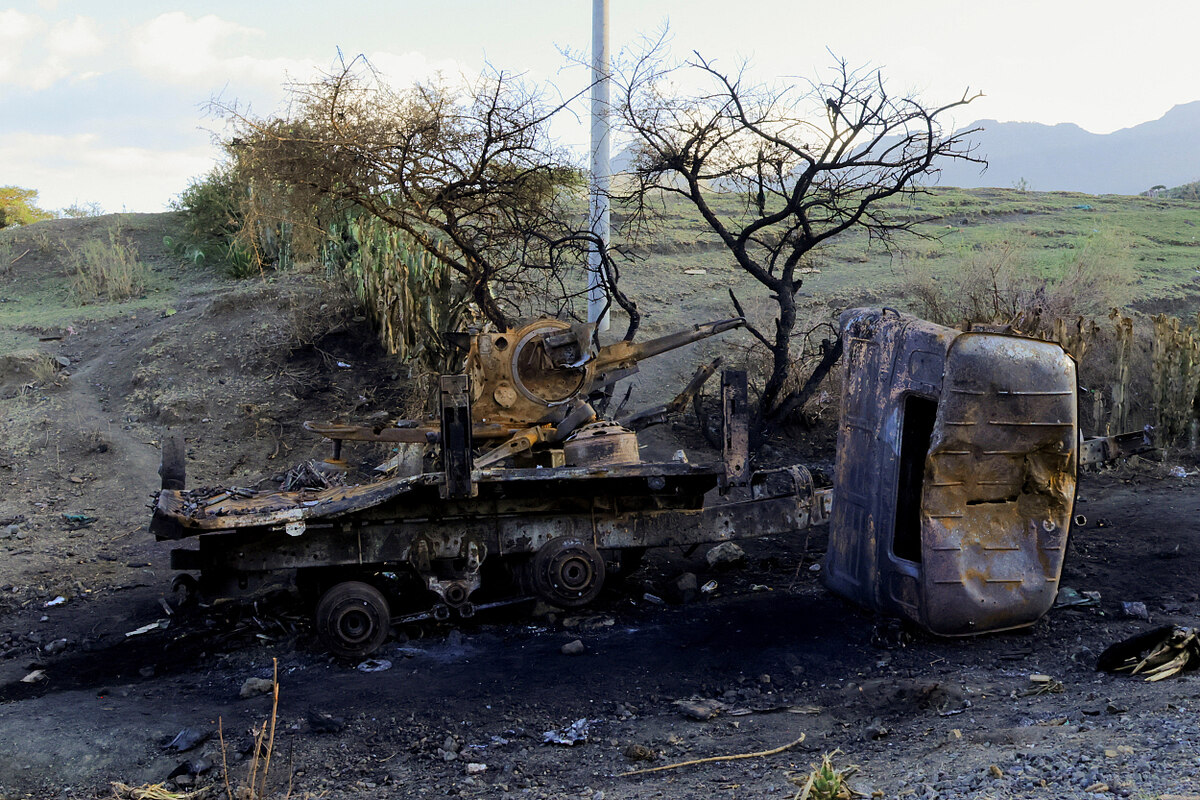
- October 10, 2025: Independent analyses confirm that between 5,000 and 8,000 Eritrean troops, supported by heavy armor, pushed toward the city of Adigrat. However, their progress was halted—and eventually forced into a retreat—by precision drone strikes launched by the Ethiopian federal military.
Strategic Realignment: The Role of Eritrea
The military intervention of Eritrea is the most significant development in this conflict. Eritrea, long an antagonist to the TPLF, has historically sought to destabilize the movement that once led Ethiopia during the bloody 1998–2000 border war. However, the current situation is paradoxical.
While Eritrea initially intervened to support the federal government during the 2020–2022 conflict, the dynamic has shifted. Recent intelligence suggests that the TPLF and Eritrea have reached a temporary, tactical accommodation to survive the federal offensive. This has alienated many local Tigrayans, who still harbor deep trauma from the atrocities allegedly committed by Eritrean forces during the previous conflict. Consequently, while the TPLF once enjoyed the support of the Tigrayan population, many residents are now viewing the federal Ethiopian army as a "lesser evil" compared to the prospect of Eritrean occupation.
The strategic objective of the Eritrean forces remains a subject of intense speculation. Analysts suggest that the Asmara government is attempting to secure a buffer zone in northern Ethiopia, while simultaneously preventing the Ethiopian federal government from becoming too dominant in the region.

Official Responses and Diplomatic Friction
The diplomatic fallout has been swift and vitriolic. Ethiopia and Eritrea are currently engaged in a public war of words, with both sides appealing to the United Nations for international arbitration.
In a formal correspondence to the UN Security Council, the Ethiopian government characterized the Eritrean incursion as a "flagrant aggression." Addis Ababa has invoked the "inherent right to self-defense," signaling that it is prepared to engage militarily to protect its sovereignty. The Ethiopian government’s decision to request UN intervention is viewed by experts as a calculated move: it allows Prime Minister Abiy Ahmed to maintain a posture of restraint while signaling to the international community that Eritrea is the primary aggressor.
Conversely, the government of Eritrea has accused Ethiopia of planning an invasion of its territory. In a statement to the United Nations, Asmara claimed that Ethiopia is reviving a "long-planned project of invasion" aimed at capturing the strategic Eritrean port of Assab. For Ethiopia, gaining access to the Red Sea has been a historical grievance since Eritrea achieved independence in 1993, rendering the country landlocked. The fear that Ethiopia might use the current conflict as a pretext to reclaim coastal access is a major driver of regional anxiety.

Implications for the Horn of Africa
The implications of this conflict extend far beyond the borders of Tigray. The instability threatens to draw in neighboring states, potentially creating a "firestorm" in the Horn of Africa.
The Human Cost
The humanitarian situation in Tigray is deteriorating rapidly. With the TPLF leadership reportedly fleeing to the border regions and federal troops occupying key infrastructure, civilians are caught in the crossfire. The presence of Eritrean forces—notorious for their harsh conduct—has created a climate of fear among the local population, leading to a new wave of displacement.
Regional Geopolitics
The rivalry between Ethiopia and Eritrea is the fulcrum upon which regional peace rests. The 2018 peace deal, for which Prime Minister Abiy Ahmed was awarded the Nobel Peace Prize, now appears to be in tatters. The return to overt hostility indicates that the root causes of the 1998–2000 border conflict were never truly resolved, only suppressed.

The Role of International Actors
The UN Secretary-General, António Guterres, has expressed "deep concern" over the escalation. However, the effectiveness of the UN and the African Union in mediating this crisis is hampered by the rapid speed of military developments and the lack of reliable, neutral intelligence on the ground. As military forces continue to shift, the window for a negotiated settlement is closing.
Conclusion: A Precarious Future
The conflict in Tigray has ceased to be a domestic Ethiopian affair. It is now a volatile regional crisis characterized by shifting alliances, historical grudges, and the specter of interstate war.
For the Ethiopian government, the primary challenge is to consolidate control over the north without triggering a full-scale war with Eritrea or losing the support of the Tigrayan population. For the TPLF, the challenge is survival; having lost their capital and their popular mandate, they are increasingly reliant on foreign support, which further delegitimizes their cause in the eyes of many Ethiopians.

The international community must now decide whether to engage in robust, proactive diplomacy to prevent a wider conflagration. If the current trend of mutual accusation and military maneuvering continues, the Horn of Africa risks entering a period of prolonged instability that will devastate the region’s economy, undermine its development, and exacerbate one of the world’s most acute humanitarian crises. The path to peace, if it still exists, lies in the immediate cessation of cross-border military activities and a return to the negotiating table—a prospect that currently seems more distant than ever.