The continued presence of former German Chancellor Gerhard Schröder within the Social Democratic Party (SPD) has evolved from a historical footnote into a profound moral and political crisis. As the architect of the "Agenda 2010" reforms and a central figure in modern German political history, Schröder’s post-chancellorship career has taken a trajectory that stands in stark opposition to the core values of his party. His unabashed loyalty to Vladimir Putin, even in the wake of the full-scale invasion of Ukraine, has forced the SPD into a corner, raising uncomfortable questions about the party’s integrity, its internal standards for membership, and its ability to maintain credibility on the international stage.
The Core Conflict: Loyalty vs. Values
At the heart of the debate is a simple, stinging question: How can the SPD demand political distance from extremist elements or criminal syndicates when it continues to tolerate a man who openly celebrates his friendship with a war criminal?
Gerhard Schröder is no longer a political actor with power, but he remains a powerful symbol. By maintaining his party membership, he provides a veneer of legitimacy to his actions—actions that include holding lucrative advisory roles for Russian energy giants and, most infamously, appearing at the Kremlin to toast the man responsible for the ongoing slaughter in Ukraine. For the SPD, the challenge is twofold: legally, stripping a member of their party card is a complex, high-bar hurdle requiring proof of "party-damaging behavior." Politically, however, the damage is already manifest. Every time a Russian state media outlet labels him "former German Chancellor (SPD)," the party’s brand is tarnished by association.
A Chronology of Estrangement
To understand the current impasse, one must look at the timeline of Schröder’s drift away from the mainstream of European social democracy:
- The Post-Chancellorship Shift (2005–2014): Almost immediately after leaving office, Schröder pivoted to the energy sector, taking a high-profile position with Nord Stream AG. While initially viewed as a bridge-building exercise, critics grew increasingly concerned as his rhetoric began to mirror Kremlin talking points.
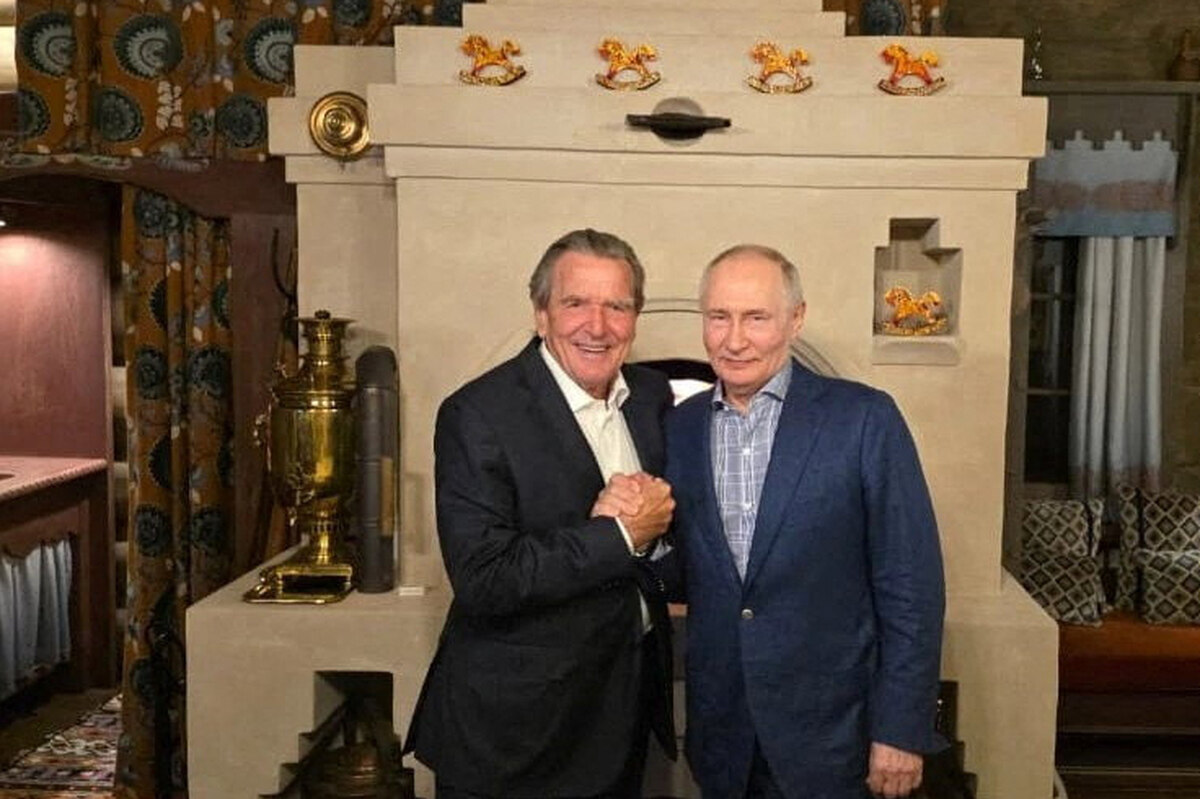
- The Annexation of Crimea (2014): Despite the clear violation of international law in Ukraine, Schröder’s relationship with Putin did not waver. He notably celebrated his 70th birthday in St. Petersburg with Putin, a gesture that signaled his disregard for Western diplomatic efforts to isolate the Russian regime.
- The Escalation (2022): The full-scale invasion of Ukraine forced a reckoning. While the German government and the SPD leadership shifted decisively toward a policy of support for Kyiv, Schröder remained defiant. He refused to resign from his Russian board positions for months, eventually relenting under immense public pressure, but never disavowing his personal friendship with Putin.
- The Present Day: Recent months have seen Schröder continue his public appearances, including attending the German Unity Day celebrations and, shortly thereafter, traveling to Moscow for a private birthday party for Vladimir Putin. These actions serve as a constant reminder that for the former Chancellor, personal loyalty to the Russian president supersedes the political consensus of his home country.
Supporting Data: The Cost of Association
The political cost to the SPD is difficult to quantify but impossible to ignore. Public opinion polls consistently show that the German electorate, across the political spectrum, is deeply alienated by Schröder’s behavior. Furthermore, the SPD finds itself in an awkward position when addressing domestic security and law enforcement issues.
Critics point to a glaring inconsistency: If the SPD leadership rightfully demands that other political parties, such as Die Linke, maintain a rigorous distance from controversial figures or organized crime elements, how can they justify their own indulgence of Schröder? This perceived "double standard" provides ammunition for political opponents, particularly those on the populist right and the new left (BSW), who argue that the established parties are hypocritical.
Official Responses and Internal Party Mechanics
The SPD leadership, including Chancellor Olaf Scholz, has repeatedly distanced itself from Schröder’s personal views and business ties. However, the formal attempt to expel him from the party failed. The internal arbitration committees of the SPD ruled that, while Schröder’s behavior was deeply regrettable, it did not meet the strictly defined legal criteria for party expulsion.
This result has left many within the party’s grassroots and the broader public feeling helpless. The legalistic defense—that being a friend of a dictator is not a violation of party statutes—has proven to be a strategic disaster. It demonstrates a lack of political agency. While the party cannot force Schröder to quit, they could significantly increase the social and political pressure. Instead, the SPD has largely opted for a policy of "calculated silence," hoping that the issue will eventually fade with time.
Implications for German Foreign Policy
The most significant implication of the Schröder saga is its effect on Germany’s international standing. Berlin has worked hard to shed its reputation as a country that allowed itself to be captured by Russian energy interests—a policy often referred to as Wandel durch Handel (change through trade).

Schröder serves as the "living embodiment" of this failed policy. When he appears alongside Putin, he reinforces the narrative that Germany is still tethered to its past mistakes. This complicates the efforts of the current German government to convince Eastern European partners that Berlin is truly committed to a new, more robust security architecture in Europe.
Furthermore, the "Schröder factor" makes it harder for the SPD to project moral authority. In a geopolitical environment where clear lines are being drawn between democratic values and autocratic aggression, a party that keeps a prominent Putin-apologist in its ranks creates a permanent vulnerability.
The Path Forward: Defining Party Identity
If the SPD is to regain its footing, it must address the Schröder problem not as a legal issue, but as an existential one. Party membership is not a right; it is a declaration of shared values. If those values are being systematically undermined by one of the party’s most prominent members, the party leadership must decide what matters more: adherence to the rigid, bureaucratic processes of the past or the protection of the party’s future credibility.

The current situation is, as many observers have noted, "tragicomic." The SPD is a party that has provided the country with visionary leaders, yet it remains haunted by a man who has become a mascot for the very regime that threatens the stability of the European continent.
To move beyond this, the SPD needs to do more than simply ignore Schröder. It needs to actively reshape its narrative. This involves a clear-eyed rejection of the policies he represents and a firm, unambiguous stance on the necessity of separating party association from personal history. Until the SPD can effectively sever this link, the "Schröder dilemma" will remain a self-inflicted wound, damaging the party’s reputation and leaving it open to charges of hypocrisy that are increasingly difficult to defend against.
The era of Gerhard Schröder has long since ended, yet his shadow looms large. For the sake of its own political survival and the integrity of its stance on Ukraine, the SPD must find the courage to fully close this chapter, even if the man himself refuses to turn the page.