


Oslo, Norway – October 20, 2026 – Ukrainian President Volodymyr Zelenskyy has unequivocally asserted that any discussions concerning Ukraine’s future are only "acceptable if we are at the negotiating table." This firm stance comes in the wake of meetings in Oslo with European partners and a key US envoy, and amidst escalating speculation of a potential trilateral summit involving US President Donald Trump, Russian President Vladimir Putin, and Chinese President Xi Jinping. The Ukrainian leader’s demand underscores Kyiv’s determination to have its voice heard in any high-level diplomatic maneuvers that could shape the ongoing conflict and the post-war landscape.
The urgency for such diplomatic engagement has been amplified by reports suggesting that Russian President Vladimir Putin is actively seeking a meeting with Trump and Xi on the sidelines of the Asia-Pacific Economic Cooperation (APEC) summit in Shenzhen, China, scheduled for November 18-19. President Trump, for his part, has expressed an openness to such a summit, telling reporters in Washington, "I would do it," though he stressed that no such meeting has yet been finalized. However, Ukraine’s Foreign Minister Andriy Sybiha has voiced strong concerns, warning that a direct meeting between these leaders without Ukraine’s participation would only serve to "encourage Putin to continue this war."
President Zelenskyy’s assertive call for inclusion highlights a critical juncture in the protracted conflict. As diplomatic overtures gain momentum, Ukraine is fighting to ensure that its sovereignty and territorial integrity remain central to any proposed resolutions, and to prevent a scenario where its fate is decided by global powers without its direct input.
A Diplomatic Dance in Oslo: Seeking Common Ground
The backdrop to President Zelenskyy’s pronouncements was a series of high-level discussions held in Oslo. The Ukrainian President engaged with Steve Witkoff, the US Special Envoy, to explore diplomatic pathways out of the Ukraine war and to secure continued US support. The meetings were multifaceted, initially involving a tripartite discussion with Norwegian Prime Minister Jonas Gahr Støre and Finnish President Alexander Stubb, followed by individual consultations with Envoy Witkoff. According to Norwegian media, US negotiators, Trump’s son-in-law Jared Kushner, and representatives from several European nations, including Germany, as well as the EU and NATO, also participated or were connected remotely.
Oslo, a city historically associated with peace negotiations, has emerged as a new forum in the ongoing, yet so far unsuccessful, peace efforts for Ukraine, which has been subjected to a brutal invasion by Russia for over four and a half years. The primary objective of the Norway and Finland-mediated talks was to improve the strained relationship with the United States and to steer the international discourse back towards diplomacy.
Key Discussion Points and Cautious Optimism
Sources indicate that the discussions in Oslo delved into critical issues such as security guarantees for Ukraine, territorial integrity, the imposition and potential lifting of sanctions, and the broader framework of European security in the post-war era.
Prime Minister Støre, speaking at a press conference in Oslo, described the talks as "good and constructive," emphasizing their necessity in light of recent developments. He noted that a foundational basis had been established during the afternoon sessions, upon which further work can be built. President Stubb echoed this sentiment, stating that the day had seen progress in the right direction. President Zelenskyy, in turn, characterized his conversations with Envoy Witkoff as vital, underscoring the need for continued collaborative efforts at all levels to achieve the necessary decisions for ending the war.
Witkoff’s Diplomatic Mission Continues to Russia
Following the Oslo engagements, Special Envoy Witkoff is scheduled to travel to Russia. Prime Minister Støre announced that Witkoff would be flying to Saint Petersburg the following day to hold discussions with the Russian leadership. The objective of this visit is to present "the proposals that European and American colleagues have developed." This leg of the diplomatic journey signals an attempt to carry forward the dialogue initiated in Oslo and to gauge Moscow’s receptiveness to potential diplomatic solutions.
Trump’s Assertions and Putin’s Stance: A Stark Contrast
In a development that has drawn sharp criticism from Kyiv and its allies, President Donald Trump, shortly after the Oslo discussions, reiterated his claims that Russia is prepared to end the war. He urged Zelenskyy to accept a "deal," warning that failure to do so would lead to dire consequences. Trump also repeated his assertion that the United States has provided "a lot" to Ukraine but has received "absolutely nothing in return."
These pronouncements from Trump stand in stark contrast to the reality on the ground and the consistent stance of the Russian leadership. His narrative often overlooks the fundamental fact that Russia, as the aggressor, holds the sole power to cease its invasion. President Putin, conversely, has consistently refused to consent to any peace settlement or ceasefire, and has either ignored or rejected every peace proposal put forth by Ukraine and its international partners. This divergence in rhetoric and stated intent highlights the significant challenges in achieving a breakthrough in the conflict.
Renewed Intelligence Sharing: A Glimmer of Hope for Ukraine
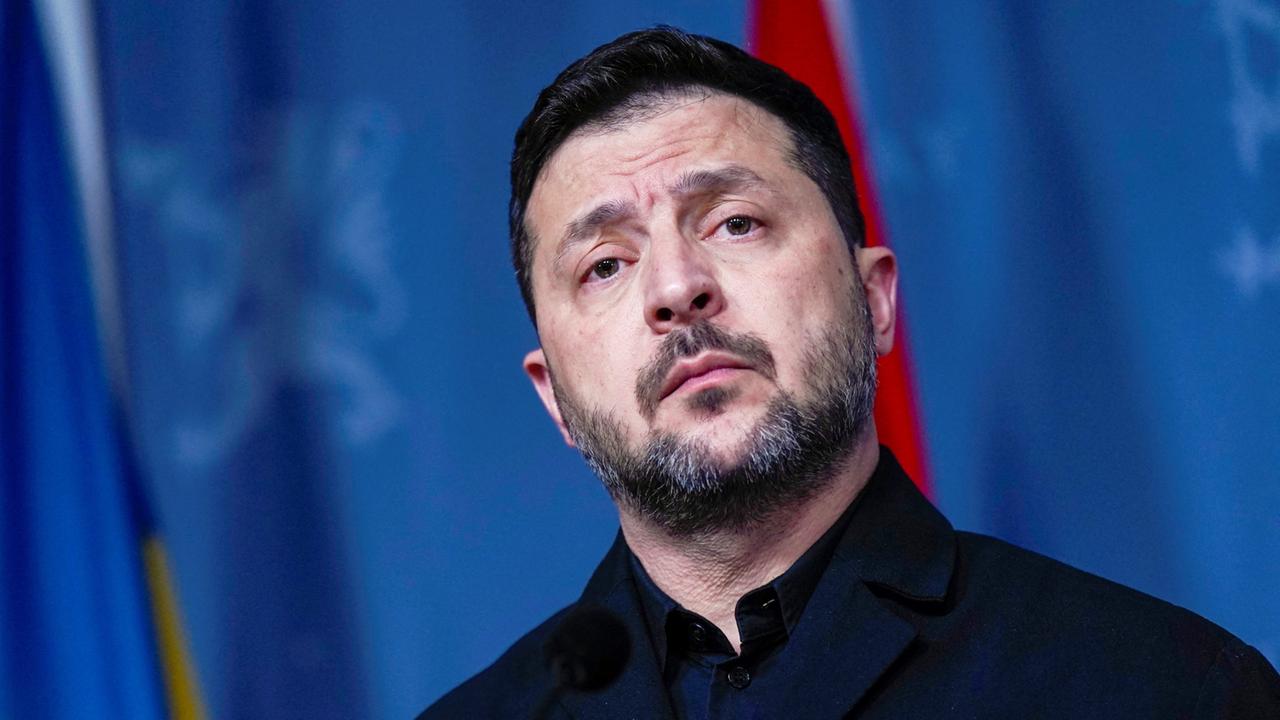
On a more positive note, President Zelenskyy announced on the evening of his Oslo meetings that the United States would resume sharing intelligence information with Ukraine regarding Russian attacks. "We are grateful that the intelligence work is functioning," Zelenskyy stated at a press conference following his talks with Witkoff. He elaborated that this intelligence sharing includes "early warnings, which is very important for our population, for children, adults, civilians." The resumption of these early warnings, he noted, followed discussions with US government officials, including a call with Secretary of State Marco Rubio.
Zelenskyy reaffirmed Ukraine’s resolve, stating that the nation is not losing the war against Russia. However, he acknowledged the tragic loss of life and reiterated Kyiv’s determination to find pathways to peace. This re-establishment of intelligence cooperation is a significant development, addressing a critical need for Ukraine’s defense and civilian protection.
Deteriorating US-Ukraine Relations and Lingering Concerns
The improved intelligence sharing comes after a period of considerable strain in the relationship between Kyiv and Washington. In recent weeks, Ukraine had reported that the US had withheld crucial intelligence and delayed the delivery of air defense systems. President Zelenskyy had also expressed concerns about a throttling of Starlink and Starshield satellite communication services, which are vital for the coordination of the Ukrainian army, drone operations, and defense efforts.
Adding to these concerns, President Trump had previously suspended planned sanctions against Russia and, instead, negotiated an agreement with Moscow for the supply of diesel fuel. These actions, perceived by Kyiv as undermining its defensive capabilities and its diplomatic standing, had fueled anxieties about waning US support. The recent developments, however, suggest a potential recalibration of the US approach, albeit amidst the persistent political complexities surrounding US foreign policy.
Broader Implications for Global Stability and Future Peace
The unfolding diplomatic landscape, characterized by the potential for high-stakes summits and the nuanced negotiations in Oslo, carries profound implications for global stability. The involvement of major global powers like the US, Russia, and China in discussions about Ukraine, even if indirect, underscores the conflict’s far-reaching geopolitical ramifications.
President Zelenskyy’s demand for inclusion is not merely a matter of national pride; it is a strategic imperative. Without Ukraine’s active participation, any peace agreement risks being perceived as imposed and may fail to address the root causes of the conflict or ensure lasting security for the region. The experience of past negotiations, where the interests of smaller nations were often sidelined, looms large in Kyiv’s calculations.
Furthermore, the differing perspectives and stated objectives of key players, particularly the contrast between Trump’s transactional approach and Putin’s apparent intransigence, present a significant hurdle to any genuine peace process. The international community faces the challenge of navigating these complex dynamics to foster a dialogue that is inclusive, just, and sustainable.
The renewed commitment to intelligence sharing between the US and Ukraine, while a positive step, also highlights the ongoing need for robust and consistent support for Ukraine’s defense and sovereignty. The effective functioning of critical infrastructure, such as satellite communication services, remains paramount for Ukraine’s military operations and the protection of its civilians.
As Special Envoy Witkoff embarks on his journey to Russia, the world watches with bated breath. The outcome of these diplomatic efforts, whether they lead to a de-escalation of hostilities or further entrenchment, will undoubtedly shape the future of Ukraine, the security architecture of Europe, and the broader international order. The path to peace remains arduous, but the current diplomatic flurry, however fraught with challenges, underscores the enduring global desire to find a resolution to this devastating conflict.



