

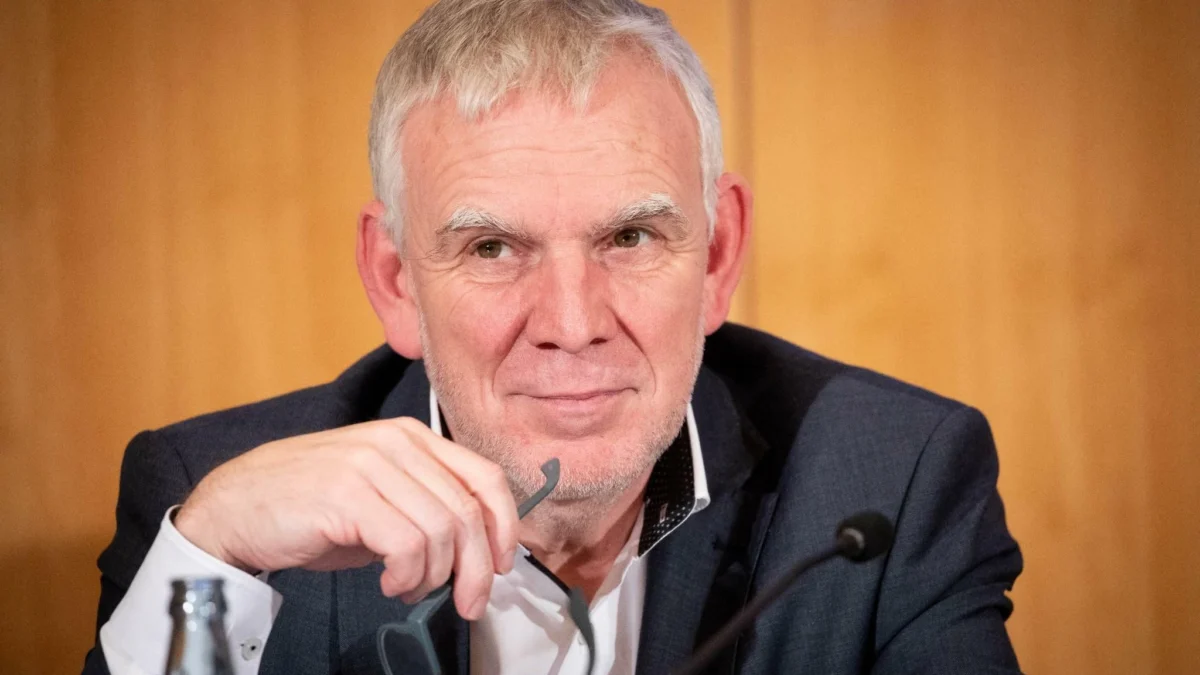
Berlin. In a significant development for German and European environmental policy, Jochen Flasbarth, the long-serving State Secretary to Federal Environment Minister Carsten Schneider (SPD), is set to leave his governmental post. Flasbarth, a widely respected figure described by his minister as a "founding father of German environmental and climate policy," will transition to the European Climate Foundation (ECF) next year. His departure marks the end of an era for the Federal Ministry for the Environment, Nature Conservation, Nuclear Safety and Consumer Protection (BMUV), where he has been a pivotal force for nearly a decade, not including a prior stint in another key ministry.
The news, first revealed in an internal email from Minister Schneider to BMUV staff and subsequently obtained by the Handelsblatt newspaper, confirms Flasbarth’s decision. "Jochen Flasbarth has informed me that he will be leaving the BMUV and moving to the European Climate Foundation next year," the email states, signaling a crucial shift in the leadership landscape of Germany’s environmental administration. The 64-year-old Flasbarth is expected to leave the ministry shortly, with Heike Henn, formerly head of the International Climate Policy department within the BMUV, stepping into the State Secretary role at the beginning of November. This transition underscores both a loss of profound institutional memory and a strategic reorientation within one of Germany’s most critical federal ministries.
A Pillar Departs: Jochen Flasbarth’s Transition to the European Climate Foundation
The Official Announcement and its Immediate Impact
The announcement of Jochen Flasbarth’s impending departure reverberated through the corridors of the Federal Ministry for the Environment, Nature Conservation, Nuclear Safety and Consumer Protection (BMUV), as well as among the broader community of climate and environmental policy experts. Federal Environment Minister Carsten Schneider chose an internal email to his staff to convey the news, a common practice for such personnel changes, ensuring that the ministry’s employees were among the first to be informed of the significant leadership shift. The subsequent acquisition and publication of this email by Handelsblatt, a leading German business newspaper, brought the news into the public domain, highlighting its importance.
The role of a State Secretary in the German federal system, particularly a beamteter Staatssekretär (civil servant State Secretary), is one of immense influence and operational power. Unlike a parlamentarischer Staatssekretär, who is a member of parliament and serves as a political representative, a civil servant State Secretary is a permanent, high-ranking administrative official. They are responsible for the day-to-day management of the ministry, overseeing departments, developing policy proposals, and representing the minister at various national and international forums. This makes them the institutional backbone of a ministry, providing continuity and expertise regardless of changes in political leadership. Flasbarth’s nearly nine years in this capacity at the BMUV, coupled with his earlier extensive experience, mean he has been a constant and shaping presence in German environmental policy across multiple legislative periods and under different ministers. His move from a direct governmental role to a leading European non-governmental organization dedicated to climate action is therefore not just a personal career change but a strategic shift of a key player from one influential sphere to another. The timing of his departure from the ministry "shortly" and his commencement at the European Climate Foundation "next year" suggests a carefully managed transition, allowing for an orderly handover of responsibilities within the BMUV while preparing for his new, impactful role on the European stage.
A Career Forged in Environmental Stewardship: Flasbarth’s Chronology
Decades of Dedication: From NGOs to Federal Service
Jochen Flasbarth’s career trajectory is a testament to a lifelong commitment to environmental protection and climate action, spanning over four decades. Born in 1959, his journey began not within the bureaucratic structures of government but in the vibrant world of non-governmental organizations. He served as the President of Naturschutzbund Deutschland (Nabu), one of Germany’s oldest and largest environmental associations. Nabu plays a crucial role in advocating for nature conservation, biodiversity protection, and sustainable development, influencing public opinion and policy-making through its extensive network and expertise. Flasbarth’s leadership at Nabu provided him with an early and profound understanding of grassroots environmental concerns, public engagement, and the practical challenges of conservation, experiences that would prove invaluable in his later governmental roles.
Following his impactful tenure at Nabu, Flasbarth transitioned into federal service, bringing his deep expertise and advocacy skills directly into the policymaking arena. He held positions as a Department Head within the Federal Environment Ministry (BMUV), where he gained intimate knowledge of the ministry’s internal workings and policy development processes. His ascent continued with his appointment as President of the Federal Environment Agency (UBA). The UBA is Germany’s central environmental authority, responsible for providing scientific data, assessing environmental situations, and developing policy recommendations across a vast array of environmental issues, from air and water quality to waste management and climate change. Leading the UBA positioned Flasbarth at the forefront of Germany’s environmental scientific and regulatory landscape, further cementing his reputation as a leading expert.
It was after these significant roles that Flasbarth first became a State Secretary, demonstrating a continuous upward trajectory within the German environmental administration. His experience accumulated across various facets of environmental governance – from advocacy to scientific assessment and policy implementation – made him uniquely qualified for such a high-level position. This long-standing tenure as a civil servant State Secretary, which included nearly nine years at the BMUV, was briefly interrupted by a four-year period as State Secretary in the Federal Ministry for Economic Cooperation and Development (BMZ). This interlude at the BMZ, a ministry dedicated to fostering sustainable development and combating poverty in partner countries, further broadened Flasbarth’s perspective. Here, his environmental expertise would have been critical in integrating climate resilience, sustainable resource management, and ecological considerations into Germany’s international development agenda, aligning foreign aid with global environmental goals and climate finance initiatives. This cross-ministerial experience is particularly noteworthy, as it equipped him with a holistic view of how environmental policy intersects with economic development, social justice, and international relations.
Upon his return to the BMUV, Flasbarth resumed his role as a key architect of German environmental and climate policy, bringing with him an enriched understanding of global challenges and international cooperation. His nearly nine years as State Secretary within the Environment Ministry itself underscores his enduring commitment and the consistent value placed on his expertise by successive political administrations. Throughout these various appointments, Flasbarth has been an unwavering advocate for ambitious climate action and robust environmental protection, contributing significantly to Germany’s national legislative frameworks and its standing on the international stage.
The Landscape of German Environmental Policy: Supporting Data and Context
Germany’s Role on the Global Climate Stage
Germany has historically positioned itself as a vanguard in environmental policy, particularly in the realm of climate action. The concept of the "Energiewende" – the ambitious transition from fossil fuels and nuclear power to renewable energy sources – has been a defining characteristic of the nation’s environmental agenda for decades. This transformative project, initiated with bold legislative frameworks and significant public investment, has made Germany a global leader in renewable energy deployment and a pioneer in setting ambitious climate targets. The country has committed to achieving climate neutrality by 2045 and has legally binding interim targets for emissions reduction, striving for a 65% cut by 2030 compared to 1990 levels.
However, Germany’s path is not without its formidable challenges. The phase-out of coal-fired power generation, while politically agreed upon, requires careful management to ensure energy security and social equity in affected regions. The transformation of its powerful industrial sector, a cornerstone of the German economy, poses immense hurdles in decarbonization. Furthermore, the country faces pressing issues such as biodiversity loss, the need for sustainable land use, and the development of effective climate adaptation strategies to mitigate the impacts of increasingly frequent extreme weather events. The BMUV plays a central role in navigating these complexities, developing national strategies, enforcing environmental regulations, and representing Germany’s interests in international forums.
Internationally, Germany’s environmental policy is deeply intertwined with the European Union’s ambitious Green Deal, which aims to make Europe the first climate-neutral continent by 2050. Germany’s economic and political weight within the EU means its domestic policies often set precedents or influence the direction of broader European initiatives. Jochen Flasbarth, through his various roles, would have been instrumental in shaping Germany’s negotiating positions within the EU, advocating for robust environmental standards, and contributing to the development of European directives and regulations. Beyond Europe, Germany is a key player in global climate governance, participating actively in the annual UN Climate Change Conferences (COPs). These summits are crucial for advancing international cooperation on climate action, setting global targets, and developing mechanisms for climate finance and technology transfer. Flasbarth, with his deep diplomatic experience and expertise, would have consistently been a leading German delegate, influencing the outcomes of these critical negotiations and helping to forge international consensus on climate solutions.
The European Climate Foundation: A New Chapter
Jochen Flasbarth’s decision to join the European Climate Foundation (ECF) marks a significant transition not only for him personally but also for the foundation itself. The ECF is a major philanthropic initiative dedicated to promoting climate and energy policies that reduce greenhouse gas emissions and advance climate neutrality in Europe. Established in 2008, it has grown into one of the most influential non-governmental organizations in the European climate space, working with a vast network of partners, including NGOs, think tanks, academic institutions, and businesses. The ECF’s mission is to accelerate the transition to a net-zero society by providing strategic grants, fostering collaboration, and supporting evidence-based advocacy for ambitious climate policies.
The move of a seasoned public servant like Flasbarth to the ECF is a strategic coup for the foundation. His unparalleled experience, deep understanding of governmental processes, extensive network within national and international policy circles, and proven negotiation skills will undoubtedly enhance the ECF’s capacity to influence European climate policy. Flasbarth brings not just an understanding of what policies are needed, but how they can be effectively implemented within complex political and bureaucratic environments. His expertise will be invaluable in identifying strategic opportunities, advising on policy design, and building bridges between diverse stakeholders. This transition underscores a growing trend where highly experienced individuals from government and international organizations move into the non-governmental sector, leveraging their expertise to drive change from outside formal political structures. For the ECF, Flasbarth’s arrival signals an intent to further bolster its strategic impact and deepen its engagement with the most critical policy debates surrounding Europe’s climate future. His ability to navigate the intricacies of multilateral negotiations and his intimate knowledge of the European policy landscape will make him an exceptionally potent advocate for accelerated climate action.
Official Responses and Tributes
Minister Schneider’s Valediction
The internal email from Federal Environment Minister Carsten Schneider was more than just a formal announcement of a personnel change; it was a heartfelt tribute to a colleague whose influence had been profound and enduring. Schneider’s description of Jochen Flasbarth as an "Urgestein der deutschen Umwelt- und Klimapolitik" – often translated as a "founding father" or "veteran" of German environmental and climate policy – speaks volumes about the respect and admiration Flasbarth commanded. This term is not used lightly; it signifies someone who has not only been present but has actively shaped the very foundations and trajectory of a policy field over an extended period.
Schneider’s further commendation that Flasbarth had "uniquely shaped" German, European, and international environmental and climate policy over the preceding decades underscores the breadth and depth of his impact. While the email does not delve into specific legislative achievements or diplomatic breakthroughs, this praise implies Flasbarth’s significant involvement in numerous critical initiatives. On the national level, this would likely include contributions to key environmental protection laws, the development of Germany’s climate action plans, and the implementation of the Energiewende. At the European level, his influence would have extended to Germany’s input into the EU’s environmental directives, the Emissions Trading System (ETS), and the ambitious targets of the European Green Deal. Globally, Flasbarth would have played a crucial role in Germany’s diplomatic efforts at UN climate conferences (such as the COPs), helping to forge international agreements, advance climate finance, and strengthen multilateral cooperation on environmental issues. His ability to bridge scientific expertise with political pragmatism and diplomatic skill would have been central to these endeavors.
The tenor of Schneider’s message, conveyed through an internal communication, reflects a genuine appreciation for Flasbarth’s dedication and competence. Such expressions of gratitude in official communications are common but the specific language used here highlights a recognition of an irreplaceable contribution. It signals to the ministry’s staff the significance of the departing individual and frames the transition with a sense of respect for a distinguished career. While public statements often maintain a more neutral and formal tone, internal communications allow for a more personal acknowledgment of a colleague’s legacy, preparing the ground for the changes to come while honoring past achievements. This valediction, though brief, encapsulates the immense esteem in which Jochen Flasbarth is held within the highest echelons of German environmental governance.
Implications for the Future of German and European Climate Action
A Void in the BMUV and the Path Ahead
Jochen Flasbarth’s departure leaves a considerable void within the Federal Ministry for the Environment, Nature Conservation, Nuclear Safety and Consumer Protection (BMUV). As a beamteter Staatssekretär, he provided a critical layer of institutional memory, technical expertise, and operational continuity that often transcends political cycles. His long tenure meant he possessed an unparalleled understanding of complex policy dossiers, intricate legislative histories, and the nuances of international negotiations. The loss of such a seasoned figure inevitably poses challenges for the ministry, requiring a concerted effort to transfer knowledge and ensure a seamless continuation of ongoing projects and policy development. Minister Schneider will face the task of ensuring that this leadership transition does not disrupt the BMUV’s crucial work on national climate targets, biodiversity protection, and international environmental diplomacy, especially during a period of heightened climate urgency.
The transition also presents an opportunity for the ministry to refresh its strategic approach and infuse new perspectives into its leadership. While continuity is important, new leadership can bring fresh ideas and energy. The challenges ahead for German climate policy are immense, ranging from accelerating the energy transition and decarbonizing industry to adapting to climate impacts and leading international efforts. The new State Secretary will need to quickly grasp the complexities of these tasks and build effective working relationships within the ministry and across other governmental departments.
Heike Henn: A New Era for the State Secretariat
The appointment of Heike Henn as the new State Secretary, effective early November, signals a clear direction for the BMUV. Minister Schneider’s email highlights her immediate qualifications: "She knows the house, its topics, and its working methods and will bring her own experience and perspective to this important task." This internal knowledge is invaluable, ensuring that the transition is as smooth as possible. Critically, Henn’s most recent role as Head of the Department for International Climate Policy within the BMUV is particularly telling. This background suggests a strong emphasis on Germany’s role in global climate governance, a continuation of robust engagement in international negotiations, and a focus on aligning national policies with international climate goals and commitments.
Henn’s expertise in international climate policy is highly pertinent given the interconnectedness of global environmental challenges. Germany’s climate targets are inextricably linked to the success of the European Green Deal and the broader frameworks established by the Paris Agreement. Her experience will be crucial in representing Germany’s interests in multilateral forums, fostering partnerships, and contributing to the development of global solutions for climate change. This appointment suggests that the BMUV intends to maintain, if not strengthen, its focus on Germany’s international climate leadership, building on the foundations laid by her predecessor. Her "own experience and perspective" could also bring innovative approaches to Germany’s diplomatic efforts and its engagement with emerging climate challenges.
Enhanced Influence for the European Climate Foundation
Jochen Flasbarth’s move to the European Climate Foundation is a significant boost for the non-governmental climate sector. His unparalleled experience in governmental policy-making, strategic planning, and international negotiation will substantially enhance the ECF’s capacity to influence climate policy across Europe. He brings a deep understanding of the intricacies of political processes, allowing the ECF to refine its advocacy strategies and engage more effectively with policymakers at national and European levels. This strategic appointment will likely increase the ECF’s leverage in pushing for more ambitious climate targets, accelerating the transition to renewable energy, and advocating for robust legislative frameworks.
This transition also reflects a broader trend of experienced public servants moving into the non-governmental or philanthropic sector. Such moves can be mutually beneficial: organizations gain invaluable expertise and networks, while individuals can continue to contribute to public good from a different vantage point, often with greater flexibility and a more direct focus on advocacy. For Flasbarth, joining the ECF offers an opportunity to continue shaping European climate policy, albeit from outside the formal governmental structure. His presence will undoubtedly strengthen the foundation’s ability to drive systemic change and ensure that climate action remains a top priority on the European political agenda, reinforcing the ECF’s position as a leading force in the continent’s fight against climate change.
Conclusion
Jochen Flasbarth’s departure from the Federal Ministry for the Environment marks the end of a remarkable chapter in German environmental policy. Heralded by Minister Carsten Schneider as a "founding father" of the nation’s climate efforts, Flasbarth’s decades of dedicated service, spanning from prominent environmental NGOs to the highest echelons of federal administration, have undeniably left an indelible mark on German, European, and international climate action. His transition to the European Climate Foundation next year underscores a strategic shift for both the veteran diplomat and the influential organization, signaling a continued commitment to shaping climate policy from a new, equally impactful platform.
While his absence will undoubtedly create a significant void of institutional knowledge and diplomatic acumen within the BMUV, the appointment of Heike Henn, with her strong background in international climate policy, indicates a clear intention to maintain Germany’s robust engagement on the global climate stage. This leadership transition comes at a critical juncture for Germany and Europe, as they navigate the complexities of ambitious decarbonization targets, the ongoing energy transition, and the imperative to adapt to a changing climate. Flasbarth’s legacy of unwavering commitment and strategic foresight will continue to inspire, even as new leadership takes the helm to guide Germany through the urgent and multifaceted challenges of climate action in the years to come. The coming months will reveal how this significant personnel change will influence the trajectory of German and European environmental policy, as the continent strives towards a sustainable and climate-neutral future.




















