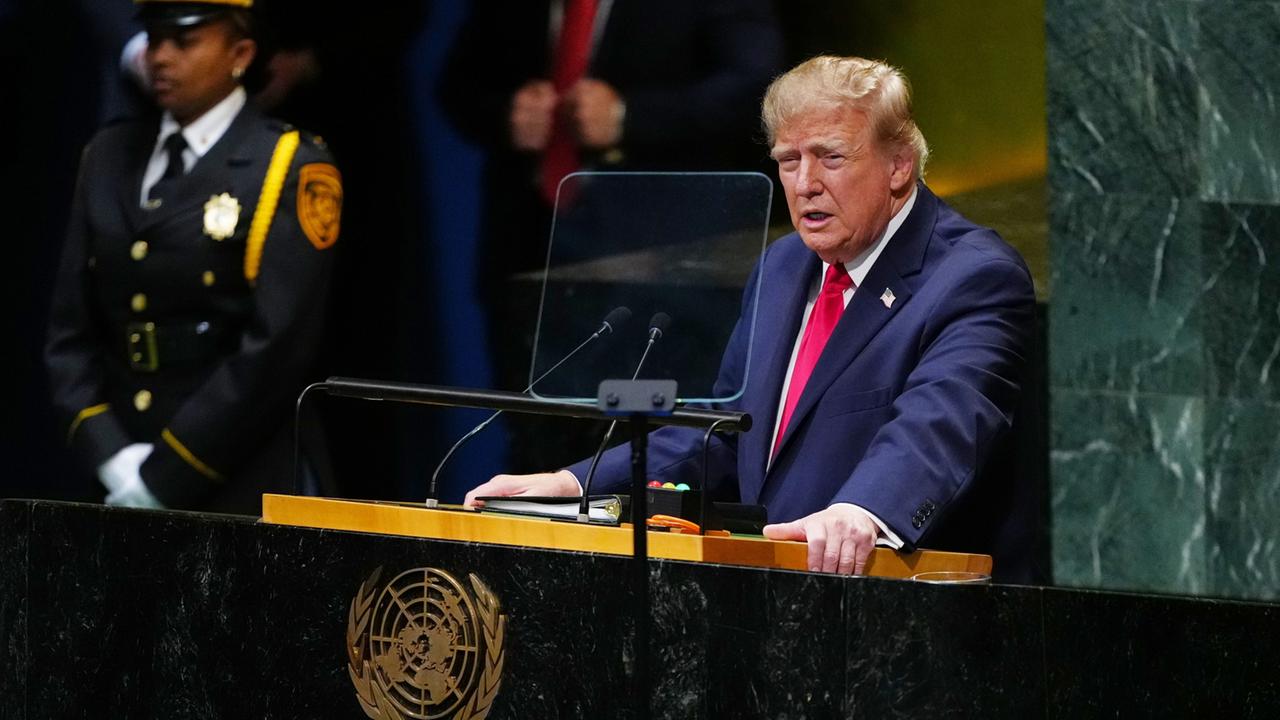
New York, NY – September 23, 2026 – In a notable departure from his characteristic confrontational rhetoric, U.S. President Donald Trump delivered a surprisingly measured and disciplined address before the United Nations General Assembly (UNGA) today. The speech, a stark contrast to his previous fiery appearances on the global stage, signals a potential strategic recalibration, driven primarily by mounting domestic political pressures and a desperate search for diplomatic off-ramps from escalating international crises.
The shift, observed by seasoned diplomats and political analysts alike, saw President Trump read meticulously from a teleprompter, expressing gratitude to the UN Security Council on multiple occasions – a significant departure from his past critiques of multilateral institutions. This unexpected display of diplomatic decorum has ignited discussions about the underlying motivations behind the President’s apparent pivot, raising questions about its sincerity and long-term implications for American foreign policy and global stability.
Main Facts: A Shift in Tone and Strategy
President Trump’s address to the UN General Assembly marked an unmistakable pivot from his previously combative and isolationist stance. Gone were the unscripted broadsides against international bodies and allied nations that had become a hallmark of his UN appearances. Instead, the President presented a seemingly more statesmanlike demeanor, meticulously adhering to a prepared text and, remarkably, offering explicit thanks to the UN Security Council. This newfound appreciation for multilateralism stands in stark opposition to his administration’s earlier threats of withdrawing from the United Nations and its various agencies.
Analysts, including political commentator Martin Ganslmeier, quickly noted the stark contrast, highlighting the President’s apparent enjoyment of the global spotlight, coupled with a pragmatic recognition of geopolitical realities. The notion that even a military superpower like the United States cannot unilaterally resolve complex international flashpoints – such as the protracted conflict in Gaza or the volatile situation in the Strait of Hormuz – appears to have gained traction within the administration. Furthermore, the slow progress of his envisioned "Peace Council" for the Middle East, conceptualized as an alternative to established UN frameworks, is believed to have underscored the limitations of go-it-alone diplomacy. Perhaps most tellingly, there is a growing consensus that the President harbors regrets over the United States’ deepening entanglement in a proxy conflict with Iran, a situation widely perceived to have been influenced by external pressures.
Despite this evident shift in presentation, elements of the President’s signature style remained. His address, though shorter than usual at approximately 40 minutes, still featured moments of self-congratulation, including claims of having "ended eight wars" and the recitation of laudatory remarks purportedly penned by foreign heads of state. He continued to project an image of himself as the sole courageous actor on the world stage, contrasting his decisive actions with the perceived inaction of others. Moreover, his controversial views on emerging technologies and global challenges resurfaced, as he decried efforts to regulate Artificial Intelligence, equating proponents with those who perpetuate the "hoax" of climate change. This blend of newfound discipline and familiar populist rhetoric leaves observers pondering the true depth and durability of this strategic repositioning.
Chronology: From Confrontation to Cautious Cooperation
To fully appreciate the significance of President Trump’s latest UN address, it is essential to trace the trajectory of his engagement with the world body, which has historically been characterized by skepticism, criticism, and often outright hostility.
2017-2019: The Era of "America First" and Disruption
Upon assuming office, President Trump swiftly articulated an "America First" foreign policy, prioritizing national interests and bilateral agreements over multilateral commitments. His early appearances at the UN General Assembly were defined by this ethos. His inaugural address in September 2017 was a forceful declaration of national sovereignty, featuring strong critiques of "globalism" and a pointed warning to "rogue states" like North Korea and Iran. While he did not explicitly threaten to withdraw from the UN, his rhetoric was seen as undermining the very principles of collective security and international cooperation that the organization embodies.
The following year, in September 2018, his speech became infamous for the audible laughter from delegates when he boasted about his administration’s achievements. Unfazed, Trump continued to lambaste the UN as inefficient and overly bureaucratic, and openly questioned the value of alliances, particularly NATO, and international trade agreements. He doubled down on his "America First" agenda, expressing disdain for international treaties and institutions that he perceived as impinging on U.S. sovereignty or economic interests. It was during this period that the threat of a U.S. withdrawal from various UN bodies and even the organization itself loomed largest, sending shockwaves through diplomatic circles.
2020-2025: Escalation and Isolation
The subsequent years saw a continuation, and in some cases, an escalation of these trends. The U.S. officially withdrew from the Paris Agreement on climate change and the World Health Organization (WHO), further cementing its image as an outlier on global issues. Trade disputes with allies and adversaries alike intensified, often initiated through unilateral tariff impositions. The Middle East remained a volatile region, with the U.S. withdrawing from the Iran nuclear deal (JCPOA) in 2018 and subsequently imposing crippling sanctions, leading to heightened tensions and military standoffs in the Persian Gulf. The proposed "Peace Council" for the Middle East, touted as a more effective alternative to existing frameworks, struggled to gain traction, revealing the complexities of bypassing established international diplomatic channels.
September 2026: The Apparent U-Turn
Fast forward to the current address on September 23, 2026. The shift was dramatic. Instead of the familiar unscripted tirades, President Trump delivered a carefully prepared speech, read verbatim from a teleprompter. He not only refrained from his usual criticisms of the UN but went so far as to explicitly thank the UN Security Council – a body he had previously treated with disdain – for its work. This move was particularly significant given the ongoing crises in Gaza and the Strait of Hormuz, where multilateral engagement is deemed crucial.
This apparent U-turn, from an "America First" isolationist to a seemingly more accommodating leader, suggests a strategic recalculation. While the underlying ideology of "America First" may persist, the method of its pursuit appears to be undergoing a significant, albeit perhaps temporary, transformation. This chronological overview underscores the magnitude of the shift observed today, setting the stage for deeper analysis into its motivations and potential consequences.
Supporting Data: The Weight of Domestic Discontent
The most compelling explanation for President Trump’s pivot towards a more conventional, statesmanlike posture at the UN General Assembly lies in a confluence of domestic political pressures and unfavorable public sentiment. Recent polling data, widely circulated among political strategists, paints a bleak picture for the President and the Republican party as the crucial November congressional elections loom.
Miserable Poll Numbers: According to multiple leading national surveys conducted in the weeks preceding the UNGA, President Trump’s overall approval ratings have dipped significantly, with some indicating a disapproval rate exceeding 70% for his foreign policy initiatives. This widespread dissatisfaction is not merely anecdotal; it reflects a tangible weariness among the American populace with the constant state of international friction and unpredictability.
Foreign Policy Disapproval: A deeper dive into the polling reveals specific areas of public concern. The President’s consistent attacks on long-standing American allies, particularly European nations and Canada, have alienated a significant portion of the electorate, including moderate Republicans and independents who value stable international partnerships. The chaotic nature of his administration’s trade policy, characterized by sudden tariff announcements and retaliatory measures, has caused economic uncertainty for businesses and consumers alike, contributing to the negative sentiment. Many citizens express frustration over the perceived erosion of American leadership and credibility on the global stage.
The Iran Quagmire: Perhaps the most potent source of public discontent stems from the escalating tensions with Iran. The decision to withdraw from the Joint Comprehensive Plan of Action (JCPOA) in 2018, followed by a campaign of "maximum pressure" and increasing military posturing in the Persian Gulf, has pushed the U.S. to the brink of a wider conflict. Public opinion polls consistently show strong disapproval of a potential war with Iran, with a significant majority of Americans favoring diplomatic solutions. The commentary suggests that the President may regret the "entanglement" with Israel in this conflict, implying a realization that regional allies’ priorities may have inadvertently drawn the U.S. into a more precarious position than initially intended. The financial burden of sustained military presence and the economic impact of rising global oil prices, directly linked to instability in the Strait of Hormuz, have translated into tangible grievances for American households.
Energy Prices and Economic Strain: The ripple effects of global instability are keenly felt at home. The disruption to oil shipments and the general uncertainty in energy markets have led to a noticeable increase in gasoline and energy prices across the United States. For many American families, these rising costs represent a direct hit to their disposable income, fueling frustration and contributing to the overall negative assessment of the administration’s economic stewardship, particularly its foreign policy implications.
The Greenland Compromise: The recent agreement regarding Greenland, lauded by the President as a "face-saving compromise," served as a timely opportunity to demonstrate a capacity for de-escalation and cooperation. While the new deal may not significantly differ from previous arrangements, the President’s public praise for Denmark, Greenland, and NATO – organizations he had previously criticized – was a deliberate effort to project an image of constructive engagement. This tactical embrace of allies, however superficial, aimed to reassure a domestic audience fatigued by diplomatic spats.
In essence, the data indicates that President Trump’s measured tone at the UN was less an ideological conversion and more a strategic maneuver. Faced with plummeting approval ratings and the impending electoral test, the administration recognized the urgent need to project stability and a willingness to seek diplomatic solutions, thereby calming a skeptical and increasingly agitated electorate. The message to the American people was clear: more statesmanship, less disruption.
Official Responses: Cautious Optimism and Lingering Skepticism
The international community’s response to President Trump’s uncharacteristically restrained UN address was a complex tapestry of cautious optimism, relief, and lingering skepticism. Diplomats and heads of state, accustomed to his provocative rhetoric, found themselves analyzing every nuance of his speech for deeper meaning.
Allies’ Relief, but Reserved: European leaders, who have frequently borne the brunt of President Trump’s criticism regarding trade, defense spending, and multilateral agreements, expressed a guarded sense of relief. Many saw the toned-down rhetoric as a welcome respite, potentially opening avenues for more constructive dialogue on pressing global issues. French President Emmanuel Macron, for instance, reportedly acknowledged the shift as a "step in the right direction," while emphasizing the need for consistent action to back up words. German Chancellor Angela Merkel, known for her pragmatic approach, welcomed the acknowledgment of the UN’s role but stressed that "genuine cooperation requires more than a single speech; it requires sustained commitment." There was a palpable hope that the "Greenland compromise" could signal a broader willingness to engage with allies rather than antagonize them, though many remained wary that this could be a temporary tactical shift rather than a fundamental change in policy.
Adversaries’ Observation: Nations often targeted by Trump’s harsh rhetoric, such as Iran, offered a more cynical assessment. While acknowledging the departure from outright threats, Iranian Foreign Minister Mohammad Javad Zarif reportedly dismissed the shift as "cosmetic," emphasizing that "actions, not just words from a teleprompter, will determine the future of our relations." There was an underlying suspicion that the "annihilation threats" against Tehran, even if softened in delivery, still underscored a hostile intent. China and Russia, meanwhile, likely viewed the shift through a geopolitical lens, observing whether the U.S. was genuinely seeking de-escalation or merely attempting to consolidate its position ahead of domestic elections. Their official statements were typically non-committal, calling for continued dialogue and respect for international law.
UN Officials’ Measured Welcome: Within the United Nations itself, the reaction was largely positive, albeit with a sense of guarded anticipation. UN Secretary-General António Guterres reportedly welcomed the President’s explicit thanks to the Security Council and his apparent recognition of the UN’s indispensable role in global problem-solving. Such endorsements, even if tactical, provide a much-needed boost to the organization’s legitimacy and operational capacity. However, UN officials are acutely aware that the institution has endured years of U.S. financial withholding and policy challenges, and a single speech, however conciliatory, does not erase that history. The real test, they noted, would be in future U.S. engagement on issues like climate change, human rights, and humanitarian crises.
Domestic Reactions: A Divided Interpretation: Back in the United States, reactions were sharply divided along partisan lines. Republican allies praised the President for demonstrating "presidential gravitas" and "diplomatic skill," framing the speech as a testament to his ability to adapt and lead on the world stage. They highlighted the perceived strength in his stance on Iran while welcoming the renewed rhetoric of cooperation with allies. Democratic opponents, conversely, largely dismissed the shift as a cynical and opportunistic ploy driven by dire poll numbers ahead of the congressional elections. They pointed to the continued inclusion of controversial statements on climate change and AI as evidence that the President’s core beliefs remained unchanged, arguing that the measured tone was merely a superficial attempt to assuage an anxious electorate. Commentators like Martin Ganslmeier underscored this domestic political motivation, suggesting that the goal was primarily to "not further unsettle U.S. citizens."
In summary, while President Trump’s UN address did succeed in altering the immediate diplomatic atmosphere, the international community and domestic observers alike remain cautious. The prevailing sentiment is one of "wait and see," as the world watches to determine whether this newfound statesmanship represents a genuine and lasting shift in U.S. foreign policy or merely a temporary tactical adjustment in the run-up to a critical election.
Implications: A Crossroads for U.S. Foreign Policy
President Trump’s notably disciplined appearance at the UN General Assembly carries profound implications, signaling a potential crossroads for U.S. foreign policy and the global order. The shift, driven by a complex interplay of domestic electoral pressures and the sobering realities of international power dynamics, could reshape America’s engagement with the world in the coming years.
For U.S. Foreign Policy: A Tactical Pause or a Paradigm Shift?
The most immediate implication is the potential for a tactical pause in the administration’s "America First" unilateralism. If the restrained rhetoric translates into a more cooperative approach, even temporarily, it could alleviate tensions with traditional allies and create space for diplomatic initiatives. The explicit thanks to the UN Security Council and the praise for NATO, Denmark, and Greenland suggest an acknowledgment of the value of alliances, however reluctant. However, whether this represents a genuine paradigm shift towards renewed multilateralism or merely a strategic adjustment to navigate immediate domestic challenges remains to be seen. If it is the latter, the underlying friction points with allies could resurface post-election. A more cooperative stance, even if opportunistic, could provide the U.S. with greater leverage in negotiations, particularly on issues like trade and burden-sharing, where allies have often felt alienated.
For International Relations: De-escalation and Renewed Dialogue?
The change in tone could have a de-escalatory effect on several global flashpoints. The commentary’s assertion that Trump "regrets" getting involved in a war with Iran, coupled with his administration’s desperate search for an "exit strategy," suggests a willingness to explore diplomatic avenues. The numerous conversations held on the sidelines of the UNGA could be crucial in this regard, potentially paving the way for indirect talks or a mediated de-escalation in the Persian Gulf. Similarly, a more constructive U.S. engagement with the UN could breathe new life into efforts to address the protracted conflict in Gaza, where international consensus and coordinated humanitarian efforts are desperately needed. However, the President’s persistent dismissal of climate change as a "hoax" and his skepticism towards AI regulation underscore that on certain global challenges, the U.S. may continue to operate outside international consensus, limiting the scope of true cooperation.
For Domestic Politics: The November Referendum
Domestically, the implications are directly tied to the upcoming congressional elections in November. The shift towards statesmanship is a clear attempt to assuage the 70% of American citizens who disapprove of his foreign policy. By projecting an image of stability and responsibility, the President aims to mitigate concerns about chaos and unpredictability, which have contributed to the Republican Party’s "miserable" poll numbers. A perceived de-escalation of the Iran conflict and a softening on trade disputes could ease anxieties about rising energy prices and economic uncertainty, potentially improving voter sentiment. The success of this strategy will be a key indicator of whether the American electorate prioritizes stability and cooperation over a more disruptive, unilateral approach in foreign affairs. The election will effectively serve as a referendum on the efficacy of this pivot.
For Specific Conflicts and Challenges:
- Iran: While "annihilation threats" persist, the "desperate search for an exit strategy" suggests that behind the rhetoric, the administration is actively seeking a way out of the current quagmire. This could involve back-channel negotiations or a willingness to accept a face-saving diplomatic solution.
- Gaza & Hormuz: The recognition that unilateral action is insufficient to resolve these complex conflicts implies a potential, albeit cautious, return to leveraging multilateral platforms for resolution. This could lead to increased U.S. diplomatic engagement within the UN framework for these regions.
- Climate Change & AI: The President’s continued polemic against regulating AI and his dismissal of climate change suggest that these areas remain significant points of divergence from the international community, limiting the scope of genuine cooperation despite the broader shift in tone.
In conclusion, President Trump’s UN address represents a moment of strategic ambiguity. While the shift towards a more conventional, statesmanlike posture offers a glimmer of hope for de-escalation and renewed dialogue, the underlying motivations remain firmly rooted in domestic political calculus. The coming months, particularly the outcome of the November elections and the subsequent actions of the administration, will reveal whether this pivot is a fleeting tactical adjustment or the beginning of a more enduring reorientation of American foreign policy. The world watches, with a mixture of hope and trepidation, for clarity on what this new chapter truly portends.