By Peggy Wolter, MDR SACHSEN
Updated: October 22, 2026
In the verdant, rolling landscapes of northwestern Poland, a quiet cultural revolution is taking place. It is not occurring in the sterile halls of high-fashion ateliers in Paris or Milan, but rather within the vibrant, flower-strewn walls of a workshop in the heart of the Kashubian region. Here, the ancient, intricate patterns of a Slavic minority are being peeled away from dusty museum shelves and breathed into the fabric of contemporary streetwear. Through the vision of designer Angelika Szulfer, the Kashubian artistic heritage—long cherished for its precise embroidery and iconic ceramic motifs—is finding a new, global resonance on the soles of sneakers and the hoods of modern apparel.
The Cultural Landscape: A Slavic Legacy
The Kashubians are a distinctive West Slavic ethnic group, possessing their own language and a deep-seated identity that has survived centuries of historical flux. Central to this identity is their folk art, a visual language defined by a strict, symbolic seven-color system and recurring floral motifs. For the Kashubian people, every petal, leaf, and geometric flourish painted on wood or stitched into linen tells a story of an intimate, ancestral bond with the natural world.
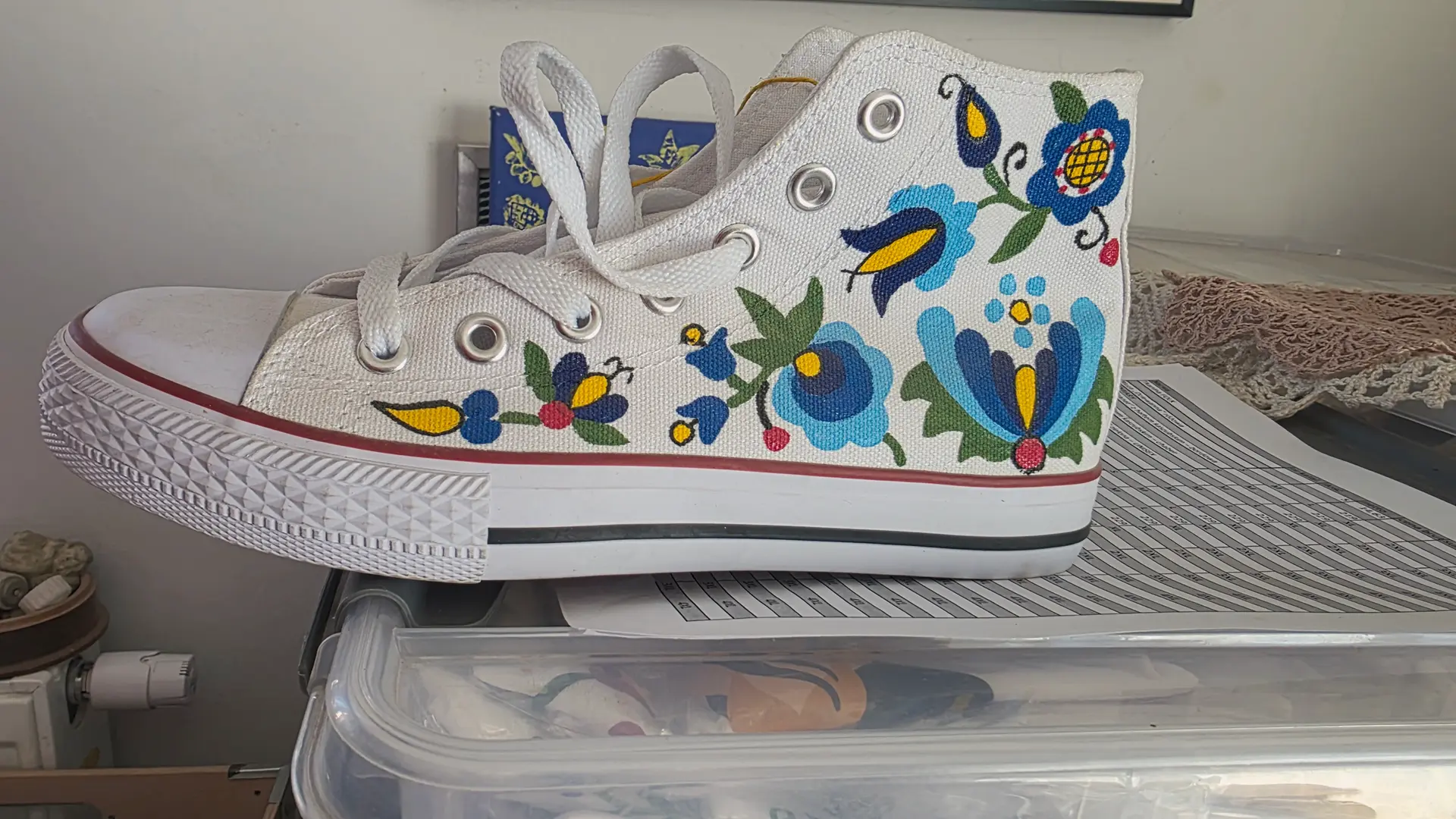
The artistic vocabulary of the region is rooted in a deliberate palette: three shades of blue representing the region’s lakes, the vast sky, and the deep, dark sapphire of the nearby Baltic Sea; a vibrant green for the endless forests and rolling meadows; a sunny yellow for the warmth of the sun and the abundance of the harvest; a fiery red for the passion and heart of the people; and a deep, grounding black for the fertile, heavy soil of their homeland.
Chronology of a Creative Evolution
The journey of "Farwa"—the label founded by Angelika Szulfer—began not as a commercial venture, but as an act of personal expression.
- The Academic Spark (Circa 2018–2019): While at university, Szulfer began experimenting with applying traditional regional ornaments to unconventional surfaces. Her initial project, which involved surprising her professors with contemporary items featuring traditional motifs, served as the proof-of-concept that would eventually define her career.
- The Foundation (2020): Amidst a period of global uncertainty, Szulfer established her primary workshop in the village of Kamienica Szlachecka. The choice of location was symbolic: a return to the roots of the craft, set against the backdrop of the traditional landscape that inspired the art itself.
- Scaling the Vision (2021–2023): Realizing the need for a physical space to bridge the gap between creation and community, Szulfer opened her gallery in Kościerzyna. This venue serves as a hybrid space—part boutique, part design studio, and part educational hub.
- The Modern Pivot (2024–Present): Today, Farwa has become a beacon for those looking to merge heritage with the "streetwear" aesthetic. From hand-painted sneakers to high-quality embroidered hoodies, the brand has successfully positioned Kashubian art as a viable, desirable element of modern, daily fashion.
Supporting Data: The Anatomy of the Craft
The success of the Farwa model lies in its uncompromising commitment to quality. The "Kashubian Sneaker" has become the flagship of the brand, requiring hours of meticulous, manual labor. Szulfer utilizes specialized, weather-resistant paints to ensure that the floral designs survive the rigors of everyday wear, whether on canvas or leather.
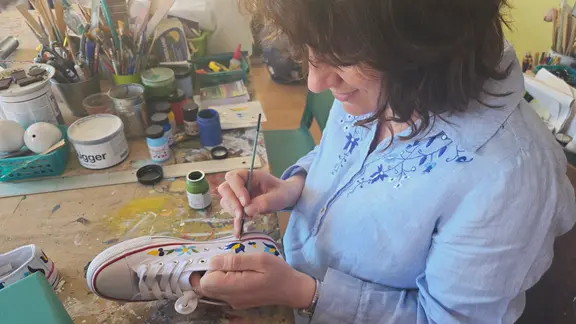
The production process is a testament to the "slow fashion" movement:
- Preparation: Each shoe is cleaned and primed.
- Freehand Artistry: Unlike mass-produced screen prints, every floral ornament is applied millimeter-by-millimeter using fine-tipped brushes.
- Vitrification: A protective, waterproof sealant is applied, locking in the vibrant seven-color pigment.
- Integration: The motifs are scaled to the contours of the footwear, ensuring that the traditional patterns do not appear distorted or "forced" onto the modern silhouette.
This same precision is applied to her textile work. Using traditional embroidery techniques, she elevates simple hoodies, sweatshirts, and even utility belt bags, turning everyday functional items into wearable art.
The Philosophy of "Farwa": Bridging Generations
The name of the label, "Farwa," is derived from the Kashubian word for "color." It is a moniker that reflects the brand’s mission to keep the region’s identity from fading.
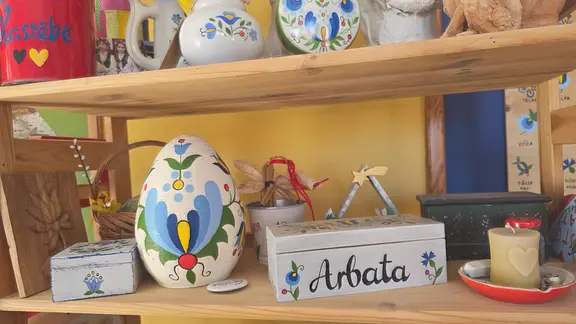
"I want this tradition to be preserved, but for it to connect with modernity," says Szulfer. "I try to show the Kashubian style in different ways, so that there is something for the young and the old—something for every age."
This philosophy of inclusivity is the engine behind her workshop program. In her gallery, tourists, children, and local residents sit side-by-side to learn the history of the seven-color system. They are taught how to translate traditional symbolism onto canvas, wooden chests, and porcelain figures. By democratizing the ability to create these motifs, Szulfer ensures that the art form is not merely observed by consumers, but actively practiced by a new generation.
Implications: A New Model for Cultural Tourism
The success of Farwa has broader implications for regional tourism in Poland. The Pomeranian Regional Tourism Organization has identified this blend of craft and contemporary design as a vital draw for cultural travelers. By moving away from "souvenir-shop" trinkets and toward high-quality, artisanal products, the region is successfully rebranding its cultural offerings.
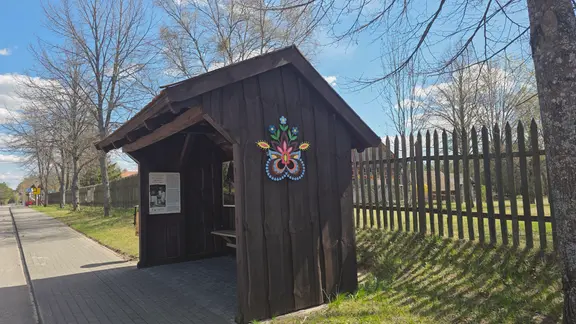
Furthermore, the integration of these motifs into public spaces—such as the viral image of a bus stop in Northern Poland, fully painted in the traditional Kashubian style—demonstrates the potential for folk art to act as a source of local pride and a point of interest for international visitors.
Official Responses and Cultural Impact
While the fashion world often looks toward the future, the integration of ethnic motifs—a trend seen in high fashion globally—is often criticized for being "cultural appropriation." However, Szulfer’s work is widely regarded as the opposite: it is an act of cultural preservation. By controlling the narrative, the production, and the application of these symbols, she keeps the economic and creative power within the Kashubian community.
"The work is not just about the paint on the shoe," says an advisor from the Polish Tourism Board. "It is about the survival of the Kashubian identity in an era of globalization. When a young person in Warsaw or Berlin wears a hoodie with these patterns, they are participating in a conversation that started centuries ago."

Conclusion: The Path Forward
As the lines between traditional craft and modern design continue to blur, the work of Angelika Szulfer provides a compelling blueprint for other minority cultures looking to preserve their heritage. By refusing to let tradition become a static, museum-bound relic, and instead allowing it to evolve with the changing tides of taste and technology, Farwa has proven that the most effective way to protect the past is to wear it into the future.
Whether through the intricate embroidery of a winter coat or the bold, painted floral patterns on a pair of urban sneakers, the spirit of the Kashubian people is no longer confined to the borders of their region. It is walking the streets, carried by those who value the story behind the stitch as much as the aesthetic of the garment itself. The seven colors of Kashubia are, quite literally, coloring the world of modern fashion.