LEIPZIG – The industrial peace at one of Germany’s most prominent exhibition centers has been shattered. As of late October 2026, the ongoing labor dispute between the management of Leipziger Messe GmbH and the trade union Verdi has reached a critical juncture, characterized by hardening fronts, allegations of union-busting, and a total breakdown in the atmosphere of social partnership.
The conflict, which has been simmering since July 2026, moved into the public eye this week when Verdi members issued a formal, open letter to Saxony’s Minister of Economic Affairs and Leipzig’s Lord Mayor, Burkhard Jung. The letter, a desperate plea for mediation, marks a significant escalation in what was previously a standard, albeit difficult, set of wage negotiations.
The Core of the Dispute: Economic Demands vs. Corporate Realities
At the heart of the standoff lies a wide chasm between the expectations of the workforce and the budgetary constraints of the Messe management. Verdi, representing a broad coalition of employees across the Messe and its subsidiary companies, has laid out a comprehensive package of demands intended to combat inflation and address the rising cost of living in the region.
The Union’s Position
Verdi is demanding:

- A monthly salary increase of 350 euros, to be applied retroactively to July 1, 2026.
- A streamlined salary structure with new, equitable pay-grade groupings.
- Improved employee wellness, specifically the introduction of three paid "health days" per year.
- Working time reduction, aiming for a standard 38-hour work week to ensure better work-life balance for those managing the grueling exhibition cycles.
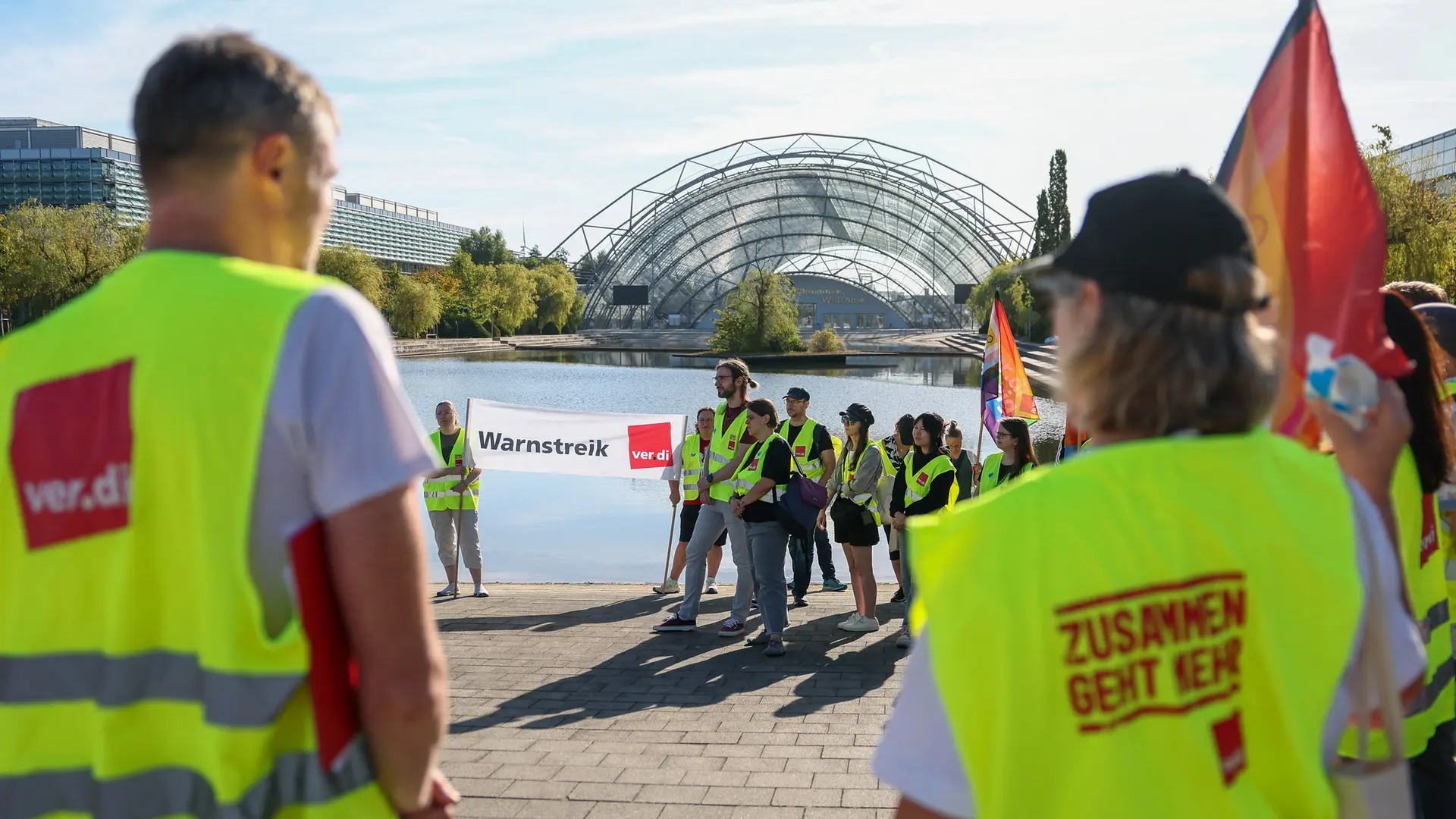
The union argues that these demands are not merely "wants," but necessities for retaining skilled labor in a competitive market. Furthermore, they emphasize that the productivity of the Messe is directly tied to the dedication of its staff—a sentiment expressed during the October protest actions, where banners reading "We are worth it" were prominently displayed.
The Management’s Response
Leipziger Messe, led by CEO Markus Geisenberger, has maintained a firm stance. Management characterizes the union’s demands as "economically unrealistic" and "overblown."
In response to the mounting pressure, the company released a statement claiming they have already put a "significantly improved offer" on the table. According to the Messe, this proposal aligns with the collective bargaining agreements reached in the public sector for the federal states, supplemented by additional financial and structural benefits. From the management’s perspective, the ball is firmly in the union’s court, and they have called for more "constructive compromise" from the labor representatives.
A Chronology of Confrontation
The path to this impasse has been marked by a series of failed negotiations and intensifying industrial action.

- July 2026: Initial rounds of negotiations commence. Both sides acknowledge the need for a new agreement but find themselves divided on the scale of salary adjustments.
- Early September 2026: Talks begin to stall as the Messe presents an offer that Verdi labels "insulting."
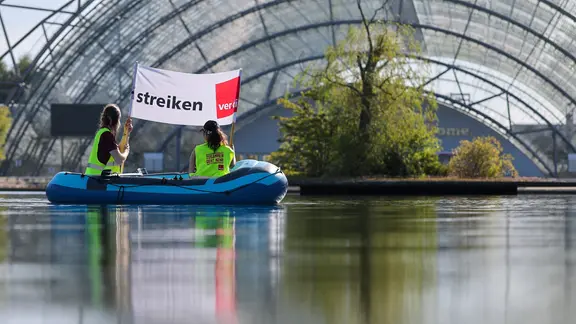
- October 1–2, 2026: The first major wave of warning strikes takes place. Employees from the Messe and its subsidiaries leave their stations, causing significant disruption to operational activities. The sight of striking workers in inflatable boats on the lake in front of the iconic Glashalle becomes a symbolic image of the protest.
- Mid-October 2026: Allegations surface regarding the treatment of union activists. Verdi reports that a member of the internal tariff commission was issued an official warning (Abmahnung), which the union views as an act of intimidation aimed at suppressing labor advocacy.
- October 22, 2026: The submission of the open letter to political leadership, signaling that the dispute has transcended the workplace and has become a matter of regional political concern.
The Controversy: Allegations of Union-Busting
Perhaps the most damaging aspect of the current conflict is the deterioration of the relationship between management and the workers’ representatives. The recent, formal complaint regarding the disciplinary action taken against a member of the tariff commission has poisoned the well.
Verdi representatives have explicitly accused the management of employing "loud, condescending, and inappropriate behavior" during the fourth round of negotiations. Such language is rarely used in German labor relations and indicates a deep-seated loss of trust.

The Messe management has vehemently denied these claims. In a formal response to press inquiries, the company stated: "A disadvantage or sanction based on trade union activity does not take place in our company." They further noted that they do not discuss specific personnel matters in public, a standard corporate defense that has, in this instance, failed to quiet the growing outrage among the workforce.
Political Implications and the Limits of Autonomy
The involvement of Saxony’s Minister of Economic Affairs and Leipzig’s Mayor, Burkhard Jung, highlights the political significance of the Messe. As a publicly backed entity, the Messe is viewed by many as a barometer for the regional economy.
However, the response from the state level has been one of measured distance. A spokesperson for the Ministry of Economic Affairs confirmed receipt of the letter but declined to intervene, citing the principle of "Tarifautonomie" (collective bargaining autonomy). In Germany, the government is constitutionally barred from dictating the terms of wage agreements between unions and employers.
This refusal to mediate leaves the two parties in a vacuum where the only remaining levers are further strikes or a total capitulation by one side. The next round of negotiations is scheduled for October 27, 2026. This date is now widely regarded as a "make or break" moment for the 2026 fiscal year at the Messe.
Analyzing the Economic Impact
The Leipziger Messe is a massive economic engine for the city and the state. It hosts international trade fairs, conventions, and cultural events that bring thousands of visitors to the region. A prolonged strike does not only affect the immediate bottom line of the exhibition center but has a ripple effect on:
- The Hospitality and Tourism Sector: Hotels, restaurants, and local transport providers rely heavily on the steady stream of traffic generated by the Messe.
- Regional Business Reputation: A conflict that turns public and aggressive can damage the image of Leipzig as a stable and reliable location for international commerce.
- Employee Retention: In a tightening labor market, the loss of skilled, long-term employees due to dissatisfaction could lead to a permanent degradation in service quality at the exhibition center.
Looking Ahead: The Path to Resolution
As October draws to a close, the mood remains fraught. For a resolution to occur, both sides must find a way to retreat from their current, entrenched positions without losing face.
For Verdi, the challenge is to secure a deal that justifies the intensity of the protest to their members, who have been energized by the prospect of meaningful wage reform. For the Messe management, the challenge is to reconcile their budget, which is clearly under pressure, with the necessity of maintaining a motivated and professional workforce.
Industry analysts suggest that a potential compromise might lie in a phased implementation of the salary increase, combined with a commitment to a future-oriented working time model. However, such a deal would require a return to the "social partnership" model that has historically defined German industrial relations—a model that is currently being tested to its limits at the gates of the Leipziger Messe.

With the October 27th meeting approaching, the eyes of the region—and the labor movement at large—are fixed on the negotiation table. Whether this will result in a breakthrough or a further descent into industrial chaos remains the central question of the autumn. One thing is certain: the era of quiet, behind-closed-doors negotiations at the Leipziger Messe has effectively ended, replaced by a loud, public, and high-stakes battle for the future of the workplace.