In a remarkable turn of events that has captured the imagination of the footballing world, MSV Duisburg has ascended to the pinnacle of the 3. Liga. Ten matchdays into the 2026/2027 season, the "Zebras" are not merely leading the pack; they are dominating it with a blend of tactical maturity, administrative stability, and an infectious wave of local euphoria.
As the club celebrates its 125th anniversary, the atmosphere at the Schauinsland-Reisen-Arena is electric. With a five-point cushion over their closest challengers, Viktoria Köln, the MSV has transformed from a sleeping giant into a powerhouse, silencing critics and reigniting the passion of a fanbase that has weathered years of uncertainty.
The Current State of Play: A Statistical Masterclass
The numbers speak for themselves. After ten rounds, the MSV Duisburg hierarchy is clear: they are the team to beat. Their only blemish remains a solitary defeat at the hands of Fortuna Düsseldorf on the fifth matchday, a result that served more as a wake-up call than a setback.
What sets this iteration of the Zebras apart is their sheer efficiency. Unlike previous seasons, where inconsistency plagued the squad both home and away, the current side has mastered the art of winning in all conditions. They currently sit atop both the home and away tables, a testament to the tactical discipline instilled by head coach Dietmar Hirsch. As they prepare for their upcoming clash against FC Ingolstadt, the objective is simple: extend the streak and consolidate the lead.
The Foundation of Success: Continuity and Cohesion
The primary engine behind this resurgence is a rare commodity in modern football: stability. While many clubs in the lower tiers of German football undergo radical squad overhauls every summer, MSV Duisburg took a different approach.
Retaining the Core
The backbone of the team—Rasim Bulić, Alexander Hahn, Tobias Fleckstein, Patrick Sussek, and goalkeeper Max Braune—is now in its third season of playing together. This institutional knowledge and on-pitch chemistry have created a defensive unit that is notoriously difficult to break down. When the pressure mounts, this group knows exactly how to react, a trait that is often absent in more "talented" but less experienced squads.
Targeted Reinforcements
Management did not rest on its laurels, however. The addition of players like Max Besuschkow and Ramien Safi was surgical. These signings did not just add depth; they ignited a healthy competitive fire within the squad. Every player knows that their starting position is earned during the week, not gifted, which has pushed the entire training intensity to a higher level.
Tactical Evolution: The Hirsch Philosophy
Head coach Dietmar Hirsch has been the architect of this transformation. His philosophy is built upon three pillars: defensive solidity, extreme work-rate, and ruthless transition play.
The "All-Pitch" Mentality
Under Hirsch, the Zebras play a brand of football that is both attractive and exhausting to play against. The team is capable of shifting into a full-pitch, man-to-man press that smothers opponents before they can settle. In the attacking third, players like Bulić have been granted the freedom to take more risks in the transition game, making the team’s movement more fluid and unpredictable.
Flexibility and Depth
One of the most impressive aspects of the current MSV squad is its unpredictability. Eleven different players have already found the back of the net this season, meaning opponents cannot simply mark one or two stars to neutralize the threat. Furthermore, the "joker" quality of the squad is immense. Substitutes like Peter Remmert and Steffen Krüger have repeatedly made an immediate impact, proving that the bench is not a demotion, but a vital component of the team’s tactical rotation.
The Financial and Structural Turnaround
The success on the pitch is inextricably linked to the calm within the club offices. For years, the MSV was haunted by the specter of financial instability. Today, the situation is unrecognizable.
A Debt-Free Milestone
Thanks to a rigorous and sometimes painful multi-year restructuring process, MSV Duisburg entered the current season officially debt-free. This financial clarity has trickled down to the sporting department, allowing Sport Executive Michael Preetz and coach Dietmar Hirsch to work in an environment of unprecedented tranquility. There are no salary arrears, no transfer bans, and no looming insolvency threats to distract the players. The harmony between Preetz and Hirsch is widely regarded as the cornerstone of the club’s current focus.
The 125th Anniversary Euphoria
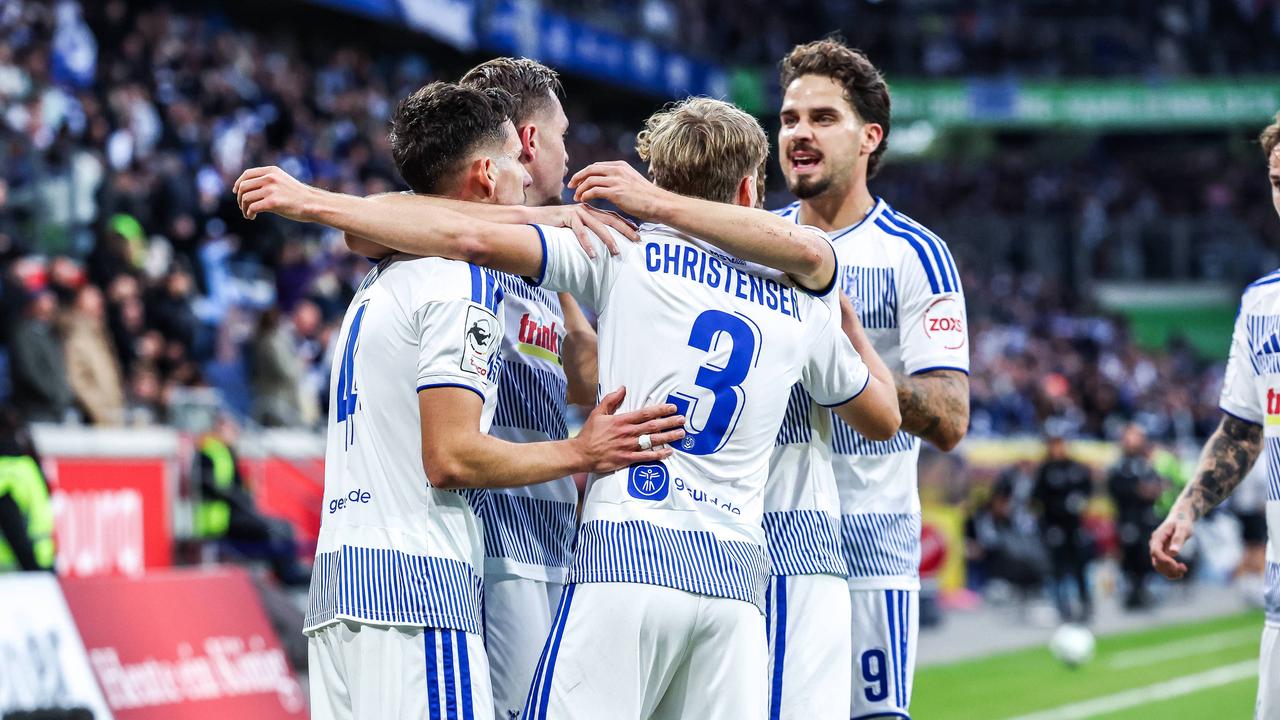
History matters. As the club celebrates its 125th year of existence, the city of Duisburg has rallied behind the team with renewed fervor. Over 10,000 season tickets were sold before the first ball was even kicked, and the matchday atmosphere—regularly seeing over 20,000 fans in attendance—has turned the Schauinsland-Reisen-Arena into a fortress.
This symbiotic relationship between the fans and the players has been critical in recent tight matches. When the legs grow tired in the 80th minute, the roar of the stands has been known to carry the Zebras over the finish line.
Looking Ahead: The Challenges of Sustained Success
While the current form is exemplary, the road ahead is long. The 3. Liga is notorious for its grueling schedule and the physical toll it takes on squads.
The Ingolstadt Test
The upcoming match against Ingolstadt will be a litmus test for the team’s maturity. Maintaining focus when sitting at the top of the table requires a specific psychological fortitude. Hirsch has been careful to manage expectations, repeatedly telling the media that the table in October is merely a reflection of current form, not a trophy.
Managing the Target on Their Backs
As the league leaders, MSV Duisburg is now the primary target for every other team in the division. Teams will come to Duisburg prepared to sit deep and counter-attack, forcing the Zebras to break down low blocks—a task they have struggled with in years past. Whether they can maintain their creative spark against defensive-minded opponents will determine if they can sustain this lead until May.
Implications for the Future
If the MSV continues on this trajectory, the implications for the club are massive. Promotion to the 2. Bundesliga would not just be a sporting success; it would be a complete revitalization of a traditional German club.
The successful synergy between the front office, the coaching staff, and the supporters has created a model that many other struggling traditional clubs in Germany look at with envy. It proves that even after years of decline, a club with a massive fanbase can rise again if they prioritize continuity, fiscal responsibility, and a coherent sporting identity.
Conclusion
The MSV Duisburg of 2026 is a team that understands its own identity. They are no longer a club searching for a soul, but a disciplined, hungry unit that believes in the system their coach has provided. With financial health, a deep squad, and a city unified behind their colors, the Zebras have positioned themselves as the clear favorites for the title.
The season is far from over, and football is a sport of fine margins, but the signs are unmistakable: something special is being built in Duisburg. Whether they are hoisting the trophy in May or not, the "Zebras" have already achieved the most important victory—they have brought hope back to the heart of the Ruhr region.