

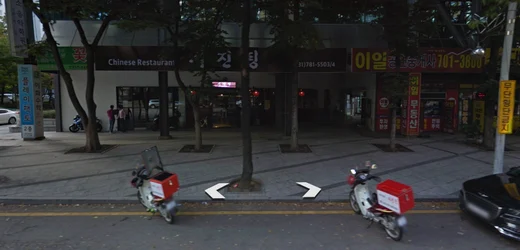
Introduction: A Targeted Strike
In a bizarre and unsettling incident that has drawn international scrutiny, a restaurant in the South Korean city of Seongnam—famously named after the Chinese President, Xi Jinping—was systematically dismantled by a group of unidentified, masked individuals. The event, which occurred in the early hours of September 24, 2026, has raised significant questions regarding cross-border security, the limits of political satire, and the growing sensitivity surrounding the image of the Chinese leadership abroad.
While the destruction of a business is typically a matter of local law enforcement, the specific target—an establishment bearing the name of the world’s second-most powerful leader—has transformed a case of criminal mischief into a high-stakes geopolitical mystery. According to South Korean police reports, the perpetrators arrived as tourists, executed a calculated act of destruction, and fled back to China before authorities could intervene.
Chronology of the Attack
The precision with which the attack was carried out suggests a level of premeditation that goes beyond a spontaneous outburst of anger.
- September 24, 2026 (Early Morning): Security footage captured four masked individuals storming the restaurant premises in the Bundang district of Seongnam. The establishment was closed for a public holiday, a fact the attackers were evidently aware of, as they chose a time when they knew the restaurant would be vacant.
- The Act: Over the course of their intrusion, the group proceeded to systematically demolish the interior. Surveillance footage shows the attackers smashing tables, shattering fixtures, and spraying black lacquer across the walls and furniture, essentially rendering the business inoperable.
- Evidence Collection: Notably, the perpetrators appeared to record their own vandalism using mobile phones. Experts believe this was done to provide "proof of work" to an external handler or organization, suggesting the act was a commissioned job rather than an independent vendetta.
- The Escape: Immediately following the vandalism, the suspects traveled to the airport and exited South Korea, returning to the People’s Republic of China. This rapid departure has severely hampered the ability of South Korean investigators to conduct interrogations, leaving them to rely on international cooperation for justice.
The Restaurant Owner’s Ordeal: A Pattern of Intimidation
The owner of the restaurant, who has maintained a low profile for safety reasons, has provided harrowing testimony regarding the events leading up to the destruction. He described a long-term campaign of harassment that had intensified in the months preceding the physical attack.
According to the owner, he had received between 40 and 50 threatening phone calls from individuals claiming to be business owners based in China. The callers were reportedly aggressive, demanding that the restaurant change its name. When intimidation failed, some callers attempted to bribe the owner, offering significant sums of money if he would agree to rebrand the establishment.
"They were incredibly persistent," the owner told local media. "They claimed to be influential business figures, and they viewed the name as an affront."
The owner maintains that the naming of the restaurant was purely a marketing strategy intended to signal that the establishment served the best Chinese cuisine in South Korea. "There was no political intent whatsoever," he stated. "I had no reason to believe that the name would harbor a grudge from anyone in China." The estimated cost of the damage—including property destruction and lost business—is approximately 10,000 Euros.

Official Responses and Jurisdictional Challenges
The South Korean police have identified the four suspects as Chinese nationals. However, the legal path forward is fraught with difficulty. Because the suspects have left the country, South Korean authorities must now navigate complex extradition treaties and diplomatic channels to request assistance from Beijing.
As of now, the Chinese government has remained silent regarding the incident. This lack of comment is consistent with Beijing’s historical tendency to avoid acknowledging controversies that involve the image of President Xi Jinping. Conversely, in South Korea, the incident has sparked a debate about the freedom of business owners to name their establishments and the potential for foreign entities to exert coercive pressure on South Korean soil.
The Sensitivity of "Xi Jinping": A Contextual Analysis
To understand why a restaurant name could trigger such a violent response, one must look at the climate of extreme sensitivity surrounding the Chinese President’s image. Under Xi’s tenure, the Chinese Communist Party has implemented a rigorous, often draconian, campaign to sanitize the leader’s image and suppress any form of public mockery or unauthorized usage of his likeness.
The "Winnie the Pooh" Precedent
Perhaps the most famous example of this sensitivity is the widespread censorship of the character "Winnie the Pooh." Years ago, internet users began comparing the stout, lovable bear to President Xi. The comparison, intended as a lighthearted meme, was interpreted by the Chinese state as a deliberate attempt to undermine the dignity of the office. Consequently, the character was scrubbed from the Chinese internet, and images of the bear were banned in public media.
This obsession with shielding the President from ridicule has clearly crossed borders. The vandalism in Seongnam suggests that this "censorship mandate" is not merely an internal policy but an exportable value system. By targeting a restaurant that shares his name, the perpetrators were arguably participating in a form of "reputation management" that operates outside the boundaries of international law.
Implications: Sovereignty and Soft Power
The attack on the Seongnam restaurant carries significant implications for the future of international business and free expression.
1. The Erosion of Local Sovereignty
The incident underscores the ease with which foreign actors can bypass local security protocols. If a group can travel to a foreign country, commit a coordinated crime, and escape before law enforcement can respond, it exposes a critical vulnerability in domestic security. It raises the question: Are foreign businesses operating in South Korea now subject to the "red lines" of foreign governments?

2. The Fear of Self-Censorship
The harassment reported by the restaurant owner creates a chilling effect. If business owners feel they must choose names that are "politically palatable" to avoid vandalism or intimidation, they are effectively practicing self-censorship. This could set a dangerous precedent, where the parameters of acceptable naming—and by extension, acceptable thought—are dictated by a foreign power.
3. Geopolitical Strain
The incident occurs against a backdrop of already fluctuating relations between Seoul and Beijing. While the two nations share deep economic ties, they frequently clash over cultural appropriation and geopolitical alignments. A brazen attack by Chinese nationals on South Korean soil, even if not state-sponsored, will inevitably be used as a political football in the National Assembly, putting further pressure on the South Korean government to demand accountability from Beijing.
Conclusion: A Symptom of a Larger Problem
The destruction of the "Xi Jinping" restaurant is a bizarre, yet highly symbolic, case study in modern political anxiety. It highlights a disconnect between the globalized, open world where entrepreneurs should be free to name their businesses as they please, and a world where certain leaders are deemed beyond the reach of satire or mundane association.
The investigation continues, but the core issue remains: The act was not just about breaking chairs and spraying paint. It was an assertion of power. Whether the perpetrators were acting on their own misguided patriotism or were part of a more coordinated, state-adjacent campaign of intimidation, the result is the same: a violation of a business owner’s rights and a challenge to the rule of law.
As the international community watches, the case will serve as a bellwether for how nations handle the long reach of authoritarian sensitivities. For the owner of the shop in Seongnam, the dream of running a successful restaurant has been replaced by the reality of being caught in the crosshairs of a global power struggle he never intended to join. The incident remains a stark reminder that in the modern era, the name on a storefront can carry the weight of a superpower’s pride—and the consequences of crossing it can be severe.


























