The global art world is in mourning following the passing of Yayoi Kusama, the Japanese creative force who turned her personal struggles into a universal language of dots, mirrors, and infinite reflection. She died on August 14, 2026, at the age of 97 in a Tokyo hospital.
Known for her iconic polka-dot patterns and immersive "Infinity Mirror Rooms," Kusama leaves behind a legacy that bridges the gap between mid-century avant-garde movements and the digital-age phenomenon of viral, experiential art. Her death marks the end of a singular artistic career that spanned seven decades and challenged the boundaries of sculpture, painting, performance, and installation.
A Legacy of Infinite Reach: The Main Facts
The news of Kusama’s passing was confirmed by her official representatives, who noted that the artist remained intellectually active and committed to her craft until her final days. Despite her advanced age and the constraints of her health, she continued to sketch new concepts, reflecting a lifelong devotion to creation as a vital, daily necessity.
Kusama was not merely an artist; she was a cultural phenomenon. Her work transcended the sterile environment of traditional galleries, finding a massive, eager audience in the era of social media. Her "Infinity Mirror Rooms"—kaleidoscopic environments that use mirrors to create the illusion of endless space—became the ultimate immersive experience, drawing millions of visitors to major institutions worldwide, most recently setting an all-time attendance record at the Museum Ludwig in Cologne.
Chronology: A Life Defined by Obsession and Transcendence
To understand the gravity of Kusama’s loss, one must examine the arc of her extraordinary life:
- 1929: Born in Matsumoto, Japan, into a family of seed merchants. Her childhood was marked by severe mental health struggles, including auditory and visual hallucinations.
- 1957: After early training in traditional Japanese Nihonga painting, she moved to the United States, eventually settling in New York City.
- 1960s: She became a pivotal figure in the New York avant-garde, rubbing shoulders with Andy Warhol, Donald Judd, and Claes Oldenburg. It was during this period that she began her "Accumulation" sculptures and her signature "Polka Dot" paintings.
- 1973: Exhausted and suffering from deteriorating mental health, she returned to Japan.
- 1977: She checked herself into the Seiwa Hospital for the Mentally Ill in Tokyo, where she would reside voluntarily for the rest of her life, maintaining a studio nearby.
- 1993: Her return to the global stage as the sole representative for Japan at the Venice Biennale brought her a wave of international recognition that continued to grow exponentially until her death.
- 2026: Kusama passes away peacefully on August 14, at age 97.
The Art of Survival: Therapy and Technique
Kusama’s work was never merely aesthetic; it was existential. She famously described her art as a form of "art-medicine." Her obsession with repetition—the thousands of dots, the endless mirror reflections—was a direct response to her childhood trauma and the recurring hallucinations that plagued her.
"I am creating art to save my life," she often stated. By coating the world in dots, she sought to "self-obliterate" her own trauma, blending her physical presence into the vastness of the universe. This psychological depth gave her work a haunting resonance. While the public flocked to her exhibitions for the "Instagrammable" quality of her rooms, those who looked closer found the profound vulnerability of a woman who spent her life fighting to maintain her grip on reality through the act of creation.
Supporting Data: An Unparalleled Global Impact
The scale of Kusama’s success in the 21st century is difficult to overstate. Her market value and institutional footprint grew in tandem with the rise of the "blockbuster exhibition" model.
- Institutional Reach: Over the last two decades, her retrospective tours have visited over 30 countries, consistently breaking attendance records at venues such as the Tate Modern in London, the Hirshhorn Museum in Washington, D.C., and the Museum Ludwig in Cologne.
- Market Dominance: As of 2025, Kusama was consistently ranked as one of the most commercially successful living artists in history, with her works fetching millions of dollars at auction houses like Christie’s and Sotheby’s.
- Cultural Saturation: Her collaborations with luxury fashion houses—most notably Louis Vuitton—brought her signature aesthetic to the global mass market, making the "dot" a recognizable symbol of high-end contemporary design even to those unfamiliar with the history of the avant-garde.
Official Responses and Global Tributes
The art world has responded with a collective sense of profound loss. Cultural ministers in Japan lauded her as a "national treasure who carried the spirit of Japanese avant-garde to every corner of the globe."
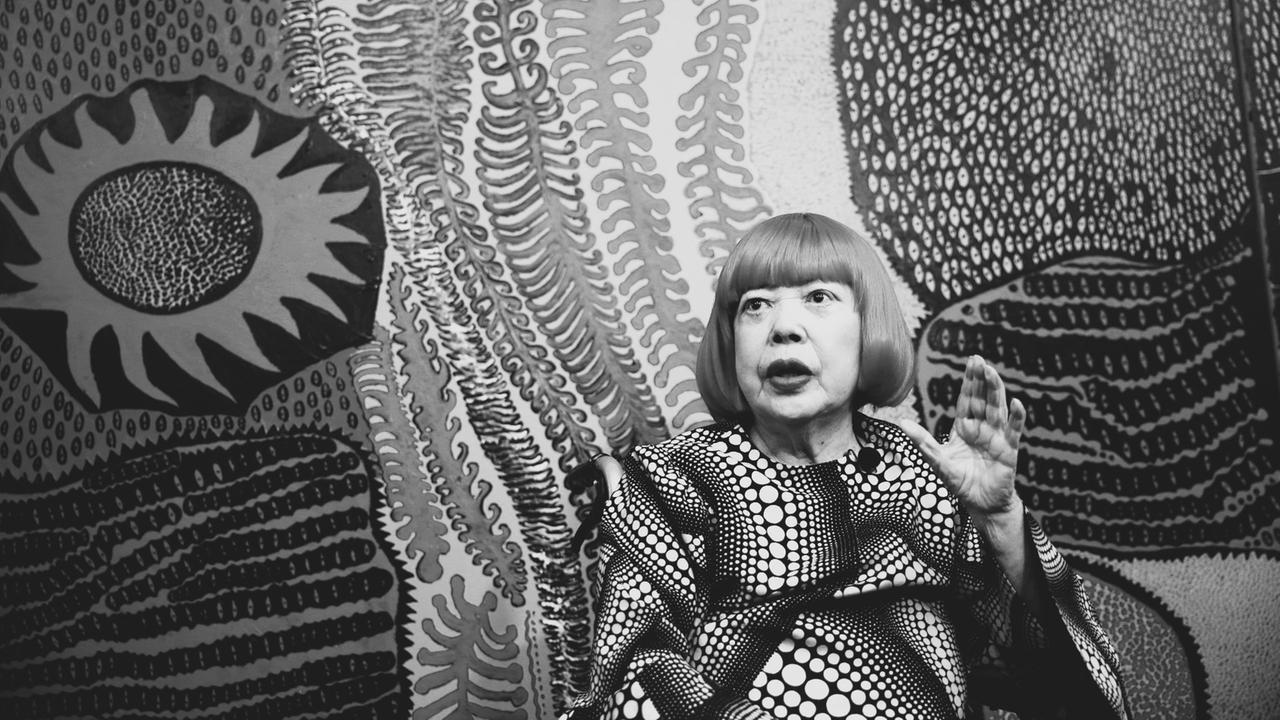
"Yayoi Kusama taught us that our perceived limits are merely illusions," said a spokesperson for the Japanese Ministry of Culture. "She transformed her internal pain into an external light that shone on the entire world. Her contribution to art history is not just in the objects she created, but in the way she changed the way we experience space, time, and ourselves."
Curators from major museums, including the Museum of Modern Art (MoMA) and the Centre Pompidou, have issued statements highlighting her influence on contemporary installation art. "She was a pioneer who never stood still," said one curator. "She moved from painting to performance, to sculpture, to immersive technology, always keeping her core vision—that of the infinite—at the center."
Implications: The Post-Kusama Art World
With her passing, the art world faces a transition. Kusama’s studio, which has operated with a rigorous, almost factory-like efficiency to meet global demand, will likely pivot toward the preservation and exhibition of her vast archive.
The implications for the art market are significant. As the supply of new works by her hand ceases, the value of her existing pieces is expected to climb. However, the more pressing question for the art community is how to preserve the spirit of her work. Her installations are often fragile, technology-dependent, and highly reliant on specific physical environments. Institutions will now be tasked with the challenge of maintaining these "infinite" spaces for future generations without losing the raw, therapeutic intention that fueled them.
Furthermore, there is the legacy of her story: the artist who lived in a psychiatric facility for nearly 50 years while simultaneously conquering the global art market. Her life serves as a powerful case study in the resilience of the human spirit. She demonstrated that severe mental health challenges do not preclude greatness; rather, in her case, they provided the raw material for a visual language that defined an era.
Final Reflections: The Dots Continue
Yayoi Kusama once said, "Our earth is only one polka dot among a million stars in the cosmos." She viewed herself as a small, repeating part of a vast, infinite whole. Even in death, that philosophy remains the cornerstone of her impact.
As the world continues to interact with her mirror rooms, walk past her giant pumpkin sculptures, and admire her canvases, the "obliteration" she sought will never truly be complete. Through her art, Kusama has achieved a form of immortality—a state of being where the dots continue to multiply, the mirrors continue to reflect, and her vision remains, for as long as there are eyes to see it, infinite.
The art world has lost its most prolific visionary, but the universe she constructed—one of color, rhythm, and boundless space—remains, an enduring testament to a life lived at the intersection of madness and genius.