In an era where synthetic media has become virtually indistinguishable from reality, the line between human-made and machine-generated content has blurred to the point of erasure. Recognizing the urgent need for digital provenance, Google has officially opened its "SynthID Detector" to the public. Originally unveiled in May 2025 as an exclusive tool for researchers and journalists, the platform now allows any user to upload images, videos, and audio files to determine if they bear the digital fingerprints of Google’s proprietary watermarking technology.
While this move marks a significant step toward transparency, it also highlights the persistent challenges in the ongoing arms race between generative AI creators and the platforms striving to label their output.
A Chronology of Digital Provenance
The journey to the current iteration of the SynthID Detector began as a defensive necessity. As Google scaled its generative capabilities—spanning models like Gemini, Imagen, and Veo—the company recognized that the potential for misinformation was catastrophic.
- 2023: Google quietly began embedding invisible, imperceptible watermarks into its AI-generated media using the SynthID framework. By the end of this period, the company had successfully marked over 180 billion images and videos, alongside a staggering 240,000 years’ worth of audio content.
- May 2025: Google formally announced the SynthID Detector. At this stage, the tool was restricted to a "walled garden," accessible only to select media organizations and academic researchers, aimed at preventing the spread of deepfakes during sensitive news cycles.
- Late 2025/Early 2026: Recognizing the shift in industry standards, tech giants such as OpenAI, Nvidia, and Kakao began aligning their own output with the SynthID framework, effectively creating an interoperable ecosystem of verification.
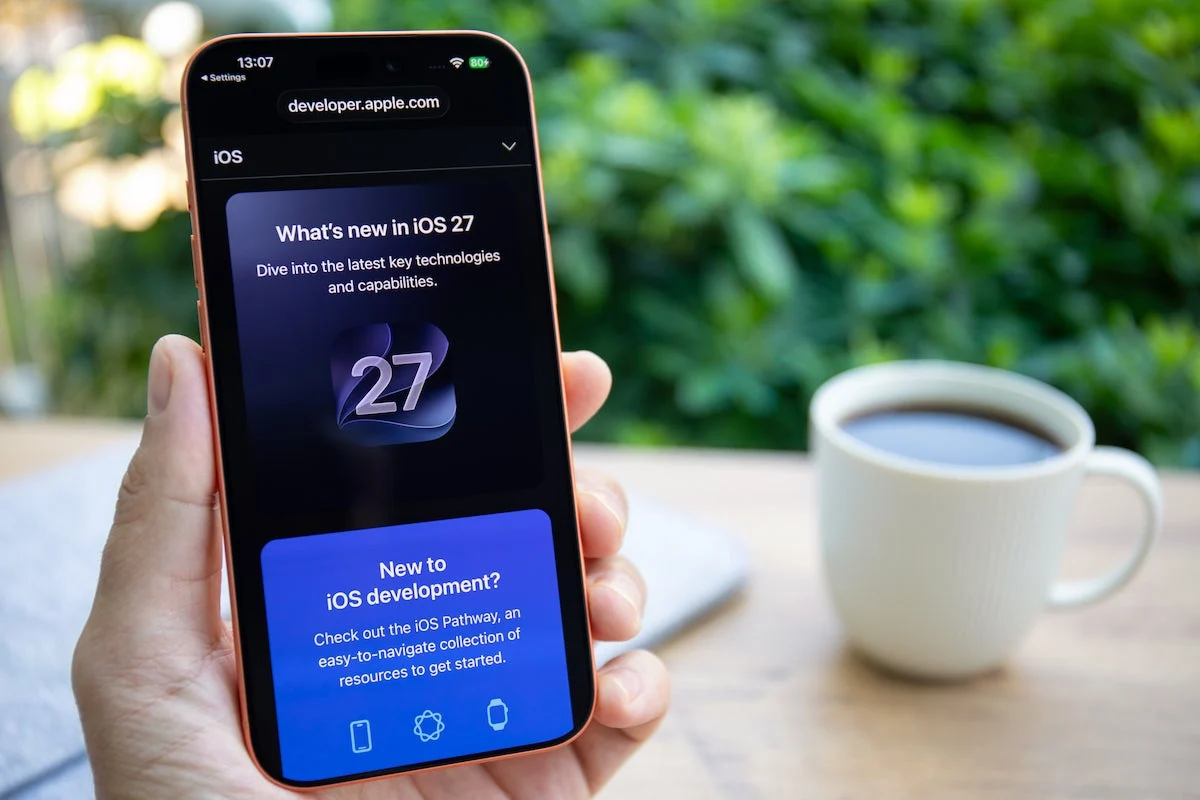
- Present Day: The tool is now available via synthid.com, allowing the general public to verify the origin of digital assets, with support for Apple Intelligence integration promised for the near future.
The Mechanics of Detection: How SynthID Works
At its core, SynthID is not a traditional "detection" tool that analyzes pixel patterns or statistical artifacts—methods often used by third-party checkers that suffer from high false-positive rates. Instead, SynthID is a watermarking system.
When a Google AI model generates an image or audio file, it introduces subtle, mathematical modifications to the signal. These modifications are invisible to the human eye and ear, and they are robust enough to survive common forms of tampering, such as cropping, color adjustment, or compression. When a user uploads a file to the detector, the tool scans for these specific embedded patterns.

However, there is a fundamental limitation that users must grasp: The absence of a SynthID signal is not proof that a piece of media is human-made.
If the detector returns a negative result, it simply means that the file does not contain a Google-partnered watermark. It does not rule out the possibility that the content was generated by a different model (such as Anthropic’s Claude, which currently does not support SynthID) or by an open-source model that lacks built-in watermarking protocols.
Implications for the Media Landscape
The opening of the SynthID Detector to the public has profound implications for how we consume information.
1. The Fragmentation of Standards
The tech industry is currently caught between competing methodologies for AI identification. While Google, OpenAI, and Nvidia are consolidating around SynthID, other players—including Microsoft and Meta—have invested heavily in their own proprietary methods. Furthermore, there is the industry-wide C2PA (Coalition for Content Provenance and Authenticity) standard, which Adobe, Microsoft, and Google helped develop.
C2PA acts as a "digital nutrition label," providing a history of how an image was edited. In contrast, SynthID acts as a "stamp of origin." The lack of a universal, cross-industry detector that can read every possible watermark remains the single largest hurdle for journalists and fact-checkers.

2. The Achilles’ Heel: Text and Malicious Editing
One of the most glaring omissions in the current iteration of the SynthID Detector is its inability to analyze text. As generative AI continues to dominate the production of articles, social media posts, and phishing emails, the lack of a text-based detection tool leaves a massive gap in the safety net. Currently, users looking to verify text must rely on separate tools, such as Pangram, which operate on entirely different linguistic analysis principles.
Furthermore, bad actors are becoming increasingly sophisticated. While SynthID is designed to survive basic image editing, it is not invincible. Malicious actors are actively researching ways to "scrub" watermarks through adversarial noise or repeated re-encoding. As Google admits, if an attacker has enough time and computing power, the integrity of the watermark can be compromised.
Official Responses and Industry Outlook
Google’s decision to open the tool is being framed as an act of "corporate responsibility." In recent statements, company representatives emphasized that while the tool is not a silver bullet, it is a necessary component of a "defense-in-depth" strategy.
"We believe in a future where users can make informed decisions about the media they consume," a Google spokesperson noted during the launch. "By providing the public with the same verification tools used by our researchers, we are democratizing the ability to identify synthetic media."
However, industry analysts are more cautious. Many argue that public-facing detection tools can create a false sense of security. If a user checks a suspicious video and the detector says "No AI watermark found," the user might falsely conclude that the video is authentic. This phenomenon, known as "automation bias," could potentially lead to higher levels of misinformation spread if the public does not fully understand the technical limitations of the tool.
Looking Ahead: The Role of Apple Intelligence
The upcoming integration of Apple Intelligence into the SynthID ecosystem is widely viewed as a "game-changer." As one of the most widely used consumer AI platforms, Apple’s commitment to adopting watermarking standards signals a maturation of the technology.
Once Apple’s "Image Playground" and other generative features are readable by the SynthID Detector, a massive percentage of the world’s mobile-generated AI content will finally be traceable. This integration is expected to be the catalyst that pushes other holdout companies to adopt a unified standard.
Conclusion
The release of the SynthID Detector is a watershed moment in the history of the digital age. It represents a pivot from "detection" to "provenance"—moving away from trying to guess if something is fake and toward verifying if something is known to be synthetic.
However, the technology remains in its infancy. As the internet becomes increasingly saturated with synthetic content, the onus will continue to shift toward the user. We are entering an age of "Zero Trust" media, where the provenance of an image must be as scrutinized as the content itself. Google’s tool is a powerful weapon in this fight, but it is merely one piece of a much larger, global puzzle that will require cross-industry cooperation, public education, and, perhaps most importantly, a healthy dose of skepticism regarding everything we see on our screens.
For now, the battle against deepfakes and misinformation remains a human challenge that no amount of code can fully solve—but with tools like SynthID, we finally have a map to navigate the landscape of the synthetic world.