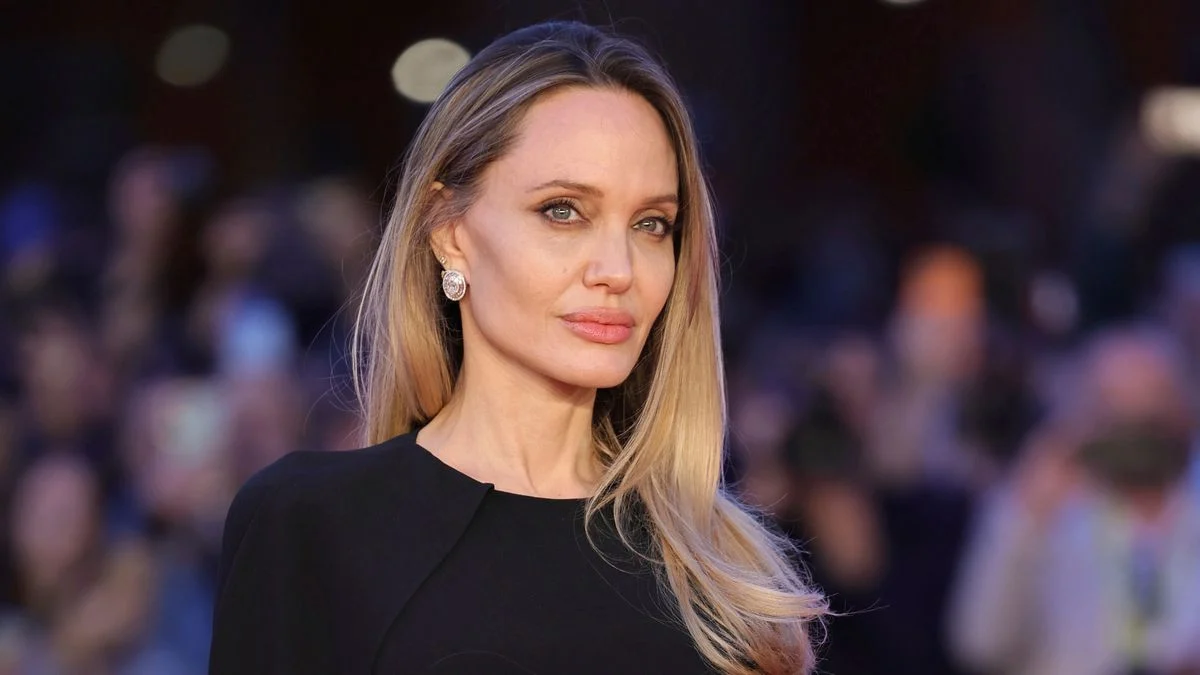
In the landscape of contemporary Hollywood, few figures possess the gravitas and the complex public narrative of Angelina Jolie. At 51, the Academy Award-winning actress and filmmaker has spent decades navigating the intersection of global superstardom and private trauma. Now, with her latest project, Couture, Jolie is stepping into a role that transcends the traditional boundaries of performance, portraying a film director battling breast cancer. For Jolie, this is not merely a professional endeavor; it is a profound act of public reclamation and personal catharsis.
In a recent, exclusive interview with People magazine, Jolie articulated the weight of this role, noting that five years ago, she likely would not have possessed the emotional fortitude required to inhabit such a character. "I’m not sure if I would have been strong enough to play this five years ago—to be open and trusting, to share, and to allow vulnerability again," she admitted. For a woman whose life has been meticulously documented by the global press, this admission of vulnerability serves as a poignant reminder that even the most iconic figures are subject to the universal human struggle with mortality and grief.
The Intersection of Life and Art: A Chronology of Resilience
To understand the resonance of Couture, one must examine the timeline of Jolie’s own history with the disease that defines her character. The roots of this story are deeply embedded in her familial lineage.
- 2007: The defining tragedy of Jolie’s life occurred when her mother, the actress Marcheline Bertrand, passed away at age 56 following a grueling battle with ovarian and breast cancer. The loss of her mother, who was a foundational influence on Jolie’s humanitarian and artistic identity, left an indelible mark on her trajectory.
- 2013: Following the discovery that she carried the BRCA1 gene mutation—which statistically increased her risk of developing breast cancer by 87 percent and ovarian cancer by 50 percent—Jolie made the life-altering decision to undergo a preventive double mastectomy.
- 2015: Demonstrating her commitment to proactive healthcare, Jolie subsequently underwent a preventive salpingo-oophorectomy to remove her ovaries and fallopian tubes, effectively entering menopause and confronting the permanent physical shifts associated with high-risk genetic management.
- 2024–2025: The production of Couture brings these threads together. During filming, Jolie notably wore a necklace that had belonged to her mother, a talisman of both grief and enduring connection. She has described the experience as so deeply personal that, for the first time in her career, "it didn’t feel like a movie."
The Science of Risk: Genetic Predisposition and Public Health
Jolie’s narrative is inextricably linked to the broader conversation surrounding genetic testing and preventive medicine. Her 2013 op-ed in The New York Times, titled "My Medical Choice," is widely credited with the "Angelina Effect"—a documented spike in public awareness and testing for the BRCA1 and BRCA2 gene mutations.
The science is stark: BRCA mutations are responsible for a significant percentage of hereditary breast and ovarian cancers. For many women, the realization that they carry these mutations is a moment of existential crisis. By choosing to speak openly about her surgical choices, Jolie shifted the cultural perception of the mastectomy from a taboo subject of loss to a powerful tool of agency. Couture acts as an extension of this advocacy. The film does not merely document the clinical reality of cancer; it explores the psychological landscape of a patient who is more than her diagnosis.
A Philosophy of Empathy: The Core Message of Couture
At the heart of the film lies a fundamental question: How do we remain human while facing the dehumanizing machinery of medical treatment? Jolie has been vocal about the film’s intent to foster a deeper understanding of empathy.
"It shows how everyone deals with things that make us very human," Jolie explained during production. "And that we will be better and feel less alone if we find a way to overcome challenges together, by leaning on each other and having more empathy for one another."
This sentiment is a departure from the "warrior" rhetoric often applied to cancer patients. Instead of focusing solely on the fight, the film invites the audience to witness the isolation, the loss of self, and the struggle to maintain one’s identity when the world begins to view you solely through the lens of your prognosis.
Perspectives from the Frontline: The Toronto Discourse
The depth of Jolie’s commitment to this message was evident during a poignant exchange at the Toronto International Film Festival last year. A member of the audience, who had recently lost a dear friend to cancer, asked Jolie what sustained her hope during the darkest moments of the disease.
Jolie’s response offered a glimpse into her mother’s final days and a lesson in human-centric care. She recounted a conversation with her mother, who lamented that, during her illness, she was no longer seen as an individual, but as a patient. "Everyone keeps asking me about the cancer," her mother had noted.
Jolie used this anecdote to provide a mandate for those supporting loved ones in crisis: "If you know someone who is going through a hard time, ask them about all the other things in their life. They are a whole person, and they are still living." This philosophy—that the patient is more than the pathology—serves as the emotional anchor for Couture.
Implications for the Film Industry and Beyond
The implications of Couture extend beyond the box office. By choosing to center a narrative on the raw, unvarnished experience of illness, Jolie is challenging the industry’s tendency to sanitize or sensationalize tragedy.
1. The De-stigmatization of Vulnerability
For decades, Hollywood demanded that its stars remain untouchable. By leaning into her own history, Jolie is redefining what it means to be a "strong" female lead. Strength, in the context of Couture, is defined by the capacity to express fear, the willingness to share grief, and the courage to remain connected to others while feeling profoundly isolated.
2. A Shift in Medical Storytelling
The film serves as a critique of how society interacts with the terminally ill. By highlighting the need for conversation that transcends the clinical diagnosis, the film encourages a shift in societal behavior. It challenges friends, family, and caregivers to hold space for the "whole person" rather than focusing solely on the medical emergency.
3. The Personalization of Artistic Output
Jolie’s admission that this is the only film she has made that "doesn’t feel like a movie" suggests a potential shift in her career path. As she matures, her work appears to be moving away from the high-octane blockbusters of her youth toward projects that serve as vehicles for social commentary and personal reflection.
Conclusion: The Whole Human
Angelina Jolie’s Couture is more than a creative project; it is a synthesis of her life’s most difficult chapters. By channeling the memory of her mother and her own experiences with the medical system, she has crafted a performance that seeks to bridge the gap between the patient and the observer.
In a world that is increasingly comfortable with quick, superficial interactions, the film stands as a call to action for empathy. It reminds us that behind every headline, every diagnosis, and every public persona is a human being navigating the complexities of existence. As Jolie continues to push the boundaries of her craft, her willingness to be "open and trusting" serves as a testament to the resilience of the human spirit. She is no longer just the actress, the director, or the icon; in Couture, she is a mirror held up to the shared fragility of us all, proving that even in our most isolated moments, we remain part of a larger, interconnected human experience.