

Introduction: A Summer Afternoon, Transformed
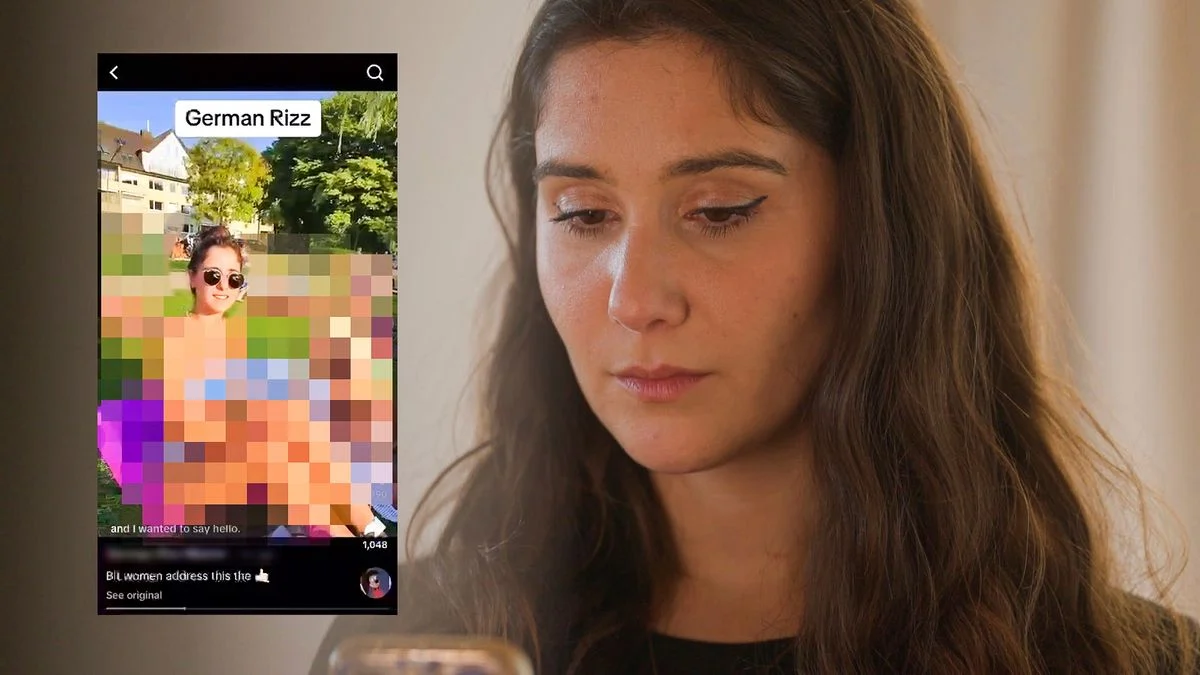
It was a quintessential summer day in Hamburg in 2024. The mercury had climbed to a comfortable, sun-drenched peak, turning the banks of the Alster into a vibrant tapestry of urban leisure. For 28-year-old Zeina Abou Taha, it was meant to be a quiet afternoon of relaxation. Dressed in a bikini and lounging on the grass with a friend, she was surrounded by the rhythmic hum of the city: music drifting from a nearby portable speaker, the laughter of picnickers, and the occasional splash of swimmers cooling off in the river.
The tranquility was interrupted by a man who crossed the busy lawn, heading directly toward them. His tone was seemingly polite, his demeanor casual. "Sorry, just a quick second, I don’t want to disturb you," he began, before pivoting to a line that has become a trope of modern dating culture: "I just wanted to say that you caught my eye."
He introduced himself and posed a question that is at once intimate and intrusive: Did she have a boyfriend? When Abou Taha replied with a polite but firm negative, the man pushed further, asking if she might be interested in a "better" one. Abou Taha, caught off guard and relying on the reflexive social niceties often expected of women in public spaces, laughed it off. The man wished them a pleasant day and melted back into the crowd. For Abou Taha, the encounter was a fleeting, slightly awkward moment—a minor blip in a sunny afternoon.
Little did she know, that moment had been recorded, uploaded, and broadcast to the digital ether. Weeks later, the arrival of a link from her brother-in-law would shatter her sense of security and privacy, turning a harmless summer day into a cautionary tale about the erosion of the public sphere in the age of viral content.
The Chronology of a Digital Intrusion
The trajectory from a private, in-person interaction to a global digital spectacle follows a disturbing, increasingly common pattern.
The Encounter
The interaction at the Alster was brief. It followed the playbook of the "cold approach"—a technique popularized by various "dating coaches" and social media influencers who advocate for approaching women in public spaces to film the interactions. The goal is often to prove one’s confidence or to create "organic" content that draws engagement through the premise of romantic pursuit.
The Upload
Unbeknownst to Abou Taha, the man was equipped with a hidden or semi-concealed camera. Within hours, the footage—showing her in her swimwear, vulnerable and unsuspecting—was uploaded to TikTok. The video was framed to capitalize on the "daring" nature of the approach, positioning the man as a bold protagonist and the woman as a passive object of the narrative.
The Viral Explosion
The algorithms took over. By the time Abou Taha received the link from her family member, the video had already spiraled beyond the creator’s immediate circle. It garnered nearly 15,000 likes and had been shared over 1,000 times. The comments section—a digital agora where anonymity breeds vitriol—was filled with users analyzing her appearance, her reaction, and her "suitability" as a partner. The privacy of the Alster bank had been permanently replaced by the panopticon of the comment section.
Supporting Data: The Rise of "Surveillance Content"
The case of Zeina Abou Taha is not an isolated incident; it is a symptom of a burgeoning genre of social media content known as "public approach" or "prank/dating" videos.
The Metrics of Voyeurism
Data from social media monitoring firms suggest that videos featuring "real-life" social interactions—often filmed without the consent of the subject—are among the highest-performing content categories for male-dominated influencer channels. The allure is simple: the audience feels like they are watching a "real" interaction. However, this authenticity is bought at the expense of the subject’s autonomy.
The Psychological Toll
Research from digital safety advocacy groups indicates that being filmed without consent in public settings causes a significant increase in hyper-vigilance. Victims of "viral tagging" often report feelings of being "hunted" in their own neighborhoods. When a woman realizes she has been recorded while relaxing, the park is no longer a place of leisure; it becomes a potential film set where she is the unwilling star.
Legal and Ethical Implications: Where Does Privacy End?
The legal landscape regarding the right to one’s own image (the Recht am eigenen Bild) is stringent in Germany, yet the enforcement mechanism is struggling to keep pace with the speed of digital distribution.
The German Legal Context
Under the Kunsturhebergesetz (KUG), it is generally prohibited to publish photographs or videos of individuals without their consent, provided the person is the focus of the image. While there are exceptions for public gatherings or incidental participants, the deliberate targeting of an individual for content creation generally falls outside these protections.
The Difficulty of Recourse
Even when the law is on the victim’s side, the practical barriers are immense:
- Platform Policy: TikTok and other platforms often prioritize engagement over proactive policing of consent. Removing a video often requires a tedious reporting process that can take days or weeks—by which time the damage is done.
- Global Reach: Once a video is shared, it is downloaded and re-uploaded across multiple platforms, making the "right to be forgotten" an impossible standard to meet.
- The Victim’s Burden: For victims like Abou Taha, the process of demanding the removal of content often forces them to interact further with the person who violated their privacy, potentially leading to further harassment.
Official Responses and Societal Discourse
The incident has sparked a heated debate in Hamburg and beyond regarding the boundaries of the public space.
The Cultural Shift
Sociologists argue that we are witnessing a fundamental shift in the "social contract" of public life. Historically, being in public meant accepting that you might be seen, but not that you would be documented, archived, and analyzed by a global audience. The "influencer mentality" treats the world as a background for one’s own brand, disregarding the rights of the people who inhabit that background.
Advocacy for Legislative Change
Privacy advocates are calling for stricter enforcement of existing laws, specifically targeting the platforms that profit from non-consensual recordings. Proposals include:
- Mandatory Age-Verification and Consent Tools: Requiring uploaders to verify they have consent for content featuring identifiable individuals.
- Algorithmic De-prioritization: If a video is reported for privacy violations, the algorithm should immediately suppress its reach until a review is conducted.
- Stricter Penalties: Moving beyond simple deletion to impose fines on creators who systematically use non-consensual footage to build their brands.
The Human Cost: A Sense of Security Lost
For Zeina Abou Taha, the aftermath of the video going viral has been profound. She describes the feeling of having her "sense of security and freedom in the public space" changed forever.
The violation is twofold. First, there is the initial intrusion—the unwanted approach. But the secondary, more enduring violation is the digital permanence. Every time she walks through a park, she is now aware that she could be a target. The leisure of a summer day has been replaced by the cognitive load of scanning for cameras, wondering if a stranger’s smile is a genuine social overture or the setup for a piece of content.
This phenomenon effectively pushes women out of the public square. When the risk of becoming a viral prop outweighs the benefit of enjoying a sunny afternoon, the public space ceases to be truly public. It becomes a space where only those willing to risk their privacy, or those unaware of the risks, feel comfortable.
Conclusion: Reclaiming the Public Square
The story of Zeina Abou Taha is a microcosm of a larger societal failure. We have allowed the digital obsession with "content" to colonize our physical lives, subordinating human interaction to the dictates of the feed.
As we move forward, the conversation must shift from "how to handle unwanted attention" to "why we allow the mass-surveillance of the public for entertainment." The right to exist in a public space without becoming a digital commodity is a fundamental aspect of modern liberty. If we do not protect this right, we risk turning our parks, our streets, and our cities into nothing more than backdrops for a digital theater where the audience is infinite, but the humanity of the performers is forgotten.
Society must demand more from the platforms that host this content, and we must foster a culture that respects the boundaries of the stranger. Until then, every summer day in a park remains, for some, a potential trap—a reminder that in the age of the smartphone, the most private moments are often the ones most vulnerable to being made public.























Leave a Reply