Introduction: A Strategic Pivot Toward Global AI Leadership
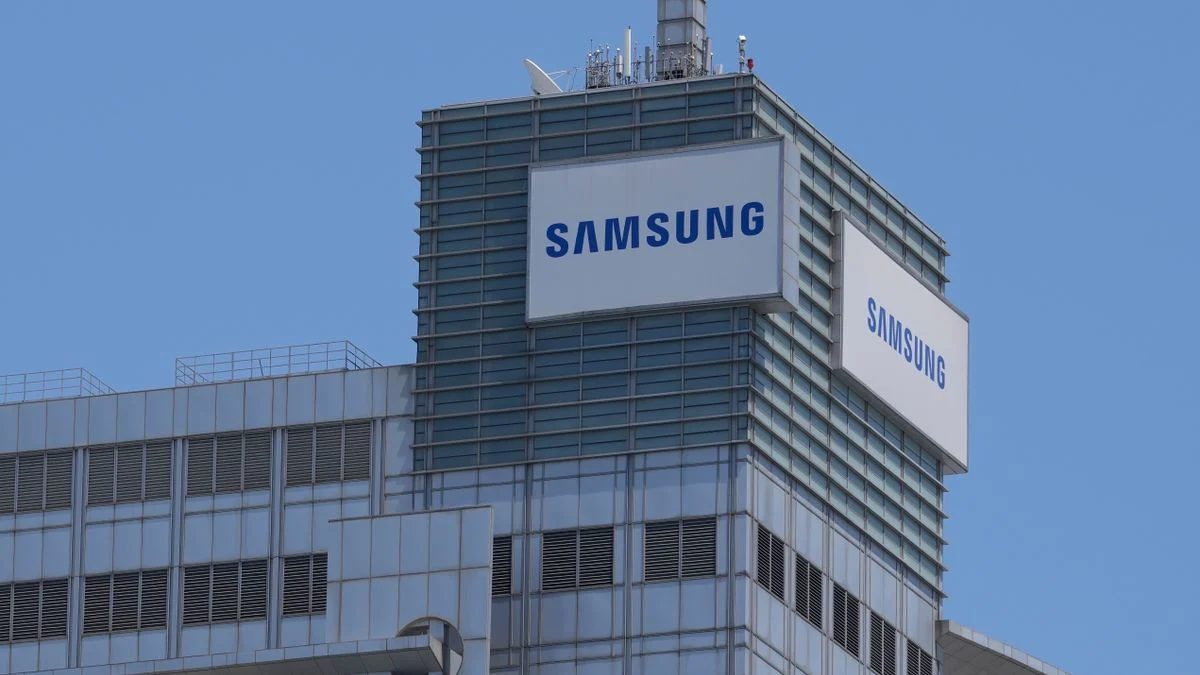
South Korea has set its sights on a singular, ambitious goal: establishing itself as the world’s third pillar in the global Artificial Intelligence (AI) landscape, standing shoulder-to-shoulder with the United States and China. Central to this national ambition is the technological juggernaut Samsung Electronics. Recent quarterly financial data suggests that the conglomerate is not only meeting this challenge but is currently riding a wave of unprecedented prosperity fueled by the voracious global appetite for high-performance computing hardware.
In a landmark quarter that has sent shockwaves through global financial markets, Samsung Electronics has reported earnings that eclipse any previous performance by a technology firm. Driven by the surging prices of memory chips—the lifeblood of modern AI infrastructure—the company has solidified its position as the engine of the global digital revolution.
The Financial Landscape: Numbers Behind the Records
According to preliminary calculations released by the company, Samsung’s operating profit has experienced an extraordinary ninefold increase, reaching approximately 71.68 billion euros. This marks the fourth consecutive quarter of record-breaking growth, a feat rarely seen in the volatile semiconductor industry.
While the headline figures are stellar, the context of the revenue stream is equally telling. The company reported a 127 percent surge in revenue, totaling 130 billion euros. Despite this meteoric rise, some market analysts noted that the figure fell slightly short of aggressive investor expectations, leading to a tempered reaction on the stock market. Samsung is scheduled to release its finalized and audited quarterly report on October 29, which analysts expect will provide deeper insights into the specific drivers of this growth.
The Global Semiconductor Crunch: A Long Road to Equilibrium
The current semiconductor boom is not merely a cyclical spike; it is a structural shift driven by the massive expansion of global data centers. As nations and corporations race to integrate AI into every facet of industry, the supply-demand imbalance has become critical.
The shortage is pervasive, extending well beyond the specialized High Bandwidth Memory (HBM) required for AI training. Traditional DRAM and NAND flash memory, which serve as the backbone for consumer electronics like PCs and smartphones, are also seeing significant price appreciation. According to internal projections from Samsung, this supply-side tightness is unlikely to abate until at least 2028.
To mitigate the risks associated with this prolonged period of high demand, Samsung is shifting its business model. The company is actively pursuing long-term supply contracts with major data center operators, effectively "locking in" demand to justify the massive capital expenditure required to bring new production facilities online. These multi-year commitments are essential to de-risking the multibillion-euro investments in new fabrication plants.
The Battle for HBM Supremacy: Closing the Gap with SK Hynix
At the heart of the current profit surge is the high-margin business of High Bandwidth Memory (HBM). These memory chips are the "secret sauce" of AI data centers, allowing for the rapid data throughput necessary for training Large Language Models (LLMs).
Douglas Kim, founder of the analysis firm Douglas Research, estimates that sales of these specialized products grew by 50 percent in the third quarter alone compared to the previous three months. This growth is strategically vital for Samsung, as it fights to claw back market share from its domestic rival, SK Hynix. While SK Hynix has historically held the title of HBM global market leader, Samsung’s recent momentum suggests that the gap is narrowing, setting the stage for a fierce battle for dominance in the next generation of AI-ready hardware.
Market Paradox: Why Investors Are Cautious
Despite the euphoria surrounding the record profits, the markets have reacted with skepticism. On the Thursday following the announcement, Samsung shares in Seoul dipped by 2.4 percent. This trend was not isolated to Samsung; competitors such as SK Hynix saw similar declines, while U.S.-based Micron saw its shares tumble by three percent in pre-market trading on Wall Street.
This market hesitation highlights a growing investor anxiety: the "AI bubble" concern. While the semiconductor division is flourishing, other sectors of the tech industry are struggling. Samsung’s consumer electronics and smartphone divisions, for instance, are grappling with shrinking margins. Analyst estimates suggest the mobile division suffered a staggering loss of roughly 894 million euros in the third quarter, largely due to intensifying competition from Apple and a cooling global consumer market. Investors are weighing the long-term gains of the semiconductor division against the immediate headwinds facing the company’s retail-facing segments.
The Human Element: Prosperity, Dividends, and Labor Relations
The financial success of the company is cascading down to both shareholders and employees. Samsung has announced plans to distribute a record-shattering 73 billion euros to its shareholders this year. Investors are keenly awaiting the final earnings call at the end of the month for details on how this capital will be deployed—whether through dividends or share buybacks.
Crucially, the workforce has also been a primary beneficiary of the recent success. Following protracted negotiations earlier this year, Samsung employees secured significant bonus increases. Under the current compensation structure, 10.5 percent of the company’s profit is earmarked for profit-sharing. On average, this translates to roughly 290,000 euros per employee, with workers in the semiconductor division often receiving significantly higher amounts. This distribution strategy serves as a critical tool for maintaining talent in a highly competitive global labor market for engineers and specialized chip technicians.
Strategic Implications: South Korea’s AI Sovereignty
The success of Samsung is inextricably linked to the South Korean government’s broader economic policy. Seoul has identified semiconductors as a matter of national security, providing tax incentives, infrastructure support, and R&D funding to ensure that the country remains the world’s primary source of high-tech silicon.
By fostering an ecosystem where firms like Samsung and SK Hynix can thrive, South Korea is insulating itself from the geopolitical tensions currently affecting the global chip supply chain. As the U.S. and China continue to engage in "technological decoupling," South Korea’s ability to act as a stable, high-output provider of essential AI infrastructure gives it significant diplomatic and economic leverage.
Looking Ahead: The 2028 Horizon
As Samsung prepares to report its final figures on October 29, the industry remains focused on the company’s forward-looking statements. The 2028 estimate for supply-demand equilibrium serves as both a roadmap and a warning. For the tech sector, it implies a prolonged period of high costs but also high innovation. For Samsung, it represents a period of necessary expansion.
The company’s ability to balance its struggling mobile and consumer electronics segments with its hyper-growth semiconductor division will be the defining challenge of the next fiscal year. If Samsung can maintain its pace of innovation in HBM and secure the long-term contracts necessary to fund its expansion, it is well-positioned to achieve its goal: to not just participate in the AI revolution, but to command it.
The story of Samsung is no longer just about a company making chips; it is the story of a nation transforming itself into the central node of the global digital economy. As the world becomes increasingly reliant on the intelligence embedded in machines, the importance of the facilities currently being built in South Korea cannot be overstated. The silicon crown is up for grabs, and for now, Samsung is leading the charge.