


As the world turns its gaze toward the upcoming El Clásico, the atmosphere surrounding Real Madrid is defined not by anticipation of a tactical masterclass, but by the conspicuous absence of their biggest star. Vinícius Júnior, once the undisputed heir to the throne of global football excellence, finds himself mired in a slump that has left the Santiago Bernabéu polarized and the Spanish press questioning his future.
The Eye of the Storm: A Star Under Siege
The upcoming clash between FC Barcelona and Real Madrid is historically the biggest event in the club football calendar. Yet, for the Los Blancos faithful, the pre-match narrative is dominated by a void. Vinícius Júnior will be forced to watch from the sidelines, serving a mandatory four-match suspension in La Liga.
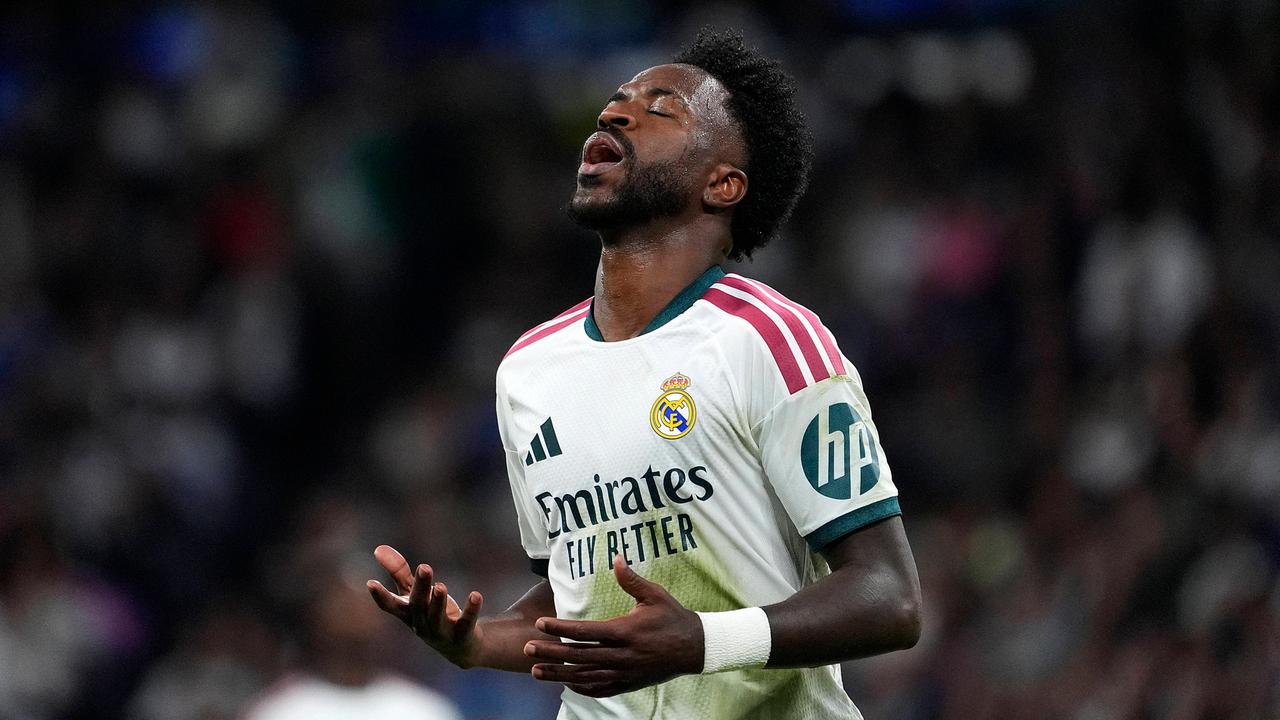
Under normal circumstances, the absence of a player of his caliber—a man who finished second in the 2024 Ballon d’Or voting—would be viewed as a catastrophic blow to Real Madrid’s title aspirations. Instead, the sentiment in the Spanish capital is markedly different. Critics, fans, and media outlets are openly discussing whether his absence might actually be a tactical "blessing" for a team that has looked increasingly disjointed with him on the pitch.
"Vinícius Júnior has hit rock bottom," noted the sports daily Mundo Deportivo this week, echoing a growing consensus that the 26-year-old winger has lost the Midas touch that made him the most dangerous forward in European football just a year ago.
Chronology of a Decline: From Summit to Slump
To understand the severity of the current crisis, one must look at the statistical trajectory of the Brazilian international. The 2023/24 season was, by all accounts, a crowning achievement for Vinícius. Across 54 appearances, he notched an incredible 22 goals and 13 assists, cementing his status as the primary offensive engine for the club.
The 2026 campaign, however, tells a harrowing story of regression. In the current season, Vinícius has featured in eleven of twelve competitive fixtures, starting ten of them. In 801 minutes of action, he has managed a measly single goal and three assists. The decline in output is stark; at this same stage last year, he had already accounted for ten direct goal contributions.
A Summer of Discontent
The downturn arguably began following the conclusion of the 2026 FIFA World Cup in the United States. While the tournament was a personal showcase of relative solidity for the winger, it was a collective failure for the Brazilian national team. The emotional hangover from that tournament appears to have lingered, manifesting in both his performances and his public persona.
Upon returning to Europe, the narrative surrounding Vinícius shifted from the pitch to the tabloid pages. Reports surfaced regarding his personal life, specifically his high-profile and volatile relationship with Brazilian influencer Virginia Fonseca. The pair’s breakup, officially confirmed by his management in October, has been cited by pundits as a potential catalyst for his erratic form. Simultaneously, the striker’s decision to undergo a cosmetic "jaw neutralization" procedure ignited a firestorm of social media debate and ridicule, suggesting a player increasingly disconnected from his core professional identity.
Supporting Data: The Efficiency Gap
The modern game is defined by efficiency, and current metrics highlight exactly why the coaching staff and the fans are losing patience.
- Shot Conversion Rate: Vinícius’s conversion rate has plummeted from 21% last season to a dismal 6% this term.
- Dribbling Success: His trademark ability to isolate and beat defenders—the very skill that made him a nightmare for full-backs—has seen a 30% reduction in successful take-ons per 90 minutes.
- Positional Discipline: Heat maps from the recent Champions League outing against RB Leipzig indicate that Vinícius is drifting into congested central areas rather than utilizing the width of the pitch, effectively crowding the space for teammates like Kylian Mbappé.
While he performed "passably" against Leipzig, creating two clear-cut chances, his inability to sustain intensity or threaten the goal directly has made him a liability in high-stakes matches where every possession is vital.
The Mourinho Doctrine: A Coach’s Dilemma
Amidst the chorus of boos at the Bernabéu and the scathing headlines, Real Madrid manager José Mourinho has remained a steadfast—if increasingly isolated—defender of his player.
"He is a young man carrying the weight of the world on his shoulders," Mourinho stated in an exclusive interview with MARCA. "He needs the support of everyone. He has been booed at away games, which can be a form of motivation, but when it happens at home, it is heartbreaking. He is a player of immense talent who is going through a human, not just a professional, crisis."
Despite this public backing, Mourinho’s actions on the pitch suggest a shift in philosophy. During the 70th minute of the Leipzig game, the Portuguese tactician made a statement by withdrawing Vinícius in favor of 19-year-old academy product Yan Diomande. The substitution was not merely tactical; it was a changing of the guard. Diomande immediately impacted the game, providing an assist for Mbappé before burying a stunning volley to secure a 4-1 victory.
Implications: The Rise of the New Guard
The rise of Yan Diomande represents the most significant threat to Vinícius’s tenure at the club. The teenager plays with a hunger and a lack of ego that the senior squad currently lacks. For a club that pays its superstars astronomical wages—with Vinícius reportedly earning a base salary of €25 million net per annum—performance is not optional.
1. Financial Strain vs. Sporting Value
The optics of paying a player at the level of Kylian Mbappé while receiving the output of a fringe player are becoming unsustainable for the Real Madrid hierarchy. If the trend continues, the club may be forced to consider the unthinkable: an exit strategy or a significant restructuring of his role within the squad.
2. The Tactical Shift
Mourinho has long favored a system that relies on clinical efficiency. With Diomande providing a more versatile, two-way threat, the team looks more fluid. If Diomande thrives during the upcoming Clásico, the "Vinícius Problem" may solve itself, as the Brazilian risks being relegated to the bench permanently upon his return from suspension.
3. The Psychological Factor
The most concerning implication is the mental state of the player. Vinícius has become a lightning rod for criticism, and his body language—slumped shoulders, constant arguing with officials, and a visible lack of joy—suggests a man who has lost his passion for the game. Whether he can reclaim his throne depends not on his physical talent, which remains elite, but on his ability to block out the noise of the Mundo Deportivo headlines and the scrutiny of the Santiago Bernabéu.
Conclusion: A Turning Point
As the dust settles before Sunday’s showdown, the reality is clear: Real Madrid is entering a post-Vinícius phase, whether by design or by necessity. El Clásico will serve as the ultimate litmus test for the team’s new identity. Should they succeed without their Brazilian star, the narrative of his "indispensability" will be permanently shattered.
For Vinícius Júnior, the road back to the top is narrow and steep. He is no longer the untouchable golden boy of the Spanish capital; he is a player fighting for his reputation, his position, and perhaps, his future at the greatest club in the world. The lights of the Bernabéu are unforgiving, and the next few weeks will decide whether he is a legend in the making or a cautionary tale of a star who burned too bright, too fast.



