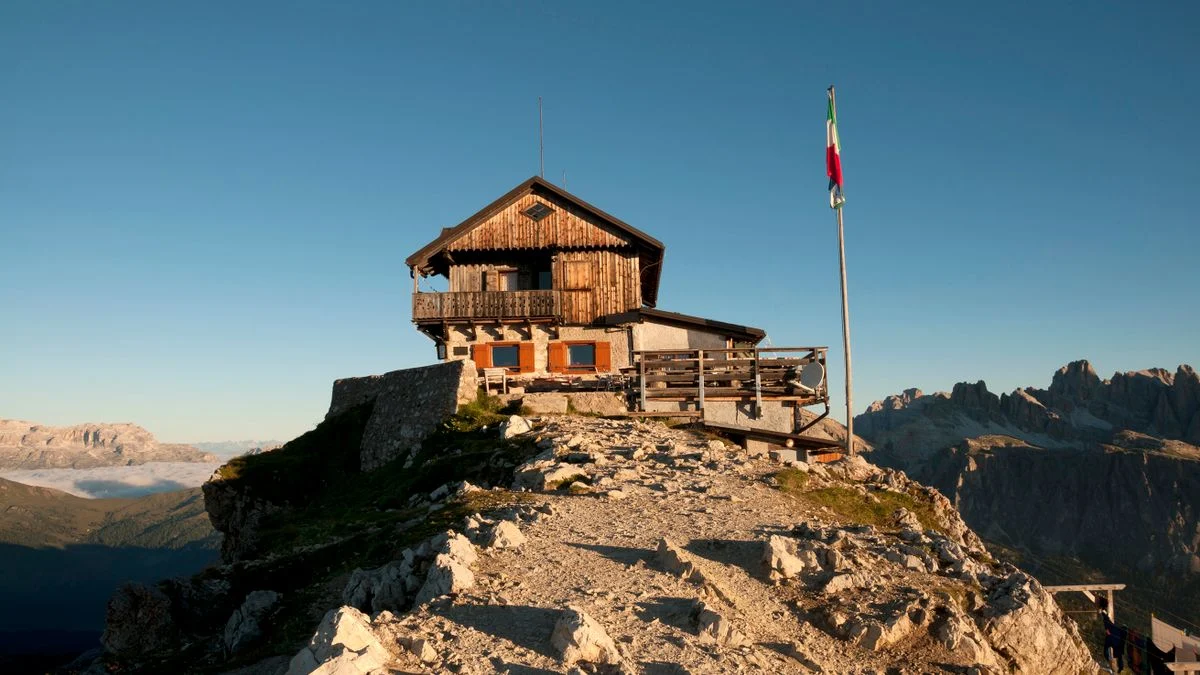
In an age defined by hyper-connectivity, the relentless hum of digital notifications, and the exhaustion of urban sprawl, the humble mountain hut—the Berghütte—has emerged as an unlikely bastion of mental and physical restoration. Despite the inherent discomforts of high-altitude living—limited privacy, communal sleeping quarters, unpredictable weather, and the physical toll of the ascent—these rugged structures have never been more relevant.
As the modern world accelerates, the "heilsamer Ort" (healing place) of the mountain hut offers a profound paradox: we seek out the most inhospitable environments to find our own sense of peace.
Main Facts: The Architecture of Solitude
The mountain hut is more than a shelter; it is a social and geographical institution. Historically constructed as waystations for climbers and alpine workers, they have evolved into hubs of cultural exchange and ecological awareness.
The core appeal lies in the "controlled deprivation" they offer. When one leaves the paved paths of civilization, the hierarchy of needs is simplified: warmth, sustenance, and rest. This reduction of stimuli serves as a digital detox by default. Research into environmental psychology suggests that "soft fascination"—the type of attention we pay to natural landscapes—replenishes the cognitive resources depleted by office work and screen time. In the high Alps, the view of a serrated horizon provides a mental reset that no app or subscription service can replicate.
Chronology: From Refuge to Retreat
To understand the current obsession with mountain huts, one must look at their historical trajectory.
- 19th Century (The Pioneer Era): The early huts were rudimentary stone shelters built by Alpine clubs to facilitate scientific study and the burgeoning sport of mountaineering. They were functional, stark, and strictly for the committed climber.
- Mid-20th Century (The Era of Democratization): As mountain tourism became accessible to the middle class, huts were expanded. They began to serve as communal dining halls where diverse social strata—doctors, laborers, and students—met over bowls of soup.
- Late 20th Century (The Maintenance Crisis): Many huts faced obsolescence as technology promised faster, easier ways to "experience" nature. Infrastructure costs soared, and for a period, the relevance of the remote mountain hut was questioned.
- The 21st Century (The Wellness Renaissance): The current era has seen a total reversal. As the digital sphere became increasingly claustrophobic, the mountain hut became a symbol of "the authentic." They are now booked months in advance, not just by athletes, but by those seeking a meditative escape from the digital noise.
Supporting Data: The Science of Alpine Healing
Recent studies from the Alpine Research Institute underscore the physiological benefits of staying at higher altitudes.
- Cortisol Regulation: Observations of hikers before and after a stay in high-altitude huts show a significant reduction in salivary cortisol—the primary stress hormone.
- Circadian Realignment: Free from the artificial blue light of urban environments, guests at high altitudes report faster sleep onset and higher quality of REM cycles.
- Social Connectivity: Unlike the isolating experience of digital media, the communal nature of mountain huts fosters "prosocial behavior." Sitting at a long wooden table with strangers creates a unique form of camaraderie, often described by sociologists as "the egalitarianism of the summit."
Data shows that while occupancy rates in traditional hotels fluctuate with luxury trends, the demand for mountain huts remains inelastic. The more digitised our lives become, the higher the value we place on the analog experience of a wooden bunk and a sunrise over a glacier.
Official Responses and Cultural Perspectives
Alpine associations across Europe, including the DAV (Deutscher Alpenverein) and their counterparts in Austria and Switzerland, have been forced to pivot their operational strategies.
"We are no longer just maintaining roofs and walls," says a spokesperson for the Alpine Hut Network. "We are the guardians of a vanishing silence. People come to us not because they want luxury, but because they want to feel small again. The mountains provide a sense of scale that puts individual problems into perspective."
However, this popularity brings challenges. Environmentalists warn that the surge in "hut-hopping" puts pressure on sensitive alpine ecosystems. The challenge for the future is to maintain the accessibility of these sites without compromising the very isolation that makes them healing. The official stance is one of "managed access"—encouraging multi-day trekking to reduce the churn of visitors and emphasizing the educational aspect of mountain life, such as water conservation and waste management.
Implications: The Future of the "Analog Escape"
Why do we insist on finding healing in places that, by all metrics, are difficult to reach and inconvenient to inhabit?
The implication is clear: the modern human is suffering from "nature deficit disorder." The mountain hut acts as a buffer zone between the chaos of the digital world and the sublime indifference of the peaks.
The Psychological Pivot
As we move further into an era of AI-generated content and virtual realities, the "analog" nature of the mountain hut becomes its most valuable feature. It is a place where you cannot "log in." The walls are often too thick for reliable cellular data, and the focus is shifted from the screen to the horizon. This forced detachment is not merely a break from work; it is a structural necessity for maintaining mental health in a century defined by information overload.
Economic and Environmental Sustainability
The popularity of the mountain hut also signals a shift in travel economics. We are moving away from the consumption-heavy "resort" model toward an "experience-based" model. Tourists are willing to pay for the privilege of a simple, sustainable, and challenging experience.
However, this growth must be sustainable. The mountain hut of the future will likely incorporate advanced green technology—solar energy, gray-water recycling, and climate-controlled waste management—to ensure that the sites remain viable without harming the environment they celebrate.
A Concluding Reflection
To visit a mountain hut is to engage in a quiet act of rebellion against the modern mandate to be always "on." It is a testament to the fact that even in a world of infinite digital reach, the human spirit still requires the physical touch of granite, the smell of damp pine, and the humbling silence of the clouds.
We return from these summits not because we have conquered the mountain, but because the mountain has helped us recover something essential about ourselves. In the shared bowl of soup and the shared exhaustion of the climb, we find a version of humanity that is not defined by pixels, but by presence. The mountain hut, therefore, is not a relic of the past; it is a vital laboratory for the future of human well-being.
As we look toward the coming decades, the preservation of these huts will be paramount. They represent the last few places on Earth where the digital world stops, and the real world begins. For anyone feeling the strain of the modern condition, the solution is not more information—it is the ascent.