By Sports Desk
October 12, 2026
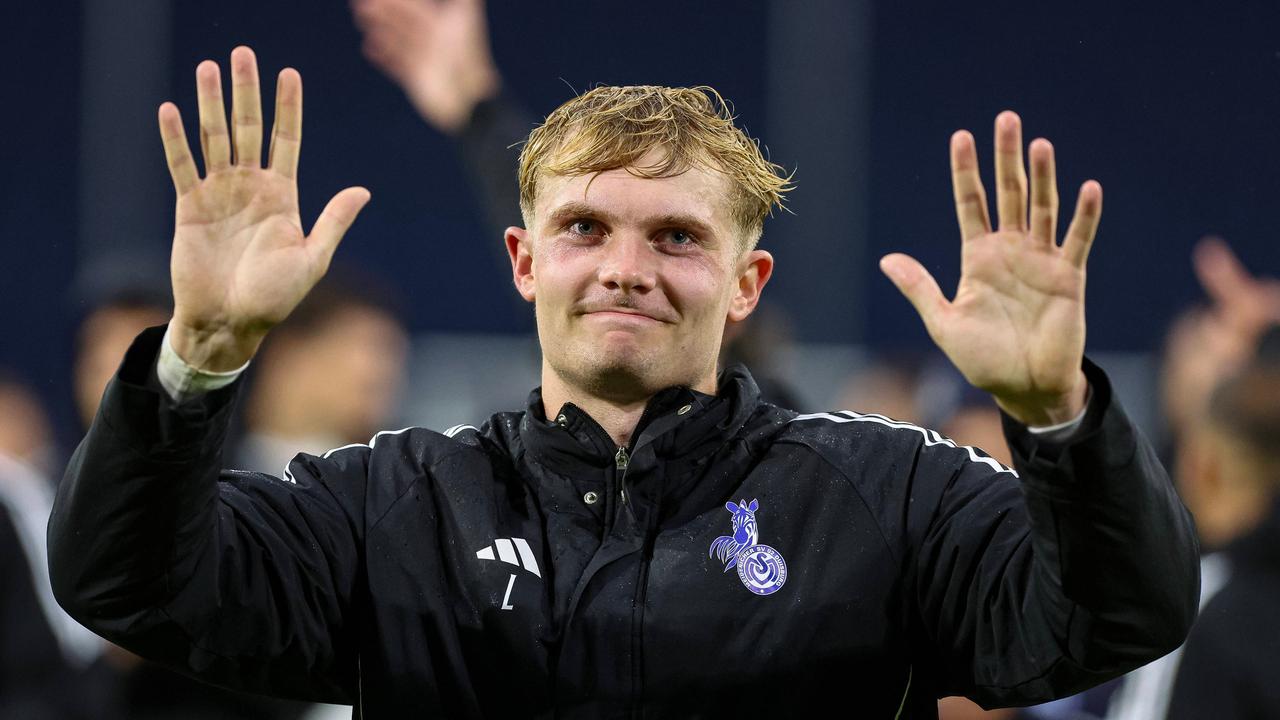
In the long, storied history of the 3. Liga, certain performances etch themselves into the collective memory of football fans. On a crisp October evening in Duisburg, Peter Remmert provided a masterclass in resilience and raw talent. With his side trailing 0-2 against TSG Hoffenheim II and the atmosphere at the Wedau growing increasingly anxious, the 21-year-old loanee from Schalke 04 ignited an explosive comeback that has not only rewritten the record books but has sent a clear signal to the rest of the league: the MSV Duisburg juggernaut is here to stay.
As the team prepares for a critical away encounter against 1. FC Saarbrücken, the euphoria of the weekend remains palpable. For a club that has endured its share of instability in recent years, this current run of form feels different. It is built on defensive steel, tactical discipline, and, as proven on Saturday, a bench that can turn the tide in the blink of an eye.
A Historic Six Minutes of Brilliance
The narrative of the match against Hoffenheim II was, for the first hour, one of frustration. MSV head coach Dietmar Hirsch did not mince his words post-match, describing the first half as "the worst performance I have seen from this team to date." Hoffenheim’s clinical approach had left the hosts shell-shocked, and a 0-2 deficit seemed a mountain too steep to climb.
Enter Peter Remmert. Brought on at halftime, the youngster initially struggled to find his rhythm, taking roughly 25 minutes to acclimate to the intensity of the match. Then, the dam broke.
In a display of clinical efficiency that defied the typical flow of 3. Liga football, Remmert orchestrated a comeback that will be analyzed for years to come. Between the 70th and 76th minute, he hammered home three goals, turning a deficit into a lead in just six minutes. This feat officially shattered the previous league record held by Ali Lukunku, who, in 2009 while playing for Erzgebirge Aue, required seven minutes to achieve a "lupenreiner" (pure) hattrick. Remmert’s performance was not just a turnaround; it was an act of historical significance.
The Psychology of the Comeback: "It Only Happens Here"
The immediate aftermath of the third goal saw the Wedau stadium descend into a state of collective delirium. For the fans, who have stood by the club through thick and thin, the moment was validation.
"It all happened so quickly," Remmert reflected after the final whistle. "When the second goal went in, the stadium just exploded. It’s the kind of atmosphere that you can only find here in Duisburg."
Coach Dietmar Hirsch was quick to credit the "special character" of his squad. "Sometimes you can’t explain the flow," Hirsch noted. "It’s not just tactical; it’s passion, it’s mentality. When the players start to feed off the energy of the crowd, they become an unstoppable force. We were abysmal in the first half, but the way they responded shows that we have moved past the fragility that haunted us in previous seasons."
For Remmert personally, the hattrick was a vindication of his patience. Having spent the first four matchdays entirely outside of the matchday squad, the young striker had faced an uphill battle to prove his worth. "It hasn’t been an easy start," he admitted. "But the coaching staff and my teammates kept telling me that everyone has a role to play. We have a culture where every player is valued, and that is what makes us successful right now."
Tactical Stability and Defensive Fortitude
While the headlines belong to Remmert, the broader success of MSV Duisburg this season is rooted in a fundamental shift in defensive structure. The chaotic, inconsistent displays of the past have been replaced by a rigorous, disciplined backline that rarely gives away cheap opportunities.
Milan Sasic, the former MSV coach who led the club to the DFB-Pokal final in 2011, has been closely monitoring the team’s progress. Speaking to the WDR, Sasic was effusive in his praise for the current trajectory. "They have become unbelievably stable," Sasic remarked. "With a defense like this, you have the foundation to win a championship. You should be winning championships with this level of defensive organization."
Sasic also pointed toward the leadership of Michael Preetz, whose influence on the club’s infrastructure has been a significant factor. "You need a stable environment to succeed. The work being done behind the scenes—the administrative stability—is finally reflecting on the pitch. The players can focus entirely on their roles because the foundation is sound."
The Road Ahead: Testing the Title Credentials
The victory over Hoffenheim II puts MSV Duisburg on 21 points, with a goal difference of 22:9. These numbers cement their status as the current favorites in the 3. Liga. However, the nature of the "English Week" (a period of three games in seven days) means there is no time to celebrate.
On Tuesday, the squad travels to Saarbrücken, currently sitting in fifth place. It is a classic "six-pointer" that will test whether the team’s confidence can translate to away environments. Should they emerge victorious, they will return home for a blockbuster clash against current second-placed side Viktoria Köln on Sunday.
The implications for the remainder of the season are clear: MSV is no longer just "in the mix." They are setting the pace. While the memory of last winter’s mid-season collapse still looms large in the minds of some supporters, there is a palpable sense that this iteration of the MSV is built differently.
Examining the Numbers: A Statistical Dominance
A closer look at the 3. Liga table reveals why the league is taking notice. Duisburg’s success is not built on individual moments alone. Their "expected goals" (xG) metrics have improved significantly since the start of the season, and their ability to sustain pressure has increased.
Furthermore, the integration of loan players like Remmert has provided a much-needed depth. By rotating the squad effectively, Hirsch has managed to keep the intensity levels high even during the demanding autumn schedule. The statistics from the weekend match highlight a key trend: even when the team performs poorly in the first 45 minutes, their physical condition allows them to overwhelm opponents in the latter stages of the game.
Official Responses and Future Outlook
The club hierarchy has remained grounded despite the recent success. Michael Preetz has emphasized that while the team is in a "good phase," the season is a marathon. The focus remains on "game-by-game" management, a mantra that seems to have permeated the entire dressing room.
As the team departs for Saarbrücken, the mood is one of cautious optimism. The players are aware that they have painted a target on their backs. Every team in the 3. Liga now looks at the MSV fixture as the game to win.
"We know what’s coming," said a spokesperson for the coaching staff. "Saarbrücken will be aggressive, and they will look to exploit any complacency we might have after the weekend. But our group is hungry. They aren’t looking at the table; they are looking at the next training session, the next tactical briefing, and the next whistle."
Whether the "Remmert Miracle" becomes a footnote or the defining moment of a championship season remains to be seen. But one thing is certain: in 2026, MSV Duisburg has reclaimed its identity. The passion of the fans, the stability of the management, and the clinical hunger of players like Peter Remmert have combined to create something that feels very much like a return to form for one of Germany’s most traditional clubs.
The trip to Saarbrücken on Tuesday night will serve as the next litmus test. With the wind in their sails and a record-breaking striker in their ranks, the MSV is ready to prove that their ascent to the top of the table is no accident—it is the result of a project finally coming to fruition.