In an era where digital infrastructure serves as the backbone of global commerce, the specter of ransomware has evolved from a nuisance into a systemic threat to national security and corporate stability. As cyber-attacks increasingly target the manufacturing sector and the backbone of the economy—the Mittelstand—the question is no longer if a firm will be targeted, but how it will respond when the digital locks are snapped shut.
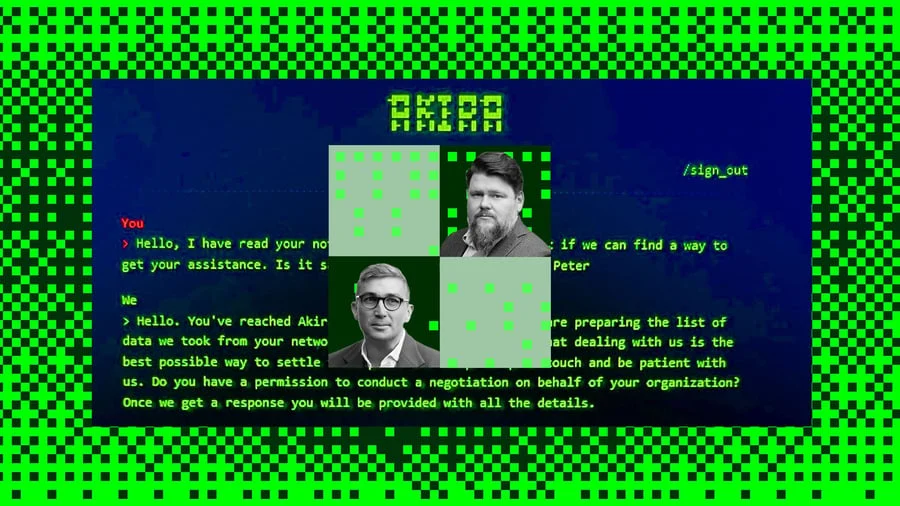
Drawing from expert insights from crisis negotiators like Michael Sjöberg, formerly of the Danish military, and Peter Skovbo of the Swiss-based firm Delta Crisis, this report examines the anatomy of a cyber-extortion event, the critical failures that occur in the first hours of a breach, and the strategic path toward regaining control.
1. The Anatomy of an Attack: When the Lights Go Out
Ransomware is no longer merely about encrypting files; it is a sophisticated operation of corporate sabotage. In a typical scenario, criminal syndicates gain unauthorized access to a company’s network, often lingering undetected for weeks—a period known as "dwell time." During this phase, attackers exfiltrate sensitive intellectual property, employee records, and financial data.

The "big bang" occurs when the ransomware payload is deployed. Systems are locked, production lines grind to a halt, and a digital ransom note appears on screens, demanding payment—almost exclusively in Bitcoin or other untraceable cryptocurrencies. The threat is twofold: pay to regain access to your data, or face the public release of confidential information, a tactic known as "double extortion."
2. Chronology of a Crisis: The First 48 Hours
The initial hours following a detection are the most critical in determining the long-term survival of an organization.
The Panic Phase (Hours 0–4)
Upon realizing the systems are compromised, many companies succumb to immediate panic. The most common, and most expensive, error is the impulsive decision to pull the plug on all servers or factory machines. While well-intentioned, this can destroy volatile memory evidence that is crucial for forensics and may trigger "dead man switches" set by attackers to further corrupt data if they detect a system shutdown.

Assessment and Containment (Hours 4–12)
Professional crisis teams emphasize the "Golden Rule": Do not communicate with the attackers until a strategy is defined. During this window, IT teams must isolate the infected segments of the network without completely severing the company from the outside world. This is the stage where the company must decide whether to engage in negotiations.
The Negotiation Window (Hours 12–48)
Negotiation is not about "paying the ransom." It is a tactical delay maneuver. By engaging the criminals, experts like Sjöberg and Skovbo can stall for time, verify that the attackers actually possess the decryption keys, and determine the scope of the data theft. Every hour spent negotiating is an hour gained for the IT recovery team to restore systems from offline, uninfected backups.
3. Supporting Data: The Rising Tide of Cyber-Extortion
The economic impact of ransomware is staggering. According to recent industry reports, the average cost of recovering from a ransomware attack—including downtime, hardware repairs, and reputational damage—has surpassed $4.5 million per incident.
- Manufacturing Vulnerability: Industrial Control Systems (ICS) are increasingly targeted because downtime is astronomically expensive. For a factory, a single hour of idle production can cost hundreds of thousands of dollars.
- The Mittelstand Trap: Small and medium-sized enterprises (SMEs) are currently the primary targets. Attackers perceive them as having "just enough" money to pay a significant ransom but "not enough" security budget to defend against sophisticated, state-sponsored or organized criminal tactics.
- Payment Rates: While government agencies strongly advise against paying ransoms, statistics indicate that nearly 40% of companies affected by ransomware still choose to pay, driven by the desperate need to restart operations.
4. Expert Insights: Lessons from the Frontline
Michael Sjöberg, who spent his career negotiating with kidnappers, draws a direct parallel between human hostage-taking and digital ransomware. "In both cases," Sjöberg explains, "the goal is to create a dialogue that keeps the ‘hostage’—your data—safe while you exhaust other options."
Peter Skovbo adds that the biggest mistake companies make is viewing the attack as purely an IT problem. "Cyber-criminality affects the entire company," Skovbo says. "It is a business-continuity crisis. When the IT department is left to handle the crisis alone, they often lack the authority to make the high-level financial and ethical decisions required to navigate a negotiation."
The "Must-Do" List for Leadership:
- Establish a Crisis Committee: This should include the CEO, CFO, Head of Legal, Head of Communications, and the Lead IT/Security Officer.
- Verify Backups: Do you have "air-gapped" backups? If they are connected to the network, the attackers have likely encrypted them too.
- Engage External Counsel: Legal privilege is essential. Bringing in specialized cyber-legal counsel ensures that the details of the incident remain protected during subsequent investigations.
- Prepare for Transparency: If the attack involves the theft of customer data, you have a legal obligation to inform the authorities and the victims. Hiding the breach can lead to massive regulatory fines under frameworks like the GDPR.
5. Official Responses and Legal Implications
Governments worldwide are scrambling to address the ransomware crisis. In Europe, the NIS2 Directive (Network and Information Security Directive) has set a new standard, forcing companies to adopt much stricter security measures and report breaches within 24 hours.

Failure to report or failure to implement "state-of-the-art" security measures is now a major liability. Directors and board members can be held personally accountable for negligence if it is found that the company lacked a robust cybersecurity posture prior to the attack.
6. Strategic Implications: Building Resilience
The ultimate lesson for any organization is that the "perimeter" is dead. With the rise of remote work and cloud integration, the attack surface has expanded indefinitely.
Moving Toward "Zero Trust"
Companies must adopt a "Zero Trust" architecture, where no user or device is trusted by default, even if they are inside the corporate network. This limits the "lateral movement" of attackers; if a single employee’s credentials are compromised, the attacker is confined to a small, isolated section of the network, preventing a total system-wide lockdown.

Human-Centric Security
Despite the high-tech nature of the threat, the entry point remains overwhelmingly human. Phishing and social engineering continue to be the primary vectors. Regular, rigorous training that goes beyond annual slide decks—incorporating live simulation exercises—is the only way to build a resilient human firewall.
The Role of Cyber Insurance
Cyber insurance is becoming a standard business requirement. However, companies must be aware that insurers are now tightening their requirements. They will not pay out if a company cannot prove they had multi-factor authentication (MFA) and immutable backups in place at the time of the attack.
Conclusion: Regaining Control
Regaining control after a cyber-attack is not merely about decryption; it is about restoring the trust of stakeholders, employees, and customers. The path to recovery is paved with preparation. As the threats from criminal syndicates grow more sophisticated, the difference between a minor incident and a total bankruptcy lies in the speed, composure, and expertise with which an organization responds in those first, frantic hours.

By treating cybersecurity as a core business function rather than a back-office IT concern, companies can shift the balance of power back to themselves, ensuring that even when the network is challenged, the organization remains resilient.