In an alarming development that highlights the intense vulnerability of the artificial intelligence sector, federal authorities in the United States have unveiled details of a major security breach at OpenAI, the San Francisco-based powerhouse behind ChatGPT. The incident, involving the illicit installation of a covert recording device within a high-level executive conference room, has sent shockwaves through the tech industry, raising urgent questions about corporate espionage and the physical security of firms at the bleeding edge of global technological development.
According to documents released by the U.S. Department of Justice, the suspect is a 35-year-old Saudi Arabian national, identified in court filings as "A." The engineer, who had been employed by OpenAI since July 2024, faces serious federal charges, including the unauthorized interception of oral communications. If convicted, he faces a potential prison sentence of up to five years and a fine of $250,000.
A Sophisticated Intrusion: The Mechanics of the Breach
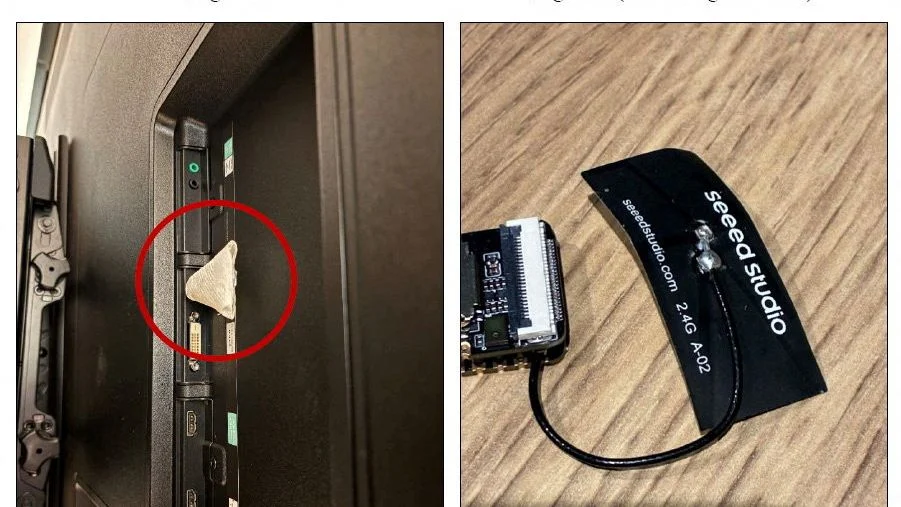
The breach was not discovered through a digital firewall alert, but rather by the manual diligence of company staff. On September 30, employees stumbled upon a concealed recording device tucked into the USB port of a television set within a sensitive boardroom. To evade detection, the device had been crudely camouflaged with toilet paper—a low-tech shroud for a high-stakes intelligence gathering operation.
Subsequent investigations revealed that the device was designed to be inconspicuous. Furthermore, authorities recovered a secondary, similar device in a bag left behind by the suspect within the company’s premises. While the contents of the recovered hardware remained encrypted, the sheer intent behind the placement suggests a calculated effort to capture privileged conversations.
The conference room in question was far from an ordinary meeting space. It served as a nerve center for OpenAI’s most sensitive discussions, encompassing proprietary research projects, long-term product roadmaps, delicate business negotiations, and confidential communications with government regulators. The potential for catastrophic intellectual property loss—had the device remained undetected—is immense.
Chronology of a Failed Espionage Plot
The timeline reconstructed by federal investigators suggests a planned, multi-stage effort to compromise OpenAI’s inner circle.
- Late September: The suspect allegedly began reconnaissance. Despite lacking explicit authorization to enter the high-security executive conference room, surveillance footage placed him near the area on multiple occasions.
- September 28: Investigators believe this is the date the recording device was installed.
- September 30: The device is discovered by staff, triggering an immediate internal investigation and the subsequent involvement of the Federal Bureau of Investigation (FBI).
- October 9: Federal agents apprehended the suspect. He was taken into custody without incident and subsequently appeared before a federal judge in San Francisco to face the initial charges.
- October 19: A follow-up court appearance is scheduled to determine the suspect’s status regarding ongoing pre-trial detention.
Evidence suggests that the preparations for the crime were digitally documented. Court records indicate that queries related to the construction of recording devices, real-time audio interception, and encryption methods were funneled through an AI assistant account linked to the suspect’s wife. These digital footprints provided investigators with a clear trail leading back to the engineer.
A Profile of the Suspect
The suspect, who has held a permanent U.S. residency permit since 2020, brings a significant professional background to this case. Before joining OpenAI in the summer of 2024, he reportedly held positions at industry titans including Meta and Microsoft. This history of employment within the "Big Tech" ecosystem adds a layer of complexity to the investigation, as authorities look to determine whether this was an isolated incident or part of a broader pattern of professional malfeasance.
The suspect’s background in high-level engineering underscores the "insider threat" phenomenon—a nightmare scenario for companies like OpenAI, where trust is a fundamental currency, yet access must be strictly segmented to protect the "crown jewels" of AI development.
The Corporate Response: Damage Control and Security Audits
OpenAI has moved swiftly to manage the fallout. In an official statement, the company confirmed that the suspect was terminated the same day he was taken into federal custody. The firm emphasized that it has been cooperating fully with the FBI throughout the investigation.
"Bislang haben wir keine Hinweise darauf, dass diese Person unberechtigt auf Modellparameter, Quellcode oder Kundendaten zugegriffen hat" (So far, we have no evidence that this individual accessed model parameters, source code, or customer data without authorization), a spokesperson stated. This is a crucial distinction for OpenAI; while the breach of physical space is a severe security failure, the loss of actual AI models or proprietary training data would represent a far more existential threat to the company’s market position.
The company is now undergoing a rigorous internal security audit to determine how an unauthorized individual was able to access restricted zones and successfully install hardware. The incident serves as a stark reminder that even the most sophisticated digital organizations remain vulnerable to "analog" threats—the human element and physical access.
Broader Implications for the AI Sector
The incident at OpenAI highlights a growing trend of corporate espionage targeting the artificial intelligence industry. As AI models become the primary drivers of future economic growth and national security, the incentives for competitors and state actors to infiltrate companies like OpenAI, Anthropic, or Google DeepMind are at an all-time high.
The Vulnerability of "Open" Cultures
The culture of collaborative innovation that defines Silicon Valley often clashes with the rigid security requirements of defense-grade intelligence protection. OpenAI, which began as a research laboratory with an emphasis on open-source philosophy, has had to rapidly pivot toward a "fortress" mentality as it commercializes its technology. This transition is difficult and creates gaps in physical and digital security.
The Insider Threat
The most dangerous adversaries are often those already inside the building. Unlike a remote hacker, an employee has the time, physical proximity, and social engineering opportunities to bypass traditional security protocols. This case demonstrates that background checks and standard employment screenings may not be sufficient to detect individuals with ulterior motives or those who become compromised after they are hired.
The Role of Regulatory Oversight
As these companies become more integral to national infrastructure, the government is likely to increase its scrutiny. We can expect to see tighter federal regulations regarding the security of facilities housing critical AI infrastructure. The FBI’s rapid response in this case signals that the U.S. government views the protection of AI labs as a matter of national security, not just corporate interest.
Conclusion: A Wake-Up Call
The attempted surveillance of OpenAI’s leadership is a watershed moment for the tech industry. It serves as a reminder that the race for Artificial General Intelligence (AGI) is not just a scientific endeavor; it is a high-stakes geopolitical competition.
For OpenAI, the path forward requires a re-evaluation of its physical security posture. For the industry at large, this incident is a clarion call to treat the security of human intelligence and proprietary secrets with the same level of intensity as the protection of the digital algorithms themselves. As the suspect awaits his day in court, the rest of the tech world is left to grapple with the realization that in the age of AI, the greatest threat to a company’s future might just be a small, unassuming recording device hidden behind a television.