If you are short on time, here is the bottom line: The software industry is currently undergoing a radical, structural metamorphosis. We are standing at a definitive tipping point, but it looks nothing like the "SaaSocalypse" that dominated headlines at the start of the year.
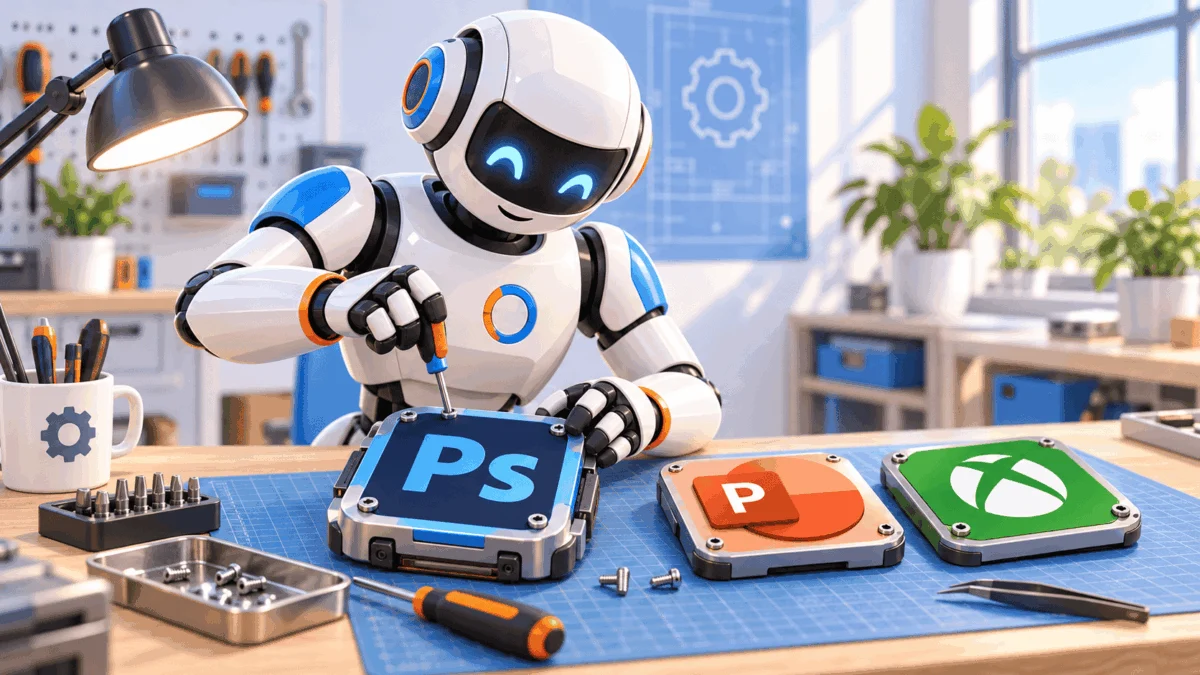
Early in 2024, the tech narrative was defined by existential dread. Industry analysts and doom-mongers predicted that Artificial Intelligence (AI) would render monolithic software giants like SAP and Salesforce obsolete. The logic seemed sound: if an LLM can automate complex workflows, who needs a bloated, expensive enterprise resource planning (ERP) system? Yet, the reality has proven far more nuanced. SAP has not only survived; it has thrived. Instead of being replaced, the industry has fractured, giving birth to a new generation of "AI-native" clones that are rapidly replicating the functionality of Photoshop, PowerPoint, and even interactive gaming engines.
The Death of the "Application" and the Rise of the Ecosystem
To understand why this is a seminal moment for the digital economy, one must recognize that the fundamental value proposition of software has shifted. For decades, the value lay in the application itself—the specific interface, the proprietary tools, and the workflow locked behind a subscription paywall.
Today, that value is eroding at an unprecedented pace. Any user with a basic understanding of prompting and a subscription to Claude or ChatGPT can now replicate, in minutes, the core utility of complex software tools that once took teams of engineers years to build. We are witnessing the democratization of functionality.
Because the barrier to entry for creating a functional tool has collapsed, the value of a standalone application is plummeting. If the "tool" is no longer the moat, where does the competitive advantage lie? It has migrated to:
- The Ecosystem: The ability to integrate, connect, and automate across disparate services.
- Persistent Maintenance: The reliability of infrastructure that doesn’t hallucinate or crash.
- Contextual Data: The proprietary data sets that allow AI to perform tasks specific to an enterprise’s unique needs.
Chronology: From Subscription Fatigue to the AI-Native Rebellion
The current friction in the software market did not appear overnight. It is the culmination of years of mounting user frustration and technological breakthroughs.
- 2013–2018 (The Subscription Era): Major software houses, led by the likes of Adobe and Microsoft, moved aggressively toward the "Software as a Service" (SaaS) model. While this provided steady, recurring revenue for corporations, it created a "subscription trap" for users who found themselves paying indefinitely for tools they owned in perpetuity only a decade prior.
- 2022 (The ChatGPT Explosion): The release of generative AI tools signaled to the market that the complexity of coding and creative production could be abstracted away.
- Early 2024 (The "SaaSocalypse" Narrative): Wall Street analysts predicted that AI agents would replace human-in-the-loop software, leading to a massive decline in demand for traditional enterprise licenses.
- Late 2024 (The Reality Check): We now see that while AI creates the utility, it doesn’t necessarily replace the platform. Instead, users are increasingly frustrated by paying "Legacy Prices" for "Commoditized Utility."
The Adobe Case Study: A Microcosm of Market Tension
The mounting pressure on legacy software providers is perhaps best exemplified by the case of Brandon Thomas, a software developer from Atlanta. Thomas represents a growing demographic of highly skilled users who are no longer willing to tolerate the "take it or leave it" attitude of traditional software giants.
Adobe, long considered the undisputed king of the creative industry, has spent years fortifying its moat through its Creative Cloud suite—specifically Photoshop and Premiere Pro. However, the company’s transition to a subscription-only model has been a point of contention for over a decade. Users have long complained about the high cost of entry and the lack of innovation relative to the rising subscription fees.
When AI tools began to emerge that could perform color grading, object removal, and asset generation—tasks that once required an hour of expert work in Premiere or Photoshop—the "Adobe Moat" began to look more like a barrier to efficiency. Thomas, like many others, began to experiment with modular, AI-first workflows. He discovered that by chaining together smaller, specialized AI tools, he could achieve 80% of his creative goals at a fraction of the cost, without the "Adobe Tax."
Supporting Data: The Shift in Enterprise Spend
Recent market data supports this shift in sentiment. While revenue for legacy SaaS companies remains high, "seat growth"—the traditional metric for success—is slowing.
- Fragmentation: Data indicates that enterprise clients are no longer looking for "all-in-one" suites. They are increasingly adopting "Best-of-Breed" stacks, where they plug in specialized AI tools that handle specific tasks, reducing their reliance on monolithic platforms.
- Customer Lifetime Value (CLV): In the past, companies like Adobe or Salesforce could rely on high switching costs. Today, the "API-first" economy means that users can switch between services with relative ease. The churn rate for non-essential software is at an all-time high.
- AI ROI: Companies are now auditing their software spend. If a tool costs $50/month per user but can be replaced by an API call to an LLM that costs $0.05 per request, the procurement departments are aggressively cutting the former.
Official Responses and Defensive Maneuvers
The response from the "Big Tech" incumbents has been defensive and predictably aggressive.
Adobe’s Stance: Adobe has doubled down on its integration of "Firefly" (its generative AI engine) into its existing products. Their argument is that while individual tools can be replicated by open-source models, professional workflows require "brand safety," "copyright protection," and "enterprise-grade integration"—elements that a lone developer in Atlanta cannot easily provide.
SAP’s Strategy: SAP, meanwhile, has leaned into the complexity argument. They argue that while an AI can write a line of code or generate an image, it cannot manage the global supply chain, regulatory compliance, or financial reporting of a multinational corporation. Their pivot has been to become the "AI Orchestrator" rather than just the "System of Record."
Implications: What Comes Next?
We are moving into an era of "Software Commodity." In the near future, we can expect the following developments:
1. The Death of the "Feature"
Features that were once the primary selling point of software—such as "automatic background removal" or "data visualization"—will cease to be products. They will become free utilities or simple API calls. Any software company trying to charge a premium for basic utility will face immediate disruption.
2. The Rise of the "Agentic" Workflow
The next phase of software will not be about "using" a tool, but about "directing" an agent. We will see the rise of orchestration layers that can call upon different AI models to execute a project from start to finish. The value will shift to the platform that provides the best integration, not the best functionality.
3. The Unbundling of the Enterprise
Large corporations will begin to "unbundle" their software stacks. They will move away from monolithic ERPs and toward a constellation of micro-services connected by LLM-driven middleware. This will lead to a more efficient, albeit more complex, IT architecture.
Conclusion
The "SaaSocalypse" didn’t destroy the software industry, but it did shatter the illusion that software is a permanent, high-margin annuity. We are in a period of creative destruction where the "moat" of the past—proprietary, locked-in functionality—has become a liability.
For users like Brandon Thomas, this is a golden age. For legacy software companies, it is an existential challenge. To survive, these giants must stop acting as gatekeepers of functionality and start acting as architects of ecosystems. The companies that win will be those that realize they are no longer selling "tools," but rather the infrastructure for the AI-augmented world. The era of the "all-in-one" suite is over; the era of the "interconnected intelligent stack" has begun.