As the football world turns its gaze toward London, the nominations for the 2026 Ballon d’Or have sparked intense debate. While the FC Bayern Munich contingent boasts a strong presence, the glaring absence of German players from the men’s shortlist highlights a shifting paradigm in European football.
The prestigious Ballon d’Or, arguably the most coveted individual accolade in the sport, is set to be awarded on October 26 in London. Recently, the French sports publication L’Équipe unveiled its list of 30 nominees for the 2026 season, setting the stage for what promises to be a historic ceremony. However, for German football fans, the announcement serves as a sobering reminder of the current state of the national talent pool.
Main Facts: The Elite 30 and the Bayern Contingent
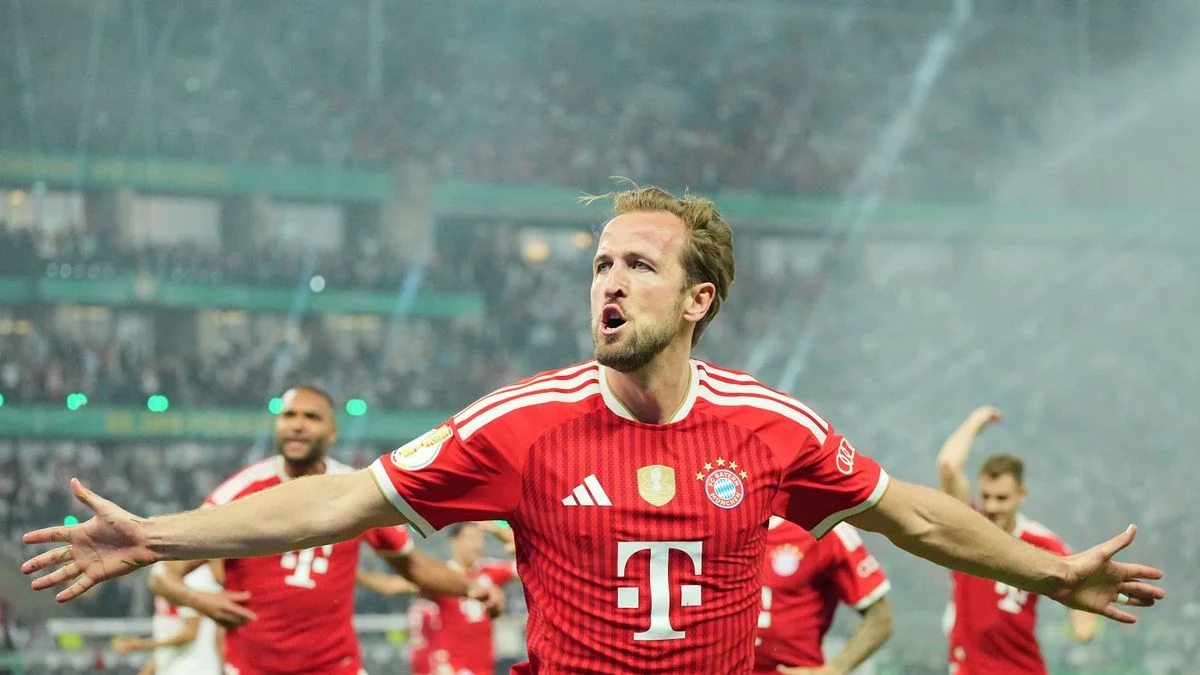
The list of 30 nominees for the men’s Ballon d’Or is a "who’s who" of international football royalty. Among them is England’s talisman and FC Bayern Munich’s prolific striker, Harry Kane. His inclusion comes as no surprise; during the 2025/2026 campaign, the forward registered an astonishing 61 goals in 51 competitive matches. Despite his individual heroics, which helped propel the Three Lions to the semi-finals of the most recent World Cup, Kane remains a realist.
"The Ballon d’Or is the greatest individual honor one can achieve," Kane remarked in mid-August. "It is not in my hands. I have done everything I could regarding my performance on the pitch."

Joining Kane in the running are his Bayern Munich teammates: Luis Díaz, the explosive winger Michael Olise, and defensive stalwart Dayot Upamecano. Their inclusion underscores Bayern’s continued influence on the European stage. Yet, the absence of a German player in this elite group of 30 is a notable development, sparking discussions about the tactical and developmental trends within the Bundesliga and the German national team setup.
Chronology: The Evolution of the Award
The Ballon d’Or, established in 1956 by France Football, was originally conceived to recognize the best European footballer of the year. Over seven decades, it has transformed into a global barometer of excellence.
- 1956: The inception of the award, with Stanley Matthews becoming the first recipient.
- 1991: The FIFA World Player of the Year award is introduced, creating a parallel track of prestige.
- 2010–2015: A period of unification, where FIFA and the Amaury Group (publishers of France Football) collaborated on the FIFA Ballon d’Or.
- 2016–Present: A return to the traditional format managed by France Football, distinct from the FIFA The Best awards.
The 2026 edition stands out as a potential turning point. Should Lionel Messi—now plying his trade with Inter Miami in Major League Soccer—secure the award, he would break new ground. Having already claimed the trophy eight times, the 39-year-old would be the first winner in history to receive the honor while playing for a non-European club during the evaluated season. His potential victory would be a poignant end to his career, following his recent retirement from international football.
Supporting Data: A Look at the Competition
While Kane and his Bayern peers have their supporters, the consensus among experts suggests that the competition for the top spot is fierce. The primary favorites include:

- Rodri: The Spanish national team captain and architect of his side’s recent successes. His control over the midfield has made him a favorite among tactical analysts.
- Kylian Mbappé: The French superstar, whose status as a World Cup record-breaker keeps him in the perennial conversation for the world’s best player.
- Lionel Messi: Despite his move to the United States, his impact remains undeniable, and his legacy continues to exert a powerful influence over the voting panel.
In the coaching categories, FC Bayern is again represented by Vincent Kompany. The manager faces stiff competition from Spain’s World Cup-winning coach, Luis de la Fuente, and Luis Enrique of Paris Saint-Germain.
The Women’s Game: A Different Narrative
Unlike the men’s category, the women’s list of 30 nominees features German representation, signaling a relative strength in the women’s game. Klara Bühl, a standout performer during FC Bayern Munich’s dominant double-winning season, leads the charge for Germany. She is joined by her club teammates Pernille Harder and the promising talent Momoko Tanikawa.
Furthermore, the goalkeeping category sees the experienced Ann-Katrin Berger (Gotham FC) nominated for the women’s award, while Borussia Dortmund’s Gregor Kobel—representing Switzerland—is in the running for the Yashin Trophy for men. In the realm of emerging talent, Bayern Munich’s Lennart Karl has been shortlisted for the best young player award, providing a glimmer of hope for the future of German football.
Official Responses and Tactical Implications
The nominations for "Team of the Year" also highlight the shift in power. FC Bayern Munich is the only German club represented in both the men’s and women’s categories. However, the club’s leadership is acutely aware that they remain outsiders compared to European giants like Paris Saint-Germain (men) and FC Barcelona (women).

The absence of German men on the list of 30 is not merely a statistical anomaly; it is being viewed in some circles as a symptom of a broader issue. Analysts suggest that the German football system, which once produced a conveyor belt of Ballon d’Or-caliber midfielders and defenders, is currently in a transitional phase. The reliance on foreign stars like Kane and Olise to carry the mantle for the Bundesliga’s most successful club suggests that the domestic pipeline for elite offensive talent has slowed.
Implications for the Future of the Sport
The 2026 Ballon d’Or is more than just a ceremony; it is a reflection of the globalization of the sport. The rise of MLS as a destination for the world’s greatest players and the continued dominance of tactical coaches from Spain and France illustrate that football’s center of gravity is constantly shifting.
For the German Football Association (DFB) and the Bundesliga, the lack of representation on the men’s list serves as a call to action. The focus on youth development, as evidenced by the nomination of Lennart Karl, must be accelerated. If Germany is to return to the pinnacle of individual honors, the investment in local talent must match the investment in international recruitment.
As the industry prepares for the gala in London, the football world remains captivated by the mystery of who will hold the golden trophy aloft. Whether it is the seasoned veteran Messi, the record-breaking Kane, or the tactical maestro Rodri, the result will define the narrative of the 2026 season. For the fans, it is a celebration of the sport’s highest peaks; for the players, it is the ultimate validation of their craft.

As the clock ticks down to October 26, the absence of a German player in the men’s top 30 will continue to be a topic of conversation in bars, boardrooms, and training grounds across the country. It is a reminder that in the unforgiving world of professional football, reputation is temporary, but performance is everything. The race is on, and the world is watching.