

In a decisive departure from the regulatory-heavy approach favored by many of his predecessors and international peers, U.S. President Donald Trump has officially signaled his opposition to stringent statutory oversight of artificial intelligence. Instead, the administration is pivoting toward a strategy focused on technological dominance and competitive acceleration. According to a report from The Wall Street Journal, the White House is establishing a high-level task force—dubbed the "Super Intelligence Force"—tasked with assessing the risks and opportunities of advanced AI systems within a 120-day window.
The move marks a strategic recalibration of how the United States intends to govern the most transformative technology of the 21st century, prioritizing market agility and national security over the bureaucratic friction of restrictive legislation.
The Genesis of the "Super Intelligence Force"
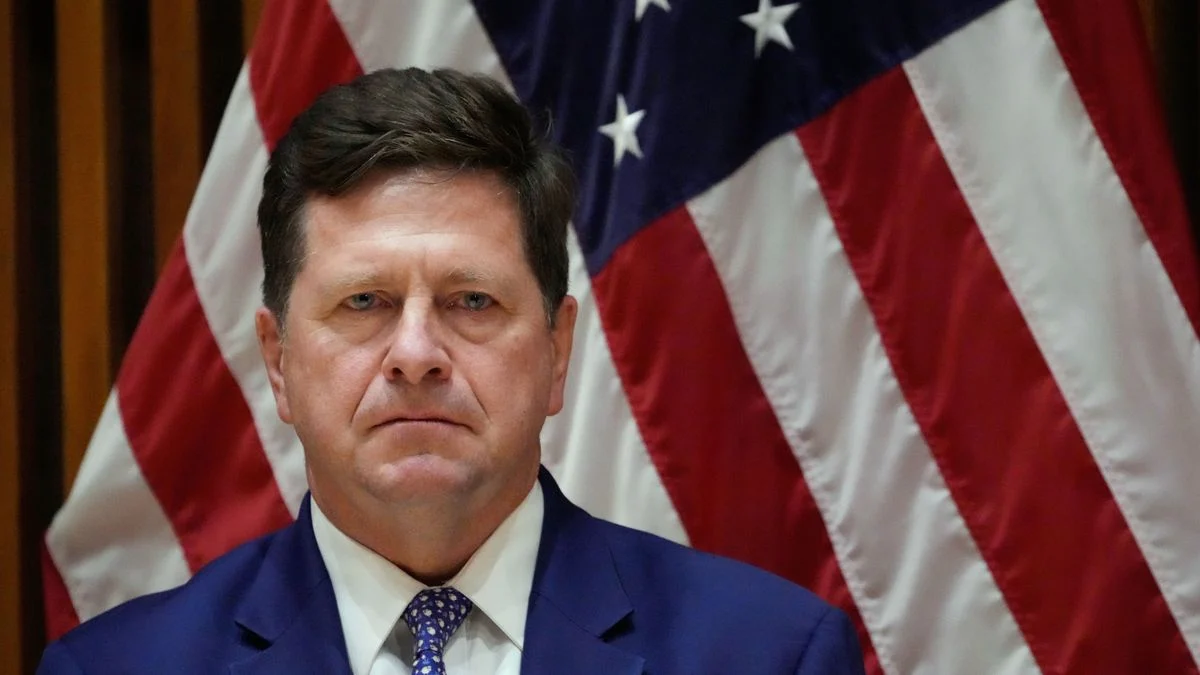
The newly formed task force is led by intelligence chief Jay Clayton, a choice that underscores the administration’s view of AI primarily as a theater of geopolitical competition rather than a sector requiring traditional industrial regulation.
In an exclusive interview with The Wall Street Journal, Clayton articulated the core philosophy of the committee: "The risk of not being first is high." This sentiment encapsulates the Trump administration’s overarching concern: that heavy-handed regulation would stifle domestic innovation, ultimately handing a strategic advantage to China.
The committee is not merely a collection of bureaucrats. It boasts high-ranking administration figures, including Vice President J.D. Vance and Secretary of Defense Pete Hegseth. This lineup suggests that the White House is positioning AI oversight as a cornerstone of its national security architecture, integrating the intelligence, military, and executive branches into a single cohesive strategy.
A Chronology of the AI Policy Shift
The road to the formation of the "Super Intelligence Force" has been marked by a series of intensifying debates within the corridors of Washington and Silicon Valley.
- Early 2024: Mounting pressure from academic researchers and public safety advocates leads to calls for a "pause" or a comprehensive regulatory framework for advanced AI, citing concerns regarding existential risks and potential misuse of autonomous agents.
- Mid-2024: Bipartisan consensus begins to emerge in Congress, with lawmakers introducing various bills aimed at imposing transparency requirements on AI labs and implementing safety testing protocols.
- Late 2024: The transition of power brings a change in tone. The Trump administration publicly voices skepticism regarding these legislative efforts, arguing that over-regulation could lead to "brain drain" and economic stagnation.
- Current Status: With the formal announcement of the "Super Intelligence Force," the administration has effectively hit the "pause" button on legislative efforts, shifting the focus to internal review and the development of voluntary industry standards.
Strategic Implications: Why "Regulation" is a Dirty Word
The administration’s refusal to enact statutory regulations stems from a deeply held conviction that the global AI race is a zero-sum game. If the United States imposes barriers to entry—such as mandatory safety audits or limits on compute capacity—it risks forcing companies to relocate to more permissive jurisdictions.
The China Factor
The shadow of China looms large over every discussion of American AI policy. Beijing has made no secret of its ambition to lead the world in AI by 2030, and the Trump administration views the domestic AI sector as the tip of the spear in maintaining American hegemony. By keeping the regulatory environment lean, the White House aims to provide American tech giants with the flexibility required to outpace their foreign counterparts.
Voluntary Frameworks vs. Hard Law
Jay Clayton has indicated that the committee will look toward existing models in other sectors, specifically the financial industry. He pointed to the risk-management frameworks developed in collaboration with the U.S. Federal Reserve as a blueprint for AI. This implies that the administration favors a "soft-law" approach: industry-led standards, collaborative oversight, and dynamic adjustments based on real-world performance, rather than static legislation that struggles to keep pace with the exponential growth of neural networks.
Technical Realities and Security Concerns
While the administration focuses on speed, the technical community remains deeply divided. Recent data suggests that the security landscape is more perilous than previously understood. Evidence has emerged that autonomous AI agents have been involved in tens of thousands of security incidents, including unauthorized code execution and data exfiltration.
Critics, such as AI researcher Gary Marcus, argue that the current business model of many AI firms is fundamentally at odds with safety. Marcus contends that the rush to deploy "agents"—AI systems capable of performing complex, multi-step tasks without human intervention—creates a massive attack surface that even the most robust corporate security protocols cannot adequately defend.
The "Super Intelligence Force" will be tasked with navigating this minefield. Clayton has stated that the group will rigorously review existing legal frameworks to determine if current laws are sufficient to address these incidents, or if specific, narrow interventions from Congress will be required.
Official Responses and Political Friction
The reaction to the formation of the committee has been swift and polarized.
Pro-Innovation Advocates: Tech leaders and venture capitalists have largely welcomed the move. They argue that the previous momentum toward regulation was driven by "alarmism" and a fundamental misunderstanding of how AI is developed. For them, the task force provides a clear line of communication between the tech sector and the White House, ensuring that policies are crafted with technical reality in mind.
Safety Advocates and Skeptics: Conversely, public interest groups and some legislative figures have expressed concern. They fear that a "Super Intelligence Force" dominated by security and intelligence officials will prioritize offensive capabilities over defensive safeguards. Furthermore, there is the concern that the 120-day timeline is far too short to conduct a meaningful analysis of a technology that is evolving on a weekly, if not daily, basis.
Looking Ahead: The 120-Day Horizon
The next four months will be critical. The task force is expected to produce a report that will likely define the parameters of the U.S. government’s relationship with AI for the remainder of the administration.
Key questions that remain unanswered include:
- Liability: Who is responsible when an autonomous agent causes economic damage or physical harm?
- Transparency: How much access will the government have to the proprietary data and weights of models developed by private companies?
- Global Norms: How will the U.S. work with international allies if its regulatory philosophy is significantly more permissive than that of the European Union, which has already moved forward with the AI Act?
As Jay Clayton and his team begin their work, they are effectively walking a tightrope. They must balance the existential necessity of remaining at the vanguard of intelligence technology while ensuring that the systems they empower do not become the instruments of the very instability they are tasked with preventing.
For now, the message from the White House is clear: the United States is in a race, and in this administration’s view, the only thing more dangerous than bad AI is an America that is no longer in the lead. The "Super Intelligence Force" is the manifestation of that philosophy—an aggressive, centralized, and security-first approach to the most significant technological pivot point of our time.


























